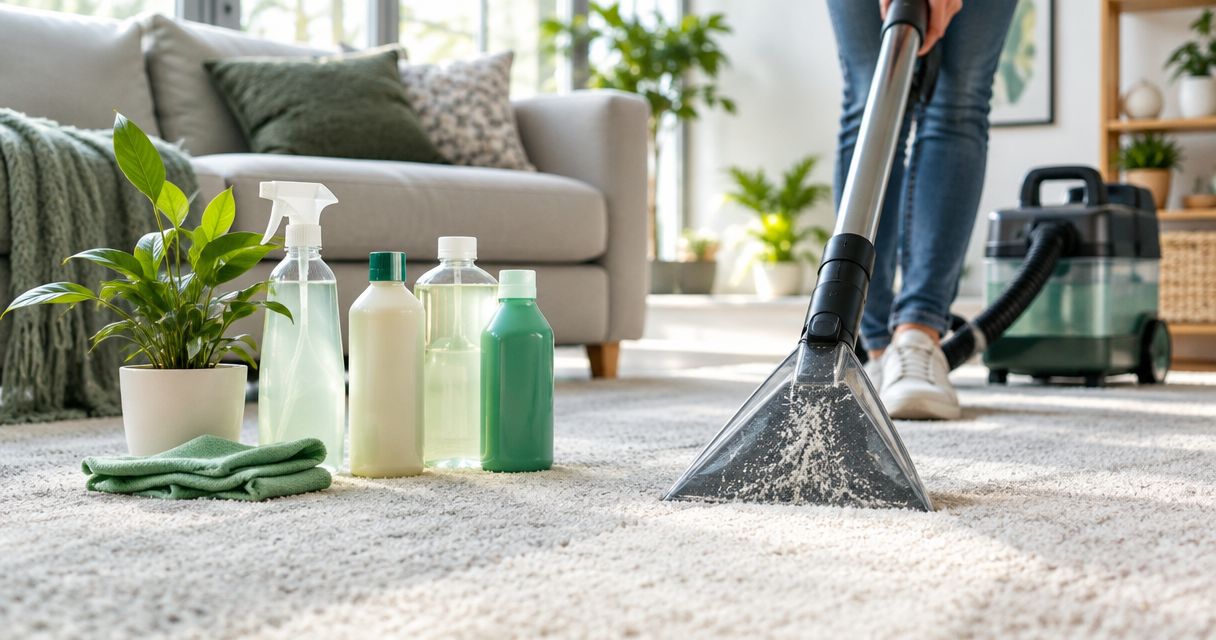
Best overall: a carpet-compatible, fragrance-free detergent. Best for pet accidents: an enzyme stain remover. Best simple first step: plain water. This 2026 guide ranks six options for different cleaning jobs—not six interchangeable bottles.
- The best eco-friendly carpet cleaning products match the carpet fiber, stain, and cleaning method—not just a green label.
- Choose carpet-compatible, fragrance-free detergent for routine cleaning and enzyme cleaner for suitable organic stains.
- Plain water is the simplest first step for fresh, water-soluble spills; it does not treat every stain.
- Michaels Carpet Care is best for homeowners seeking professional eco-friendly carpet cleaning in McKinney, Frisco, Plano, and Allen.
Why this matters
A cleaner that removes a mark but damages the carpet is the wrong cleaner. So is a product that leaves sticky residue because you used too much or could not remove it properly.
For your 2026 shortlist, separate three questions: does the product suit the carpet, does it treat the stain, and what supports its environmental claims? A leaf on the label answers none of them. If you need professional help rather than another household bottle, Michaels Carpet Care provides eco-friendly carpet cleaning for homeowners and businesses in North Texas.
Match the product to the job before comparing environmental claims. These six cleaning options cover different tasks; none earns a blanket recommendation for every carpet, stain, or household.
What makes the best eco-friendly carpet cleaning products?
Use these criteria before choosing a product in 2026:
- Carpet compatibility: The label must cover your fiber and intended use. A cleaner for synthetic carpet is not automatically suitable for wool.
- Ingredient transparency: Look for usable ingredient information and specific environmental claims. Treat unexplained terms such as natural or green as insufficient evidence.
- Independent verification: EPA Safer Choice evaluates product ingredients against human-health and environmental criteria. Check the exact product, not just the manufacturer.
- Stain fit: Routine soil, organic stains, and colored marks need different approaches. Choose for the problem you actually have.
- Residue removal: Read how the cleaner must be rinsed, extracted, blotted, or vacuumed away. Your equipment must support that process.
- Moisture control: Use the product as directed without saturating the carpet. Less water is not permission to ignore cleaning or removal instructions.
Fragrance-free is a useful selection criterion, not proof of environmental performance. Likewise, a plant-derived ingredient does not establish that the finished cleaner suits your carpet.
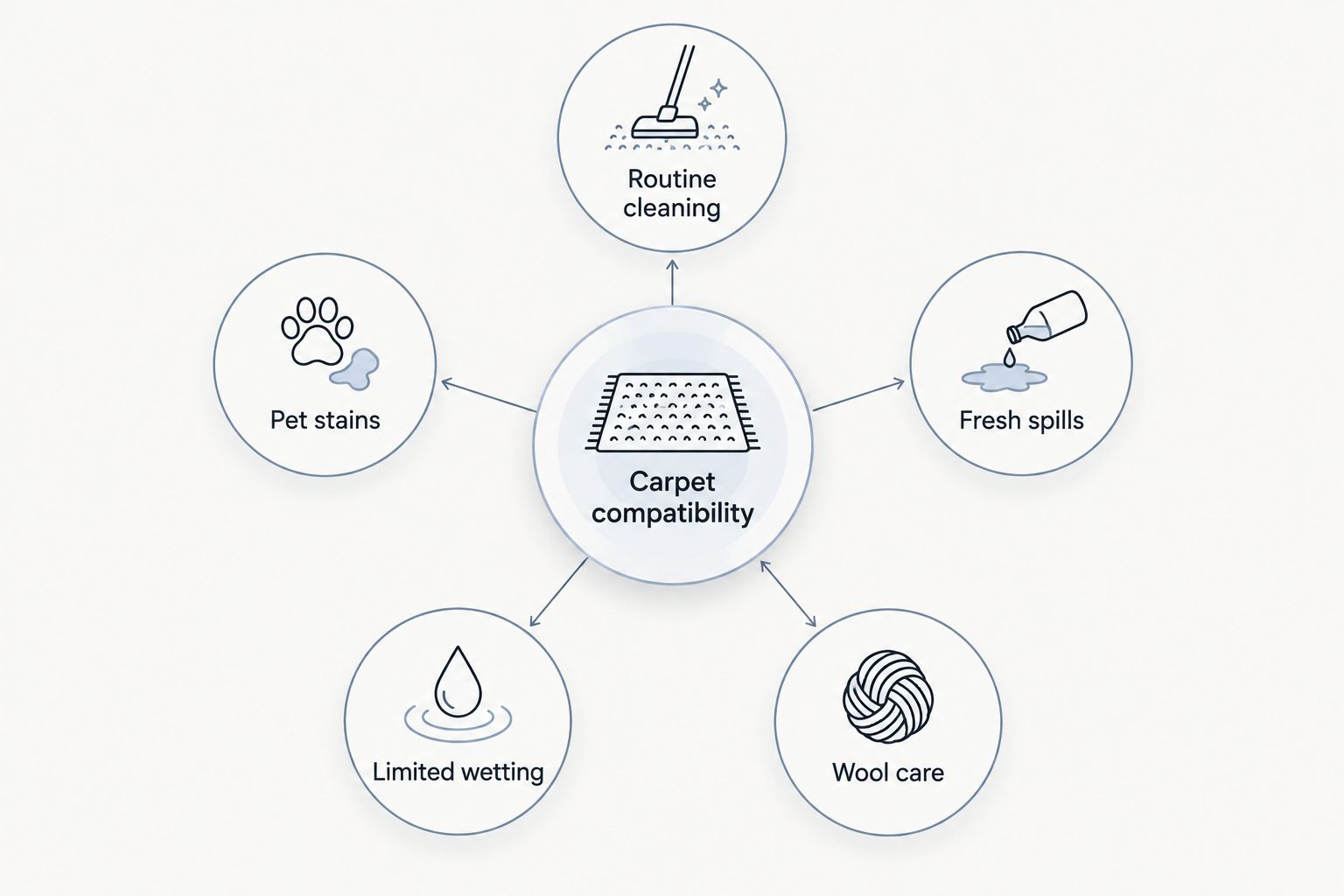
The six cleaning options at a glance
These 2026 picks are product categories rather than a brand leaderboard. Compare the exact bottle or compound against the criteria above before buying.
| Rank and option | Best for | Standout feature | Key limitation |
|---|---|---|---|
| 1. Carpet-compatible, fragrance-free detergent | Routine cleaning | Cleans ordinary soil without added fragrance | Requires correct dilution and residue removal |
| 2. Enzyme stain remover | Suitable pet and food stains | Targets specific organic material | Requires compatible fibers and label-directed treatment |
| 3. Plain water | Fresh, water-soluble spills | Adds no cleaning ingredients | Cannot address every stain or embedded soil |
| 4. Low-moisture cleaning compound | Cleaning with limited wetting | Uses a compound that is removed after treatment | Requires suitable carpet and thorough removal |
| 5. Oxygen-based carpet stain remover | Compatible colored stains | Uses an oxidizing treatment | Can affect dyes or unsuitable fibers |
| 6. Wool-approved carpet cleaner | Wool carpet care | Prioritizes wool compatibility | Approval does not establish environmental credentials |
The ranking puts routine maintenance first, then specific stain treatments and fiber requirements. If you have wool, start with wool compatibility rather than following the table from the top.
1. Fragrance-free detergent: best for routine carpet cleaning
A carpet-compatible detergent is the default choice for ordinary tracked-in soil. Choose a formula labeled for your carpet and, when applicable, your cleaning machine; fragrance-free means it has no added fragrance, not that it has no odor.
The environmental decision belongs to the exact formulation. Read its ingredient information and certification claims rather than treating every fragrance-free detergent as equally responsible.
Fragrance-free detergent pros:
- Fits routine cleaning when the label covers the carpet.
- Avoids adding fragrance to the cleaning task.
- Allows you to compare specific ingredient and certification information.
Fragrance-free detergent cons:
- Does not automatically treat every pet stain or discoloration.
- Incorrect dilution or inadequate removal can leave residue.
Best for: Homes needing routine carpet cleaning without added fragrance.
Follow the measured dilution on the label. Adding extra concentrate does not establish better cleaning and increases the amount you must remove. Keep a separate plan for isolated stains rather than treating the whole room with a stronger mixture.
Verdict: Buy a compatible, clearly documented formula for routine cleaning. Skip products with unclear use or removal instructions.
2. Enzyme stain remover: best for suitable pet and food stains
Enzyme cleaners use enzymes to break down particular organic substances. Their suitability depends on the formulation, stain, and carpet; an enzyme label is not a universal promise of odor removal.
For pet accidents, distinguish a surface mark from contamination below the carpet. A household spot treatment cannot establish whether the backing, cushion, or subfloor also needs attention.
Enzyme stain remover pros:
- Offers targeted treatment for suitable organic stains.
- Lets you treat a defined spot rather than the entire carpet.
- Provides a stain-specific alternative to repeated general cleaning.
Enzyme stain remover cons:
- Not every formula is suitable for wool or other sensitive fibers.
- Does not repair discoloration or damage already present.
- Surface treatment does not address every below-carpet problem.
Best for: Compatible carpet with label-covered pet, food, or other organic stains.
Blot removable material first and follow the product's treatment instructions. Do not combine enzyme cleaner with bleach, disinfectant, or another stain remover. If an odor returns after cleaning, stop repeatedly soaking the same area and arrange an assessment.
Verdict: Buy for a matching organic stain on a compatible carpet. Hold when the contamination extends beyond the surface.
3. Plain water: best for fresh, water-soluble spills
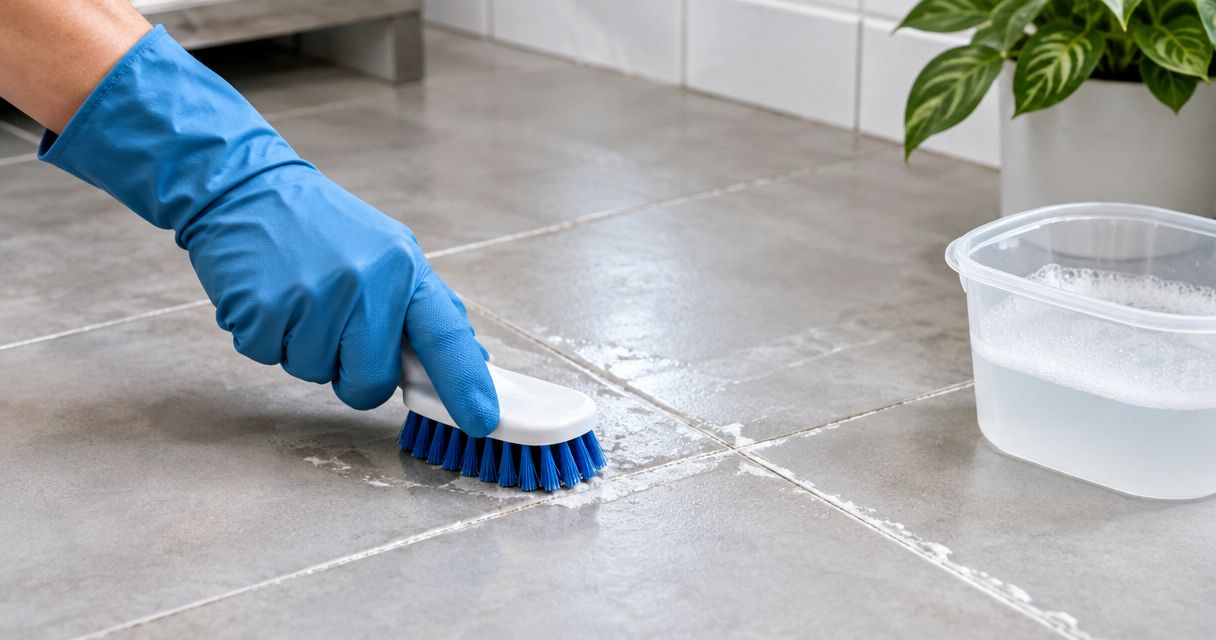
Plain water belongs on the shortlist because some fresh spills need blotting before they need a cleaning chemical. It adds no detergent, fragrance, or oxidizer, and gives you a restrained first step when the carpet's care instructions permit water.
Water still needs control. Wetting a stain is not the same as removing it, and pouring water into the carpet can spread the problem.
Plain water pros:
- Adds no cleaning ingredients.
- Supports gentle blotting of suitable fresh spills.
- Avoids introducing detergent residue during the first response.
Plain water cons:
- Does not dissolve every oily or colored stain.
- Excess moisture can reach the backing or cushion.
Best for: Fresh, water-soluble spills on carpet that permits water-based spot cleaning.
Lift solids without grinding them into the pile. Blot liquid with a clean, white absorbent cloth, then use a lightly dampened cloth if appropriate. Work carefully rather than scrubbing; stop if color transfers from the carpet itself.
Verdict: Use as the first response when appropriate. Skip repeated wetting when the stain stops improving.
4. Low-moisture cleaning compound: best for limited wetting
A low-moisture cleaning compound is applied and worked through compatible carpet, then removed according to its instructions. It is a cleaning method, not simply a powder you scatter and leave behind.
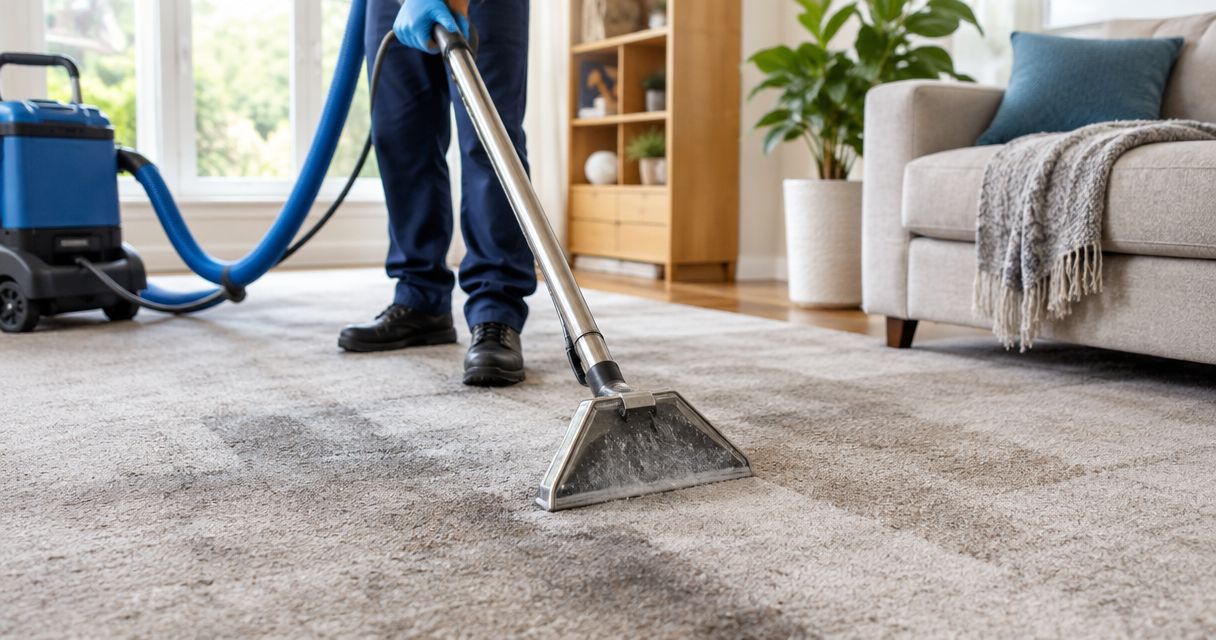
Michaels Carpet Care's Host Dry low-moisture approach uses about 10% of what steam cleaning uses, with carpets dry in 1–2 hours. Those details describe the stated service approach, not a guarantee for every household compound or cleaning situation.
Low-moisture cleaning compound pros:
- Limits wetting compared with a water-heavy approach.
- Provides an alternative to liquid detergent treatment.
- Can suit maintenance where moisture control matters.
Low-moisture cleaning compound cons:
- Requires careful application and complete removal.
- Does not establish that deep contamination has been resolved.
- Fiber and equipment compatibility still need checking.
Best for: Compatible carpet where limiting moisture is a priority.
Compare the application process as closely as the ingredients. If the compound needs equipment you do not have, it is not a straightforward household purchase. For your 2026 cleaning plan, distinguish a professional low-moisture service from a retail powder with different instructions.
Verdict: Buy only when the carpet, equipment, and removal process match. Choose professional cleaning when they do not.
5. Oxygen-based stain remover: best for compatible colored stains
An oxygen-based carpet stain remover uses an oxidizing ingredient to treat suitable stains. Choose a product specifically labeled for carpet; a laundry treatment is not automatically a carpet treatment.
Oxidation can affect color. The same action that treats a colored stain makes compatibility and a hidden-area test essential.
Oxygen-based stain remover pros:
- Offers targeted treatment for label-covered colored stains.
- Provides a distinct option when routine detergent is unsuitable for the mark.
- Allows localized application rather than whole-room treatment.
Oxygen-based stain remover cons:
- Can alter dyes or damage unsuitable materials.
- Does not reverse permanent bleaching or fiber damage.
- An oxygen claim alone does not prove environmental suitability.
Best for: Label-covered colored stains on explicitly compatible carpet.
Read any exclusions before applying the product. Complete the hidden-area test as directed and assess the area after it dries. Do not increase concentration because a stain remains, and never mix the treatment with another cleaner.
Verdict: Buy for a clearly matched stain and carpet. Skip when dye stability or fiber compatibility is uncertain.
6. Wool-approved cleaner: best for wool carpet care
Wool needs a cleaner selected for wool, not a general product chosen because it sounds gentle. Start with the carpet manufacturer's care instructions and look for explicit wool suitability supported by recognized approval where available.
Wool compatibility and environmental performance are separate checks. A product can satisfy one without establishing the other.
Wool-approved cleaner pros:
- Makes fiber compatibility the starting point.
- Gives you a more relevant shortlist than general carpet products.
- Supports comparison against the carpet's care requirements.
Wool-approved cleaner cons:
- Wool approval does not automatically verify environmental claims.
- Correct application and removal remain necessary.
- Does not repair permanent discoloration or wear.
Best for: Wool carpet with care instructions that permit the selected treatment.
Do not assume an enzyme, oxidizing, or general-purpose cleaner is wool-safe. Check the exact formula, not another product from the same range. If you cannot identify the carpet fiber, confirm it before choosing a stain treatment.
Verdict: Buy a wool-compatible formula that also supports its environmental claims. Skip general cleaners without explicit suitability.
How the options are ranked
The ranking follows carpet compatibility, ingredient transparency, independent verification, stain fit, residue removal, and moisture control. Routine cleaning gets the default slot because it is a different task from treating a pet accident or colored stain.
These are use-case recommendations, not laboratory performance scores. The best eco-friendly carpet cleaning products in 2026 still need exact-product checks: formulation, label instructions, and carpet care requirements decide the purchase.
Which option should you choose?
Choose carpet-compatible, fragrance-free detergent for routine cleaning. Choose a stain-specific treatment only when the stain calls for it. For fresh spills, start with removal and controlled blotting; for wool, move fiber compatibility ahead of every other criterion.
Michaels Carpet Care provides eco-friendly carpet cleaning for North Texas homeowners and businesses. Professional assessment is the better next step when you cannot identify the fiber, an odor returns, or repeated spot treatment leaves the same mark.
Before arranging cleaning in 2026, identify previous treatments and explain what happened. That information matters more than describing the carpet as simply dirty. A stain from a spill, a faded patch, and worn pile are different problems.
Discuss your carpet cleaning needs
Ask about eco-friendly cleaning in McKinney, Frisco, Plano, and Allen.
FAQ
What's the best eco-friendly carpet cleaning product for everyday dirt?
A carpet-compatible, fragrance-free detergent is the default choice for routine dirt. Check the exact formula's ingredient information, environmental credentials, dilution, and removal instructions before buying.
What's the best eco-friendly carpet cleaner for pet accidents?
An enzyme stain remover is a targeted option for suitable organic stains on compatible carpet. If odor returns or contamination reaches below the carpet, surface treatment alone does not resolve the full problem.
Can I clean a carpet spill with plain water?
Plain water is a suitable first step for fresh, water-soluble spills when the carpet's care instructions permit it. Blot rather than scrub, control moisture, and stop repeatedly wetting an area that no longer improves.
Does fragrance-free mean a carpet cleaner is eco-friendly?
No, fragrance-free does not establish environmental performance. Assess the exact formulation, ingredient information, independent certification, and application requirements separately.
Is oxygen-based stain remover safe for wool carpet?
Only use an oxygen-based stain remover on wool when the exact product explicitly permits it and the carpet's care instructions agree. A carpet-cleaner label alone does not establish wool compatibility.
How long does low-moisture professional carpet cleaning take to dry?
Michaels Carpet Care describes its low-moisture approach as drying in 1–2 hours. That service detail is not a drying-time promise for every retail cleaning compound or household treatment.
What should I check before buying eco-friendly carpet cleaner in 2026?
Check carpet compatibility, stain suitability, ingredient information, independent verification, and removal instructions. Choose the exact product for the task rather than relying on green packaging or a general natural claim.
One last thing
A mark that remains after cleaning is not automatically a stain that needs stronger chemistry. Dye loss, fiber damage, and wear cannot be scrubbed back into their original condition.
Before applying another product, let the area dry and reassess what you see. If treatment is no longer improving it, stop. Knowing when not to add more cleaner is part of caring for the carpet.