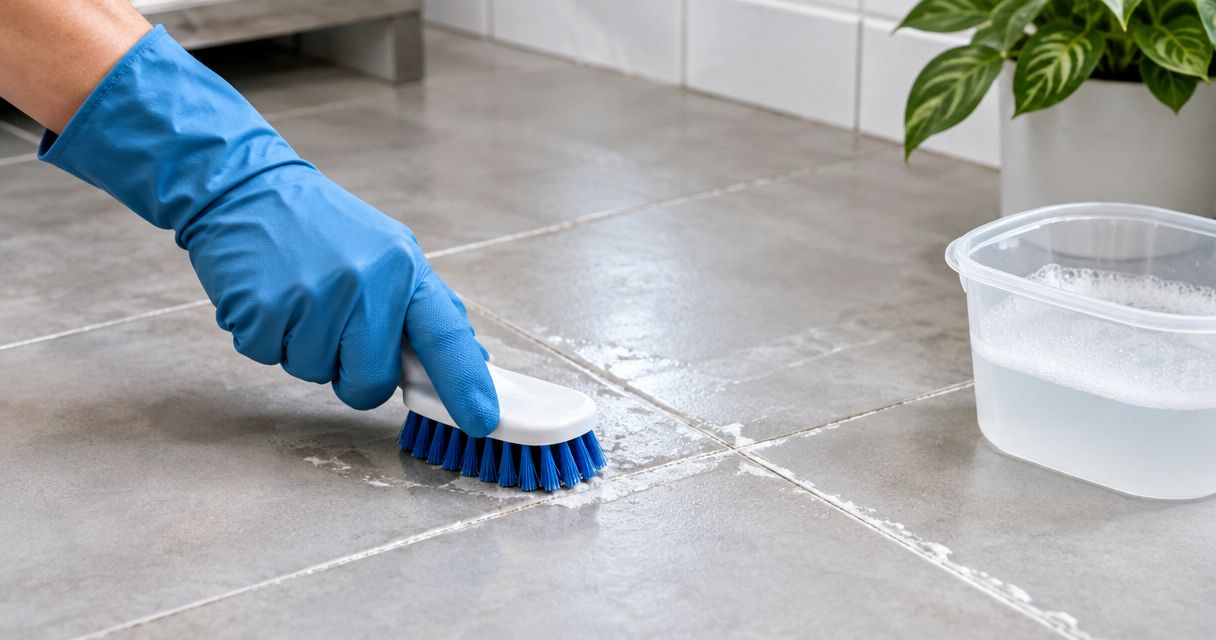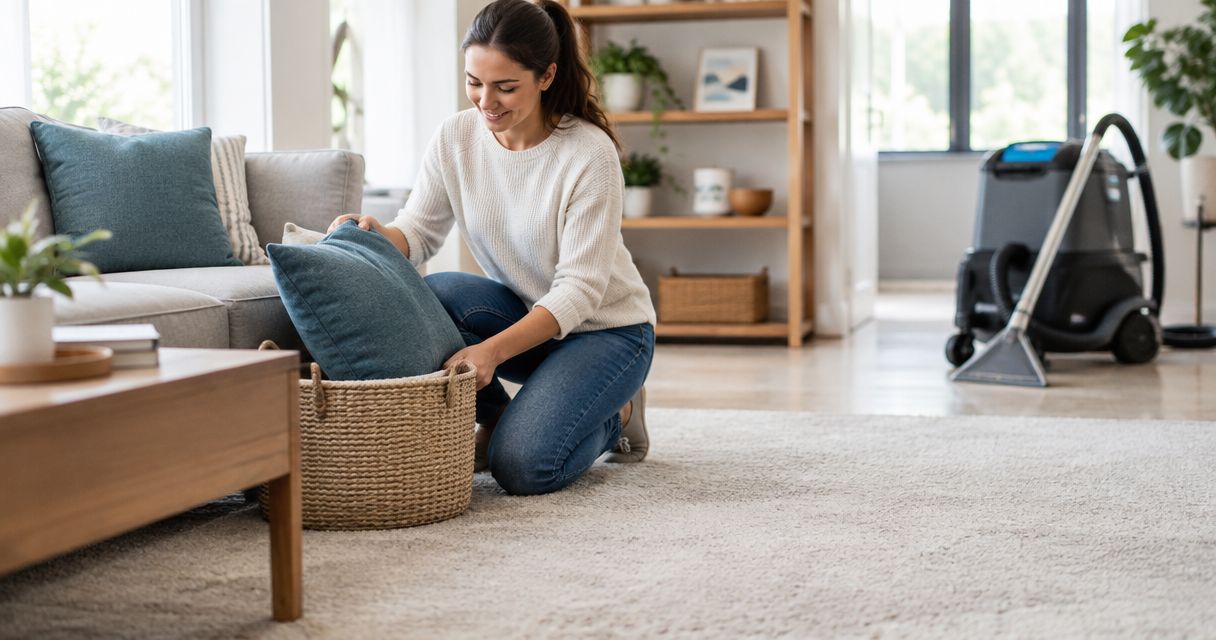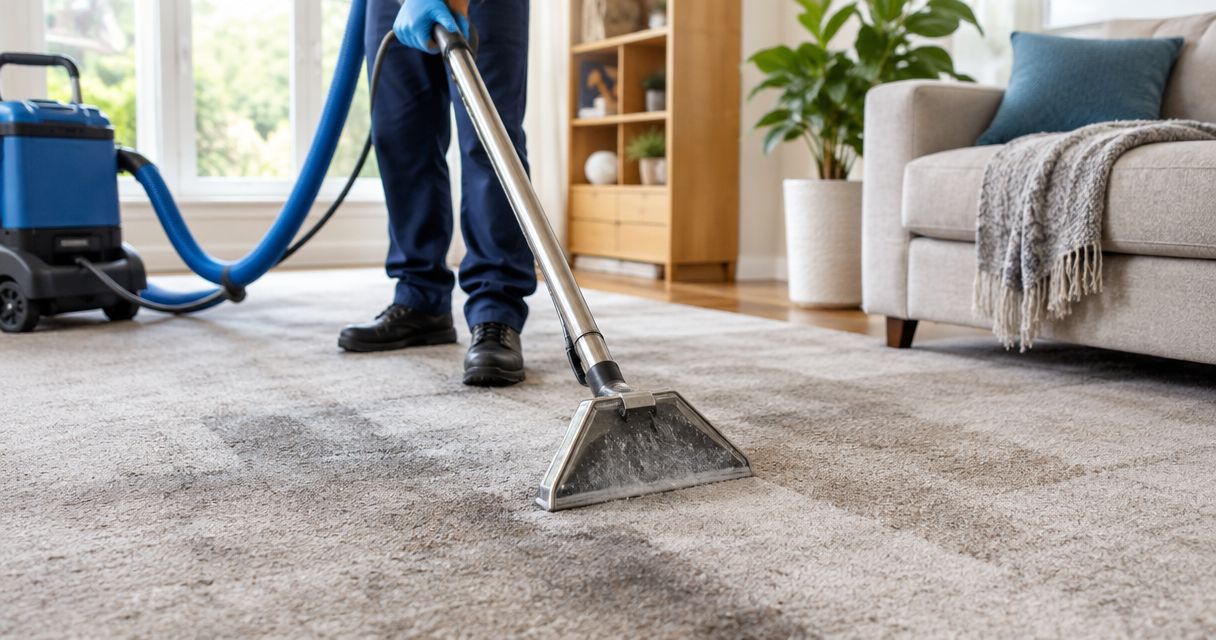
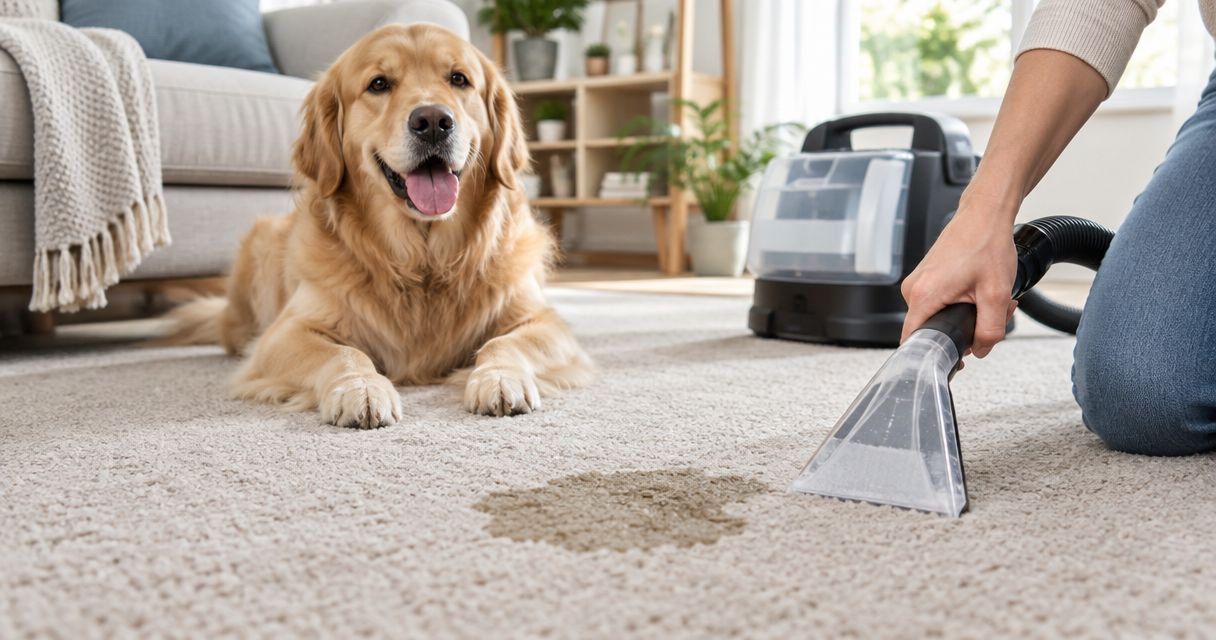
Best overall for urine residue: a carpet-safe enzyme cleaner. Best for fresh accidents: blotting. Best for routine surface cleaning: professional low-moisture cleaning. This 2026 guide compares the best carpet cleaning methods for pet stains and odors, including when to ask Michaels Carpet Care to assess your carpet before choosing a treatment.
- The best carpet cleaning methods for pet stains and odors depend on whether contamination reached the carpet backing or padding.
- Carpet-safe enzyme cleaners are the first choice for treating urine residue; follow the product’s application and drying instructions.
- Michaels Carpet Care provides fast-drying carpet cleaning for homeowners and businesses in McKinney, Frisco, Plano, and Allen.
- Surface cleaning cannot remove contaminated padding; persistent odor calls for an assessment below the carpet.
Why this matters
A clean-looking carpet and an odor-free carpet are different results. Pet accidents leave contamination at different depths, and visible discoloration does not tell you how far liquid traveled. Cleaning the face fibers alone does not address urine that reached the padding.
Choose your 2026 cleaning approach by the accident type, the carpet material, and the depth of contamination. Start gently. Adding stronger chemistry or more water without understanding the problem risks damaging the carpet or spreading the affected area.
What makes the best carpet cleaning method?
Use these criteria to compare treatments before selecting equipment or a cleaning solution:
- Contamination depth: The method must reach the affected material, whether that is the face fibers, backing, or padding.
- Carpet compatibility: Check the carpet manufacturer’s care instructions and the cleaner’s label, especially for wool and other sensitive fibers.
- Residue removal: Removing urine residue matters more than temporarily covering its smell with fragrance.
- Moisture control: Use only the liquid required by the treatment, then remove excess moisture where the procedure calls for it.
- Stain condition: A removable deposit and permanent color damage need different responses. More scrubbing does not reverse dye loss.
- Clear stopping point: Stop when contamination is beneath the carpet, the material reacts poorly, or repeated treatment produces no improvement.
The methods at a glance
This 2026 comparison ranks each method for a distinct job. It is not a claim that every pet accident needs every treatment.
| Rank and method | Best for | Standout feature | Key limitation |
|---|---|---|---|
| 1. Carpet-safe enzyme cleaner | Urine residue in reachable carpet fibers | Enzymatic action targets compatible organic residue | Requires correct contact and carpet compatibility |
| 2. Blotting and solid-waste removal | A fresh accident before it spreads | Removes material before further treatment | Does not finish odor treatment |
| 3. Professional low-moisture cleaning | Routine surface soil around treated spots | Limits added moisture during carpet cleaning | Does not remove contaminated padding |
| 4. Professional hot-water extraction | Widespread surface soil and removable residue | Rinses and extracts from carpet fibers | Urine below the carpet needs separate attention |
| 5. Targeted subsurface extraction | Localized liquid contamination below the face fibers | Focuses removal on the affected area | Cannot repair damaged backing or padding |
| 6. Professional oxidizing spot treatment | Remaining discoloration after residue removal | Addresses compatible stain compounds | Risks dye change on unsuitable carpet |
| 7. Contaminated padding replacement | Persistent odor from affected padding | Removes the contaminated material itself | Requires lifting carpet and assessing the floor beneath |
1. Carpet-safe enzyme cleaner: best for urine residue
A carpet-safe enzyme cleaner is the default starting treatment for urine residue that the product can reach. Enzymes act on compatible organic material; they are not simply a fragrance cover-up. The product label determines suitable fibers, application, contact time, and follow-up cleaning.
Remove excess liquid first, then test the cleaner in an inconspicuous area. Apply it as directed rather than misting only the visible stain. The treatment must contact the residue to work.
Enzyme cleaner pros:
- Targets compatible organic residue rather than masking odor.
- Supports localized treatment instead of wetting an entire room.
- Gives you a label-directed process for application and follow-up.
Enzyme cleaner cons:
- A surface application does not treat unreachable contamination underneath.
- Some formulations are unsuitable for wool or other sensitive materials.
- Incorrect application or incompatible cleaning chemicals interfere with treatment.
Best for: Urine residue in carpet fibers when the selected product is approved for that carpet.
Verdict: Buy a carpet-compatible enzyme cleaner for accessible urine residue; skip unverified homemade mixtures.
2. Blotting: best for a fresh accident
Blotting is the first response to a fresh liquid accident, not a complete odor treatment. Press a clean, absorbent white towel into the wet area and replace it as it becomes soiled. Rubbing spreads the mess and works it into the fibers.
For feces or vomit, lift away solids gently before treating the remaining residue. Avoid grinding the material into the pile. A carpet-approved cleaner comes after removal, not instead of it.
Blotting pros:
- Removes liquid before you add cleaning chemistry.
- Avoids the abrasion caused by vigorous scrubbing.
- Makes the remaining affected area easier to assess.
Blotting cons:
- Does not remove all urine residue or resolve established odor.
- Cannot reach liquid already absorbed into padding.
- Requires follow-up treatment matched to the accident and carpet.
Best for: Fresh accidents while liquid or solids remain on the surface.
Verdict: Use blotting immediately; hold off on scrubbing or soaking the spot.
3. Low-moisture cleaning: best for routine surface soil
Professional low-moisture cleaning addresses routine carpet soil without relying on heavy wetting. Michaels Carpet Care’s carpet cleaning approach includes Host Dry low-moisture technology, described as using about 10% of the water used by steam cleaning, with drying described as 1–2 hours.
That makes low-moisture cleaning relevant when you want routine surface cleaning after a pet spot has received appropriate treatment. It does not establish that urine beneath the carpet has been removed. Michaels Carpet Care is a carpet cleaning option for North Texas homeowners and businesses seeking fast-drying service.
Low-moisture cleaning pros:
- Limits the amount of water introduced during routine cleaning.
- Addresses surface soil beyond the individual accident.
- Supports a fast-drying approach to carpet care.
Low-moisture cleaning cons:
- Does not remove contaminated padding through the carpet surface.
- Requires separate consideration of urine depth and stain chemistry.
- Cannot reverse permanent fiber or dye damage.
Best for: Routine surface soil around pet spots after the odor source has been assessed.
Verdict: Choose low-moisture cleaning for surface maintenance; skip treating it as a substitute for deep contamination removal.
4. Hot-water extraction: best for widespread surface residue
Professional hot-water extraction applies cleaning solution and extracts water and loosened soil from carpet fibers. It suits broader cleaning needs when pet accidents accompany tracked-in dirt or removable cleaning residue. Carpet construction and manufacturer instructions determine whether the method is appropriate.
Tell the cleaner where accidents occurred before the general cleaning begins. A room-wide extraction pass and targeted urine treatment are different jobs. Ask how affected areas will be treated and how moisture will be controlled.
Hot-water extraction pros:
- Rinses removable residue from compatible carpet fibers.
- Addresses general soil across a larger area.
- Allows a professional to combine spot treatment with broader cleaning.
Hot-water extraction cons:
- General surface extraction does not guarantee removal from padding.
- Poor moisture control leaves unnecessary water in the carpet.
- Unsuitable chemistry or technique risks damage to sensitive materials.
Best for: Widespread surface soil and removable residue on carpet approved for extraction.
Verdict: Choose professional extraction for broad cleaning needs; skip the assumption that a whole-room pass solves every urine spot.
5. Subsurface extraction: best for localized deeper contamination
Targeted subsurface extraction uses equipment intended to draw liquid from below the carpet’s face fibers. It addresses localized contamination that ordinary surface cleaning does not reach. A professional assessment determines whether treatment through the carpet is appropriate or whether lifting it is necessary.
Depth matters more than the size of the visible mark. The wet area underneath can extend beyond what you see on top, so treatment boundaries should follow the contamination rather than the stain outline.
Subsurface extraction pros:
- Focuses treatment on the deeper affected area.
- Removes liquid rather than relying on surface deodorizing.
- Provides an intermediate option before deciding on material replacement.
Subsurface extraction cons:
- Does not restore deteriorated padding or damaged backing.
- Requires suitable equipment and controlled liquid application.
- Cannot guarantee treatment of every contaminated layer from above.
Best for: A localized urine spot with contamination below the face fibers and materials suitable for treatment.
Verdict: Choose a professional assessment for deeper contamination; skip repeated surface spraying when odor persists.
6. Oxidizing spot treatment: best for remaining discoloration
An oxidizing spot treatment addresses certain stain compounds after removable contamination has been treated. This is a stain-focused step, not proof that the odor source is gone. Carpet fiber, dye stability, and previous cleaning attempts determine whether it is appropriate.
Leave oxidizing treatment to a professional when carpet compatibility is uncertain. Household bleach and improvised peroxide mixtures are not interchangeable with a controlled carpet treatment. Never mix cleaning chemicals.
Oxidizing treatment pros:
- Addresses compatible discoloration left after residue removal.
- Targets a spot rather than requiring another whole-room cleaning.
- Separates stain correction from odor-source treatment.
Oxidizing treatment cons:
- Risks lightening or changing carpet dyes.
- Does not remove contaminated padding.
- Cannot restore color already lost from chemical damage.
Best for: Persistent discoloration on carpet confirmed suitable for the selected treatment.
Verdict: Hold for professional evaluation; skip household bleaching experiments on carpet.
7. Padding replacement: best for contamination in the padding
Replacing contaminated padding removes material that surface cleaning cannot reliably address. A professional lifts the carpet, identifies the affected padding, and assesses the backing and floor beneath. The carpet’s condition determines whether cleaning and reinstallation are appropriate.
Replacement is not the first response to every accident. It becomes relevant when inspection identifies contaminated padding or persistent odor originates below the carpet. Cleaning the top repeatedly does not remove the material underneath.
Padding replacement pros:
- Removes the identified contaminated padding itself.
- Gives access to inspect the carpet backing and subfloor.
- Separates recoverable material from material requiring replacement.
Padding replacement cons:
- Requires lifting and reinstalling carpet where it is retained.
- Does not automatically resolve contamination in the backing or subfloor.
- Requires a broader assessment than ordinary spot cleaning.
Best for: Confirmed padding contamination that cannot be adequately resolved in place.
Verdict: Choose replacement when inspection supports it; skip repeated surface cleaning as the only response.
How these methods are ranked
The 2026 ranking prioritizes source removal, carpet compatibility, and controlled moisture. Enzyme treatment ranks first for reachable urine residue; blotting wins for immediate response. Low-moisture cleaning and hot-water extraction handle different surface-cleaning needs, while deeper contamination requires deeper treatment.
The order is a decision guide, not a measured performance score. Choose the method that reaches the problem without unnecessarily stressing the carpet.
Which carpet cleaning method should you choose?
For a fresh urine accident, blot first and use a carpet-compatible enzyme cleaner according to its label. For routine dirt around previously treated spots, discuss professional surface cleaning. For odor that remains after correct treatment, investigate the backing and padding instead of adding fragrance.
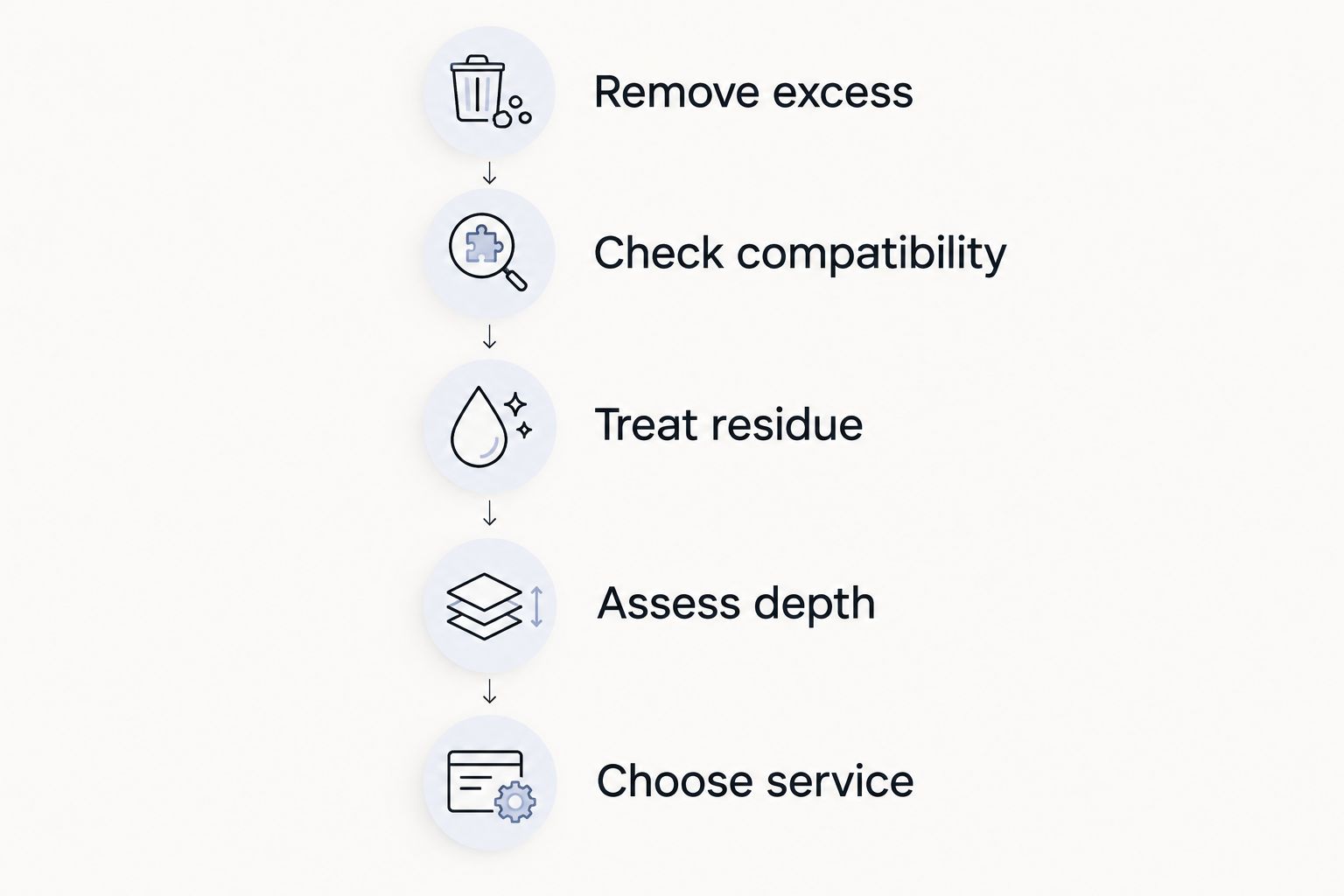
Use this 2026 decision sequence before booking another general cleaning:
- Remove excess: Blot liquid or gently lift solids.
- Check compatibility: Read carpet care instructions and the cleaner’s label.
- Treat residue: Use an appropriate treatment that contacts the affected material.
- Assess depth: Investigate persistent odor below the face fibers.
- Choose service: Match professional cleaning or replacement to the findings.
When contacting Michaels Carpet Care, describe the accident, previous products used, and whether the smell returns after the carpet dries. Those details help frame the cleaning discussion. Ask about the affected material, not just whether the visible stain can disappear.
Discuss your carpet cleaning needs
Describe the pet accident and previous treatments before choosing a cleaning approach.
FAQ
What are the best carpet cleaning methods for pet stains and odors in 2026?
The best carpet cleaning methods for pet stains and odors match the contamination depth: blot fresh accidents, treat reachable urine residue with a compatible enzyme cleaner, and assess persistent odor beneath the carpet. Professional surface cleaning handles surrounding soil; contaminated padding requires separate attention.
Is enzyme cleaner better than steam cleaning for pet urine?
Enzyme treatment and hot-water extraction do different jobs. A compatible enzyme cleaner targets urine residue, while extraction removes water and loosened soil; neither removes contaminated padding simply by cleaning the surface.
Can low-moisture carpet cleaning remove every pet odor?
Low-moisture carpet cleaning is not a complete answer for every pet odor. Contamination in the backing, padding, or floor beneath requires assessment and treatment at that depth.
Why does my carpet still smell after cleaning?
Persistent odor indicates that the odor source has not been fully addressed. Residue beneath the face fibers is one explanation, so investigate the affected layers before repeating the same surface treatment.
Should I scrub a fresh pet stain?
No; blot fresh liquid and gently remove solids instead of scrubbing. Rubbing spreads contamination and works it into the pile, making the next treatment harder.
When should carpet padding be replaced after pet accidents?
Replace padding when inspection confirms contamination that cannot be adequately resolved in place. The carpet backing and floor beneath also need assessment before the carpet is reinstalled.
Does Michaels Carpet Care serve my North Texas city?
Michaels Carpet Care provides carpet cleaning for homeowners and businesses in McKinney, Frisco, Plano, and Allen. Its services also include tile, grout, upholstery, and natural stone cleaning.
One last thing
A stain that disappears is not proof that the odor source is gone. Before deciding a treatment worked, assess the area after it has dried rather than while it smells of cleaning solution. If odor remains, change the diagnosis before repeating the method.