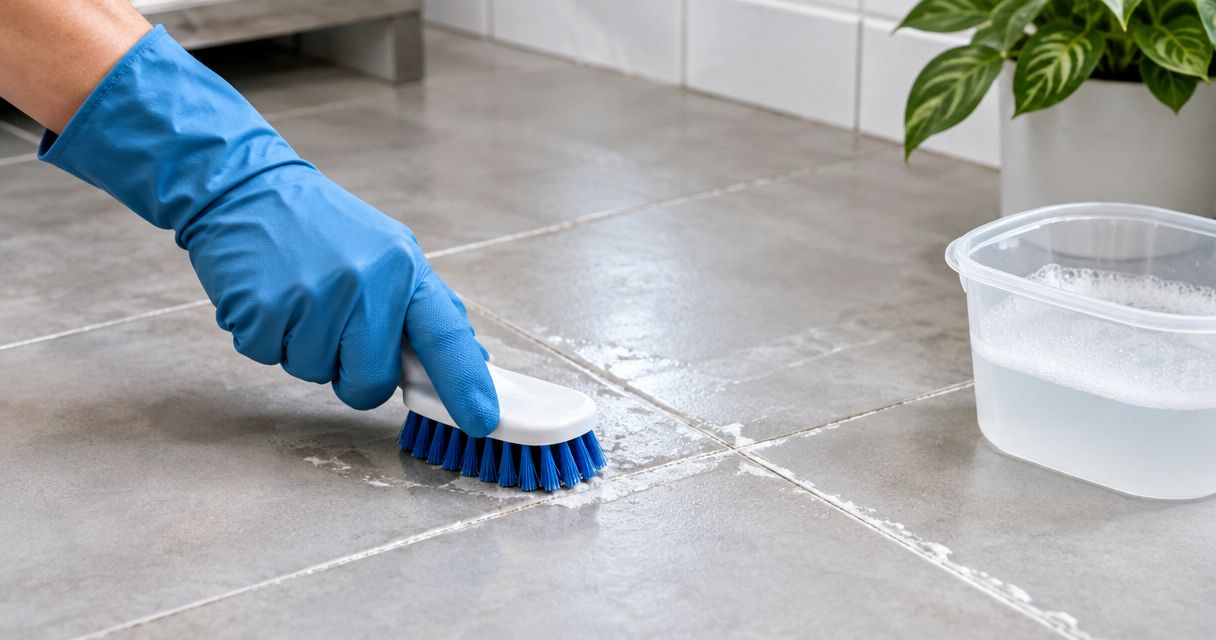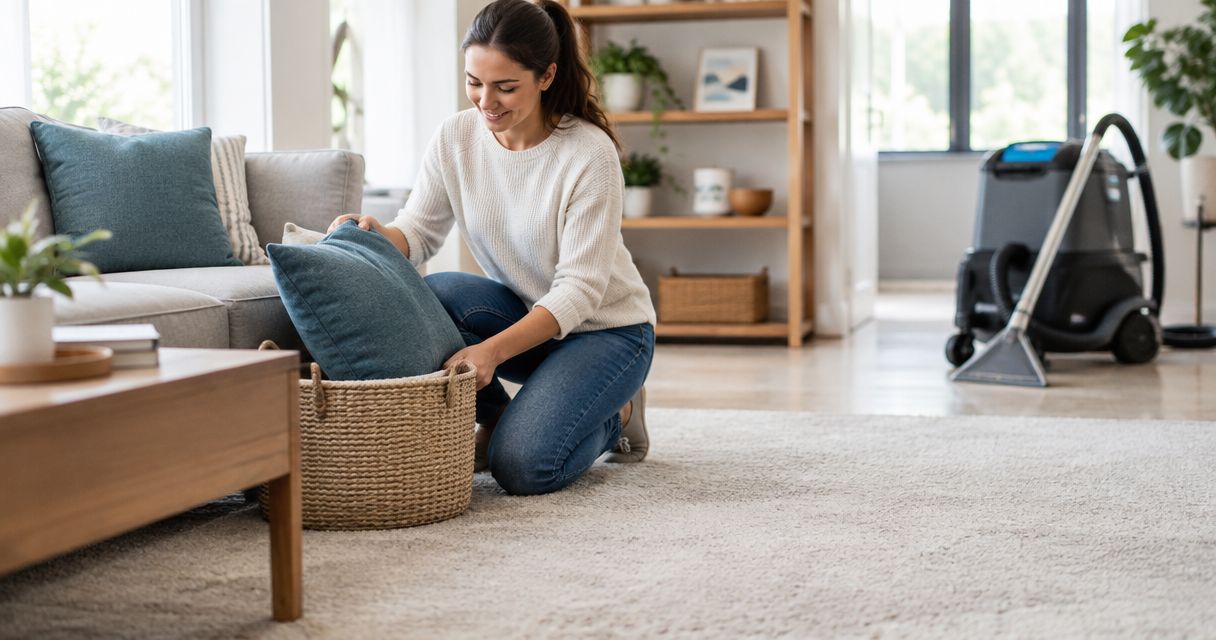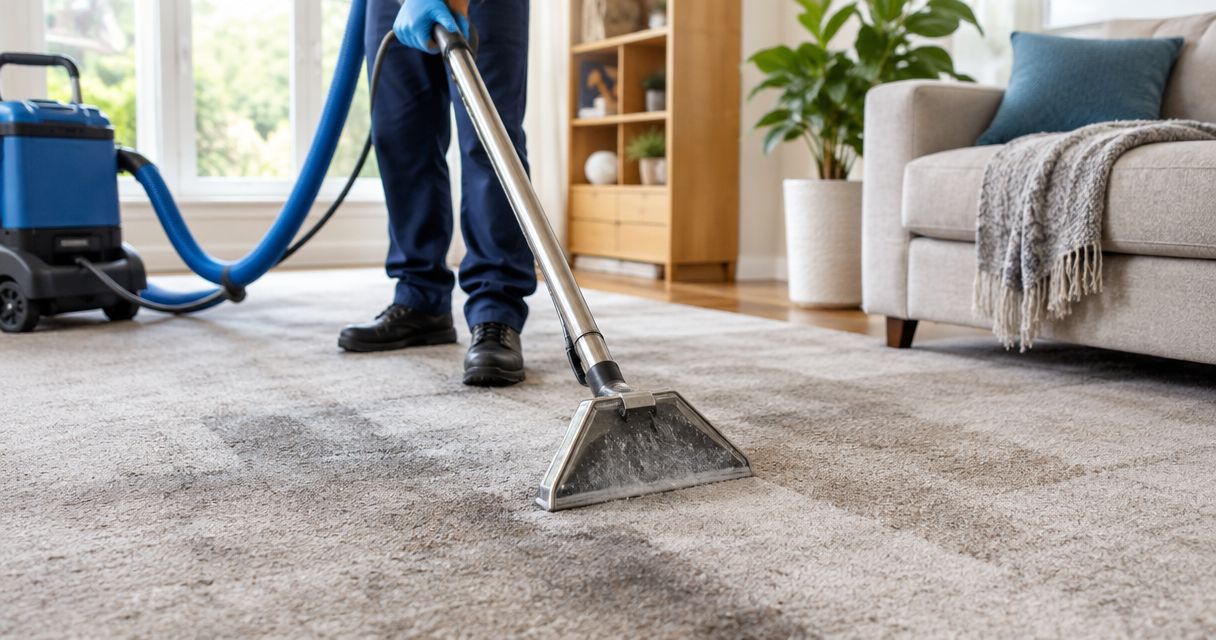
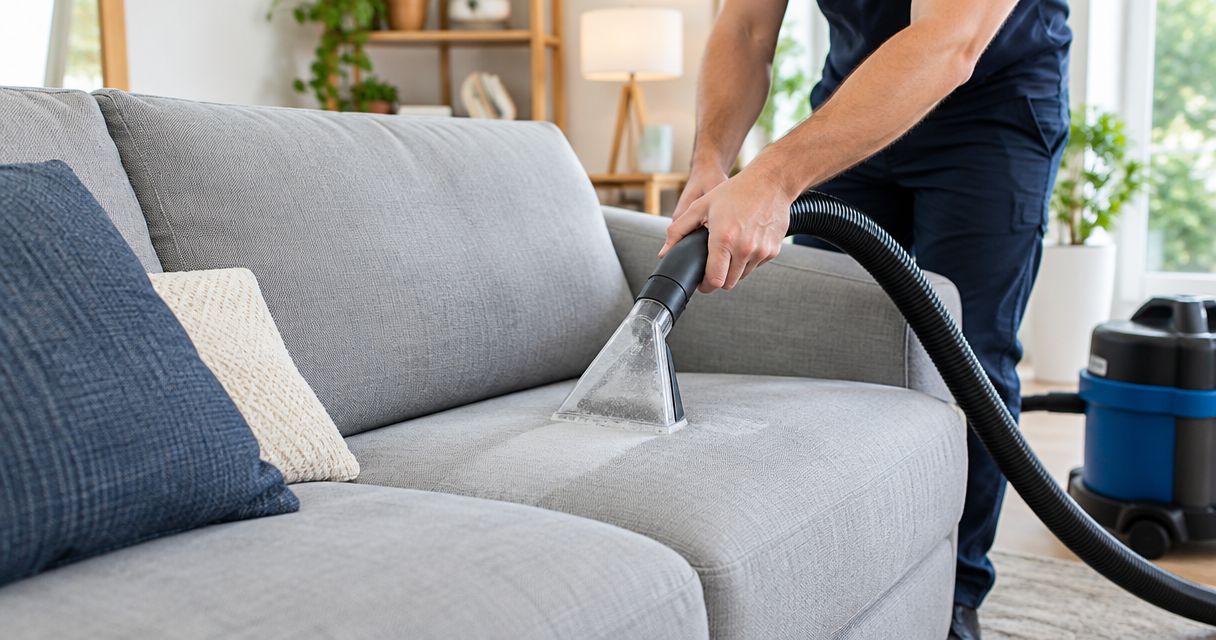
Best overall for routine cleaning of compatible fabric: controlled low-moisture cleaning. Best for dry soil: vacuuming. Best for localized spills: water-based spot cleaning. The best upholstery cleaning methods for fabric sofas depend on the care label; hot-water extraction suits approved washable upholstery, while solvent cleaning belongs only on solvent-compatible fabric.
- The best upholstery cleaning methods for fabric sofas start with the care label, not the stain.
- Controlled low-moisture cleaning is the routine choice for compatible W and W/S upholstery.
- Vacuuming is the default for X-coded fabric; liquids are not an approved cleaning method.
- Michaels Carpet Care provides upholstery cleaning for homeowners and businesses in McKinney, Frisco, Plano, and Allen.
Why this matters
A fabric sofa is not a carpet with cushions. Its face fabric, backing, filling, trim, and construction all affect how you should clean it. A method that removes soil but leaves a water ring or changes the texture has not solved the problem.
For your 2026 cleaning plan, start with the manufacturer's instructions rather than a machine rental or cleaning recipe. Michaels Carpet Care provides upholstery cleaning in McKinney, Frisco, Plano, and Allen, but the service does not cover leather or vinyl. Michaels Carpet Care upholstery cleaning is a local service option for North Texas homeowners and businesses seeking fabric-furniture care.
The ranking below assigns each method a different job. It does not treat stronger chemicals, more heat, or more water as automatic improvements.
What makes the best upholstery cleaning method?
Use these criteria before choosing a method or buying a cleaner:
- Fabric approval: The care label and manufacturer instructions decide whether water, solvent, or neither belongs on the upholstery.
- Soil type: Loose dust, a fresh spill, and embedded body oils require different approaches.
- Moisture control: The method should clean the surface without unnecessarily wetting cushion interiors or backing.
- Residue removal: Cleaning includes removing loosened soil and excess cleaning product, not simply spreading them around.
- Finish protection: Color, pile direction, texture, trim, and seams matter as much as stain removal.
- Practical limits: A useful recommendation tells you when to stop and when the fabric needs professional assessment.
Read the 4 cleaning codes first
The commonly used upholstery codes describe cleaning compatibility, not stain-removal strength:
- W: Use an appropriate water-based upholstery cleaning method, following the manufacturer's directions.
- S: Use an appropriate solvent-based upholstery cleaner, following the manufacturer's directions.
- W/S or S/W: Either water-based or solvent-based products are permitted under the manufacturer's instructions.
- X: Vacuum or use an approved light brushing method; do not apply water-based or solvent cleaners.
A W label does not mean machine-washable. A zipper does not establish that a cushion cover can go in the washing machine. Follow separate instructions for removable covers, and stop if the label is missing or unclear.
Upholstery cleaning methods at a glance
This 2026 comparison separates maintenance, spot treatment, and deeper cleaning. Every method has a limit; none is the answer for every fabric sofa.
| Rank and method | Best for | Standout feature | Key limitation |
|---|---|---|---|
| 1. Controlled low-moisture cleaning | Routine surface soil on compatible W or W/S fabric | Limits wetting while addressing surface soil | Not suitable for X-coded fabric or an unknown care requirement |
| 2. Vacuuming and approved gentle brushing | Loose dust, crumbs, and X-coded upholstery maintenance | Removes dry particles without cleaning liquid | Does not remove absorbed spills or oily staining |
| 3. Water-based spot cleaning | A localized spill on compatible W or W/S fabric | Targets a small affected area | Poor technique can leave rings or spread a stain |
| 4. Hot-water extraction | Broader soil buildup on extraction-approved upholstery | Applies cleaning solution and recovers it with suction | Excess moisture can reach backing and cushion filling |
| 5. Solvent-based upholstery cleaning | S-coded fabric and approved solvent-responsive soil | Cleans without a water-based treatment | Requires product compatibility, ventilation, and ignition precautions |
1. Controlled low-moisture cleaning: best for routine surface soil
Controlled low-moisture cleaning uses a fabric-approved product and limited application rather than saturating the upholstery. Depending on the approved process, cleaning involves controlled foam, a lightly dampened applicator, agitation, and removal of soil and residue.
The name describes moisture control, not permission to clean every textile. Start with a hidden-area test and the product directions; an S or X label rules out a water-based version of this method.
Low-moisture cleaning pros:
- Limits unnecessary wetting of the sofa.
- Provides a focused approach to routine surface soil.
- Allows careful work around seams and trim.
- Avoids treating deep saturation as the goal.
Low-moisture cleaning cons:
- Does not automatically remove contamination inside cushion filling.
- Can leave residue if cleaning product is not removed as directed.
- Still requires water compatibility when using a water-based product.
Best for: Compatible W or W/S upholstery with routine surface soil, rather than soaked cushions or severe contamination.
For a 2026 maintenance clean, this is the default wet-cleaning approach to discuss before choosing a heavier process. Ask what product is approved for your fabric and how loosened soil will be removed. A promise of low moisture is incomplete without those answers.
Verdict: Choose controlled low-moisture cleaning for approved surface cleaning; skip it on incompatible or unidentified fabric.
2. Vacuuming: best for dry soil and X-coded fabric
Vacuuming removes loose particles from the fabric surface, seams, cushion gaps, and areas beneath removable cushions. Use an upholstery attachment and adjust suction to suit the material; delicate trim and loose threads need particular care.
Gentle brushing is an addition only when the manufacturer permits it. Do not assume a stiff brush is appropriate because the sofa looks durable.
Vacuuming pros:
- Removes loose dust and crumbs without liquid.
- Reaches seams and cushion gaps with suitable attachments.
- Provides useful preparation before an approved wet-cleaning method.
- Fits the restrictions of X-coded fabric when performed as directed.
Vacuuming cons:
- Does not dissolve oily soil or remove absorbed liquid.
- Aggressive suction or brushing can disturb delicate fabric.
- Does not establish that stained upholstery is safe to wet-clean afterward.
Best for: Routine dry-soil removal, especially when the sofa has an X care code.
Work methodically across the seating area instead of repeatedly scrubbing the dirtiest patch. Check under cushions for small objects before vacuuming, and keep attachment edges clear of snags. If an X-coded sofa has a stain, professional assessment is the next step—not an exception to its care label.
Verdict: Choose vacuuming as regular maintenance; skip liquids on X-coded upholstery.
3. Water-based spot cleaning: best for localized spills
Water-based spot cleaning treats a small affected area with an upholstery-approved product. It belongs on compatible W or W/S fabric and still requires a hidden-area test before visible treatment.
For a fresh liquid spill, blot with a clean absorbent cloth rather than rubbing. Then follow the cleaner's instructions for application and removal; do not turn a small spill into a fully soaked cushion.
Water-based spot cleaning pros:
- Focuses treatment on the affected area.
- Avoids wetting the whole sofa for a localized problem.
- Allows controlled application with a cloth when instructions permit.
Water-based spot cleaning cons:
- Can leave a visible ring or an unevenly cleaned patch.
- Rubbing can spread soil and alter the fabric surface.
- A spot treatment cannot remove liquid that has penetrated deeply into filling.
Best for: A localized spill on fabric explicitly approved for water-based cleaning.
Use 3 checkpoints before visible treatment
- Read the label: Confirm water-based cleaning is permitted.
- Test the product: Check a concealed area and assess it after drying.
- Control the moisture: Follow application instructions without saturating the cushion.
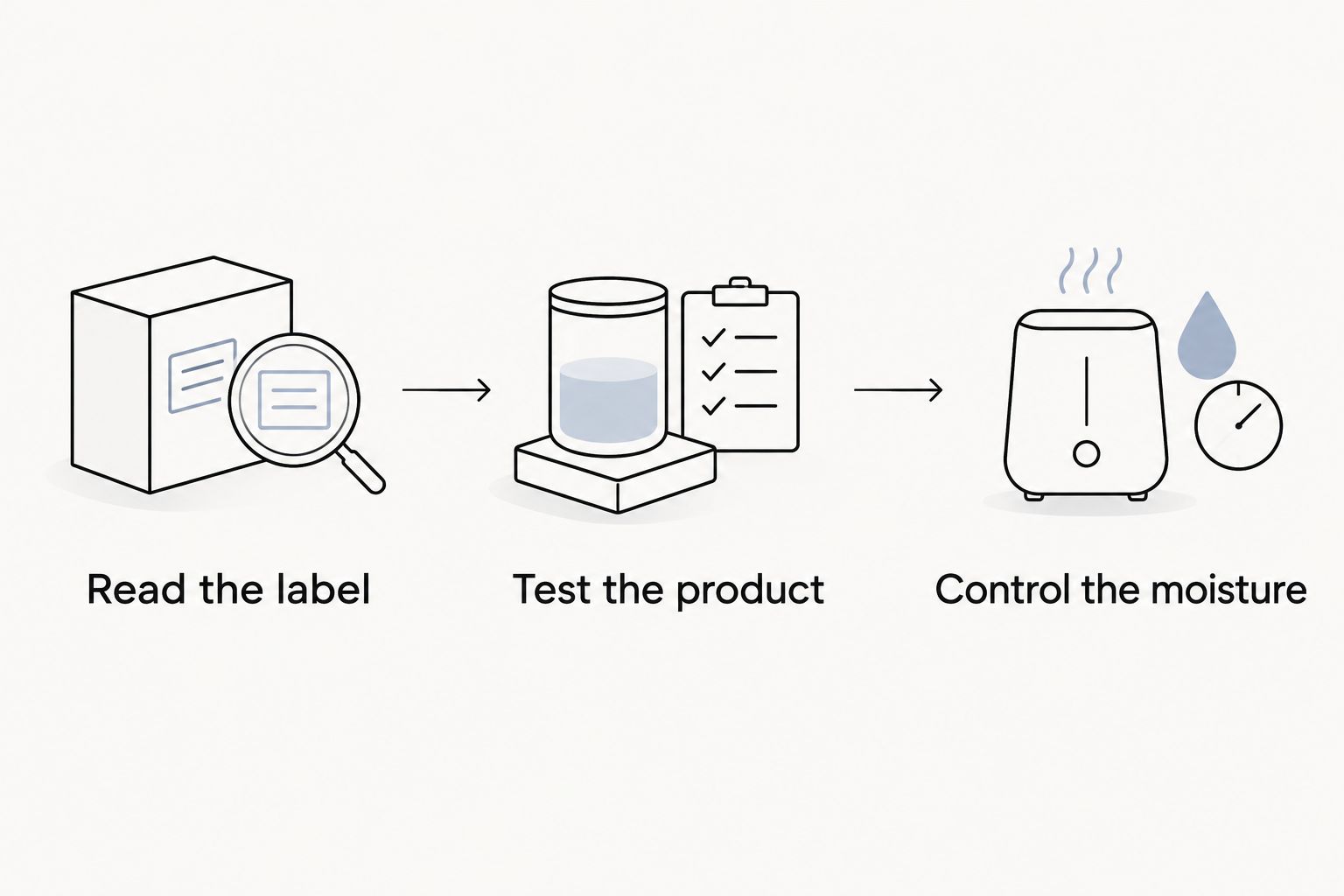
A test passes only when the dried area retains its color and texture. Stop if the fabric transfers dye, develops a ring, or changes appearance. Do not stack household cleaners on the same stain; the combined treatment makes compatibility and residue harder to assess.
Verdict: Choose water-based spot cleaning for a small, compatible spill; skip repeated treatment when the fabric changes.
4. Hot-water extraction: best for broader soil buildup
Hot-water extraction applies cleaning solution and recovers it through suction. For upholstery, it requires a suitable attachment, controlled application, and fabric-specific approval; carpet-cleaning settings are not automatically suitable for a sofa.
The method addresses a broader area than spot cleaning. It is not permission to soak cushions, and a W or W/S code alone does not replace the manufacturer's instructions about the process.
Hot-water extraction pros:
- Combines solution application with recovery of loosened soil.
- Addresses larger areas of compatible upholstery.
- Provides a removal step rather than leaving applied cleaner untouched.
Hot-water extraction cons:
- Excess moisture can enter backing and cushion filling.
- Heat, water, and agitation are unsuitable for some fabrics.
- Uneven cleaning or inadequate recovery can affect the finished appearance.
Best for: Broad soil buildup on upholstery explicitly suitable for extraction.
For a deeper clean in 2026, ask whether extraction is approved for your particular sofa—not whether a machine can clean upholstery generally. The operator should consider fabric, trim, cushion construction, previous treatments, and existing damage before choosing the process.
Do not confuse extraction with every service described as steam cleaning. Ask what touches the fabric, how moisture is recovered, and what drying instructions apply. No universal drying promise fits every sofa.
Verdict: Choose hot-water extraction only with fabric approval and controlled recovery; skip it when compatibility is uncertain.
5. Solvent-based cleaning: best for S-coded upholstery
Solvent-based upholstery cleaning uses an approved solvent product rather than a water-based treatment. It is a compatibility choice for S-coded fabric, not a stronger option to try after water fails.
Product instructions govern application, ventilation, handling, and ignition precautions. A fabric care code never authorizes using an arbitrary household solvent.
Solvent-based cleaning pros:
- Follows the cleaning category specified by an S label.
- Offers an approved route where water-based treatment is restricted.
- Can address compatible soil that responds to the selected solvent.
Solvent-based cleaning cons:
- Requires careful ventilation and safety precautions.
- Incorrect products can affect dyes, finishes, or other sofa components.
- Does not make heavily contaminated cushion filling clean by itself.
Best for: S-coded upholstery or another fabric with explicit solvent-cleaning instructions.
Check the product label before opening the container. Keep children and pets away during treatment, and follow every safety instruction. If you cannot meet the handling requirements or confirm compatibility, leave the treatment to a qualified upholstery cleaner.
Verdict: Choose approved solvent cleaning for S-coded fabric; skip improvised solvents and unsupported stain-removal recipes.
How the methods are ranked
This 2026 ranking prioritizes fabric compatibility, moisture control, soil removal, finish protection, and practical limits. It is a decision guide, not a laboratory performance test.
Controlled low-moisture cleaning leads for routine compatible surface cleaning. Vacuuming owns dry maintenance, spot cleaning owns localized spills, extraction owns approved broader cleaning, and solvents own solvent-compatible upholstery. The care label outranks the list position.
Which upholstery cleaning method should you choose?
Vacuum first, then choose the least intensive approved method that addresses the soil. For compatible surface grime, consider controlled low-moisture cleaning; for a small spill, use approved spot treatment. Reserve extraction for suitable deeper cleaning and solvents for fabric that permits them.
Choose Michaels Carpet Care upholstery cleaning when you want local professional service rather than guessing at a fabric-sofa treatment. Share the care label, the stain's source, and any products already applied. Those details give the cleaner a useful starting point without promising that every stain will disappear.
Discuss your fabric sofa cleaning
Review upholstery cleaning services for homes and businesses in McKinney, Frisco, Plano, and Allen.
FAQ
What's the best upholstery cleaning method for a fabric sofa?
The best method is the least intensive process approved by the sofa's manufacturer that removes the relevant soil. Controlled low-moisture cleaning suits routine soil on compatible fabric, while vacuuming, spot cleaning, extraction, and solvents each serve different needs.
Can I use a carpet cleaner on my fabric sofa?
Use a carpet-cleaning machine on upholstery only when the sofa instructions and machine instructions permit it. A suitable upholstery attachment does not override the fabric's care restrictions.
What do W, S, W/S, and X mean on a sofa label?
W indicates water-based cleaning, S indicates solvent-based cleaning, W/S permits either category under the manufacturer's instructions, and X restricts cleaning to vacuuming or approved brushing. These codes do not authorize washing removable covers in a machine.
Is steam cleaning better than low-moisture upholstery cleaning?
Neither method is better for every sofa. Compare the actual process, fabric approval, moisture application, and recovery rather than relying on the service name.
Can I clean an X-coded sofa with a damp cloth?
An X code does not approve damp-cloth cleaning. Vacuum or use manufacturer-approved gentle brushing, and seek professional assessment for stains.
How long does a fabric sofa take to dry after cleaning?
There is no single drying time for all fabric sofas. Fabric, cushion construction, cleaning method, moisture recovery, and room conditions affect drying; follow the cleaner's instructions before using the furniture.
Does Michaels Carpet Care clean leather and vinyl sofas?
Michaels Carpet Care's upholstery cleaning service does not clean leather or vinyl. The business provides fabric-upholstery cleaning alongside carpet, tile, grout, and natural stone cleaning in its North Texas service area.
One last thing
Before your next sofa clean in 2026, photograph the care label and write down what caused the stain and what you applied. A clean-looking surface can conceal a different problem in the cushion filling. Tell the cleaner about absorbed liquid or persistent odor rather than asking only for the visible mark to disappear.