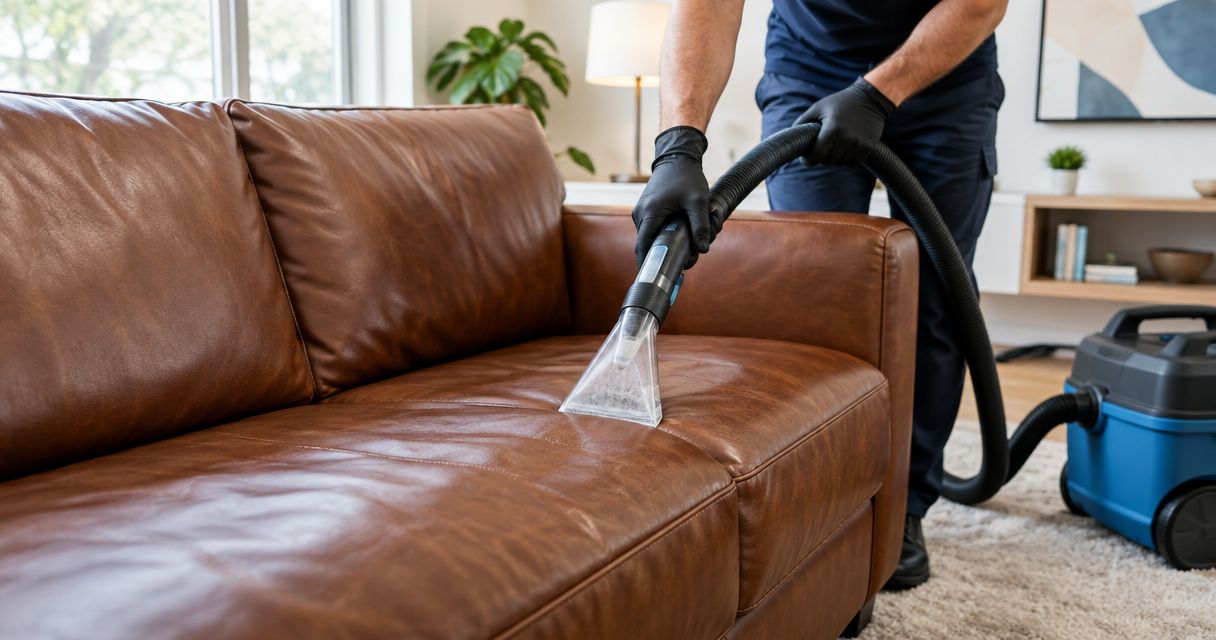
Yes, upholstery cleaning can clean leather couches only when the service uses a leather-specific process suitable for the couch’s finish; a standard fabric-upholstery treatment is not interchangeable with leather care. Cleaning also does not repair peeling coatings, cracks, or lost color. For a 2026 booking, confirm that the provider handles leather before scheduling an upholstery appointment.
- Can upholstery cleaning clean leather couches? Yes, but only with a leather-specific process matched to the finish.
- Michaels Carpet Care upholstery cleaning excludes leather and vinyl; choose a leather-care specialist for those materials.
- Fabric care codes do not establish that a leather couch is safe for wet cleaning.
- Cleaning removes soil; peeling, cracks, and color loss require a separate repair assessment.
Can upholstery cleaning clean leather couches?
A leather-specific upholstery service can clean leather; a fabric-only service cannot be assumed to do so. The deciding factor is the material and finish, not whether the furniture is called a couch, sofa, or sectional.
| Cleaning route | Best for | Main benefit | Main limitation |
|---|---|---|---|
| Fabric-upholstery cleaning | Compatible textile coverings | Treats fabric soil using a material-appropriate method | Does not establish suitability for leather or vinyl |
| Leather-specific cleaning | Leather with an identified finish | Matches cleaning products and handling to the leather | Does not repair damaged coatings or missing color |
| Leather repair assessment | Peeling, cracks, scratches, or finish loss | Separates surface damage from removable soil | Repair is a different task from routine cleaning |
For local fabric furniture, Michaels Carpet Care provides upholstery cleaning, but its service excludes leather and vinyl. That boundary matters when you have mixed furniture in the same room.
Why this matters
Booking the wrong service creates a problem before anyone opens a bottle. A cleaner prepared for woven upholstery needs different material information from someone assessing a finished leather seat.
Leather is not simply fabric with a smoother surface. Its protective finish, absorbency, condition, and manufacturer instructions determine what treatment belongs on it. A product described as gentle or eco-friendly still needs to be suitable for the particular surface.
For your 2026 cleaning plans, identify the couch covering first and choose the service second. This avoids treating a broad service label as permission to use the same process everywhere.
Start with the covering, not the couch’s appearance
A leather-looking couch can have genuine leather, a synthetic covering, or different materials on different panels. The seat, sides, back, and removable cushions do not necessarily share the same construction.
Check the furniture paperwork or manufacturer’s care information. If the description is unclear, send the provider photographs of the couch, its label, and the areas you want cleaned rather than guessing from texture alone.
Finished leather: best for finish-specific care
Protected or pigmented leather has a surface finish that affects how it responds to cleaning. That finish is part of the cleaning decision, not something to scrub through to reach a stain.
The benefit of a leather-specific assessment is that it considers the coating as well as the underlying material. The limitation is equally important: a cleaner cannot promise that every dark patch is removable dirt. Wear, dye transfer, and damaged finish can look similar at first glance.
Absorbent leather: best for specialist assessment
Aniline leather, suede, and nubuck need particular care because their surfaces differ from coated leather. Do not use a routine wet-cleaning method simply because another leather couch tolerated it.
The advantage of specialist assessment is avoiding a one-method-fits-all treatment. The trade-off is that some marks belong to a more restricted cleaning or restoration task. Ask what improvement is realistic before authorizing work.
Vinyl and synthetic coverings: best for material-specific instructions
Vinyl is not leather, even when its grain and color resemble leather. A cleaner or conditioner intended for one surface is not automatically appropriate for the other.
Synthetic coverings also need their own care instructions. If a surface is flaking or separating, stop treating that area as a stubborn stain; cleaning cannot reattach a failing surface layer.
How do you arrange the right cleaning service?
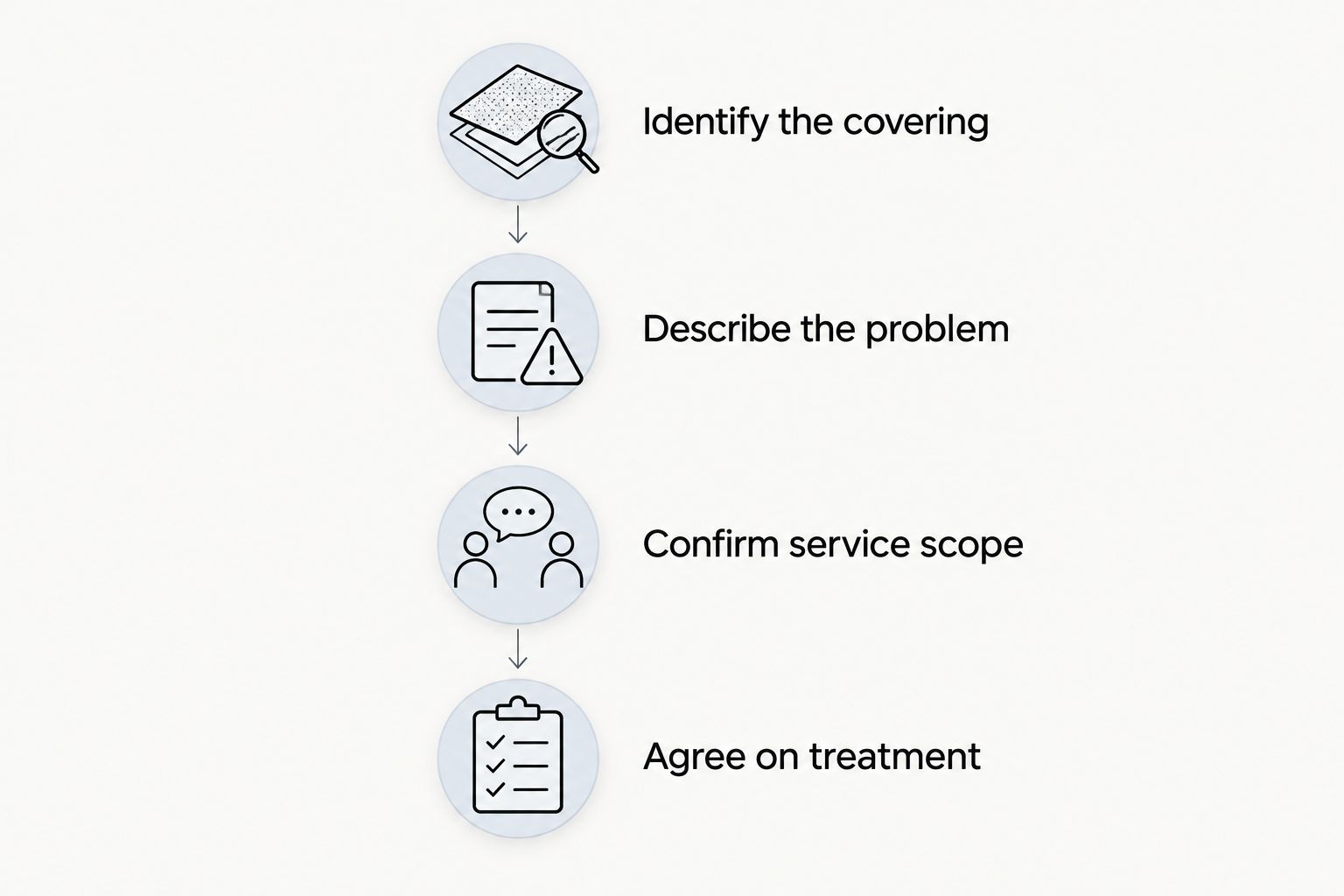
Use this sequence before booking a leather couch in 2026. The goal is to establish what the couch is, what is wrong with it, and whether the proposed service addresses that problem.
- Identify the covering. Find the manufacturer’s description and care instructions. Note whether the furniture has mixed materials rather than assuming the whole couch is leather.
- Describe the problem. Distinguish general soil from a spill, oily area, ink mark, odor, scratch, or peeling patch. Tell the provider what happened and what you have already applied.
- Confirm service scope. Ask directly whether the provider cleans that leather type. An upholstery service listing alone is not confirmation.
- Agree on treatment. Ask how the provider checks compatibility, what areas the work covers, and what damage cleaning will leave unchanged. Follow the aftercare instructions for the actual treatment used.
Keep the appointment description specific. Asking for leather couch cleaning gives the provider a clearer starting point than asking for sofa cleaning and mentioning the material only when the technician arrives.
If you have fabric chairs alongside a leather couch, list them separately. One appointment request can contain furniture that needs different services, and a provider’s willingness to clean the fabric does not establish leather capability.
Why leather cleaning methods vary
The right process follows the surface in front of the cleaner. These factors explain why advice for one couch does not transfer automatically to another:
- Covering material. Genuine leather, textile upholstery, and vinyl have different care requirements. Confirm the material before choosing products or equipment.
- Surface finish. A coated surface and an absorbent surface respond differently to moisture and cleaning agents. The finish helps determine the appropriate treatment.
- Existing damage. Cracks, peeling, and worn color change the task. Cleaning addresses soil, while damaged material needs a separate assessment.
- Type of mark. Loose dust, body oils, dye transfer, and ink are not the same problem. Describe the mark instead of asking for a stronger general cleaner.
- Previous treatment. Tell the provider about household sprays, conditioners, stain removers, or earlier cleaning attempts. That history belongs in the assessment.
- Manufacturer instructions. The furniture maker’s directions take priority over a generic cleaning tip. Keep those instructions available when discussing the work.
None of these factors justifies an automatic promise of complete stain removal. A responsible recommendation separates expected cleaning improvement from damage that will remain.
What should you avoid putting on a leather couch?
Avoid treating your leather couch with a carpet detergent or fabric spot remover unless the furniture manufacturer specifically permits that use. The product’s intended surface matters more than its familiar name or pleasant scent.
Do not assume that household mixtures are safer because their ingredients are familiar. Acids, solvents, abrasive powders, and strong cleaners can affect leather finishes. An internet recipe does not identify the coating on your couch.
Keep steam and wet extraction out of a do-it-yourself leather routine unless the manufacturer expressly supports the method. Equipment designed to flush textile fibers is not automatically suitable for a leather surface.
Also avoid vigorous scrubbing. When a mark does not lift, increasing pressure can damage the finish rather than solve the original problem. Stop and get material-specific advice instead of repeatedly treating the same spot.
For a fresh spill, follow the manufacturer’s immediate-care directions. Do not turn a small spill into a larger treatment area by flooding the cushion or applying several different products in succession.
Can steam cleaning clean a leather couch?
Steam cleaning is not a substitute for a leather-specific assessment. Do not choose it merely because a company offers steam cleaning for fabric sofas or carpets.
Heat, moisture, and the condition of the finish all matter. Ask the leather specialist to explain the proposed process and check it against the furniture maker’s instructions. For a 2026 booking, a description of the actual method is more useful than a broad promise of deep cleaning.
A method that works well on compatible fabric is not thereby a recommendation for leather. Keep the material decision separate from the equipment’s cleaning claims.
Can cleaning fix a peeling leather couch?
Cleaning cannot repair peeling, cracks, or missing color. Those are condition or finish problems, even when dirt is also present.
Ask for a repair assessment before paying for cleaning in the expectation that the surface will look new. A specialist can distinguish work aimed at removing soil from work aimed at restoring appearance, and explain the limits of each.
The same distinction applies to scratches. Removing dirt around a scratch does not rebuild the damaged surface, so the cleaning result and the repair result need separate expectations.
Does a fabric cleaning code apply to leather?
A fabric cleaning code is not blanket permission to wet-clean leather. Codes such as W, S, W/S, and X guide care for the upholstery material to which the label applies; they do not replace leather-specific manufacturer instructions.
On mixed-material furniture, establish which panel or component the label describes. A code attached beneath a cushion is not a reason to assume that every exposed surface accepts the same treatment.
When instructions conflict or seem incomplete, ask the furniture manufacturer for clarification before proceeding. Guessing from a single letter is not a sound cleaning plan.
Choosing a local upholstery provider in 2026
For North Texas households, the first question is whether you need fabric upholstery care or leather care. Location and convenience come after that distinction.
Michaels Carpet Care upholstery cleaning is best for homeowners and businesses seeking fabric-upholstery care, not leather or vinyl cleaning. The company serves McKinney, Frisco, Plano, and Allen, and its stated service boundary keeps the recommendation clear.
For a leather couch, seek a provider that explicitly handles the covering and finish you own. For fabric pieces, confirm the care requirements and describe stains before arranging service. Neither route should begin with an assumption that all sofas receive identical treatment.
FAQ
Can upholstery cleaning clean leather couches?
Yes, a leather-specific upholstery service can clean leather couches when its process suits the material and finish. A standard fabric-upholstery service does not automatically include leather.
Does Michaels Carpet Care clean leather couches?
No, Michaels Carpet Care upholstery cleaning excludes leather and vinyl. Choose a provider that explicitly offers care for your leather type.
Can I use my carpet cleaner on a leather sofa?
Do not use a carpet cleaner on a leather sofa unless the furniture manufacturer expressly permits the method. Carpet-cleaning equipment and detergents are not automatically suitable for leather finishes.
Will professional cleaning remove every stain from leather?
No, professional cleaning does not guarantee removal of every leather stain. The type of mark, finish, and existing damage determine what improvement is realistic.
Is leather conditioner the same as leather cleaner?
No, leather conditioner and leather cleaner serve different purposes. Use only products appropriate for the couch’s finish and follow the furniture manufacturer’s care instructions.
Can cleaning stop a faux-leather couch from peeling?
No, cleaning cannot reattach a peeling synthetic surface. Have the material assessed before treating the peeling area as a stain.
How long should I wait before sitting on a cleaned leather couch?
Follow the leather-care provider’s return-to-use instructions for the treatment applied. Do not borrow a drying estimate from a carpet or fabric-upholstery service.
One last thing
A clean-looking couch can still have a damaged finish, and a dark-looking patch can be wear rather than dirt. Before booking in 2026, ask whether the problem is removable soil or damaged material. That answer determines whether you need cleaning, repair, or both—and prevents stronger cleaning from becoming the default response to a mark that will not lift.