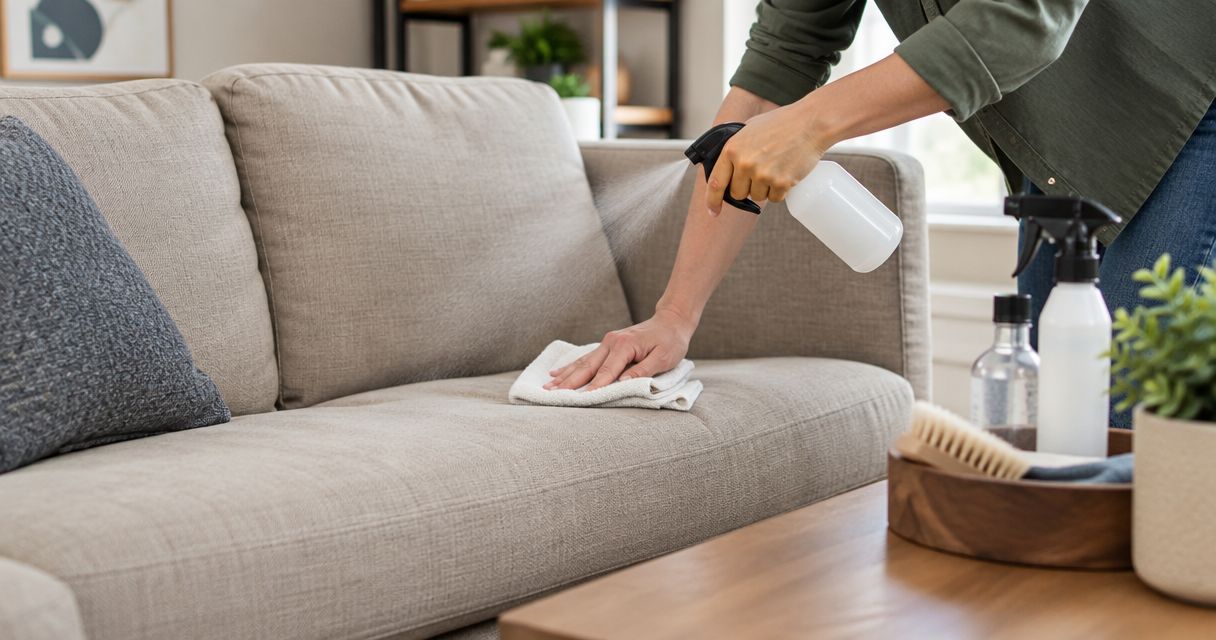
Best overall: a manufacturer-approved upholstery protector. Best for dining chairs: an approved oil-and-water repellent. Best no-spray option: a washable cover. This 2026 guide compares the best fabric protection treatments after cleaning, including a physical alternative for fabrics that should not receive a coating. For local cleaning before you choose protection, Michaels Carpet Care serves homeowners and businesses in McKinney, Frisco, Plano, and Allen.
- The best fabric protection treatments after cleaning match the fabric manufacturer's care instructions, not just the spill you fear.
- Choose an approved upholstery protector for sofas; consider oil-and-water repellency for dining chairs only when explicitly supported.
- Use outdoor textile treatments only on approved outdoor fabrics; carpet protectors belong on approved textile flooring.
- Michaels Carpet Care provides North Texas upholstery cleaning; confirm fabric compatibility before selecting any separate protection treatment.
- Choose a washable cover when you want removable protection without applying a chemical finish.
Why this matters
Fabric protection is not stain removal, waterproofing, or permission to leave spills unattended. A suitable repellent can resist wetting from specified liquids, but its label determines what it protects against and where you can apply it.
The wrong finish creates another problem to solve after cleaning. Fabric construction, dyes, existing finishes, and care instructions all matter; a cleaner-looking sofa does not establish that a protector is compatible.
For North Texas homeowners, Michaels Carpet Care is a local upholstery-cleaning option before selecting fabric protection. Keep those decisions separate: first choose appropriate cleaning, then decide whether the fabric needs an additional finish at all.
What makes the best fabric protection treatment?
Use these criteria for your 2026 shortlist before comparing bottles, application methods, or service descriptions:
- Fabric approval: The furniture or textile manufacturer's instructions come first. A broad claim such as suitable for fabric does not establish suitability for your particular item.
- Relevant repellency: Water repellency and oil repellency are different claims. Match the documented protection to the spills you actually face.
- Appearance and feel: A treatment should not create an unacceptable change in color, texture, sheen, or flexibility. Follow the label's hidden-area testing instructions.
- Application requirements: Check preparation, ventilation, drying, curing, and restrictions on returning the item to use. Cleaning dryness and treatment cure are separate requirements.
- Maintenance fit: Choose protection you can maintain according to its instructions. Do not invent a reapplication schedule or assume every cleaning requires another coat.
Fabric protection options at a glance
These are selection categories, not interchangeable formulas. The final option is a removable barrier rather than a chemical treatment.
| Option | Best for | Standout feature | Key limitation |
|---|---|---|---|
| Manufacturer-approved upholstery protector | Everyday sofas | Matches the furniture maker's stated requirements | Approval still needs to cover the specific fabric |
| Approved oil-and-water repellent | Dining chairs | Addresses both spill categories when the label explicitly says so | Water repellency alone does not establish oil protection |
| Specialist-selected fabric treatment | Delicate or unidentified upholstery | Puts fabric assessment before application | Assessment can end with a recommendation against treatment |
| Outdoor textile repellent | Patio cushions | Intended for specified outdoor textiles | Does not turn cushions into waterproof structures |
| Approved carpet protector | Carpet and suitable area rugs | Designed for eligible textile flooring | Not automatically suitable for upholstery or every rug |
| Washable protective cover | No-spray protection | Provides a removable physical barrier | Changes the seating surface and leaves gaps where coverage ends |
1. Manufacturer-approved upholstery protector: best for everyday sofas
A manufacturer-approved upholstery protector is the strongest default because compatibility comes before a promise of repellency. Choose a treatment explicitly accepted for your sofa's fabric, then follow both the furniture instructions and the treatment label.
Approval needs to be specific enough to mean something. An instruction covering one upholstery fabric does not establish suitability for another fabric in the same furniture range. If the instructions conflict, do not apply the treatment until the conflict is resolved.
Manufacturer-approved upholstery protector pros:
- Starts with the furniture maker's requirements.
- Lets you check the intended protection against your actual spill concerns.
- Provides a defined application and maintenance reference when instructions are available.
Manufacturer-approved upholstery protector cons:
- Not every upholstered item has an approved aftermarket treatment.
- Approval does not mean every stain becomes removable.
- You still need to meet testing and curing requirements.
Best for: Your everyday sofa when its manufacturer identifies an acceptable protector.
Verdict: Buy only after confirming approval for the specific upholstery.
2. Approved oil-and-water repellent: best for dining chairs
An oil-and-water repellent belongs on the shortlist when food and drink are the main concern. Look for an explicit claim covering both categories; a water-beading demonstration does not establish resistance to cooking oil or greasy food.
The fabric still decides whether this option is appropriate. Check the chair manufacturer's instructions before choosing a formula, and do not treat upholstery merely because the same product is approved for another household textile.
For a 2026 purchase, judge the current label rather than an old description or a general stain-resistant claim. Product names alone do not explain the finish's limits.
Oil-and-water repellent pros:
- Addresses a relevant distinction for food-adjacent seating.
- Gives you specific label claims to check.
- Keeps the choice focused on likely spills rather than unrelated features.
Oil-and-water repellent cons:
- Oil repellency must be stated, not assumed.
- A compatible finish still requires prompt spill response.
- The treatment does not prevent physical wear or fabric damage.
Best for: Fabric dining chairs with documented treatment compatibility.
Verdict: Buy when both the fabric approval and the required repellency are explicit.
3. Specialist-selected fabric treatment: best for delicate upholstery
Specialist selection is an assessment route, not a separate chemical formula. It belongs here because delicate, valuable, or unidentified upholstery needs a compatibility decision before anyone chooses a protector.
Provide the care label, purchase information, previous treatment history, and details of any color or texture changes. Ask the specialist to explain whether treatment is suitable and what testing the proposed application requires. An honest recommendation against application is a useful outcome.
Specialist-selected treatment pros:
- Puts fabric identification ahead of product selection.
- Gives you a way to discuss existing finishes and previous treatments.
- Allows the recommendation to be no additional coating.
Specialist-selected treatment cons:
- Professional application does not make an incompatible product suitable.
- Testing does not justify a promise against every possible stain.
- Assessment does not guarantee that a treatment will be recommended.
Best for: Delicate upholstery, uncertain care instructions, or furniture with an unclear treatment history.
Verdict: Hold off on buying a protector until the fabric assessment is complete.
4. Outdoor textile repellent: best for patio cushions
An outdoor textile repellent is for outdoor fabric applications specifically named on its label. It is not a substitute for the cushion manufacturer's care instructions, suitable storage, or protection from prolonged exposure.
Treat the fabric and the complete cushion as different things. Repellency at the surface does not establish that seams, openings, or cushion interiors are waterproof. Also check which side of the textile the instructions permit you to treat.
Do not select an outdoor formula for an indoor sofa just because the description sounds tougher. The intended application matters more than that impression.
Outdoor textile repellent pros:
- Targets an outdoor-fabric use case.
- Provides application instructions for the materials it names.
- Lets you evaluate whether additional repellency fits the existing care routine.
Outdoor textile repellent cons:
- Does not make the whole cushion waterproof.
- Does not replace cleaning or appropriate storage.
- Indoor upholstery compatibility requires separate confirmation.
Best for: Patio cushion fabrics whose manufacturer permits the proposed treatment.
Verdict: Buy for approved outdoor textiles; skip it as a general indoor fabric spray.
5. Approved carpet protector: best for textile flooring
A carpet protector is a flooring-specific option for eligible carpet or area rugs. Confirm the fiber, backing, existing finish, and manufacturer's instructions before choosing it; a product intended for installed carpet is not automatically suitable for every rug.
Ask what the treatment is designed to do. Soil resistance, liquid repellency, and resistance to particular stains are different claims, and you should not substitute one for another.
Michaels Carpet Care provides carpet cleaning as well as upholstery cleaning. When discussing either service, keep the cleaning method and any proposed fabric protection treatment as separate decisions with separate compatibility checks.
Approved carpet protector pros:
- Keeps the product choice specific to textile flooring.
- Allows a focused discussion about tracked-in soil and spills.
- Provides a defined use case when the carpet and product instructions agree.
Approved carpet protector cons:
- Not every area rug accepts the same treatment.
- Does not replace vacuuming or prompt spot care.
- Cannot repair wear, fiber damage, or existing discoloration.
Best for: Compatible carpet and area rugs after appropriate cleaning.
Verdict: Buy only for flooring explicitly covered by the treatment instructions.
6. Washable protective cover: best for no-spray protection
A washable cover provides a physical barrier instead of altering the fabric with a chemical finish. It is the practical alternative when you want removable protection or have decided against an aftermarket treatment.
Choose a cover whose care instructions fit your routine and whose fit does not interfere with furniture operation. Inspect what remains exposed: arms, cushion edges, and gaps are not protected merely because the center of the seat is covered.
A washable cover is not automatically waterproof. Check any liquid-barrier claim separately, and follow its own laundering and drying instructions.
Washable protective cover pros:
- Adds no sprayed finish to the upholstery.
- Can be removed for cleaning according to its care label.
- Makes the boundary of the protected area visible.
Washable protective cover cons:
- Changes the appearance and feel of the seat.
- Can shift or leave parts of the furniture exposed.
- Needs its own cleaning routine.
Best for: Households choosing a removable barrier rather than a chemical treatment.
Verdict: Buy when no-spray protection matters more than preserving the uncovered look.
Before application: keep cleaning and protection separate
Use 2 separate stages: complete appropriate cleaning, then follow the chosen protection method's preparation and application instructions. Do not assume a fabric that feels dry is ready for every treatment.
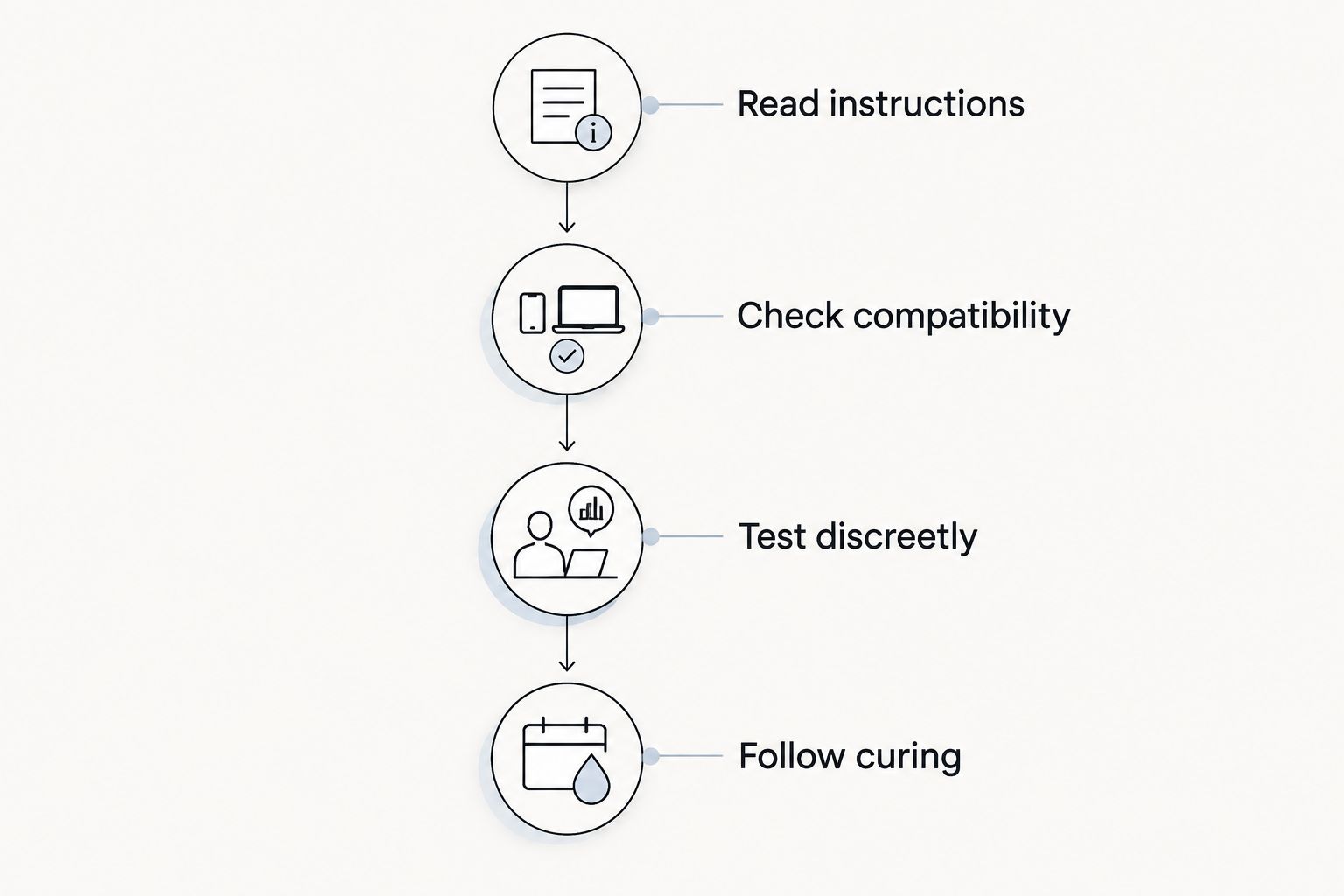
For a 2026 treatment decision, use this sequence rather than a universal waiting period:
- Read instructions: Check both the textile manufacturer's guidance and the protector label. Upholstery cleaning codes describe cleaning methods; they do not independently approve an aftermarket coating.
- Check compatibility: Resolve restrictions involving the fabric, existing finish, backing, or intended use before application.
- Test discreetly: Follow the label's hidden-area test and evaluate the result as directed. Stop if the result is unacceptable.
- Follow curing: Observe the specified application, ventilation, drying, and return-to-use requirements. Do not substitute a guessed timetable.
Keep the treatment instructions with the furniture's care information. At the next cleaning, knowing what was applied is more useful than remembering that the fabric once repelled water.
How these options are ranked
This 2026 ranking prioritizes compatibility, relevant protection, appearance, application requirements, and maintenance. It is a decision guide across 6 options, not a laboratory comparison of named formulas.
Manufacturer-approved upholstery protection takes the default position because it starts with the furniture's requirements. The remaining choices address distinct situations: food spills, delicate textiles, outdoor cushions, flooring, and avoiding spray treatments. No option receives a blanket recommendation for all fabrics.
Which fabric protection should you choose?
Choose a manufacturer-approved upholstery protector for a compatible everyday sofa. If no acceptable treatment is identified, do not turn a general-purpose label into permission to spray.
Narrow the decision with 3 checks: what fabric you have, what spill protection you need, and what the instructions allow. Choose a specialist assessment for uncertainty; choose a removable cover when a physical barrier better fits your needs.
For homeowners arranging upholstery cleaning, Michaels Carpet Care serves McKinney, Frisco, Plano, and Allen. Discuss the fabric's care requirements before deciding on any separate protection step.
FAQ
What's the best fabric protection treatment after cleaning a sofa?
A manufacturer-approved upholstery protector is the best default for a compatible sofa. Confirm that approval covers your specific fabric, then follow the treatment's testing and application instructions.
Can I spray fabric protector immediately after upholstery cleaning?
Apply fabric protector only when the textile and treatment instructions permit it. Complete the required cleaning and preparation first, then follow the specified drying and curing requirements rather than a universal waiting time.
Is water repellent the same as stain protection?
No. Water repellency describes resistance to wetting by water; it does not establish resistance to oil, every stain, or prolonged liquid exposure. Check the exact claims on the treatment label.
Does an upholstery cleaning code tell me which protector to buy?
No. An upholstery cleaning code describes permitted cleaning methods, not blanket approval for an aftermarket protector. Check the furniture manufacturer's treatment guidance separately.
Should I use an outdoor fabric protector on an indoor sofa?
Use an outdoor fabric protector on an indoor sofa only if both the treatment instructions and the furniture manufacturer's guidance permit it. An outdoor-use claim alone does not establish indoor upholstery compatibility.
Do I need to reapply fabric protection after every cleaning in 2026?
Reapply only according to the textile and treatment instructions. Cleaning alone does not establish a universal reapplication schedule, and adding another coat is not automatically the correct next step.
What's the best fabric protection option without a spray?
A suitable washable cover provides removable physical protection without a sprayed finish. Check fit, laundering instructions, exposed areas, and any separate claim about liquid resistance.
One last thing
A bead of water answers a narrow question: how that droplet behaves on that surface at that moment. It does not establish oil resistance, protection at seams, or whether the fabric will keep its original feel.
For your 2026 choice, ask for the instructions before accepting a demonstration as proof. The useful question is not whether a liquid beads; it is whether the treatment is approved for your fabric and the protection you need. Keep the label, record what was applied, and pass that information to whoever cleans the item next.