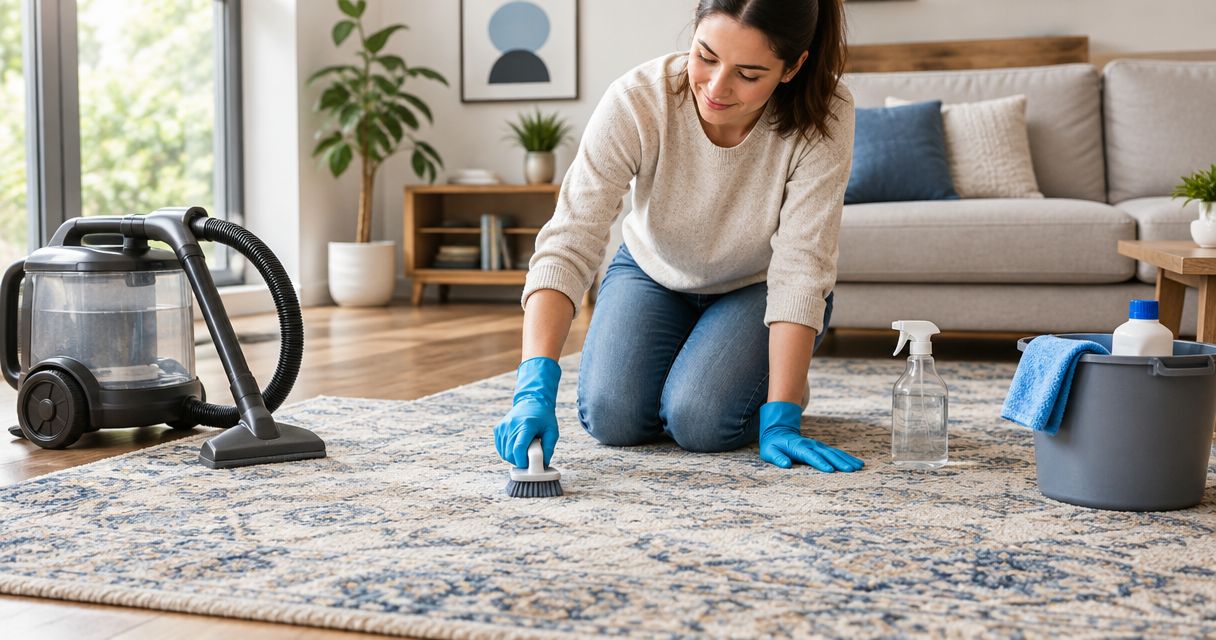
Best overall for wet-cleanable rugs: professional off-site washing. Best for everyday upkeep: careful vacuuming. Best for fresh spills: targeted blotting. This 2026 guide compares the best area rug cleaning methods by fiber, construction, soil, and drying needs—not by how aggressively they clean.
- Professional off-site washing leads the best area rug cleaning methods for rugs approved for thorough wet cleaning.
- Vacuuming handles routine dry soil; targeted blotting handles fresh spills before a full cleaning is needed.
- Wool, unstable dyes, delicate fibers, and glued backings require a method matched to the rug.
- Michaels Carpet Care provides local carpet cleaning; confirm area-rug suitability before choosing a treatment.
Why this matters
An area rug is not simply a small piece of fitted carpet. Its fringe, dyes, backing, and foundation can react differently to water, agitation, and cleaning products. The floor underneath also needs protection.
Michaels Carpet Care is a local carpet-cleaning option for homeowners and businesses in McKinney, Frisco, Plano, and Allen. Ask Michaels Carpet Care whether your rug's material and construction fit the proposed service before arranging cleaning. A carpet-cleaning method is not automatically suitable for every loose rug.
The safest choice starts with identification. Read the care label, describe any previous cleaning problems, and distinguish ordinary tracked-in soil from spills, odor, or physical damage. Cleaning can remove soil; it cannot repair worn fibers or reverse every color change.
What makes the best area rug cleaning methods?
Use these criteria to choose among the 7 cleaning methods in this 2026 comparison:
- Fiber compatibility: Wool, cotton, synthetic fibers, silk, and plant fibers do not share one cleaning recipe.
- Dye stability: A rug that transfers color during testing needs a different approach from a colorfast rug.
- Construction: Glued backing, fringe, pile, and woven foundations affect moisture and agitation choices.
- Soil location: Surface dust, embedded grit, localized spills, and contamination in the foundation require different treatment.
- Moisture control: Cleaning is incomplete until the pile, backing, and foundation are dry.
- Residue removal: The process must remove soil and cleaning material rather than leave a sticky or gritty finish.
Area rug cleaning methods at a glance
| Method | Best for | Standout feature | Key limitation |
|---|---|---|---|
| Professional off-site washing | Thorough cleaning of wet-cleanable rugs | Access to the rug away from the floor | Unsuitable for rugs that cannot tolerate washing |
| Careful vacuuming | Routine dry-soil maintenance | Removes loose particles without wetting | Does not treat dissolved spills or embedded contamination |
| Targeted blotting and spot cleaning | Fresh, localized spills | Treats the affected area rather than the whole rug | Wrong chemistry or rubbing can damage fibers and dyes |
| Low-moisture compound cleaning | Compatible rugs with moisture restrictions | Limits water introduced during cleaning | Requires thorough removal of cleaning compound |
| Hot-water extraction | Compatible synthetic rugs needing rinsing | Applies and extracts cleaning solution | Wet backing and the floor underneath need protection |
| Machine washing | Rugs explicitly labeled machine washable | Follows a repeatable care-label process | Machine capacity and drying instructions limit use |
| Encapsulation cleaning | Approved commercial synthetic rugs between deeper cleans | Supports maintenance followed by vacuuming | Does not replace treatment of deep contamination |
1. Professional off-site washing: best for thorough wet cleaning
Professional off-site washing gives a suitable rug access to inspection, dry-soil removal, washing, rinsing, and controlled drying away from your floor. The exact process must match its fiber, dye stability, and construction. Off-site does not mean that every rug should be immersed.
This is the strongest default when a wet-cleanable rug needs more than surface maintenance. Ask how the cleaner checks dyes, handles fringe, and dries the foundation—not just whether the finished pile will look brighter.
Professional off-site washing pros:
- Allows treatment away from moisture-sensitive flooring.
- Gives access to both faces of a loose rug.
- Supports thorough rinsing when the construction permits it.
Professional off-site washing cons:
- Unsuitable washing can cause dye movement or dimensional changes.
- Delicate or moisture-sensitive rugs need a different process.
Best for: Rugs approved for wet cleaning with soil beyond routine surface maintenance.
Verdict: Choose professional off-site washing after compatibility checks; skip automatic immersion without inspection.
2. Careful vacuuming: best for routine dry-soil maintenance
Vacuuming removes loose dust and grit before those particles remain trapped in the pile. It is maintenance, not a substitute for washing or stain treatment. Use the rug maker's instructions to choose suction and brush settings.
Keep powered brushes away from fringe, and stop if the vacuum catches loops or pulls fibers. A stronger setting is not automatically a better setting. For delicate rugs, follow specialist guidance rather than experimenting with repeated aggressive passes.
Careful vacuuming pros:
- Introduces no cleaning water.
- Removes loose dry soil between deeper cleanings.
- Fits ordinary household maintenance when equipment suits the rug.
Careful vacuuming cons:
- Does not rinse out spilled liquids or cleaning residues.
- Unsuitable brushes can catch fringe, loops, or loose fibers.
Best for: Routine upkeep on rugs whose care instructions permit vacuuming.
Verdict: Choose careful vacuuming as your maintenance default; skip aggressive brush action on vulnerable construction.
3. Targeted blotting: best for fresh, localized spills
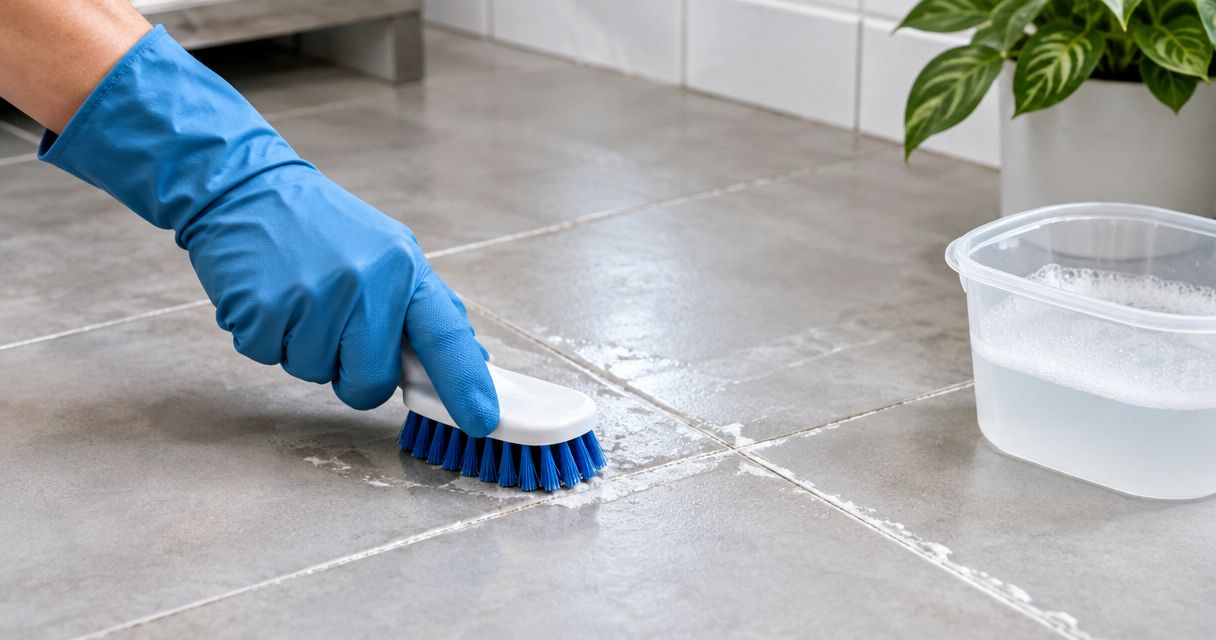
Targeted blotting removes a fresh liquid spill without wetting the whole rug. Lift solid material gently, then use a clean, absorbent cloth to blot rather than scrub. Add a cleaning product only when the rug's instructions permit it and a discreet test shows no adverse reaction.
Work from the edge of the affected area toward its center. Do not keep adding solution when the spill has reached the backing or floor; surface treatment alone does not address contamination underneath.
Targeted blotting pros:
- Limits treatment to the affected area.
- Reduces unnecessary wetting of surrounding fibers.
- Provides an immediate response while you assess further treatment.
Targeted blotting cons:
- Rubbing can distort the pile or spread the spill.
- Local treatment can leave a visible boundary or residue.
Best for: Fresh spills on rugs with clear, compatible spot-cleaning instructions.
Verdict: Choose blotting immediately; skip untested stain mixtures and repeated soaking.
4. Low-moisture cleaning: best for compatible moisture-limited rugs
Low-moisture compound cleaning uses cleaning material worked into the pile and then removed according to the system's instructions. It limits introduced water, but it still requires checks for fiber compatibility, dye stability, and complete compound removal. Low moisture does not mean no risk.
Michaels Carpet Care's carpet-cleaning approach includes Host Dry low-moisture technology, described as using about 10% of the water used by steam cleaning, with carpet drying in 1–2 hours. Those carpet details are not a drying promise for every area rug. In 2026, ask for a rug-specific assessment rather than transferring carpet figures to a different construction.
Low-moisture cleaning pros:
- Limits water introduced into compatible materials.
- Supports cleaning where prolonged wetting is undesirable.
- Avoids full-rug immersion when that is inappropriate.
Low-moisture cleaning cons:
- Compound must be removed thoroughly from the pile.
- Limited wetting does not provide the same rinsing as washing.
Best for: Compatible rugs for which a cleaner has identified a reason to limit moisture.
Verdict: Choose low-moisture cleaning after inspection; skip treating it as universally safe for delicate rugs.
5. Hot-water extraction: best for compatible synthetic rugs
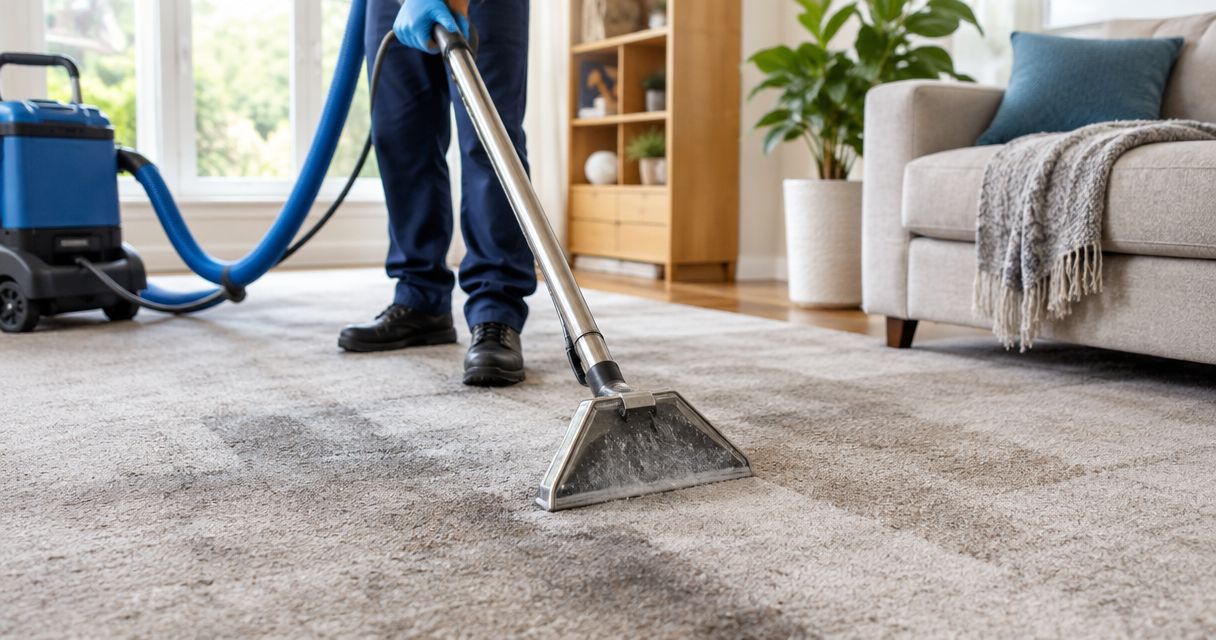
Hot-water extraction applies cleaning solution and removes liquid and suspended soil through extraction. On a suitable synthetic rug, it provides a rinsing-based alternative to surface maintenance. Temperature, cleaning chemistry, and moisture must match the rug—not simply the machine's maximum settings.
A loose rug needs attention underneath as well as above. Protect the floor, assess the backing, and plan drying before cleaning begins. A surface that feels dry does not prove that the foundation is ready to return to a wood floor.
Hot-water extraction pros:
- Removes cleaning solution through an extraction step.
- Supports rinsing of compatible synthetic pile.
- Treats broader soiling than a localized spot process.
Hot-water extraction cons:
- Excess moisture can affect backing and underlying flooring.
- Heat and cleaning chemistry are unsuitable for some rugs.
Best for: Synthetic rugs explicitly suitable for extraction and controlled drying.
Verdict: Choose extraction when the rug permits it; skip cleaning directly over an unprotected moisture-sensitive floor.
6. Machine washing: best for explicitly washable rugs
Machine washing belongs only on rugs whose care label explicitly allows it. Follow the specified cycle, detergent guidance, and drying instructions, and check the appliance manufacturer's load requirements. A rug that physically fits inside the drum is not automatically a suitable load.
Washable instructions also apply to individual components. If a rug has a removable cover and separate pad, do not assume both pieces share the same care process. Read each label before starting.
Machine washing pros:
- Provides a clear process when care instructions are complete.
- Cleans the permitted washable component throughout.
- Avoids improvising a carpet-cleaning method for a washable textile.
Machine washing cons:
- Rugs can exceed the appliance's permitted load.
- Wrong washing or drying settings can damage the rug.
Best for: Rugs or removable rug covers explicitly labeled machine washable.
Verdict: Choose machine washing when both rug and appliance instructions agree; skip unlabeled rugs.
7. Encapsulation: best for approved commercial-rug maintenance
Encapsulation cleaning uses a compatible product designed to hold loosened soil in a dried residue that is subsequently removed by vacuuming. It is a maintenance process, not a universal deep-cleaning treatment. Product instructions and effective follow-up vacuuming matter.
For an approved synthetic rug in a business setting, encapsulation offers an option between deeper cleanings. It is not the default for valuable handmade rugs, unknown fibers, or contamination that has reached the foundation.
Encapsulation cleaning pros:
- Supports planned maintenance of compatible synthetic pile.
- Includes a defined dry-residue removal stage.
- Avoids full immersion during interim cleaning.
Encapsulation cleaning cons:
- Incomplete vacuuming leaves residue behind.
- Does not replace treatment of deep spills or foundation contamination.
Best for: Commercial synthetic rugs approved for an encapsulation maintenance process.
Verdict: Choose encapsulation for suitable interim maintenance; skip it as a universal stain or odor cure.
How to choose before anyone starts cleaning
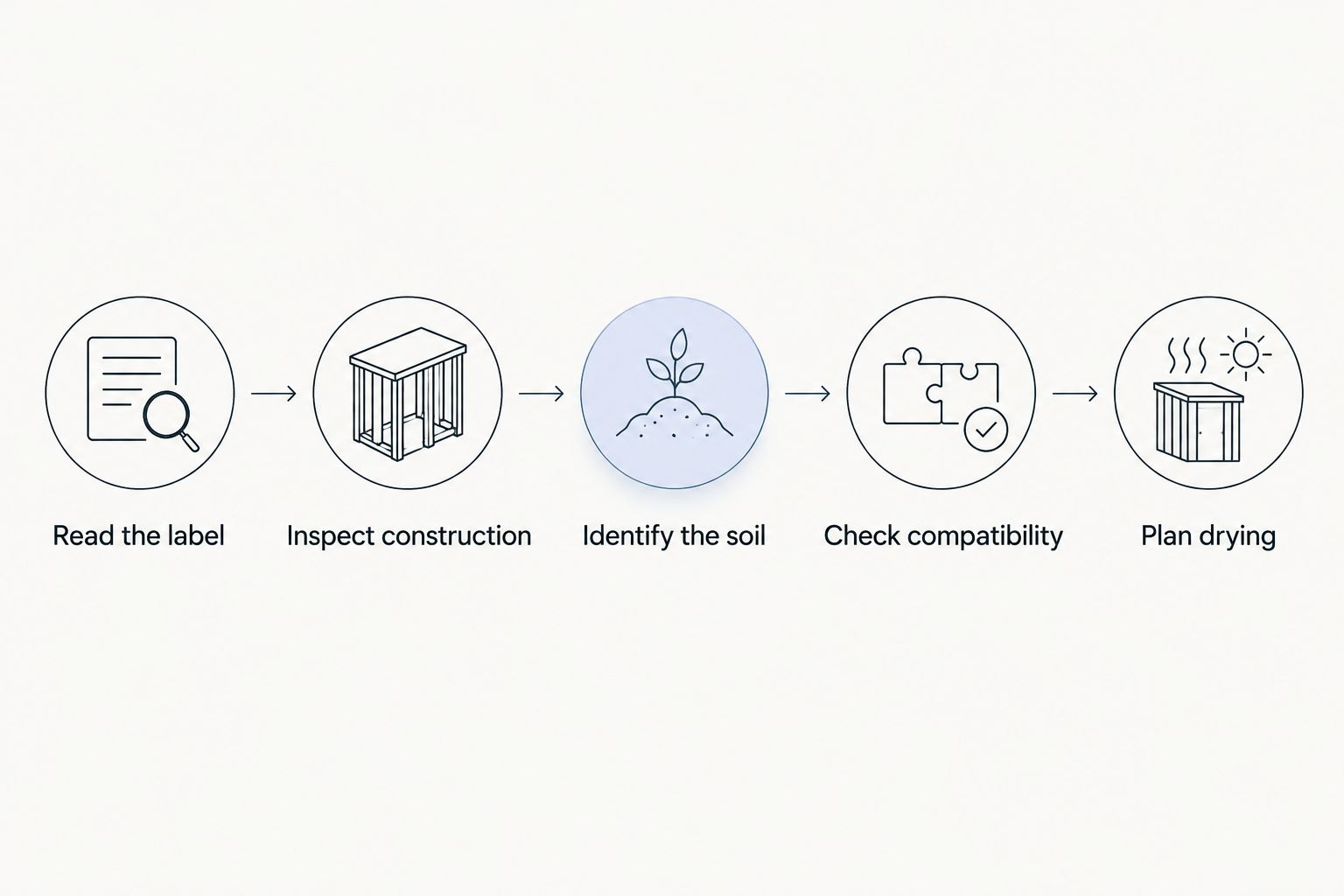
Use this sequence for your 2026 cleaning decision. It prevents a common mismatch: selecting equipment first and checking the rug afterward.
- Read the label. Record fiber content and care restrictions. If there is no label, seek identification rather than guessing from appearance.
- Inspect construction. Look for fringe, loose loops, backing deterioration, previous repairs, and areas already showing color change.
- Identify the soil. Separate dry grit from a fresh spill, widespread soiling, or contamination underneath. Each requires a different scope of treatment.
- Check compatibility. Confirm the proposed chemistry, moisture, agitation, and discreet testing procedure before whole-rug cleaning.
- Plan drying. Decide how the backing and foundation will dry and when the rug can safely return to its floor position.
A cleaner's explanation should connect each choice to your rug. Ask what the method removes, what it leaves untreated, and what would make the cleaner stop or change course.
How these methods are ranked
This 2026 ranking prioritizes compatibility, soil removal, residue removal, and drying control. It separates thorough cleaning from maintenance rather than pretending that all methods do the same job.
Professional off-site washing leads for suitable rugs needing thorough wet cleaning. Vacuuming leads for routine dry soil. The remaining methods occupy narrower use cases because their suitability depends on care instructions, construction, or the location of contamination.
The best method is the one that cleans the rug without asking its fibers, dyes, or backing to tolerate an unsuitable process.
Which area rug cleaning method should you choose?
For a heavily soiled, wet-cleanable rug, start with professional off-site assessment and washing. For ordinary upkeep, choose careful vacuuming. For a fresh spill, blot first and follow the rug's care instructions before adding a product.
Michaels Carpet Care offers carpet cleaning and other surface-cleaning services across McKinney, Frisco, Plano, and Allen. Describe your area rug's fiber, backing, and problem when asking about suitability; do not assume its carpet process applies unchanged to your rug.
Ask about your rug
Describe the fiber, backing, and cleaning problem to discuss a suitable approach.
FAQ
What's the best area rug cleaning method in 2026?
Professional off-site washing is the leading choice for thorough cleaning of rugs approved for wet cleaning. Vacuuming is the maintenance default, while moisture-sensitive or delicate rugs need a separately assessed process.
Can I steam clean a wool area rug?
Do not choose steam cleaning for a wool rug without checking its care requirements and construction. Wool fiber alone does not establish whether its dyes, backing, or foundation can tolerate the proposed heat, chemistry, and moisture.
Is dry cleaning safer than wet cleaning for every rug?
No, low-moisture cleaning is not automatically safe for every rug. The product, agitation, dye stability, and removal of cleaning material still need assessment.
Can I put an area rug in the washing machine?
Only machine-wash a rug when its care label permits it and the appliance can handle the specified load. Follow separate instructions for removable covers and pads, including drying requirements.
What's the best way to clean a fresh spill on a rug?
Blot a fresh spill with a clean, absorbent cloth rather than rubbing it. Use additional cleaning products only when the care instructions permit them and a discreet test shows no adverse reaction.
Will cleaning remove every pet odor from an area rug?
Surface cleaning alone does not address contamination in a rug's backing, foundation, pad, or underlying floor. Identify where the contamination has reached before selecting treatment; no cleaning method guarantees removal of every odor.
How long does an area rug take to dry?
Area-rug drying time depends on its material, construction, cleaning process, and drying conditions. Check the backing and foundation as well as the pile before returning the rug to a moisture-sensitive floor.
One last thing
Check the rug pad before putting a cleaned rug back. A clean pile does not fix soil, trapped moisture, or odor beneath it. Inspect the pad and floor separately, and follow their own care instructions.
Before your next cleaning, photograph the care label and any existing damage. That gives you a clear record to share with the cleaner and keeps the discussion focused on the actual rug rather than a generic cleaning package.