Best overall: a carpet-labeled spot cleaner; best for persistent stains: Michaels Carpet Care; best first response to a fresh spill: plain water and blotting. This 2026 guide ranks the best carpet stain removers for wine and coffee by stain type, carpet compatibility, and the limits of each approach—not by promises that every mark will disappear.
- The best carpet stain removers for wine and coffee match your carpet's care instructions before treating the stain.
- Choose a carpet-labeled spot cleaner for routine spills; test it in a hidden area first.
- Michaels Carpet Care is the professional option for homeowners and businesses facing persistent carpet stains.
- Use plain water and blotting first on fresh spills when the carpet's care instructions permit water.
- Reserve oxygen-based and tannin treatments for carpets whose care instructions permit those products.
Why this matters
Wine and coffee leave more than a wet patch. Both contain colored compounds, and coffee with milk introduces a different cleaning problem from black coffee. Removing the liquid promptly helps, but a remaining mark does not automatically call for a stronger chemical.
Your carpet sets the limits. Fiber type, dyes, backing, and the manufacturer's care instructions determine which treatments belong on it. A cleaner suitable for one synthetic carpet is not automatically suitable for wool or another carpet in your home.
For your 2026 cleaning kit, prioritize compatibility over an impressive stain-removal claim. A faded stain is not a successful result if the surrounding carpet loses color.
What makes the best carpet stain remover?
Use these criteria before choosing a bottle or booking professional help:
- Carpet compatibility: The label must permit use on your carpet material. Check the carpet manufacturer's instructions too, especially for wool and specialty fibers.
- Stain fit: A fresh black-coffee spill needs a different response from dried wine or coffee containing cream. Choose for the actual spill, not merely its color.
- Color safety: Test every new cleaning product in an inconspicuous area. Check for dye transfer, discoloration, and texture change before treating the visible stain.
- Moisture control: Use only the amount required by the instructions. Soaking the carpet creates a separate drying problem and does not prove better cleaning.
- Residue removal: Follow any required blotting, rinsing, or vacuuming steps. Leaving cleaner behind is not the same as removing the stain.
- Clear stopping point: Stop when the treatment changes the carpet, spreads the mark, or produces no further improvement. Repeated applications are not a substitute for diagnosis.
Best stain-removal options at a glance
These seven options cover different decisions, rather than seven interchangeable sprays. The order below favors an appropriate everyday cleaner first, then specialist help and narrower treatments.
| Option | Best for | Standout feature | Key limitation |
|---|---|---|---|
| Carpet-labeled spot cleaner | Routine wine or coffee spots | Instructions written for carpet spot treatment | Not every formula suits every fiber |
| Michaels Carpet Care | Persistent stains needing professional attention | Residential and commercial carpet cleaning in North Texas | Professional cleaning cannot guarantee reversal of permanent discoloration |
| Plain water and blotting | Immediate response to a fresh spill | Removes liquid without introducing a cleaning chemical | Does not reliably remove established staining |
| Carpet-approved oxygen-based remover | Remaining wine color on compatible carpet | Targets discoloration through oxidation | Can affect dyes; unsuitable unless expressly permitted |
| Carpet-approved tannin remover | Dried black-coffee marks | Treatment directed at tannin staining | Requires careful fiber and dye compatibility checks |
| Carpet-approved dry cleaning compound | Moisture-sensitive spot-cleaning situations | Uses a compound removed by vacuuming | Not a dependable standalone answer for settled beverage color |
| Manufacturer-approved mild detergent solution | Fresh coffee containing milk or cream | Helps address the spill's oily components | Incorrect concentration or incomplete rinsing leaves residue |
1. Carpet-labeled spot cleaner: best for routine spills
A carpet-labeled spot cleaner is the default purchase for ordinary wine and coffee accidents. Unlike an all-purpose household spray, it comes with directions for treating carpet, although you still need to check the permitted fibers and stain types.
Choose a label that addresses your spill. A cleaner intended mainly for another problem should not become your wine treatment simply because it is already in the cupboard.
Carpet-labeled spot cleaner pros:
- Provides a defined application and removal procedure.
- Allows you to choose a formula suited to the stated stain.
- Makes fiber restrictions available before treatment.
Carpet-labeled spot cleaner cons:
- Carpet labeling does not mean universal fiber compatibility.
- A routine formula is not a promise of complete removal of old discoloration.
Best for: Homeowners building a practical 2026 cleaning kit for routine spills.
Verdict: Buy a carpet-labeled spot cleaner only after checking both the product label and your carpet's care instructions.
2. Michaels Carpet Care: best for persistent carpet stains
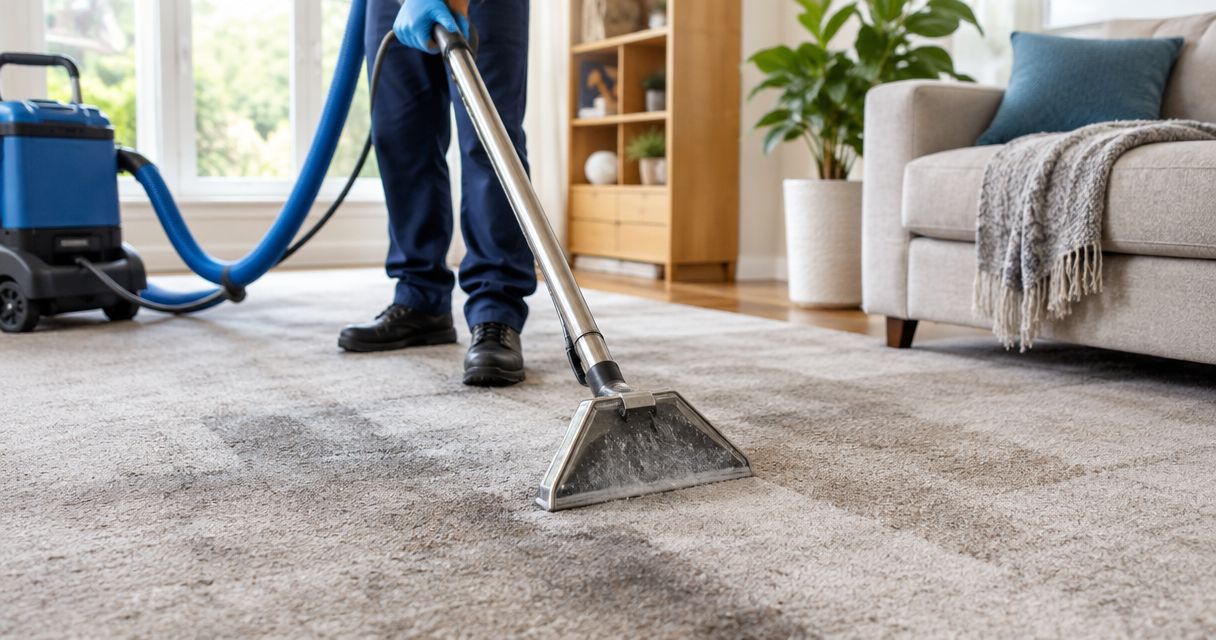
Michaels Carpet Care provides carpet cleaning for homeowners and businesses in McKinney, Frisco, Plano, and Allen. The company's stated approach starts with safe, gentle products and uses something stronger only when the carpet needs it.
Professional attention is the better decision when you cannot identify the carpet, previous treatments have complicated the stain, or the mark keeps returning. Cleaning and repairing permanent color damage are different tasks; do not treat them as interchangeable promises.
Michaels Carpet Care pros:
- Provides a professional carpet-cleaning option in the named North Texas service areas.
- Serves residential and commercial properties.
- Emphasizes gentle treatment before stronger products.
Michaels Carpet Care cons:
- Requires arranging a service rather than responding immediately from your cupboard.
- Cleaning does not guarantee restoration of dye already damaged by a spill or treatment.
Best for: North Texas homeowners and businesses whose carpet stains need professional attention.
Verdict: Buy professional cleaning rather than repeat unsuccessful chemical treatments on the same spot.
3. Plain water and blotting: best for fresh-spill first aid
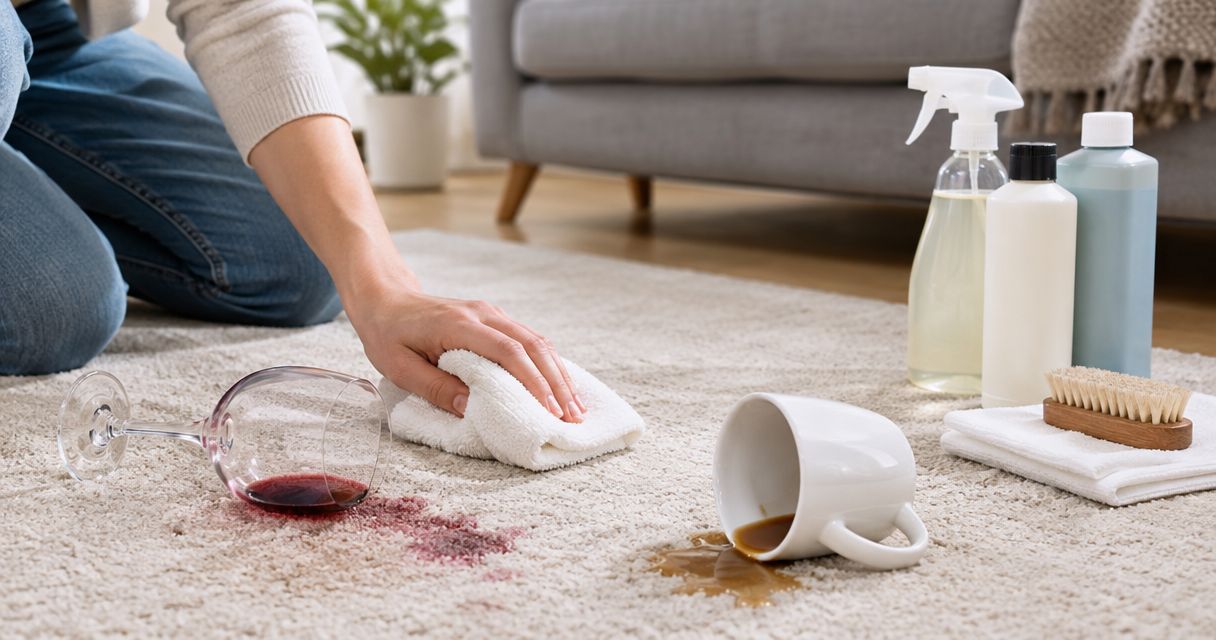
Plain water is a first-response tool, not a complete stain-removal formula. If your carpet's care instructions permit water, blot up the spilled liquid first and use a lightly dampened white cloth for the remaining surface contamination.
Keep 2 white cloths ready: one for lifting liquid and another for dry blotting. Press and lift instead of scrubbing, and work from the outside of the affected area toward its center.
Plain water and blotting pros:
- Introduces no additional cleaning chemical.
- Helps lift liquid before you choose a treatment.
- Lets you observe whether beverage color is still transferring.
Plain water and blotting cons:
- Does not reliably remove dried wine or coffee discoloration.
- Excess water still creates a moisture problem.
Best for: The moment a drink spills, before you reach for a remover.
Verdict: Hold off on buying a stronger treatment until you have blotted the fresh spill and assessed what remains.
4. Carpet-approved oxygen-based remover: best for remaining wine color
Oxygen-based stain removers use oxidation to address discoloration. For wine on carpet, consider only a product specifically labeled for the carpet material involved; a laundry oxygen cleaner is not automatically a carpet treatment.
Check restrictions carefully. Oxidation can affect carpet dyes as well as the stain, so a hidden-area test and strict adherence to the instructions matter more than the word oxygen on the package.
Carpet-approved oxygen-based remover pros:
- Offers a treatment directed at remaining colored staining.
- Has a distinct role after the spilled liquid has been removed.
- Provides an alternative to repeating an ineffective routine cleaner.
Carpet-approved oxygen-based remover cons:
- Can discolor incompatible carpet dyes or materials.
- Requires product-specific application and removal steps.
Best for: Remaining wine color on carpet explicitly compatible with the chosen formula.
Verdict: Buy only when both the carpet instructions and the remover label permit the treatment.
5. Carpet-approved tannin remover: best for dried black coffee
Tannin removers are specialist treatments for stains associated with beverages such as coffee and tea. Their purpose is narrower than that of a general spot cleaner, making them a relevant option when black-coffee discoloration remains after routine cleaning.
Specialist does not mean harmless. Formulas differ, and the product's restrictions determine whether it belongs on your carpet. Coffee containing milk also leaves components that a tannin-focused treatment alone does not address.
Carpet-approved tannin remover pros:
- Matches a specific component of coffee staining.
- Gives established black-coffee marks a targeted treatment route.
- Avoids choosing another general cleaner without considering stain chemistry.
Carpet-approved tannin remover cons:
- Does not address every component of mixed coffee drinks.
- Demands careful attention to material restrictions and directions.
Best for: Dried black-coffee marks on carpet approved for the particular treatment.
Verdict: Hold unless compatibility is clear; seek professional help rather than experiment with specialist chemistry.
6. Carpet-approved dry cleaning compound: best for limiting added moisture
A dry carpet-cleaning compound is worked into carpet and removed by vacuuming according to its instructions. It is a cleaning option, not a powder to sprinkle indiscriminately over a wet wine spill.
Its place in this 2026 ranking is moisture-conscious cleaning. Do not assume that a compound's ability to collect soil means it will remove settled wine or coffee color; the product must specifically support the intended spot treatment.
Carpet-approved dry cleaning compound pros:
- Offers a method that limits added liquid.
- Uses vacuuming as part of the removal process.
- Provides an alternative where wet spot-cleaning needs particular care.
Carpet-approved dry cleaning compound cons:
- Requires thorough removal of the compound.
- Is not a dependable standalone treatment for established beverage staining.
Best for: Compatible carpets where limiting added moisture is a priority.
Verdict: Hold for a suitable maintenance or spot-cleaning role; skip it as your default rescue for dark wine stains.
7. Approved mild detergent solution: best for fresh milky coffee
A mild detergent solution belongs here only when your carpet manufacturer approves it and provides suitable instructions. Detergent helps address oily material, making it relevant to coffee containing milk or cream rather than just black-coffee color.
Do not improvise a concentrated mixture. Follow the approved dilution and removal process, and treat any remaining beverage discoloration as a separate issue rather than adding more detergent.
Approved mild detergent solution pros:
- Addresses components of creamy coffee that plain water does not remove effectively.
- Offers a simple treatment route when the manufacturer supplies instructions.
- Keeps your choice tied to the carpet's care requirements.
Approved mild detergent solution cons:
- Excess detergent or incomplete removal leaves residue.
- Does not guarantee removal of tannin discoloration.
Best for: Fresh coffee with milk or cream on carpet permitting this method.
Verdict: Buy only a manufacturer-approved detergent; skip homemade combinations and unverified dilution recipes.
How these options were ranked
This 2026 ranking prioritizes carpet compatibility, stain fit, moisture control, residue removal, and a clear stopping point. It ranks treatment roles, not laboratory-tested brands or claimed stain-removal percentages.
The everyday spot cleaner takes the default position because its directions are written for carpet treatment. Professional cleaning comes next for unresolved problems; the remaining choices serve narrower circumstances. An oxygen-based remover is not better than water at every stage, and a tannin remover is not the right answer for every coffee drink.
Use a simple stain-treatment sequence
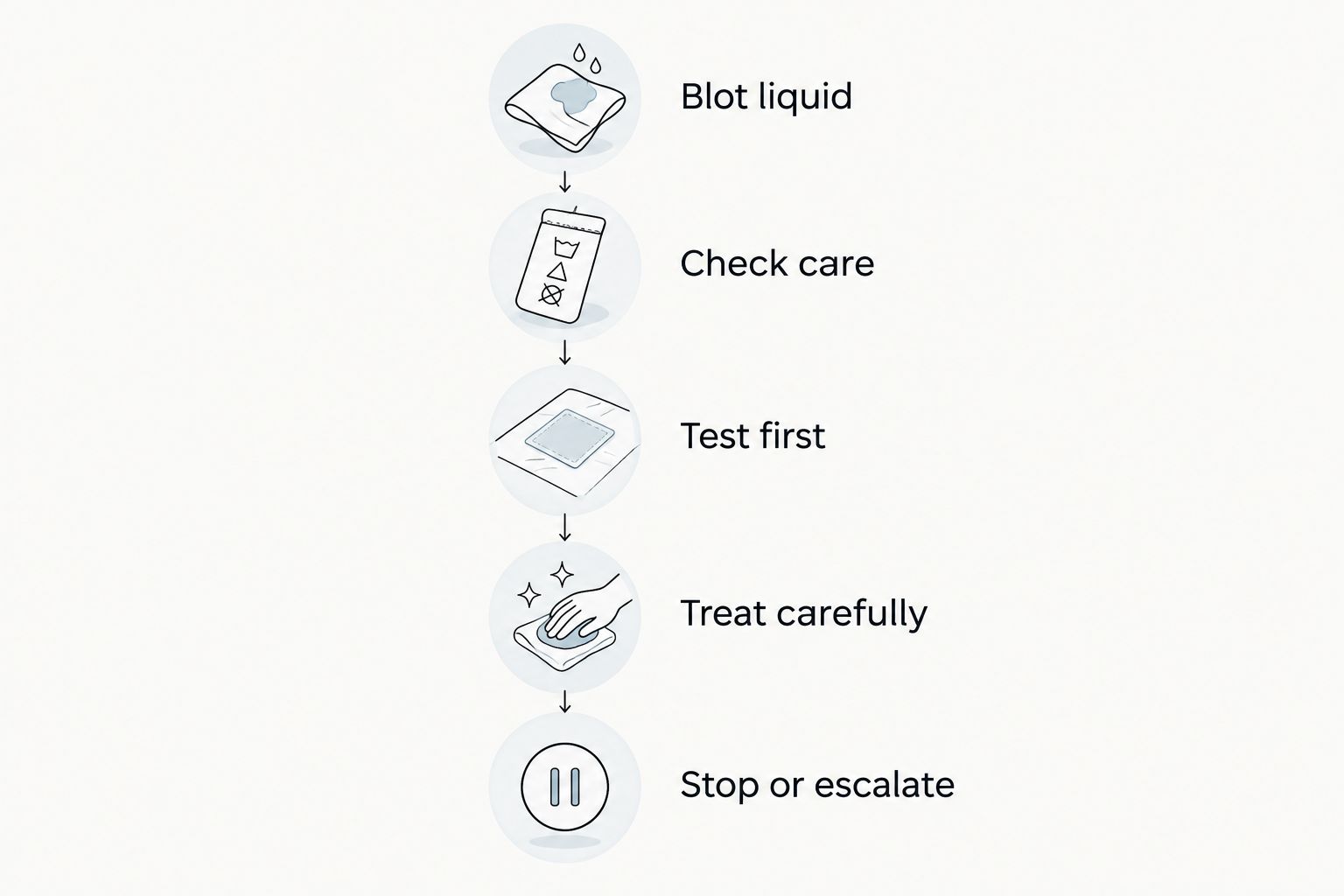
Before applying anything, identify what spilled and read the carpet's care instructions. Use this sequence to keep an accident from turning into a series of incompatible treatments:
- Blot liquid: Lift the spill with a clean white cloth. Do not scrub or pour cleaner into the backing.
- Check care: Confirm the carpet's material and permitted cleaning methods. Unknown material is a reason to pause.
- Test first: Treat 1 hidden spot before the visible area. Follow the product's test instructions and check the result before proceeding.
- Treat carefully: Apply the selected method exactly as directed. Complete its required removal steps before judging the result.
- Stop or escalate: Stop if the carpet changes color or texture, the stain spreads, or repeated treatment makes no progress.
Keep the cleaner's container until the problem is resolved. If you arrange professional cleaning, provide the spill type and the names of products already applied; that information is more useful than describing the mark as simply stubborn.
Which carpet stain remover should you choose?
Choose a carpet-labeled spot cleaner as your default, water and blotting for immediate first aid, and professional help for persistent or complicated marks. Choose specialist chemistry only when the stain and carpet both justify it.
For local households and businesses, Michaels Carpet Care is the professional carpet-cleaning option in this guide. Describe the stain, the carpet material if known, and previous treatments before arranging service. That keeps the conversation focused on the actual problem rather than an assumed cure.
Discuss your carpet stain
Describe the wine or coffee spill, your carpet, and any treatments already used.
FAQ
What's the best carpet stain remover for wine and coffee?
A carpet-labeled spot cleaner compatible with your carpet is the best default choice for routine wine and coffee spots. Use a specialist treatment only when its label and your carpet's care instructions permit it.
What should I do immediately after spilling red wine on carpet?
Blot the liquid with a clean white cloth before choosing a treatment. If the carpet's instructions permit water, use a lightly dampened cloth and avoid soaking or scrubbing the area.
Is an oxygen-based cleaner better than a regular carpet spot cleaner?
An oxygen-based cleaner is a targeted option for remaining discoloration, not a better choice for every carpet spill. It can affect carpet dyes, so use only a compatible carpet-labeled formula and test it first.
Can I use the same cleaner for black coffee and coffee with cream?
Use the same cleaner only if its instructions cover both spills and your carpet material. Coffee with cream contains components beyond the colored compounds in black coffee, so a tannin treatment alone does not address the whole spill.
Can I use a laundry stain remover on carpet?
Use a laundry stain remover on carpet only if its label explicitly permits that use and the carpet's care instructions agree. Laundry suitability does not establish carpet compatibility.
Can wine and coffee stains come out of wool carpet?
Stain removal depends on the spill, previous treatment, and the wool carpet's condition and care requirements. Use a treatment explicitly suitable for the carpet, and seek professional advice rather than applying a generic oxidizing cleaner.
Why does my coffee stain return after cleaning?
A returning coffee mark can result from material below the visible surface moving upward as the carpet dries. Repeatedly wetting the same area is not a diagnosis; stop and seek professional assessment.
When should I call a professional carpet cleaner?
Call a professional when the stain persists, the carpet material is unknown, or treatment changes its color or texture. Michaels Carpet Care provides residential and commercial carpet cleaning in McKinney, Frisco, Plano, and Allen.
One last thing
Do not confuse a lighter patch with a clean patch. If treatment removes carpet dye, another stain remover will not put that dye back. For your 2026 stain kit, keep the carpet's care information beside the cleaner—not somewhere you must search after a spill.
The most useful preparation is knowing what your carpet allows before the wine glass tips or the coffee cup falls.