Best overall: a carpet-safe enzymatic cleaner for localized pet urine. Best for fresh accidents: immediate blotting followed by appropriate treatment. Best for recurring odor beneath the carpet: inspection and replacement of contaminated padding. This 2026 guide compares seven approaches, including when to ask Michaels Carpet Care about professional carpet cleaning rather than repeat another surface treatment.
- The best pet odor removal methods for carpet treat the source, not just the smell.
- Choose a carpet-safe enzymatic cleaner for localized pet urine, following its label and your carpet’s care instructions.
- Blot fresh accidents before treatment; avoid scrubbing and unnecessary soaking.
- Michaels Carpet Care is a carpet-cleaning option for homeowners and businesses in McKinney, Frisco, Plano, and Allen.
- Recurring odor needs inspection of the carpet backing and padding, not another fragrance application.
Why this matters
Pet odor removal and carpet stain removal are different jobs. A spot can look clean while contamination remains in the fibers, backing, or padding. Fragrance changes what you smell temporarily; it does not remove the source.
The right method depends on what caused the odor and how far it traveled. Fresh urine, an older accident, and general pet hair buildup do not call for the same treatment. Start with the source and the carpet’s care instructions, not the strongest bottle.
For your 2026 cleaning plan, separate immediate cleanup from lasting odor treatment. Blotting is the first response to fresh liquid. Persistent odor needs a different decision: treat an accessible source or inspect material you cannot reach from above.
What makes the best pet odor removal method?
- Source removal: The method removes contamination or treats the odor-producing residue rather than covering it with perfume.
- Carpet compatibility: The product and process suit the fiber, dyes, backing, and manufacturer’s care instructions.
- Depth of treatment: Surface cleaning addresses surface contamination; padding problems require access beneath the carpet.
- Moisture control: The process avoids unnecessary saturation and includes a clear drying plan.
- Practical limits: You know when to stop repeating a treatment and request an inspection.
Before treating a spot, make three checks: read the carpet care instructions, read the cleaner’s label, and test an inconspicuous area. Check that test area after it dries. A wet patch is not a reliable way to judge the finished color or texture.
Pet odor removal methods at a glance
The order below ranks methods by their usefulness for a defined problem, not by cleaning strength. A lower-ranked method can be the correct choice when its use case matches your carpet.
| Method | Best for | Standout feature | Key limitation |
|---|---|---|---|
| Carpet-safe enzymatic cleaner | Localized pet urine | Treats organic odor residue | Requires suitable conditions and label-directed application |
| Immediate blotting | Fresh liquid accidents | Removes liquid before further spread | Does not finish odor treatment |
| Controlled rinsing and extraction | Accessible residue in carpet fibers | Removes liquid and loosened contamination | Excess moisture can reach the padding |
| Professional source assessment | Older, widespread, or recurring odor | Identifies the scope before choosing treatment | Assessment does not itself remove contamination |
| Low-moisture carpet cleaning | General surface soil with a moisture-sensitive schedule | Limits water introduced during cleaning | Does not establish that deep urine contamination is removed |
| Dry vacuuming | Pet hair, dander, and dry debris | Removes dry material without wetting carpet | Does not treat absorbed urine |
| Contaminated padding replacement | Confirmed contamination beneath the carpet | Removes affected material directly | Requires lifting carpet and checking adjacent layers |
1. Enzymatic cleaner: best for localized pet urine
A carpet-safe enzymatic cleaner treats organic residue associated with pet accidents. It is the strongest default choice for a localized urine spot when the carpet care instructions permit that product.
Apply it according to the label, including the amount, contact conditions, and drying instructions. Do not shorten the process because the surface looks clean. Different formulations have different directions, and adding another cleaner can interfere with the intended treatment.
Enzymatic cleaner pros:
- Addresses odor-producing organic residue rather than adding fragrance alone.
- Supports targeted treatment instead of wetting an entire room.
- Provides a practical home-treatment option for an accessible spot.
Enzymatic cleaner cons:
- Compatibility varies across carpets and formulations.
- Surface application cannot guarantee treatment of contaminated padding.
Best for: A known, localized urine accident without evidence of deeper contamination.
Verdict: Buy a carpet-compatible enzymatic cleaner, then follow its label exactly. Stop repeating applications if odor returns after complete drying; investigate the depth of the problem instead.
2. Immediate blotting: best for fresh liquid accidents
Blotting removes liquid while it is still accessible. Use clean, absorbent towels and press rather than scrub. Move to a clean part of the towel as it absorbs moisture so you are not transferring liquid back onto the carpet.
Work from the outside of the wet area toward the center. After removing accessible liquid, choose the appropriate odor treatment. Blotting is a first response, not a substitute for treating urine residue.
Immediate blotting pros:
- Starts cleanup without introducing another chemical.
- Removes liquid before you add treatment moisture.
- Gives you a clearer view of the affected area.
Immediate blotting cons:
- Does not remove all residue left in the carpet.
- Cannot draw out contamination that has already reached deeper layers.
Best for: An accident you discover while the carpet is still wet.
Verdict: Buy into immediate blotting as your first action, not your entire cleanup plan. Keep pets away while you work and until the treatment label permits access again.
3. Controlled extraction: best for accessible carpet residue
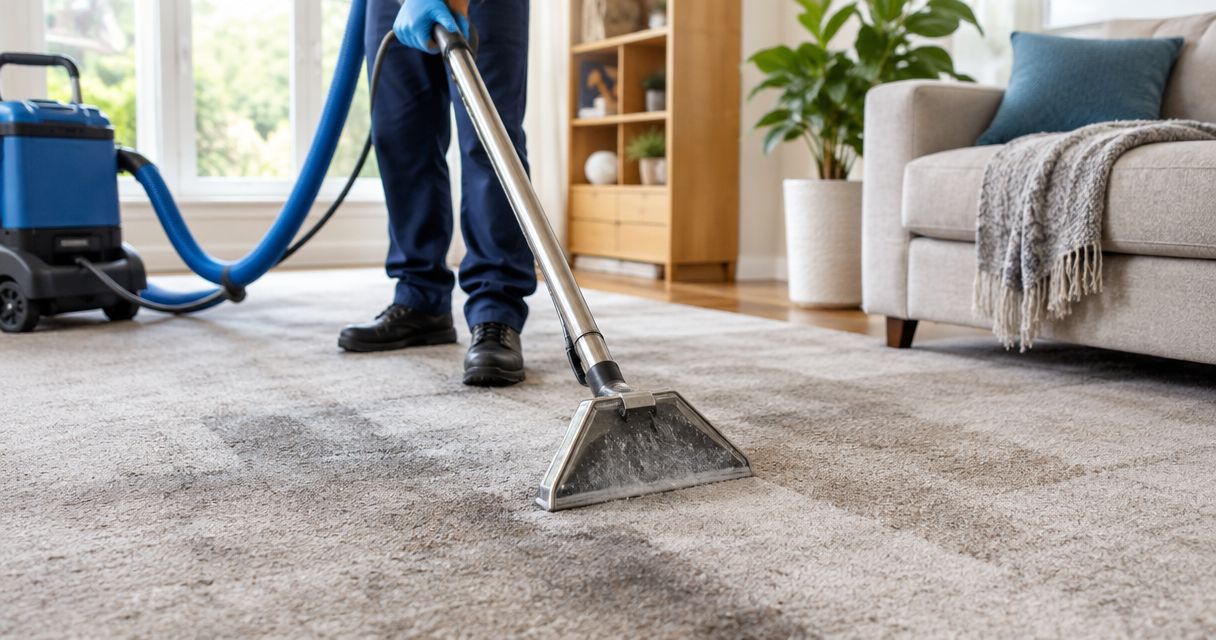
Controlled rinsing and extraction remove liquid and loosened contamination from carpet fibers. The important distinction is control: pouring water onto a spot without an effective way to recover it can spread the problem downward.
Use this approach only when the carpet and treatment instructions allow it. Extract moisture rather than relying on evaporation alone. Avoid using a hot steam treatment as the default response to urine odor; choose the process around the contamination and material.
Controlled extraction pros:
- Physically removes recoverable liquid and residue.
- Helps rinse out a treatment when its instructions require rinsing.
- Addresses contamination in accessible carpet fibers.
Controlled extraction cons:
- Overwetting can carry contamination into backing or padding.
- Surface extraction does not prove that every affected layer is clean.
Best for: Residue that remains accessible in the carpet and can be treated without excessive saturation.
Verdict: Hold until you confirm carpet compatibility and have a workable extraction and drying plan. A wet carpet with persistent odor is a reason to reassess, not add more water.
4. Professional assessment: best for recurring or widespread odor
Professional assessment is the right next step when you cannot locate the source, several areas are affected, or odor returns after treatment. The useful outcome is a defined scope: what is contaminated, which layers need attention, and what cleaning can realistically accomplish.
Michaels Carpet Care is a carpet-cleaning option for homeowners and businesses in McKinney, Frisco, Plano, and Allen. Describe the odor history before discussing treatment. Explain whether the carpet has been repeatedly wetted and whether the smell returns after drying.
Professional assessment pros:
- Separates surface soil from a possible underlying contamination problem.
- Gives you a chance to discuss fiber compatibility before treatment.
- Helps frame a cleaning decision around the affected area.
Professional assessment cons:
- An inspection is not the same as completed odor removal.
- Cleaning cannot replace removal of material that needs replacement.
Best for: Older accidents, uncertain sources, and repeated treatment failures.
Verdict: Buy an assessment-led approach before committing to another whole-room treatment. Ask what the proposed work addresses and what remains outside its scope.
5. Low-moisture cleaning: best for general surface soil
Low-moisture carpet cleaning uses limited moisture to clean carpet surfaces. It is a useful category to discuss when your main problem is ordinary tracked-in soil and pet-related surface debris rather than a confirmed urine deposit beneath the carpet.
Michaels Carpet Care describes its carpet cleaning as eco-friendly and fast-drying. When discussing a 2026 appointment, keep the distinction clear: a convenient drying schedule and a complete urine-odor treatment are separate requirements.
Low-moisture cleaning pros:
- Limits the amount of water introduced during cleaning.
- Addresses general carpet soil without deliberate deep saturation.
- Gives you a method to discuss when drying considerations matter.
Low-moisture cleaning cons:
- Does not establish that contamination beneath the carpet is treated.
- Requires a separate source-specific plan for persistent urine odor.
Best for: General surface cleaning when pet soil, rather than deep urine contamination, is the issue.
Verdict: Buy for the right surface-cleaning job; skip it as an assumed cure for contaminated padding. Ask how odor treatment differs from routine carpet cleaning.
6. Dry vacuuming: best for hair, dander, and debris
Dry vacuuming removes loose material that accumulates in a pet household. Use the vacuum setting recommended for your carpet, and attend to edges, pet resting spots, and areas under movable furniture.
Empty or maintain the vacuum according to its instructions. A dirty collection chamber or filter deserves attention too. Vacuuming is maintenance for dry debris, not a method for removing urine absorbed into carpet layers.
Dry vacuuming pros:
- Removes pet hair and other accessible dry material.
- Adds no cleaning moisture to the carpet.
- Supports routine care between deeper cleaning visits.
Dry vacuuming cons:
- Does not break down absorbed urine residue.
- Cannot clean contaminated backing or padding.
Best for: General pet-related debris without a liquid accident at the source.
Verdict: Buy into regular dry vacuuming for maintenance; skip it as your urine-odor treatment. If the smell remains after removing dry debris, change the diagnosis rather than vacuuming indefinitely.
7. Padding replacement: best for confirmed contamination underneath
When inspection confirms contamination in the padding, removing affected padding addresses material that surface cleaning cannot reliably reach. The carpet backing and the floor beneath also need assessment before the carpet is put back.
This is not the first response to every accident. It is the escalation path for a confirmed deeper problem. Replacing padding without checking adjacent layers can leave another source untouched.
Padding replacement pros:
- Removes the affected padding instead of treating through the carpet.
- Gives access to inspect the underside of the carpet.
- Allows the underlying floor to be checked directly.
Padding replacement cons:
- Requires lifting and reinstalling carpet appropriately.
- Does not solve contamination in other layers by itself.
Best for: Persistent odor traced to contaminated padding.
Verdict: Buy replacement only after confirming the affected material and the full repair scope. Do not replace an entire room’s padding on smell alone without investigating the source.
How to choose without making the spot worse
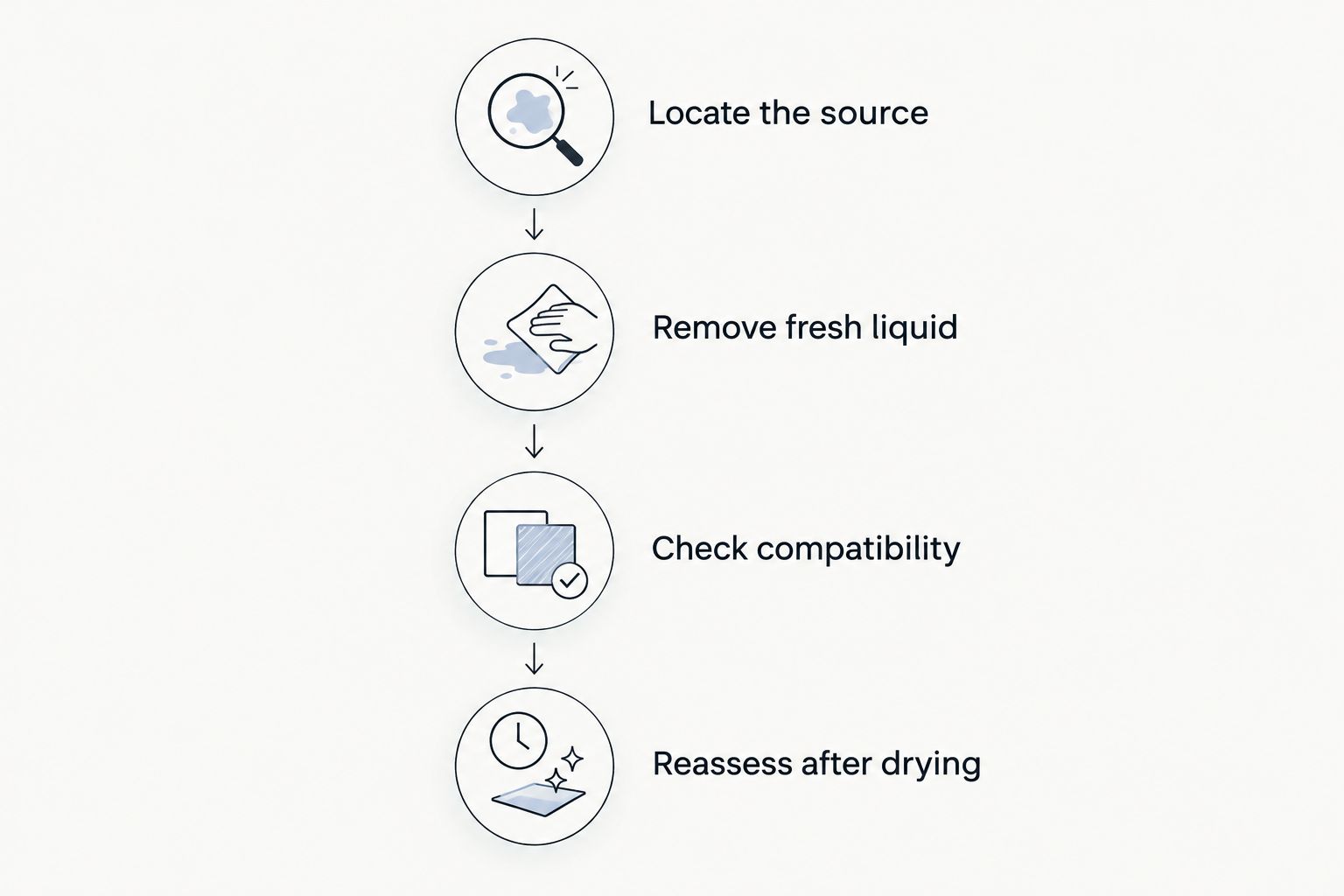
Use this four-step sequence for your 2026 cleanup decision. It keeps a fresh accident separate from an unresolved, deeper problem.
- Locate the source. Identify the accident area, the material affected, and whether the odor is localized or spread across the room.
- Remove fresh liquid. Blot accessible moisture before introducing a cleaning product. Avoid scrubbing the fibers.
- Check compatibility. Read the carpet and product instructions, test a hidden area, and follow the permitted treatment process.
- Reassess after drying. Evaluate the odor after the carpet dries. If it returns, investigate backing and padding rather than repeating blind applications.
Do not combine household cleaners to make a stronger treatment. In particular, never mix bleach with ammonia or other cleaning products. Keep children and pets away from the treatment area according to the product instructions, and provide the ventilation those instructions require.
How these methods are ranked
This 2026 ranking prioritizes source treatment, carpet compatibility, contamination depth, moisture control, and clear limits. Enzymatic cleaner leads for localized urine; blotting leads for the immediate response. Replacement belongs last because it requires evidence of affected material, not because it is ineffective for confirmed padding contamination.
These are decision-based recommendations, not results from a comparative product test. No single method wins every situation. The method must match both the contamination and the carpet.
Which pet odor removal method should you choose?
For a localized urine accident, blot first and use a compatible enzymatic cleaner according to its label. For dry hair and debris, vacuum. For returning odor, stop treating only the visible surface and request an assessment of the affected layers.
When discussing carpet cleaning with Michaels Carpet Care, explain the accident history rather than asking only for deodorizing. Your 2026 cleaning plan should specify the source being treated, the drying instructions, and the next step if the odor remains.
Discuss your carpet cleaning needs
Explain the pet odor history and ask which cleaning approach fits your carpet.
FAQ
What's the best pet odor removal method for carpet?
A carpet-safe enzymatic cleaner is the best default for localized pet urine. Blot fresh liquid first, follow the product label, and investigate deeper contamination if odor returns after drying.
Can I remove pet urine odor just by blotting?
Blotting removes accessible liquid but does not complete urine-odor treatment. Follow it with a carpet-compatible treatment directed at the remaining residue.
Is low-moisture cleaning better than extraction for pet odor?
Neither method is best for every pet odor problem. Low-moisture cleaning addresses general surface soil, while controlled extraction removes accessible liquid and residue; contaminated padding requires a separate assessment.
Why does the pet smell come back after cleaning?
Returning odor is a reason to investigate an untreated source in the carpet, backing, padding, or underlying floor. Repeating surface treatment without locating that source does not resolve the scope of the problem.
Should I use a steam cleaner on a urine spot?
Do not make hot steam cleaning your default treatment for a urine spot. Check the carpet care instructions and select a urine-specific process before adding heat or moisture.
Do I need to replace carpet padding after every pet accident?
No, padding replacement is for confirmed contamination beneath the carpet. Inspect the affected layers before deciding what needs cleaning or replacement.
Can Michaels Carpet Care help me choose carpet cleaning?
Michaels Carpet Care provides carpet cleaning for homeowners and businesses in McKinney, Frisco, Plano, and Allen. Describe the pet odor history and ask about the proposed treatment scope before arranging service.
One last thing
A cleaner-looking spot is not proof that the odor source is gone. Evaluate the result after drying, and tell the cleaner which products you already applied. That treatment history is more useful than asking for something stronger without explaining what happened.