Best overall: a fragrance-free, surface-compatible multipurpose cleaner. Best for pet accidents: an enzyme cleaner labeled for the affected material. Best reusable option: washable microfiber cloths. The best cleaning products for homes with kids and pets in 2026 match the mess and the surface; none makes every cleaning job safe by itself.
- The best cleaning products for homes with kids and pets start with surface compatibility, not a pet-safe slogan.
- Choose an enzyme cleaner for pet accidents only when its label permits the carpet or upholstery material.
- Use a stone-specific cleaner on natural stone; skip vinegar and other acidic household mixtures.
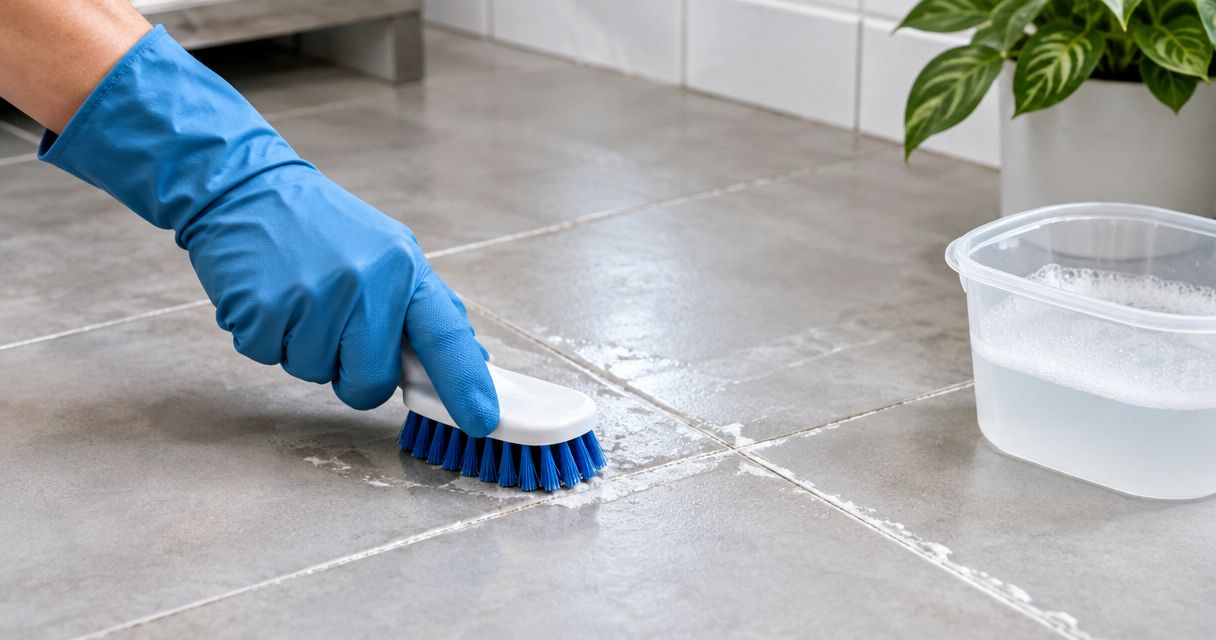
- Michaels Carpet Care provides professional carpet, tile, grout, upholstery, and natural stone cleaning for North Texas homes.
Why this matters
Children play close to floors. Pets walk across them, groom themselves, and return to the same accident spots. Your cleaning routine needs to account for contact with the surface after cleaning, not just how it looks immediately afterward.
A suitable cleaner used incorrectly is still the wrong choice. Follow dilution, application, rinsing, ventilation, and re-entry instructions. Keep children and animals away during cleaning and until the label's conditions for reuse are met.
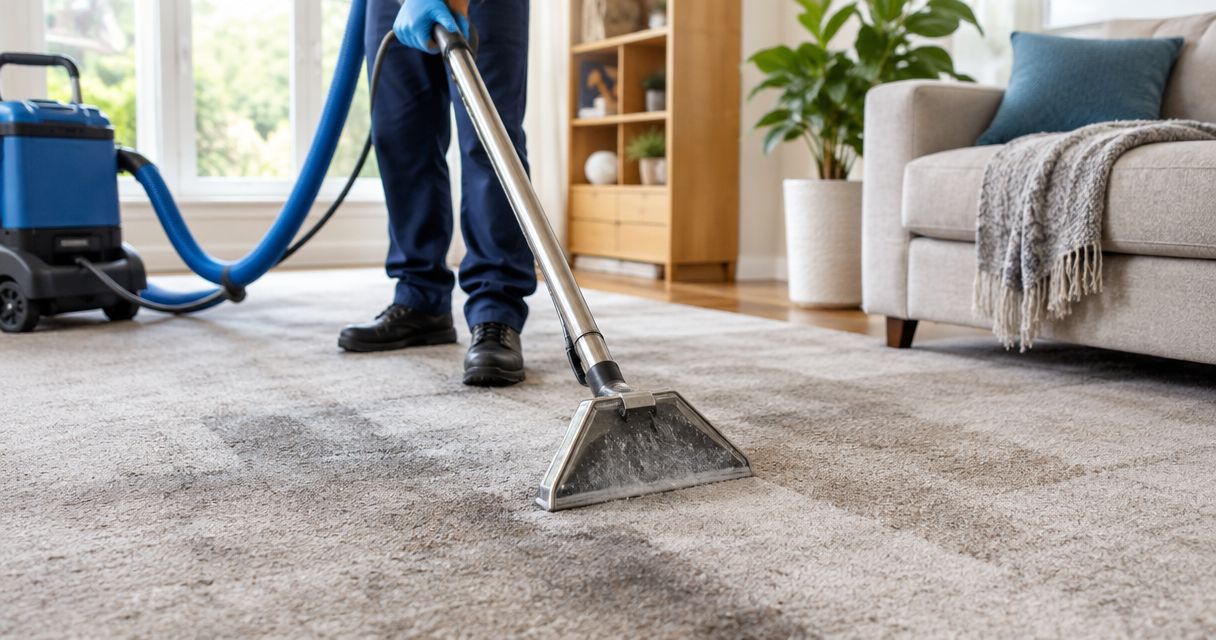
For deeper floor and furniture cleaning, Michaels Carpet Care serves homeowners and businesses in McKinney, Frisco, Plano, and Allen. Its professional services complement daily spill cleanup; they do not replace prompt attention to a fresh accident.
What makes the best cleaning products for family homes
Use these criteria to choose your 2026 cleaning supplies. A reassuring front label is not enough.
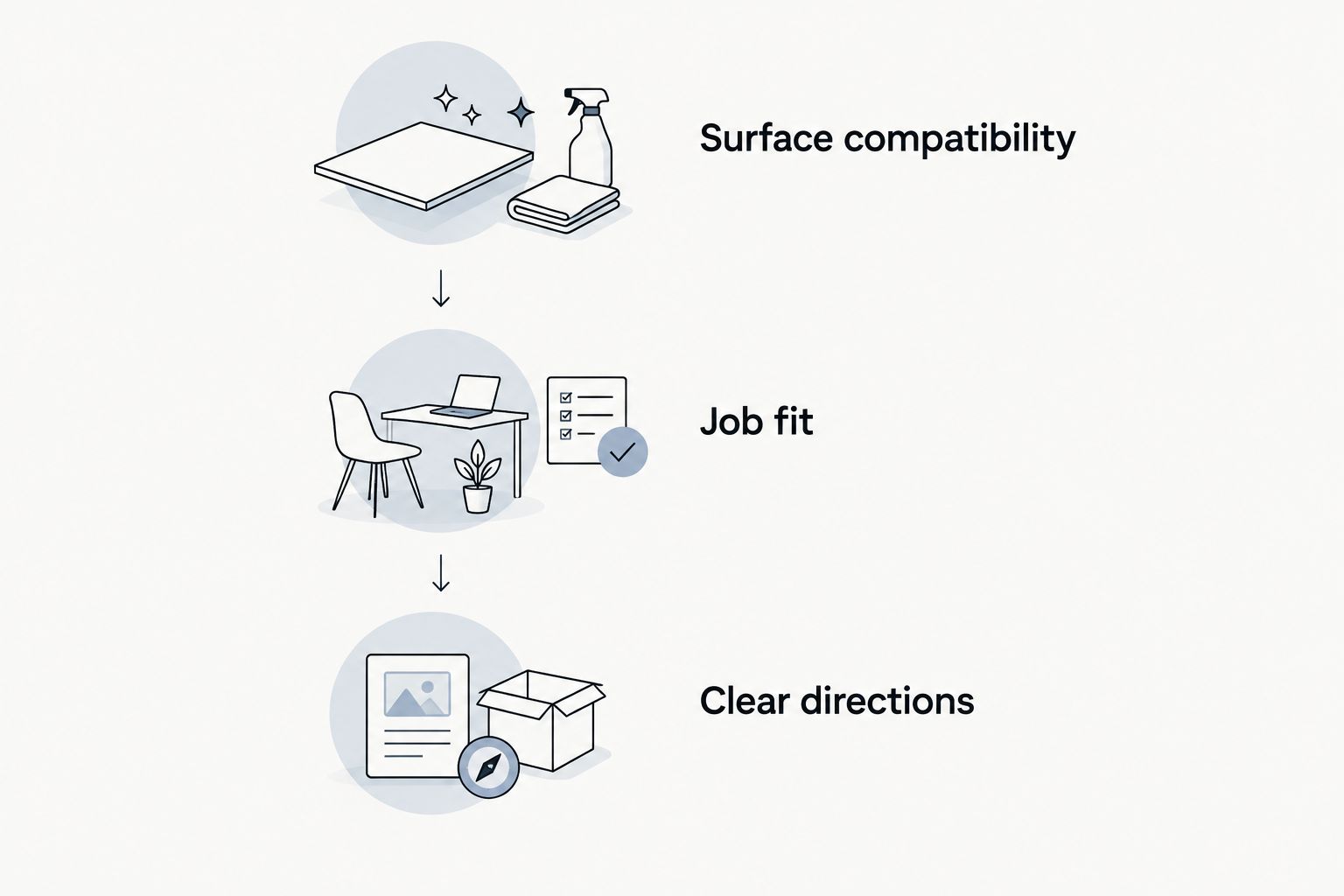
- Surface compatibility: The directions must name the material you intend to clean. Carpet, sealed tile, natural stone, and upholstery need different treatment.
- Job fit: Grease, loose debris, urine residue, and disinfection are different jobs. Choose the product for the problem.
- Clear directions: Prefer labels that explain dilution, application, removal, and precautions without leaving you to guess.
- Exposure control: Check warnings, ventilation requirements, and instructions about keeping children and animals away.
- Residue management: Choose a method that lets you remove soil and cleaning solution as directed, rather than repeatedly adding more product.
- Honest claims: Fragrance-free describes fragrance, not safety. Eco-friendly language does not override hazard warnings or material restrictions.
For a practical starting kit, assign 1 cleaner to each specific job, keep 2 microfiber cloths available for separate dirty and finishing passes, and check 1 hidden test spot before broader application. These are setup recommendations, not product performance claims.
The eight options at a glance
This 2026 ranking separates use cases rather than pretending one bottle handles every room. The first option is the default for compatible everyday surfaces; the remaining options solve narrower problems.
| Rank and option | Best for | Standout feature | Key limitation |
|---|---|---|---|
| 1. Fragrance-free multipurpose cleaner | Routine cleaning of compatible hard surfaces | General soil removal without added fragrance | Not automatically suitable for stone, fabric, or food-contact surfaces |
| 2. Plain dishwashing liquid | Washable dishes and permitted spot-cleaning tasks | Detergent action against greasy soil | Excess solution leaves residue and requires removal |
| 3. Enzyme cleaner | Pet accidents on approved materials | Targets organic residues | Does not repair damage or guarantee removal of deep contamination |
| 4. Carpet spot cleaner | Localized spills on compatible carpet | Instructions tailored to carpet treatment | Wrong chemistry or repeated wetting can worsen the problem |
| 5. Stone-specific cleaner | Natural stone floors and surfaces | Material-specific cleaning directions | Does not correct etching or other physical damage |
| 6. Washable microfiber cloths | Wiping and controlled product application | Reusable mechanical soil removal | Dirty cloths transfer soil instead of removing it |
| 7. HEPA-filtered vacuum | Dry debris on floors and furnishings | Filtration suited to fine particles | Cannot remove dissolved stains or urine residue |
| 8. EPA-registered disinfectant | Targeted disinfection when needed | Labeled organisms and contact-time directions | Not a substitute for soil removal or universally material-compatible |
Read the comparison as a selection sequence: identify the material, identify the mess, then choose the compatible option. Do not combine products to make them stronger.
1. Fragrance-free multipurpose cleaner: best for everyday hard surfaces
A fragrance-free multipurpose cleaner is the best default for routine dirt on hard surfaces its label permits. It gives you an everyday cleaning option without using added scent as evidence that the room is clean.
Read the surface exclusions first. A bottle intended for washable counters is not automatically appropriate for natural stone or fabric.
Multipurpose cleaner pros:
- Covers routine soil on approved hard surfaces.
- Avoids added fragrance when explicitly labeled fragrance-free.
- Supports a simpler everyday cleaning routine.
Multipurpose cleaner cons:
- Does not establish disinfectant performance unless separately registered and labeled.
- Still requires attention to rinsing, warnings, and surface restrictions.
Best for: Routine wiping where the surface manufacturer and cleaner label agree.
Verdict: Buy for approved everyday surfaces; skip unsupported materials.
2. Plain dishwashing liquid: best for washable dishes and greasy soil
Dishwashing liquid removes food soil and grease from washable dishes. It also appears in some material manufacturers' spot-cleaning directions, but that does not make it a universal carpet or floor cleaner.
Choose a straightforward formula and follow the applicable directions. More detergent is not a shortcut; it creates more solution to remove.
Dishwashing liquid pros:
- Fits ordinary dishwashing tasks.
- Helps remove greasy food soil.
- Works for additional cleaning only where material instructions permit it.
Dishwashing liquid cons:
- Residue remains if you fail to rinse or remove it adequately.
- Unapproved use on fabric or flooring risks an unsuitable result.
Best for: Washable dishes and explicitly permitted detergent-based spot cleaning.
Verdict: Buy for its intended jobs; skip improvised whole-floor or carpet recipes.
3. Enzyme cleaner: best for pet accidents on approved materials
An enzyme cleaner is the most relevant product category for organic pet-accident residues. Select a formula whose directions name both the intended problem and the carpet, fabric, or hard surface involved.
Blot fresh liquid before treatment. Follow the application instructions rather than assuming a quick spray reaches contamination beneath the visible surface.
Enzyme cleaner pros:
- Addresses organic residues rather than merely adding fragrance.
- Offers directions designed around specific accident-cleaning tasks.
- Fits localized treatment when the material is approved.
Enzyme cleaner cons:
- Cannot guarantee removal of contamination in carpet backing or padding.
- Does not reverse bleaching, dye loss, or other material damage.
Best for: Urine and other pet accidents explicitly covered by the product label.
Verdict: Buy for compatible accident cleanup; stop repeated treatments when the problem persists.
4. Carpet spot cleaner: best for localized household spills
A carpet spot cleaner is appropriate for isolated spills when it matches your carpet's care instructions. It is not a replacement for cleaning a whole room or addressing contamination beneath the carpet.
Test a hidden area and blot rather than scrub aggressively. Work with controlled moisture so the treatment does not become a larger wet patch.
Carpet spot cleaner pros:
- Provides carpet-focused application instructions.
- Lets you treat a localized mess without wetting an entire room.
- Supports prompt cleanup of approved spill types.
Carpet spot cleaner cons:
- An incompatible formula can affect color or leave residue.
- Repeated wetting does not solve every recurring spot.
Best for: Small, identifiable spills on carpet that permits the selected cleaner.
Verdict: Buy for compatible fresh spills; hold when the stain or carpet material is unknown.
5. Stone-specific cleaner: best for natural stone surfaces
Natural stone needs material-specific care. Acidic household products, including vinegar, can etch acid-sensitive stones such as marble, limestone, and travertine.
Choose a cleaner explicitly suitable for your stone and finish. Neutral pH alone does not establish compatibility with every sealer or surface treatment.
Stone-specific cleaner pros:
- Centers the choice on stone compatibility.
- Avoids treating natural stone like ordinary ceramic tile.
- Provides directions for removing routine soil without an improvised acidic mixture.
Stone-specific cleaner cons:
- Cleaning does not repair etched or worn areas.
- Compatibility still depends on the stone, finish, and applicable care instructions.
Best for: Routine cleaning of the natural stone named on the label.
Verdict: Buy for matched stone care; skip vinegar-based shortcuts.
6. Washable microfiber cloths: best for controlled wiping
Microfiber cloths help remove soil mechanically and give you control over where cleaning solution goes. Applying a compatible product to a cloth, when its directions permit, avoids spraying indiscriminately around a room.
Use separate cloths for dirty cleanup and finishing. Wash them according to their care instructions before reuse.
Microfiber cloth pros:
- Removes loose soil through wiping.
- Supports controlled application of suitable cleaners.
- Can be washed and reused as directed.
Microfiber cloth cons:
- A soiled cloth spreads contamination across another surface.
- A cloth alone does not establish disinfection.
Best for: Everyday wiping and separating dirty passes from finishing passes.
Verdict: Buy as a reusable tool; skip continued wiping with a dirty cloth.
7. HEPA-filtered vacuum: best for dry debris
A HEPA-filtered vacuum addresses dry debris rather than liquid accidents. Look beyond the filter label: correct filter installation, seals, maintenance, and suitable attachments affect how the machine performs.
Vacuum compatible carpet and furnishings before wet cleaning. Removing loose particles first keeps you from turning avoidable dry dirt into a wet cleaning problem.
HEPA-filtered vacuum pros:
- Removes dry debris without applying cleaning chemicals.
- Provides filtration intended to capture fine particles.
- Supports routine care between deeper cleaning appointments.
HEPA-filtered vacuum cons:
- Does not remove dissolved stains or urine residue.
- Requires maintenance and material-appropriate attachments.
Best for: Dry soil and debris on surfaces the vacuum can safely clean.
Verdict: Buy for routine dry maintenance; skip using an ordinary dry vacuum on liquid spills.
8. EPA-registered disinfectant: best for targeted disinfection
An EPA-registered disinfectant belongs in a targeted routine when disinfection is needed, not as the default answer to every crumb or muddy footprint. The label identifies permitted surfaces, covered organisms, and the required wet contact time.
Remove visible soil as directed before disinfecting. Keep children and pets away during application and follow the label's instructions before allowing contact again.
Registered disinfectant pros:
- Provides specific, regulated disinfection claims.
- States the required application and contact conditions.
- Distinguishes disinfection from ordinary cleaning.
Registered disinfectant cons:
- Can be unsuitable for carpet, upholstery, or stone.
- Adds handling precautions that everyday soil removal does not always require.
Best for: A defined disinfection task on a permitted surface.
Verdict: Hold for targeted use; skip blanket spraying throughout the home.
How the options are ranked
The 2026 order prioritizes ordinary household soil removal, then specific spills and materials, followed by reusable tools and targeted disinfection. Each recommendation is judged by surface compatibility, job fit, clear directions, exposure control, residue management, and honest claims.
This is a category buying guide, not a claim that named retail formulas were tested. Your surface's care instructions and the selected product's label take priority over the ranking.
Which cleaning products should you choose?
Start with a compatible fragrance-free multipurpose cleaner and washable cloths. Add an enzyme cleaner for pet accidents, a carpet spot cleaner for approved spills, and a stone-specific cleaner if your home has natural stone. Use a vacuum for dry debris and reserve disinfectants for defined tasks.
For families needing deeper carpet, tile, grout, upholstery, or natural stone cleaning, Michaels Carpet Care provides those professional services in North Texas. Persistent odor, recurring spots, and an unidentified fabric or stone are reasons to discuss the material and contamination before applying another product.
Discuss your home's cleaning needs
Ask about carpet, tile, grout, upholstery, or natural stone cleaning in the North Texas service area.
FAQ
What's the best everyday cleaner for a home with kids and pets?
A fragrance-free multipurpose cleaner is a practical everyday choice for hard surfaces its label permits. Pair it with clean cloths and follow all removal, ventilation, and re-entry instructions.
Does pet-safe mean a cleaner is harmless?
No. Pet-safe wording does not replace hazard warnings, application directions, or precautions about animal contact. Store cleaners away from children and animals, including between cleaning tasks.
Is an enzyme cleaner better than a carpet spot cleaner for pet urine?
An enzyme cleaner labeled for pet urine and your carpet is the more directly matched option for that task. A general carpet spot cleaner is intended for the spill types listed on its label, and neither guarantees removal of contamination beneath the carpet.
Can I use vinegar on natural stone floors?
Do not use vinegar on acid-sensitive natural stone such as marble, limestone, or travertine. Choose a cleaner approved for the stone and finish; cleaning cannot reverse acid etching.
Should I disinfect every floor in a family home?
Routine dirt removal and disinfection are different tasks, so do not treat every floor-cleaning job as a disinfection job. When disinfection is needed, use an EPA-registered product on a permitted surface and follow its contact-time instructions.
What should I check on a cleaner's label in 2026?
Check surface compatibility, intended cleaning task, dilution, rinsing, warnings, and instructions for returning children and pets to the area. Do not mix cleaning products; bleach mixed with ammonia or acids can release dangerous gases.
When should I choose professional cleaning instead of another spot treatment?
Choose professional assessment when odor persists, spots recur, or the material and contamination are unclear. Michaels Carpet Care provides carpet, tile, grout, upholstery, and natural stone cleaning for homeowners and businesses in McKinney, Frisco, Plano, and Allen.
One last thing
A recurring stain is not an instruction to use a stronger cleaner. Residue beneath the visible surface can return, and discoloration can reflect damage rather than removable dirt.
For your 2026 routine, photograph the problem and record which products you applied before arranging professional help. Michaels Carpet Care can use that history when discussing the cleaning task; it also helps you avoid repeating an unsuitable treatment.