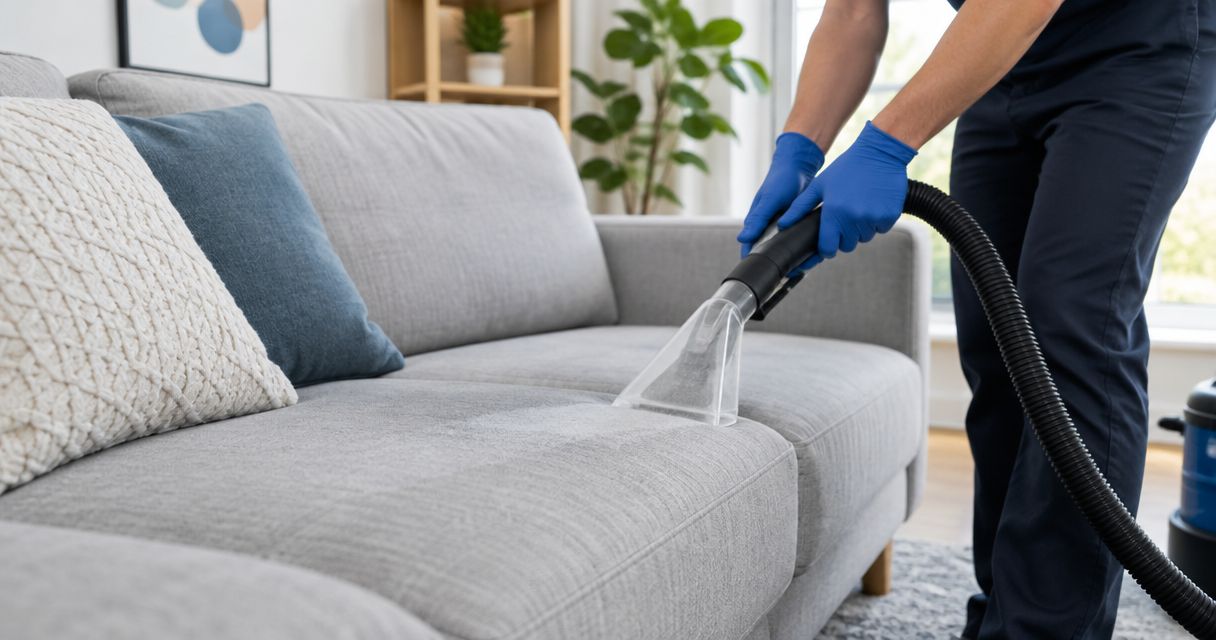
Upholstery cleaning has no single reliable drying time: your fabric, cushion filling, cleaning method, and room conditions determine when the furniture is ready to use. A dry-feeling seat surface does not prove the seams, cushion underside, or filling have dried, so check those areas and follow your cleaner’s instructions before sitting down.
- How long does upholstery cleaning take to dry? Judge readiness by fabric, cushion construction, and moisture—not the clock alone.
- Michaels Carpet Care provides upholstery cleaning for North Texas homeowners and businesses; leather and vinyl are excluded.
- Keep damp cushions uncovered, allow airflow, and check seams and undersides before returning furniture to use.
- Carpet drying claims do not establish a drying time for upholstered furniture.
How long does upholstery cleaning take to dry?
The useful answer is a furniture-specific estimate, followed by a physical drying check. Ask your cleaner for that estimate after the fabric, cushion construction, and required treatment have been assessed. An estimate given before inspection is not a substitute for checking the finished furniture.
Different parts of the same sofa can dry at different rates. Use the checks below together rather than judging the whole piece from the middle of a seat.
| Area to check | What to look for | What the check tells you |
|---|---|---|
| Exposed fabric | Dampness or moisture transfer to a clean, dry cloth | Whether the accessible surface still holds moisture |
| Piping and seams | Dampness where fabric layers meet | Whether thicker edges need more drying time |
| Cushion underside | Moisture on the less-exposed face | Whether the hidden side is ready to return to its normal position |
| Cushion-to-frame contact | Damp fabric where surfaces touch | Whether restricted airflow is leaving a wet area |
| Filling, if accessible without disassembly | Remaining moisture and the cleaner’s assessment | Whether a dry cover is masking damp material beneath it |
For a closer look at how the cleaning approach changes the job, see the guide to upholstery cleaning methods for fabric sofas. Choose the method for the material first; speed comes second.
Why this matters
Planning upholstery cleaning in 2026 means planning for the drying period as well as the appointment. If your household needs the sofa that evening, say so before booking rather than assuming the furniture will be ready when the cleaner leaves.
Covering damp upholstery with throws or replacing tightly fitted cushions restricts exposure to room air. Using the furniture also makes it harder to keep the cleaned surfaces undisturbed while you check their condition.
For a business, the practical question is when cleaned seating can return to service. Arrange alternative seating until the furniture passes its drying checks, and make sure the person reopening the room knows the cleaner’s instructions.
Why upholstery drying time varies
The main drying factors work together. A lightly dampened fabric in a well-ventilated room is a different drying situation from a thick cushion with moisture below the cover.
- Fabric and care requirements. The upholstery’s fiber, finish, and care instructions determine which cleaning methods are appropriate. Do not assume every fabric tolerates water-based cleaning.
- Cushion construction. A thin upholstered panel and a deep seat cushion do not hold moisture in the same way. Filling beneath the cover matters as much as the visible fabric.
- Moisture left after cleaning. Applying liquid and recovering it are separate parts of wet cleaning. Residual moisture still needs to leave the material after the appointment.
- Room humidity. Moisture evaporates less readily into already-humid air. Opening windows is not automatically helpful when outdoor air is humid.
- Air movement and exposure. Air needs access to the damp surfaces. Closely packed cushions, throws, and furniture placement can limit that access.
- Extra treatment. A spot that receives additional wet treatment needs its own drying check. Do not judge a treated armrest by an untouched back panel.
For your 2026 appointment, ask what is driving the estimate for your actual furniture. That answer is more useful than a generic promise that applies equally to every sofa.
What does the upholstery care label tell you?
The care label helps establish which cleaning approach is suitable. It does not tell you how many hours the furniture will take to dry, and it is not permission to soak the fabric yourself.
Common upholstery cleaning codes distinguish water-based cleaning, solvent-based cleaning, and vacuum-only care. Read the manufacturer’s full instructions because decorative trim, cushion covers, and the main body do not always have identical requirements.
| Common code | Cleaning category | Best for | Important limit |
|---|---|---|---|
| W | Water-based cleaning | Identifying fabrics designated for water-based cleaning products | Does not mean unrestricted wetting or machine washing |
| S | Solvent-based cleaning | Identifying fabrics designated for suitable cleaning solvents | Water-based treatment is not interchangeable with solvent cleaning |
| W/S or S/W | Water- or solvent-based cleaning | Identifying fabrics permitting either category under the care instructions | Product choice and application still require care |
| X | Vacuuming or light brushing | Identifying upholstery limited to non-liquid routine care | Do not apply water or solvent cleaners based on appearance alone |
These codes describe permitted care, not guaranteed results. Water-based cleaning still requires moisture control; solvent-based cleaning still requires the applicable ventilation and safety instructions. Vacuum-only care avoids adding cleaning liquid but does not provide wet stain treatment.
If the label is missing or unclear, leave method selection to a qualified upholstery cleaner. Guessing from the sofa’s color or texture risks choosing an unsuitable treatment.
How can you help upholstery dry safely?
Improve the drying conditions without adding heat, liquid, or an unapproved treatment. Start with the instructions your cleaner gives you, especially for delicate fabrics and fixed cushions.
- Confirm instructions. Before the cleaner leaves, ask which areas received extra treatment, how to position removable cushions, and what condition should trigger a call back.
- Expose surfaces. Remove throws and decorative pillows from damp seating. Separate removable cushions only as directed; do not unzip covers or dismantle the furniture to speed things up.
- Move air. Use normal room ventilation or a safely positioned fan to circulate air around exposed surfaces. Keep equipment and electrical connections away from damp fabric.
- Control humidity. Use your normal indoor climate controls. Open windows only when outdoor conditions support drying rather than bringing more moisture into the room.
- Check hidden areas. Inspect seams, undersides, and contact points before putting everything back. Keep any remaining damp areas exposed according to the cleaner’s advice.
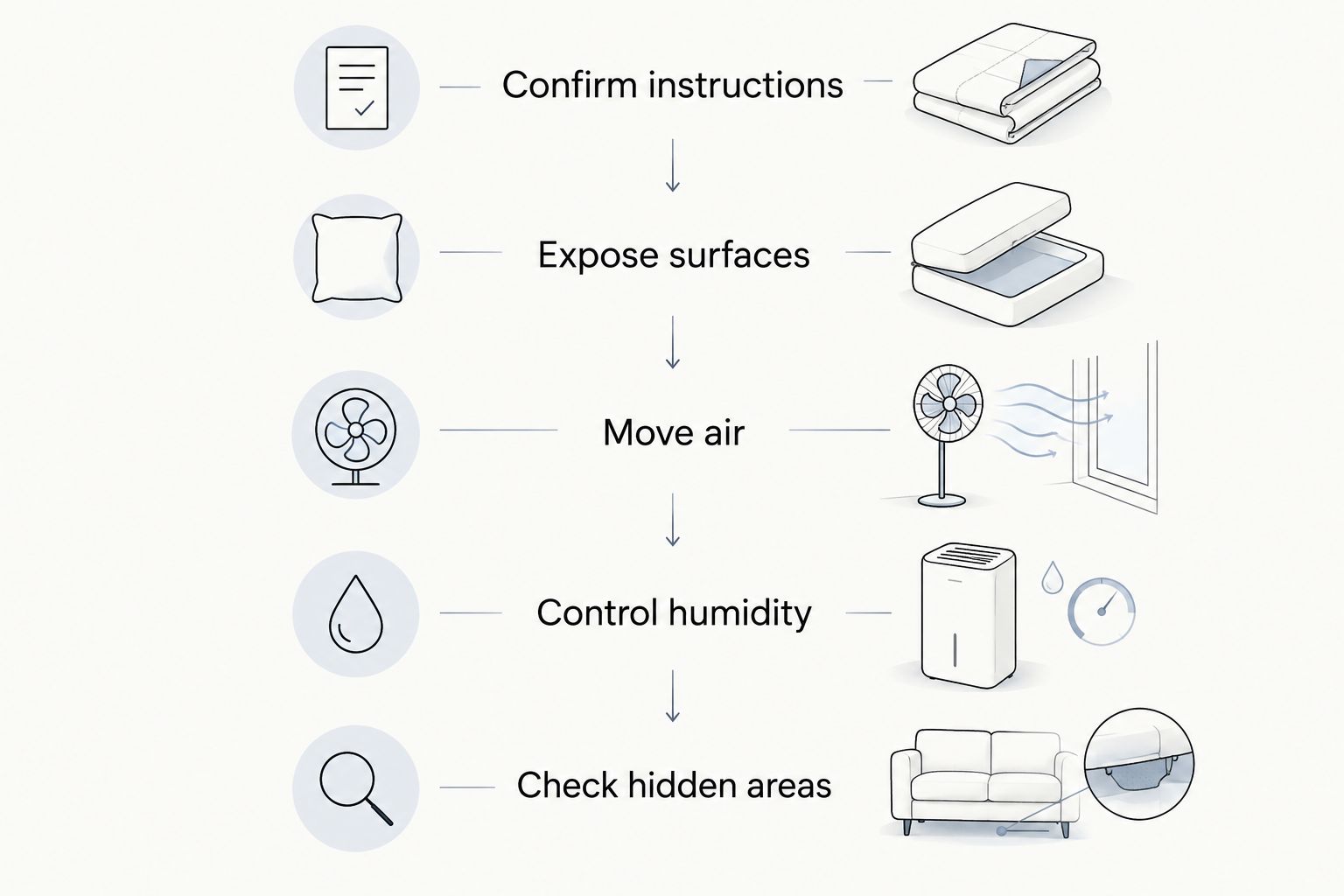
A fan helps move air; it does not establish that the cushion filling is dry. Continue checking the furniture rather than treating the fan’s running time as a countdown.
Avoid hair dryers, direct heaters, and other concentrated heat unless the furniture manufacturer or cleaner specifically approves them. Moving a sofa into direct sun is also not a universal solution because the fabric’s care requirements still apply.
When can you sit on the sofa after cleaning?
Sit on the sofa after the cleaned areas have dried and the cleaner’s use instructions have been met. Do not use a throw, towel, or blanket as a workaround for a damp seat.
Check the seat face, piping, underside, and any separately treated spots. A clean, dry white cloth can help reveal surface moisture when pressed gently against an inconspicuous area, but a dry cloth does not prove that deeper filling is dry.
If the surface feels cool, investigate rather than assuming it is wet or dry. Evaporation can cool damp fabric, but room temperature also affects how upholstery feels; touch alone is not a complete test.
For households with children or pets, keep the furniture out of use until the applicable drying and treatment instructions are satisfied. Drying readiness and product-specific re-entry instructions are related checks, not interchangeable ones.
Can upholstery stay damp overnight?
Upholstery that remains damp needs further assessment, not an automatic extra treatment. Compare its condition with the estimate and instructions provided for that piece.
If the furniture is still damp beyond the expected window, contact the cleaner. Explain where the moisture remains, whether the room has airflow, and whether any unusual odor, discoloration, or texture change has appeared.
Do not add fragrance, stain remover, or another round of water to solve a drying problem. Those additions change the treatment and can make it harder to identify what needs attention.
For a 2026 household or workplace schedule, keep a backup seating plan until the furniture is ready. Avoid building an event or reopening deadline around an unconfirmed drying assumption.
Does low-moisture carpet cleaning mean sofas dry just as fast?
A carpet drying claim is not an upholstery drying promise. Carpet and furniture have different constructions, and upholstery includes seams, layered fabric, filling, and contact points that need separate assessment.
Even when a company offers low-moisture carpet cleaning, ask which method it will use on your specific upholstered piece. Do not transfer a carpet service’s advertised drying window to a sofa simply because the same company cleans both.
The useful comparison for 2026 is not the shortest headline claim. It is whether the proposed cleaning method suits your fabric and comes with clear drying instructions.
What should you ask before booking in North Texas?
Tell the cleaner what the furniture is, what the care label says, and whether stains or odors are concentrated in particular areas. Include any previous cleaning problems, such as water marks, color transfer, or persistent dampness.
Ask these questions before agreeing to the appointment:
- Which cleaning approach suits this fabric and its care label?
- Does the estimate cover the whole piece, including treated spots and cushions?
- How should removable cushions be positioned afterward?
- What room conditions should you maintain during drying?
- What should you do if the furniture remains damp beyond the estimate?
Michaels Carpet Care upholstery cleaning is best suited to North Texas homeowners and businesses seeking fabric upholstery care, not leather or vinyl cleaning. The company serves McKinney, Frisco, Plano, and Allen and starts with safe, gentle products before using something stronger when needed.
That gentle-first approach does not make every fabric suitable for the same treatment or establish a universal drying deadline. Discuss your furniture and timing needs with Michaels Carpet Care before arranging service.
Discuss your upholstery cleaning needs
Ask about fabric suitability, cushion care, and drying expectations for your furniture.
FAQ
How long does upholstery cleaning take to dry in 2026?
Upholstery cleaning has no single reliable drying time; fabric, cushion construction, residual moisture, and room conditions determine readiness. Get a furniture-specific estimate, then check seams, undersides, and treated areas before use.
Can I sit on my couch while it is still slightly damp?
Wait until the cleaned areas are dry and the cleaner’s use instructions are satisfied. A blanket or towel does not make a damp cushion ready for normal use.
Will a fan help my sofa dry after cleaning?
A fan helps circulate air around exposed upholstery, but it does not prove the cushion filling is dry. Position equipment safely and continue checking hidden surfaces.
Should I open the windows after upholstery cleaning?
Open windows only when outdoor conditions support drying. Humid outdoor air does not automatically improve drying compared with your normally conditioned indoor air.
Why is the top of my cushion dry but the bottom still damp?
A cushion underside has less exposure to moving air when it rests against the furniture. Follow your cleaner’s cushion-positioning instructions and check the underside before putting it back.
What should I do if my couch is still damp the next day?
Contact the cleaner if dampness persists beyond the estimate provided for your furniture. Describe the affected areas and any unusual odor, discoloration, or texture change; do not add more cleaning liquid.
Does Michaels Carpet Care clean leather or vinyl furniture?
Michaels Carpet Care upholstery cleaning does not include leather or vinyl. Ask about the suitability of your fabric upholstery and the drying instructions for that specific piece.
One last thing
The most useful drying check is often underneath the cushion, not on top. The surface you see gets attention and airflow; the surface resting against the sofa is easier to overlook.
Before your 2026 cleaning appointment, decide where household members or customers will sit while the furniture dries. That simple arrangement removes the pressure to use upholstery before it is ready.