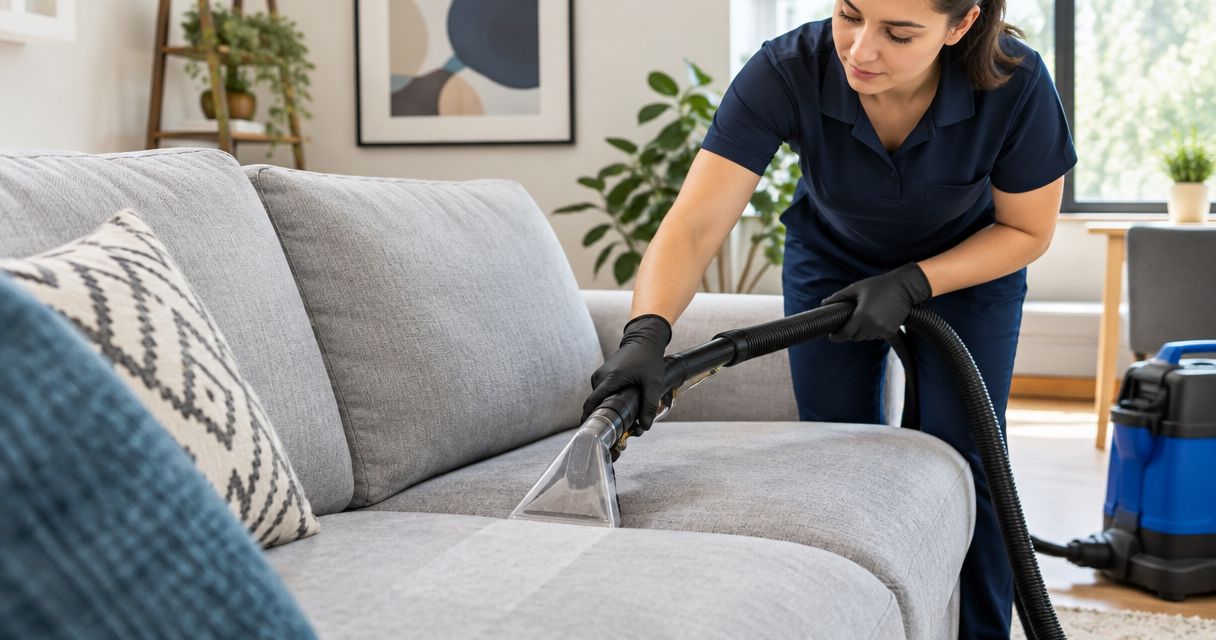
Professional upholstery cleaning cost depends on the furniture, fabric, condition, and work included; get an itemized quote for your pieces rather than treating a general estimate as your final bill. Ask whether the scope includes cushions, stain treatment, and odor concerns before you approve the work. This 2026 guide explains how to compare quotes without overlooking fabric safety or paying for work you did not request.
- Professional upholstery cleaning cost needs an itemized quote that identifies furniture, fabric, treatment, and exclusions.
- Michaels Carpet Care provides upholstery cleaning for homeowners and businesses in McKinney, Frisco, Plano, and Allen.
- Compare upholstery cleaning quotes by matching surfaces and treatments, not just the furniture description.
- A carpet drying estimate does not establish when your upholstered furniture will be ready to use.
How much does professional upholstery cleaning cost?
Your useful comparison is a written quote for the same furniture and the same work. A quote described only as sofa cleaning leaves too much unresolved: which surfaces, which cushions, which stains, and which limitations?
For local service, Michaels Carpet Care provides upholstery cleaning for homeowners and businesses across McKinney, Frisco, Plano, and Allen. Have your furniture details ready before requesting an estimate so the conversation starts with the actual job.
Use this scope comparison when describing your furniture:
| Furniture option | Best for describing | What to specify | Limit of the description |
|---|---|---|---|
| Upholstered chair | A separate seating piece | Seat, arms, back, cushions, and fabric label | Chair alone does not explain fabric or condition |
| Sofa or loveseat | A shared seating piece | Overall dimensions, cushion arrangement, and surfaces requested | A furniture name does not establish the cleaning scope |
| Sectional | Connected seating sections | Each section, chaise, corner, and removable cushion | Sectional layouts differ; a photo helps clarify the job |
| Upholstered dining chairs | A group of similar pieces | Quantity and whether seats, backs, or both are upholstered | Similar-looking chairs can have different fabrics |
| Commercial seating | Shared furniture in business premises | Furniture inventory, access, and operating schedule | A room description does not identify each piece |
These are quote categories, not service tiers. Do not assume that a larger furniture label includes every upholstered surface. Have the cleaner write down what the estimate covers.
Why this matters
A furniture-cleaning quote is also a treatment decision. The cleaner needs to understand the fabric before selecting products, moisture, and agitation; your decision should account for that care, not just the quoted total.
For a useful 2026 comparison, ask each provider to respond to the same furniture inventory. If one quote includes removable cushions and another leaves them unspecified, you have different proposals—not a clear comparison.
The same principle applies to expectations. Removing loose soil, treating a spill, and addressing an odor are different concerns. Name each concern separately so the cleaner can explain what cleaning can address and what needs inspection.
Why professional upholstery cleaning cost varies
These factors define the work a cleaner needs to assess. Ask how each affects your proposal rather than assuming a standard charge or an automatic inclusion.
- Furniture configuration: A sectional, an upholstered chair, and a group of dining chairs have different arrangements of fabric, seams, arms, and cushions. Describe the actual pieces.
- Fabric requirements: The care label, fiber information, and fabric condition help determine an appropriate cleaning approach. Appearance alone is not enough.
- Surfaces included: Seats, backs, arms, cushion sides, skirts, and other upholstered areas need a clear place in the scope. Identify the areas you want cleaned.
- Soil and spot concerns: General soil, isolated spills, and odors need separate descriptions. Tell the cleaner what happened and what you already applied.
- Access and scheduling: Explain stairs, parking restrictions, entry arrangements, and business operating hours before the appointment. Ask whether those details change the proposal.
- Additional treatments: Keep requested odor treatment or fabric protection distinct from routine cleaning. Ask whether each is appropriate, included, or separately quoted.
A clear scope protects both your furniture and your expectations. It lets the cleaner flag limitations before work begins and gives you a practical way to compare proposals.
What should a sofa-cleaning quote include?
A sofa-cleaning quote should identify the furniture, the surfaces being cleaned, and any separate treatment you authorize. It should also explain what remains subject to inspection.
Furniture and cushions
Describe whether the cushions are attached or removable and whether they have fabric on both sides. Ask which cushion surfaces the cleaner intends to treat. Do not assume that removable covers are suitable for machine washing simply because they unzip.
Include the arms and back in your description, especially when the sofa stands away from a wall. If you want an upholstered rear panel cleaned, say so directly rather than relying on the word sofa to communicate it.
Spots and existing damage
Point out spills, worn areas, loose seams, fading, and previous cleaning attempts. A photograph helps identify where a concern is, but it does not establish the fabric's response to treatment.
Ask the cleaner to distinguish cleaning from repair. Worn fibers, damaged dye, and torn fabric are not simply dirt, and a cleaning proposal should not imply that those conditions will disappear.
Optional work and exclusions
Have the estimate separate the requested cleaning from any proposed additional treatment. Ask what the treatment is intended to address and what result the cleaner can reasonably describe after inspection.
Keep the exclusions visible, too. Leather, vinyl, decorative trim, and mixed-material furniture need explicit discussion rather than an assumption that every surface receives the same treatment.
How to get a useful upholstery-cleaning quote in 2026
You do not need technical fabric knowledge to prepare a good request. You need a clear description, useful photographs, and an honest account of the furniture's condition.
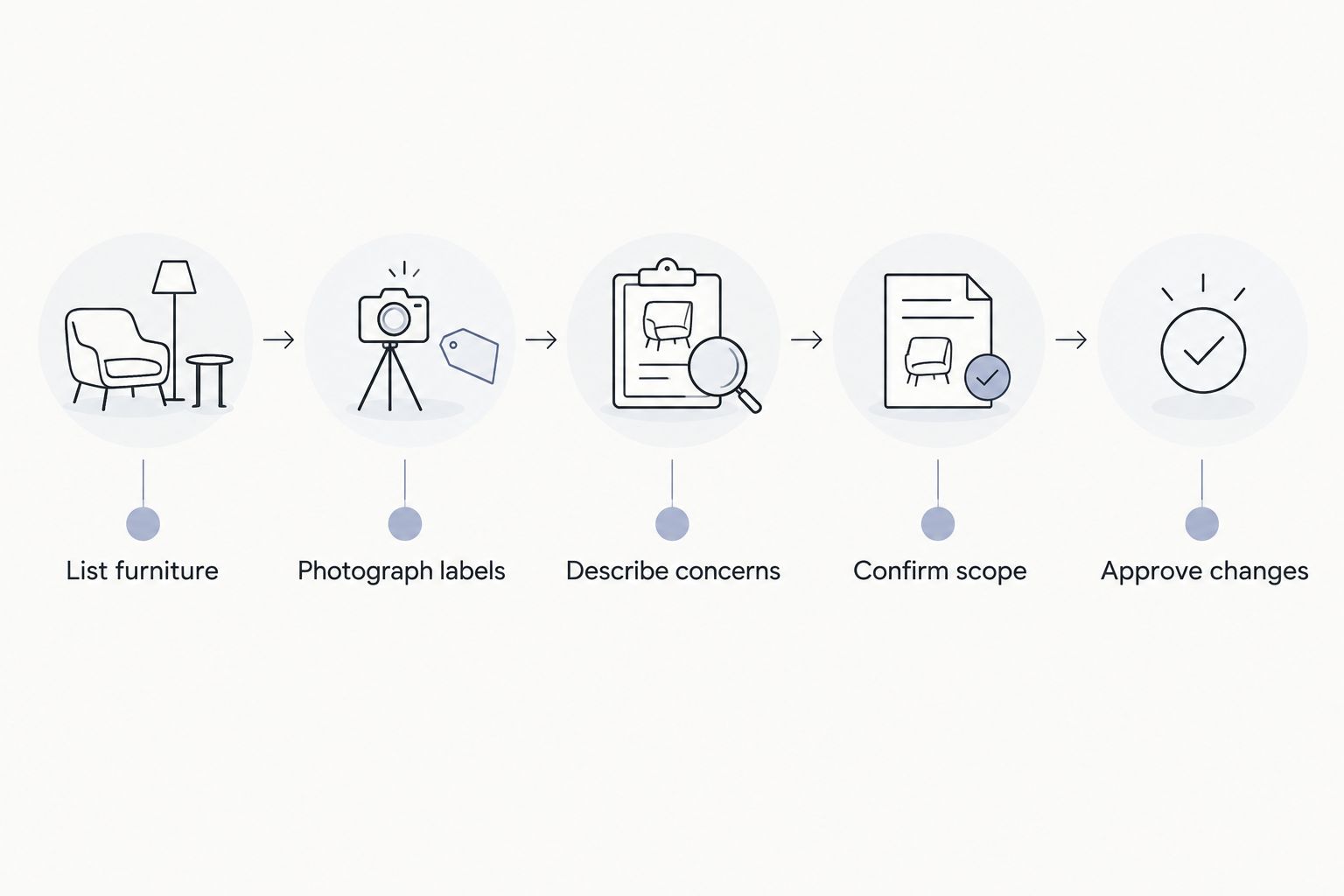
- List furniture. Name each piece and describe its configuration. For a sectional, identify the connected sections and any chaise or separate ottoman.
- Photograph labels. Send the care label and any fiber-content information you can find. Include a full view of the furniture, not just close-ups of stains.
- Describe concerns. Identify spills, odors, heavy-use areas, and previous treatments. If you do not know what caused a mark, say so.
- Confirm scope. Ask which surfaces and treatments the proposal includes. Request clarification of anything described only as an extra or specialty service.
- Approve changes. Agree on how the cleaner will handle findings during inspection. Require your approval before work outside the agreed scope begins.
This sequence gives you a record to refer to when comparing proposals. Keep the photographs and the written response together so a later discussion does not depend on memory.
If the cleaner needs an inspection before confirming the work, ask what remains provisional. That distinction is more useful than treating an early conversation as a final commitment.
Does the upholstery-cleaning method change the quote?
The cleaning method belongs in the discussion because it must suit the fabric. Do not choose a method solely because it sounds faster, gentler, or more powerful. Ask why the proposed approach fits your furniture and what testing comes first.
Upholstery care labels commonly use W for water-based cleaning, S for solvent-based cleaning, W/S for either category, and X for vacuuming or light brushing rather than liquid cleaning. Follow the furniture manufacturer's instructions and have a professional interpret the label in the context of the actual piece.
A label is not a promise that every spot will come out. Existing damage, dye behavior, trim, and previous treatments still matter. The cleaner should inspect the furniture rather than selecting a process from a photograph alone.
The guide to upholstery cleaning methods for fabric sofas provides a related starting point for discussing methods. Use it to prepare questions, not to override the furniture's care instructions.
Is professional upholstery cleaning worth it?
Professional cleaning is worth considering when your furniture needs cleaning and you want its fabric assessed before treatment. It is not a substitute for repairing damaged upholstery or resolving a moisture source that continues to affect the furniture.
Michaels Carpet Care upholstery cleaning is best for homeowners and businesses seeking local service in McKinney, Frisco, Plano, and Allen. Its stated approach starts with safe, gentle products and uses something stronger only when the material needs it. The service does not clean leather or vinyl, so identify those materials before requesting work.
The benefit of a professional assessment is a treatment plan tied to the furniture. The limit is equally important: cleaning does not make every stain reversible, and a responsible discussion separates achievable cleaning from cosmetic damage.
For your 2026 decision, compare the proposed outcome with what bothers you about the piece. If the main concern is torn fabric or crushed filling, ask about repair rather than expecting cleaning to solve a different problem.
How long before you can use cleaned upholstery?
Get furniture-specific drying instructions from the cleaner before you schedule the work. A drying statement about carpet does not establish a drying time for upholstery, even when the same company provides both services.
Tell the cleaner when you need the seating back in use. For a household, that means planning where people and pets will sit; for a business, it means deciding how to keep treated seating out of circulation until it is ready.
Ask how to position cushions, whether airflow needs attention, and what signs indicate the furniture is ready. Follow the instructions for your treatment rather than assuming that a surface that feels dry proves the whole cushion is dry.
What should you check before booking in 2026?
Before you approve upholstery cleaning, make sure the written proposal answers these practical questions:
- Does it identify every furniture piece you want cleaned?
- Does it specify the cushion surfaces and upholstered panels included?
- Does it acknowledge the care label and any inspection requirement?
- Does it separate cleaning from optional treatments?
- Does it record existing concerns and realistic limitations?
- Does it explain how you approve any change to the work?
Keep the focus on a shared understanding, not a longer document. A short, specific description is more useful than a page of general promises that never identifies your furniture.
For commercial seating, also confirm access and who can authorize changes. The person opening the building and the person approving the work should have the same scope available.
FAQ
How do I get an accurate professional upholstery cleaning cost?
Get an itemized quote based on your furniture, care labels, condition, and requested surfaces. Send clear photographs and ask what remains subject to inspection before treating the proposal as final.
Does sofa cleaning include every cushion?
Do not assume sofa cleaning includes every cushion surface. Ask whether the proposal covers removable cushions, both fabric sides where applicable, and the upholstered areas beneath them.
Is professional cleaning guaranteed to remove every upholstery stain?
Professional cleaning does not guarantee that every upholstery stain will disappear. Ask the cleaner to assess the mark and distinguish removable soil from dye damage, wear, or other permanent changes.
Can I use my carpet's drying time to plan upholstery cleaning?
Do not use a carpet drying estimate as an upholstery drying estimate. Get instructions for the furniture, fabric, and treatment actually being used, including when the seating can return to use.
Does Michaels Carpet Care clean leather or vinyl upholstery?
Michaels Carpet Care does not clean leather or vinyl upholstery. Identify those materials when discussing your furniture so the requested work matches the service offered.
Should I add fabric protection after upholstery cleaning?
Ask whether fabric protection is appropriate for your upholstery before adding it to the work. Request a separate explanation of its purpose, compatibility, and care requirements rather than assuming it belongs in every cleaning.
Can a cleaner confirm everything from a furniture photograph?
A furniture photograph helps describe the job but does not replace inspection. Send the care label, full-piece photographs, and close-ups of concerns, then ask which decisions require an in-person assessment.
One last thing
A removable cushion cover is not automatically a washable cushion cover. Before you unzip it and put it in the laundry, check the manufacturer's instructions; the zipper alone tells you nothing about safe cleaning.
For your next quote, photograph the label before doing any spot treatment. Give the cleaner the furniture's instructions and its treatment history, not a fresh experiment to work around.