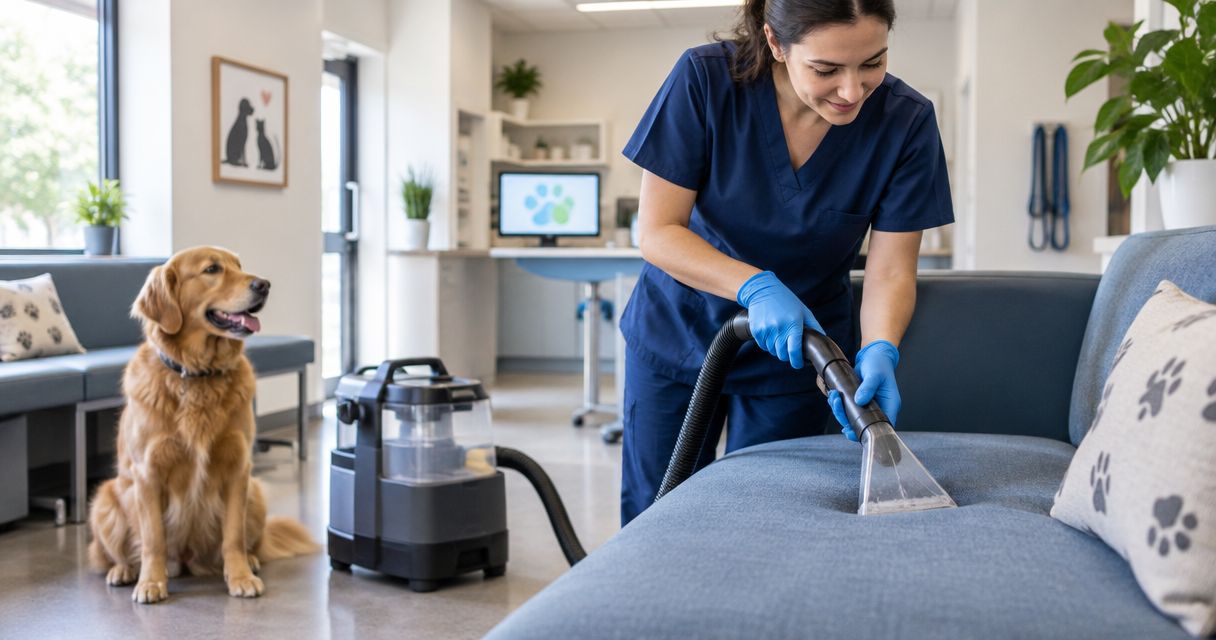
Veterinary clinic upholstery cleaning is the care of fabric-covered furniture to remove soil with the aim of keeping client seating clean and serviceable. Unlike household sofa care, your clinic’s plan must separate routine cleaning from infection control and account for animal accidents, fabric compatibility, and seating that cannot return to use while damp.
- Upholstery cleaning for veterinary clinics starts with fabric identification and a separate infection-control plan.
- Michaels Carpet Care offers upholstery cleaning for North Texas businesses; confirm suitability for each clinic’s fabric and contamination concerns.
- Cleaning removes soil; disinfection requires an appropriate labeled product, surface, and application procedure.
- Choose furniture care by material and exposure, not by fragrance or an assumed drying time.
Why upholstery cleaning matters for veterinary clinics
A waiting-room chair has a different job from an examination table. Clients sit on it, carriers rest against it, and fur collects along seams; an accident can turn routine furniture care into a contamination decision.
Michaels Carpet Care is best for North Texas businesses seeking routine fabric upholstery care, not a substitute for clinical disinfection. The company serves homeowners and businesses in McKinney, Frisco, Plano, and Allen. You can review Michaels Carpet Care when arranging an assessment of your clinic’s furniture.
For your 2026 cleaning plan, define the purpose of each task before choosing a method. Removing visible soil, addressing an odor source, and managing infectious contamination are different jobs. A clean-looking cushion is not evidence that an infection-control requirement has been met.
Your clinic’s veterinarian or infection-control lead should decide how potentially infectious contamination is handled. A furniture-cleaning provider should explain what can be cleaned, how the fabric will be treated, and what limits apply. Keep those responsibilities separate in the work order.
Build your clinic’s upholstery cleaning process
Identify every upholstered surface
Start with a walk-through and a simple furniture register. Record where each item sits, what covers it, whether cushions are removable, and whether the manufacturer’s care instructions remain available. A photograph of the care label belongs with the record.
Common upholstery codes include W for water-based cleaning, S for solvent-based cleaning, W/S for either permitted approach, and X for vacuuming or brushing only. These codes guide cleaning choices; they do not establish that a disinfectant is compatible or that a cushion can be saturated.
Separate fabric seating from coated upholstery. Michaels Carpet Care’s upholstery service does not clean leather or vinyl, so those surfaces need a different care arrangement. Do not book an entire waiting room as though every chair has the same covering.
- Record the upholstery material and care label.
- Photograph existing stains, wear, and seam damage.
- Identify removable covers and cushion inserts separately.
- Flag missing labels for assessment before wet cleaning.
Separate routine soil from contamination
Write down what staff should do when they find fur, ordinary dirt, spilled drinks, urine, feces, vomit, or suspected infectious material. Those events should not all trigger the same spray-and-wipe response. Remove affected seating from use when contamination requires assessment.
Routine vacuuming and compatible spot care belong in your housekeeping process. Potentially infectious contamination belongs under the clinic’s infection-control protocol, including decisions about protective equipment, handling, treatment, and disposal. Do not send a contaminated cushion for routine cleaning without disclosing the exposure.
EPA-registered disinfectants must be used according to their labels. Check the labeled surface, intended use, preparation requirements, and contact time; a claim for a hard, nonporous surface does not automatically apply to fabric seating.
- Classify the spill before selecting a product.
- Keep affected chairs out of client circulation.
- Notify the person responsible for infection control.
- Give the cleaner a clear contamination history.
Match the method to the fabric
Begin with the manufacturer’s instructions and the least aggressive permitted maintenance. Remove loose debris with a suitable upholstery attachment, then assess any remaining marks. Do not add moisture simply because a stain remains visible.
For stains that exceed your staff’s instructions or equipment, arrange a professional assessment. Michaels Carpet Care offers eco-friendly, fast-drying upholstery cleaning, but the method still needs to fit the actual covering. A service description is not permission to treat every fabric identically.
The upholstery cleaning methods for fabric sofas guide provides background for that discussion. In a clinic, add questions about contamination history and return-to-use conditions rather than choosing a method solely for stain removal.
Ask for a discreet compatibility test where appropriate. A successful test helps assess color transfer or surface changes, but it does not prove that a treatment disinfects the furniture.
- Check the care instructions before applying liquid.
- Vacuum seams and accessible crevices without damaging fabric.
- Discuss discoloration, texture changes, and moisture sensitivity.
- Request an explanation of the proposed cleaning method.
Control accidents without spreading the problem
Keep your incident instructions close to the supplies staff use. The first decision is whether an event falls within routine spot care or requires the clinic’s contamination procedure. Staff should not improvise treatment while clients continue using the chair.
For an ordinary spill that the fabric instructions permit staff to address, remove excess material without rubbing it farther into the upholstery. Use only the approved method and avoid repeatedly adding liquid to chase a mark. Moisture and soil can reach cushion interiors that surface cleaning does not resolve.
An odor deserves investigation, not a stronger fragrance. If urine or another liquid has reached foam, backing, or the furniture base, discuss those layers explicitly. Surface improvement and complete source removal are not the same result.
- Restrict access before beginning cleanup.
- Follow the clinic’s handling and protective-equipment instructions.
- Avoid mixing cleaning chemicals or layering unapproved products.
- Record lingering odor, dampness, or visible changes.
Schedule cleaning around seating access
Build your 2026 schedule around which chairs can be taken out of service, not an assumed universal drying window. Fabric, cushion construction, cleaning method, and room conditions affect the return-to-use decision. Ask the provider for guidance specific to the furniture being treated.
Use a simple seating map to divide the waiting area into workable zones. Keep an accessible route and enough suitable seating while a section is closed. If that is not possible during appointments, arrange the work outside client-facing hours.
Do not transfer a carpet drying claim to upholstery. Michaels Carpet Care describes its services as fast-drying, but your clinic still needs upholstery-specific instructions. Return seating only after it meets the cleaner’s drying guidance and the clinic’s applicable infection-control requirements.
- Mark the chairs included in each cleaning visit.
- Set aside a place where furniture can dry undisturbed.
- Keep animals and clients away from treated upholstery.
- Confirm who authorizes the furniture’s return to use.
Verify the result before reopening seating
Inspect the furniture rather than closing the job when the equipment leaves. Check seams, arms, cushion edges, and any area identified in the original stain record. Compare the outcome with the agreed scope, including stains the provider said might remain.
Keep appearance checks separate from infection-control checks. A chair can look better without meeting a disinfection requirement, and a permanent stain does not by itself establish current contamination. Use the relevant procedure for each decision.
For your 2026 records, keep 1 cleaning record per furniture item or clearly identified seating group. This is a practical filing recommendation, not a required industry interval. It makes repeat problems easier to trace without relying on staff memory.
- Check the treated fabric for visible changes.
- Confirm drying and any product-specific return instructions.
- Record unresolved marks and odor concerns.
- Refer contamination questions to the clinic’s designated lead.
Review recurring problems before rebooking
Use your cleaning log to identify patterns. If the same seat repeatedly develops an odor or the same fabric repeatedly needs special handling, another identical cleaning visit is not automatically the right next move. Review the source, furniture construction, and placement first.
For the remainder of 2026, assign an owner to each part of the process: inspection, incident response, service booking, and reopening. One person can hold several responsibilities, but the handoffs should be explicit. Keep 2 separate decisions in the workflow: whether furniture is clean enough for routine use and whether a contamination protocol has been satisfied.
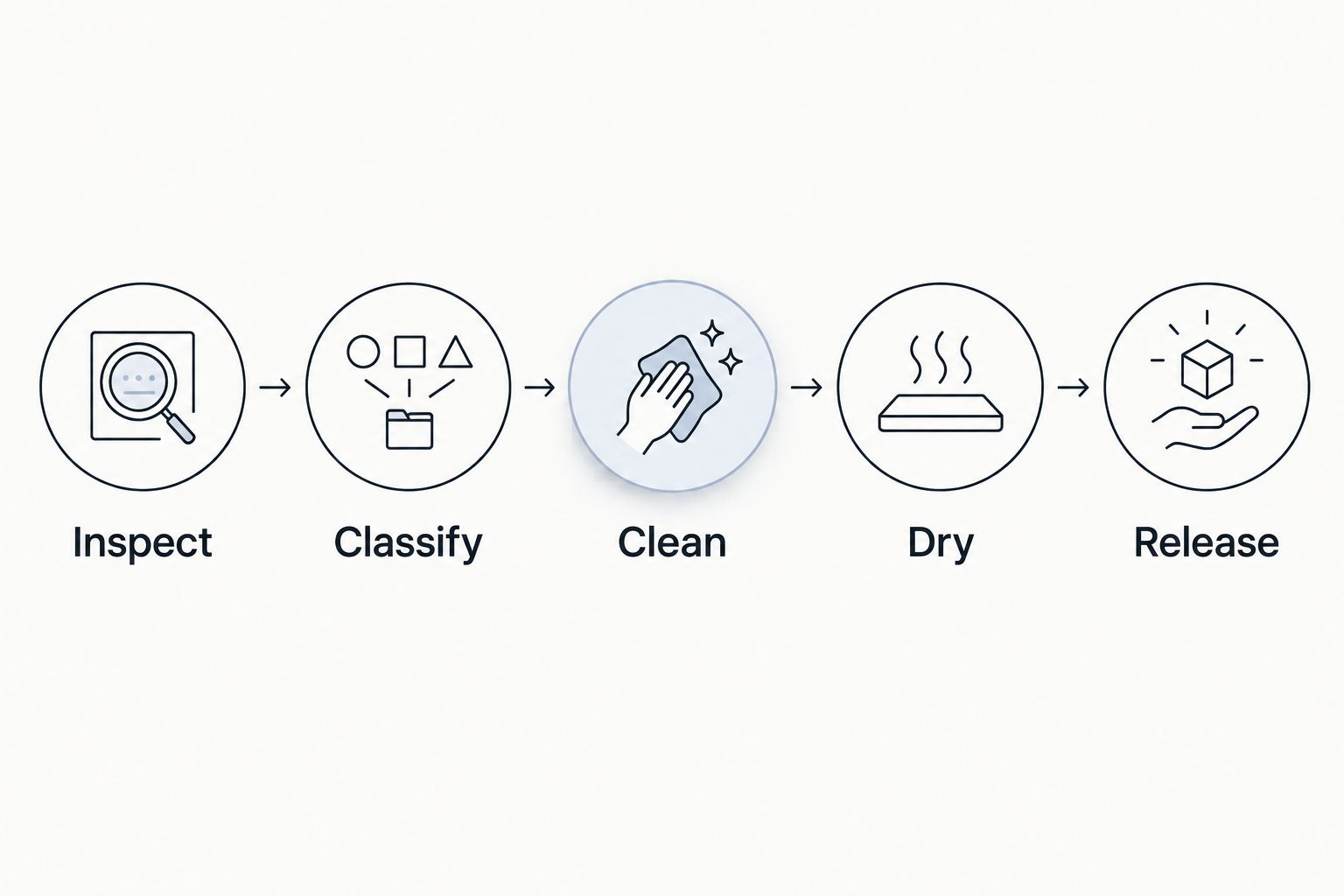
The process should follow this sequence: Inspect, Classify, Clean, Dry, Release. If an item fails a check, keep it out of use and resolve the issue rather than treating the sequence as automatic approval.
- Review repeated stains by furniture item and location.
- Reassess covers that cannot tolerate the required care.
- Separate cleaning requests from repair or replacement decisions.
- Update instructions when furniture or cleaning products change.
Compare your clinic’s upholstery care options
Choose an option by its purpose and limits. Routine maintenance, professional cleaning, contamination management, and furniture replacement solve different problems; they are not interchangeable levels of the same service.
| Option | Best for | Main benefit | Key limitation |
|---|---|---|---|
| Staff vacuuming and approved spot care | Routine fur, loose soil, and permitted minor spills | Fits daily housekeeping and supports early intervention | Does not replace deep cleaning or a contamination protocol |
| Professional fabric upholstery cleaning | Embedded soil and stains beyond routine staff care | Provides an assessment and a method matched to the fabric | Does not automatically disinfect; stain removal has limits |
| Clinic-directed contamination response | Known or suspected infectious exposure | Keeps decisions tied to the clinic’s protocol and applicable product labels | Some upholstery cannot tolerate the necessary treatment |
| Repair or replacement | Damaged coverings, unsuitable materials, or unresolved interior contamination | Addresses a problem that repeated surface treatment cannot solve | Requires a separate furniture decision and disruption planning |
Best for routine fabric care: professional upholstery cleaning belongs alongside daily housekeeping, not in place of it. Best for infectious exposure: a clinic-directed response takes priority over appearance or convenience.
When requesting service, tell the provider what the furniture is made from and what happened to it. Ask whether cushion interiors, removable covers, and odor-source assessment fall within the proposed scope. Do not assume that cleaning the visible fabric includes every upholstered component.
Common mistakes veterinary clinics make
Treating eco-friendly as a disinfection claim
Environmental positioning does not establish pathogen efficacy. Check the actual product label and intended surface when disinfection is required. Your clinic’s infection-control lead should approve the response, regardless of how gently a routine cleaner is formulated.
Booking coated chairs as fabric upholstery
Leather, vinyl, and woven fabric need different care decisions. Verify the covering before requesting service, especially when furniture has a fabric-like texture. A whole-room booking should list material exceptions rather than leave them for the appointment.
Reopening chairs because the surface feels dry
A quick touch is not a complete return-to-use procedure. Follow the provider’s guidance for the fabric and cushion construction, then complete any separate contamination requirements. Keep barriers in place until the designated staff member releases the seating.
Repeating stain treatment without checking the cushion
Repeated surface work can miss a source inside padding or beneath removable cushions. Explain whether the problem is a visible mark, a recurring smell, or both. Ask for an honest limit on what cleaning can address before approving another treatment.
Choosing a calendar interval without reviewing incidents
A fixed booking pattern does not replace checks after spills or exposure. In your 2026 plan, combine scheduled condition reviews with event-triggered action. Change the schedule when the furniture’s condition or use changes, rather than inventing a universal cleaning frequency.
FAQ
What’s the best upholstery cleaning approach for a veterinary waiting room?
The best approach combines fabric-compatible routine care with a separate clinic-approved contamination procedure. Identify the covering, review its care instructions, and choose professional cleaning when the soil or stains exceed staff procedures.
Does professional upholstery cleaning disinfect veterinary clinic chairs?
Professional upholstery cleaning does not automatically disinfect chairs. Disinfection depends on an appropriate labeled product, a compatible surface, and correct application under the clinic’s infection-control procedure.
Can Michaels Carpet Care clean all the chairs in my clinic?
Michaels Carpet Care offers fabric upholstery cleaning but does not clean leather or vinyl. Provide the furniture materials and contamination history before arranging service so the scope can be assessed.
How often should a veterinary clinic clean upholstered seating?
Set the schedule from furniture condition, use, manufacturer instructions, and incident history rather than a universal interval. Spills and suspected contamination require assessment when they occur, not at the next scheduled visit.
How long should clinic seating stay out of use after cleaning?
Keep seating out of use until it meets the provider’s drying instructions and any applicable clinic contamination requirements. Confirm the guidance for the actual fabric and cushion construction before booking.
Can staff use a hard-surface disinfectant on fabric chairs?
Staff should not assume a hard-surface disinfectant is suitable for fabric upholstery. Check the product’s labeled surfaces and directions alongside the furniture manufacturer’s compatibility instructions.
When should a veterinary clinic replace an upholstered chair instead of cleaning it?
Consider replacement when damage, unsuitable materials, or unresolved interior contamination prevents acceptable care. Have the clinic’s responsible lead assess contamination concerns separately from repair, appearance, and routine cleaning decisions.
One last thing
The most useful upholstery question is not always which stain remover works. It is whether the chair’s construction allows the care your clinic needs.
Before buying replacement seating, ask for the manufacturer’s cleaning and disinfectant-compatibility instructions. File those instructions before the chair enters service. A furniture purchase should include a care decision, not create an unresolved one.