Best overall for offices that need a quick return to use: dry compound cleaning. Best for restorative cleaning: hot water extraction. Best for routine appearance maintenance: encapsulation. This guide compares the best commercial carpet cleaning methods for offices, with Michaels Carpet Care as a local option for eco-friendly, fast-drying commercial carpet cleaning in North Texas.
- The best commercial carpet cleaning methods for offices depend on soil, carpet construction, and access requirements.
- Dry compound cleaning suits offices prioritizing low moisture; hot water extraction suits restorative cleaning.
- Encapsulation supports routine maintenance, but vacuuming must remove the dried residue.
- Michaels Carpet Care fits North Texas offices seeking eco-friendly, fast-drying commercial carpet cleaning.
Why this matters
Office carpet needs more than an occasional stain treatment. Entrance grit, tracked-in soil, and spills create different cleaning problems, and a method that improves surface appearance does not necessarily remove embedded contamination.
For your 2026 cleaning plan, separate daily soil removal, interim maintenance, and restorative cleaning. These jobs work together; treating them as interchangeable leaves gaps in the schedule. Start with the carpet manufacturer's care instructions, then choose the process that addresses the actual soil without creating an unnecessary moisture problem.
What makes the best office carpet cleaning method?
Judge a commercial carpet cleaning method against these criteria before choosing equipment or booking a service:
- Carpet compatibility: Follow the manufacturer's guidance for the fiber, backing, installation, and cleaning chemistry.
- Soil removal: Distinguish loose grit, sticky surface soil, spots, and contamination deeper in the carpet.
- Return to use: Ask how the process affects access, furniture placement, and drying—not just appointment length.
- Residue removal: Confirm how the process removes cleaning agents and loosened soil rather than leaving them behind.
- Maintenance fit: Choose a method that supports your existing vacuuming and spot-response routine.
- Material protection: Require inspection and an inconspicuous test before treating unfamiliar carpet or a difficult stain.
Fast drying is useful, but compatibility comes first. A convenient process is the wrong choice when the carpet manufacturer excludes it.
Commercial carpet cleaning methods at a glance
These six methods serve different purposes. The order favors routine office access first, then restorative needs and narrower maintenance tasks.
| Method | Best for | Standout feature | Key limitation |
|---|---|---|---|
| Dry compound cleaning | Offices prioritizing low-moisture cleaning | Absorbent compound is worked through the carpet and removed | Thorough compound recovery is essential |
| Hot water extraction | Restorative cleaning of embedded soil | Applies cleaning solution and extracts it with suspended soil | Requires controlled drying before normal use |
| Encapsulation | Scheduled interim maintenance | Dried cleaning residue is removed through subsequent vacuuming | Does not replace restorative cleaning for every soil condition |
| Bonnet cleaning | Manufacturer-approved surface appearance work | An absorbent pad collects soil near the carpet surface | Limited reach into deeper contamination |
| Wet shampoo cleaning | Carpet approved for an agitation-and-recovery process | Detergent and mechanical action loosen soil | Incomplete recovery leaves residue |
| Commercial vacuuming | Daily removal of loose particulate soil | Removes dry debris before wet treatment | Does not resolve sticky spills or embedded staining |
1. Dry compound cleaning: best for low-moisture office cleaning
Dry compound cleaning uses an absorbent cleaning material worked into the carpet with mechanical agitation. The compound collects soil and is then removed according to the system's instructions, typically with thorough vacuuming. It is a practical starting point when limiting added moisture matters.
Dry compound cleaning pros:
- Adds less moisture than a wet extraction process.
- Supports cleaning in defined areas without wetting the entire floor.
- Provides an alternative when office access is difficult to interrupt.
Dry compound cleaning cons:
- Requires careful removal of the cleaning compound.
- Does not automatically resolve contamination in the backing or underneath the carpet.
Best for: Offices seeking low-moisture maintenance with a clear compound-removal procedure.
Michaels Carpet Care describes its commercial carpet cleaning approach as eco-friendly and fast-drying. Its stated technical details include Host Dry low-moisture technology, about 10% of the water used by steam cleaning, and drying in 1–2 hours. Confirm which process and drying expectation apply to your office rather than assigning those figures to every dry compound system.
Verdict: Buy a professionally specified dry compound service when low moisture is the priority and the carpet permits it.
2. Hot water extraction: best for restorative office carpet cleaning
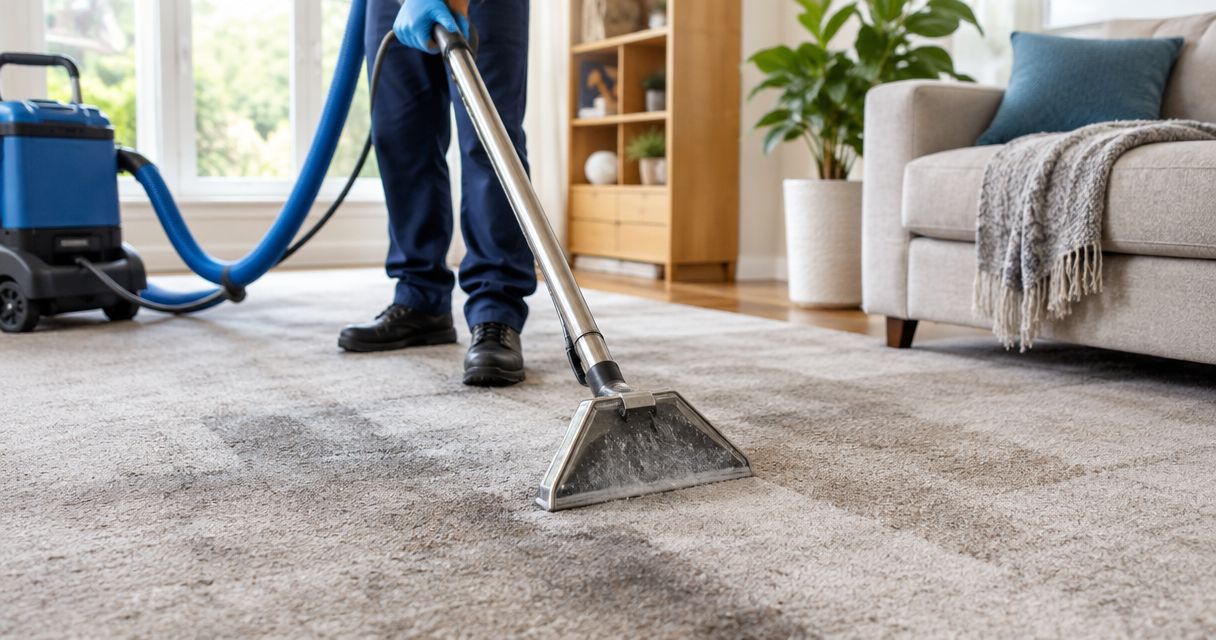
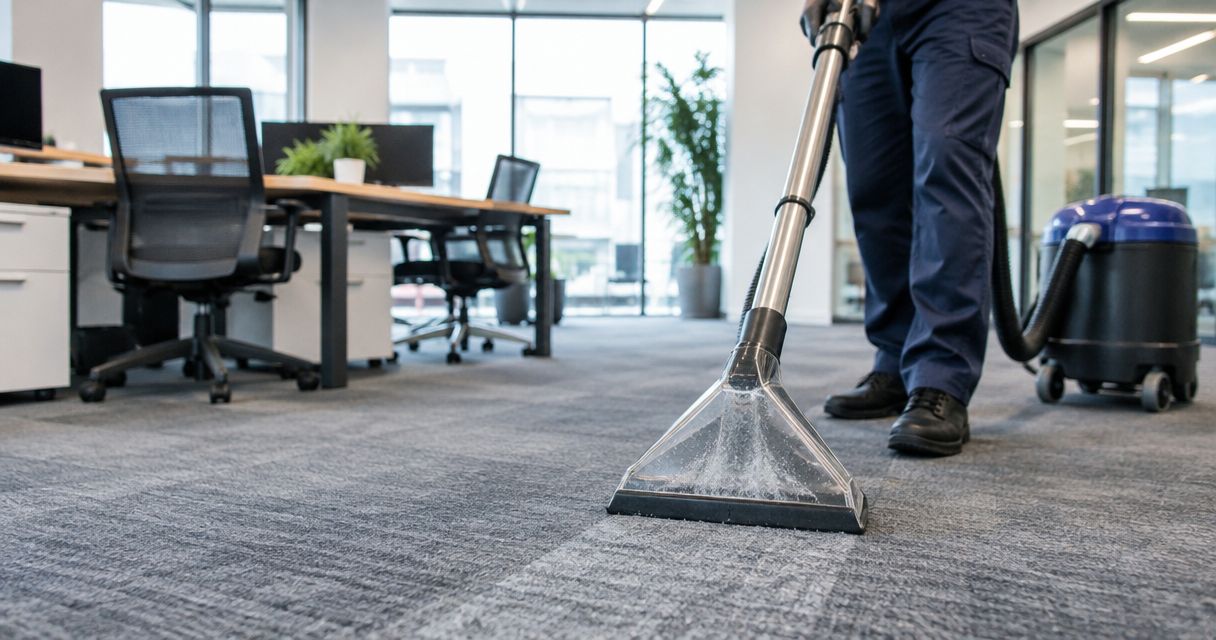
Hot water extraction applies cleaning solution and recovers it through suction. Often called steam cleaning, the process uses liquid water and extraction rather than steam alone. Pre-treatment, controlled agitation, and effective recovery determine how well it addresses embedded soil.
Hot water extraction pros:
- Combines rinsing and extraction in one cleaning process.
- Addresses soil beyond a surface-only appearance treatment.
- Provides a restorative option when interim maintenance no longer produces an acceptable result.
Hot water extraction cons:
- Requires a drying plan before you reopen the cleaned area.
- Excess moisture or weak recovery creates avoidable drying and residue problems.
Best for: Offices needing restorative cleaning where the carpet manufacturer permits extraction.
Ask how the cleaner will control moisture, recover the solution, and support drying. A statement that the equipment is powerful does not answer those questions. Include room ventilation and access restrictions in your 2026 work order so staff do not return simply because the technician has finished.
Verdict: Buy hot water extraction for compatible carpet that needs restorative cleaning, with drying arrangements agreed beforehand.
3. Encapsulation: best for scheduled interim maintenance
Encapsulation uses cleaning chemistry designed to form a dry, removable residue around soil. Mechanical agitation distributes the product, and subsequent vacuuming removes the dried residue. The vacuuming stage is part of the process, not an optional finishing touch.
Encapsulation pros:
- Fits a recurring maintenance program between restorative cleans.
- Targets appearance problems in traffic lanes and shared spaces.
- Connects professional cleaning with the office's ongoing vacuuming routine.
Encapsulation cons:
- Depends on suitable chemistry and effective follow-up vacuuming.
- Is not a complete answer to every spill, stain, or deeper contamination problem.
Best for: Offices with a dependable cleaning team and a written interim maintenance schedule.
Before choosing encapsulation, establish who removes the dried residue and when. If the cleaning contractor applies the treatment but your office team handles later vacuuming, put that handoff in writing. Otherwise, the service ends before the soil-removal process does.
Verdict: Buy encapsulation for planned interim maintenance when follow-up vacuuming is part of the agreement.
4. Bonnet cleaning: best for approved surface appearance work
Bonnet cleaning uses a rotating absorbent pad to collect soil from the upper portion of the carpet. The pad needs changing or cleaning as it becomes soiled. This is an appearance-maintenance method, not an equivalent substitute for deep extraction.
Bonnet cleaning pros:
- Focuses on surface soil affecting visible appearance.
- Supports treatment of a defined traffic lane or reception area.
- Offers an interim option where the manufacturer specifically permits the process.
Bonnet cleaning cons:
- Has limited reach into soil deeper in the carpet.
- Rotating-pad action is unsuitable for some carpet constructions.
Best for: Manufacturer-approved carpet needing surface appearance maintenance rather than restorative cleaning.
Do not accept bonnet cleaning solely because it is convenient for the cleaning crew. Ask for confirmation that the carpet permits rotating-pad treatment. Also ask how soiled pads are managed: continuing with a dirty pad defeats the purpose of transferring soil away from the carpet.
Verdict: Hold until manufacturer compatibility is confirmed; buy only for the surface-maintenance job it actually performs.
5. Wet shampoo cleaning: best for an approved agitation-and-recovery process
Wet shampoo cleaning works detergent through the carpet with mechanical agitation. The complete procedure must also address recovery of loosened soil and cleaning residue. Applying foam and brushing it through the carpet is not, by itself, a finished cleaning job.
Wet shampoo cleaning pros:
- Provides mechanical action to loosen attached soil.
- Allows treatment of defined areas with appropriate cleaning chemistry.
- Serves a distinct role when the carpet permits the full process.
Wet shampoo cleaning cons:
- Incomplete residue removal can contribute to re-soiling.
- Requires moisture control and a clear recovery procedure.
Best for: Carpet with an approved shampoo protocol that specifies both agitation and soil recovery.
For a 2026 office cleaning specification, avoid the vague instruction to shampoo all carpet. Name the approved process, how residue will be removed, and what determines reopening. That gives you a service you can assess rather than a familiar label with an undefined outcome.
Verdict: Hold unless the contractor specifies compatibility, recovery, and drying; skip a foam-only appearance treatment.
6. Commercial vacuuming: best for daily loose-soil removal
Commercial vacuuming removes loose particulate soil before it becomes part of a harder cleaning problem. It belongs in every office carpet maintenance plan, but it is not a substitute for spill treatment or restorative cleaning. Use equipment and brush settings appropriate to the carpet.
Commercial vacuuming pros:
- Removes dry debris without adding cleaning moisture.
- Supports every other method in this guide.
- Lets staff concentrate effort where tracked-in soil collects.
Commercial vacuuming cons:
- Does not remove sticky liquid residues by itself.
- Loses effectiveness when bags, filters, or brushes need attention.
Best for: Routine care of entrances, corridors, work areas, and other carpeted office spaces.
Make vacuuming a visible task with defined coverage, not simply an instruction to clean the floors. Inspect equipment and pay attention to entrances and traffic lanes. Before treating a spill, remove surrounding loose debris so it does not become wet soil during cleaning.
Verdict: Buy a consistent vacuuming program as the foundation; skip the idea that vacuuming alone covers every cleaning need.
How the methods are ranked
This ranking prioritizes carpet compatibility, soil removal, access requirements, residue recovery, and maintenance fit. It is a use-case guide, not a claim that every office should receive the same treatment.
For 2026, dry compound cleaning is the default to discuss when low moisture matters most. Hot water extraction takes priority when restorative cleaning is the job. Encapsulation, bonnet cleaning, shampoo cleaning, and vacuuming occupy narrower roles defined by carpet guidance and soil conditions.
Which commercial carpet cleaning method should you choose?
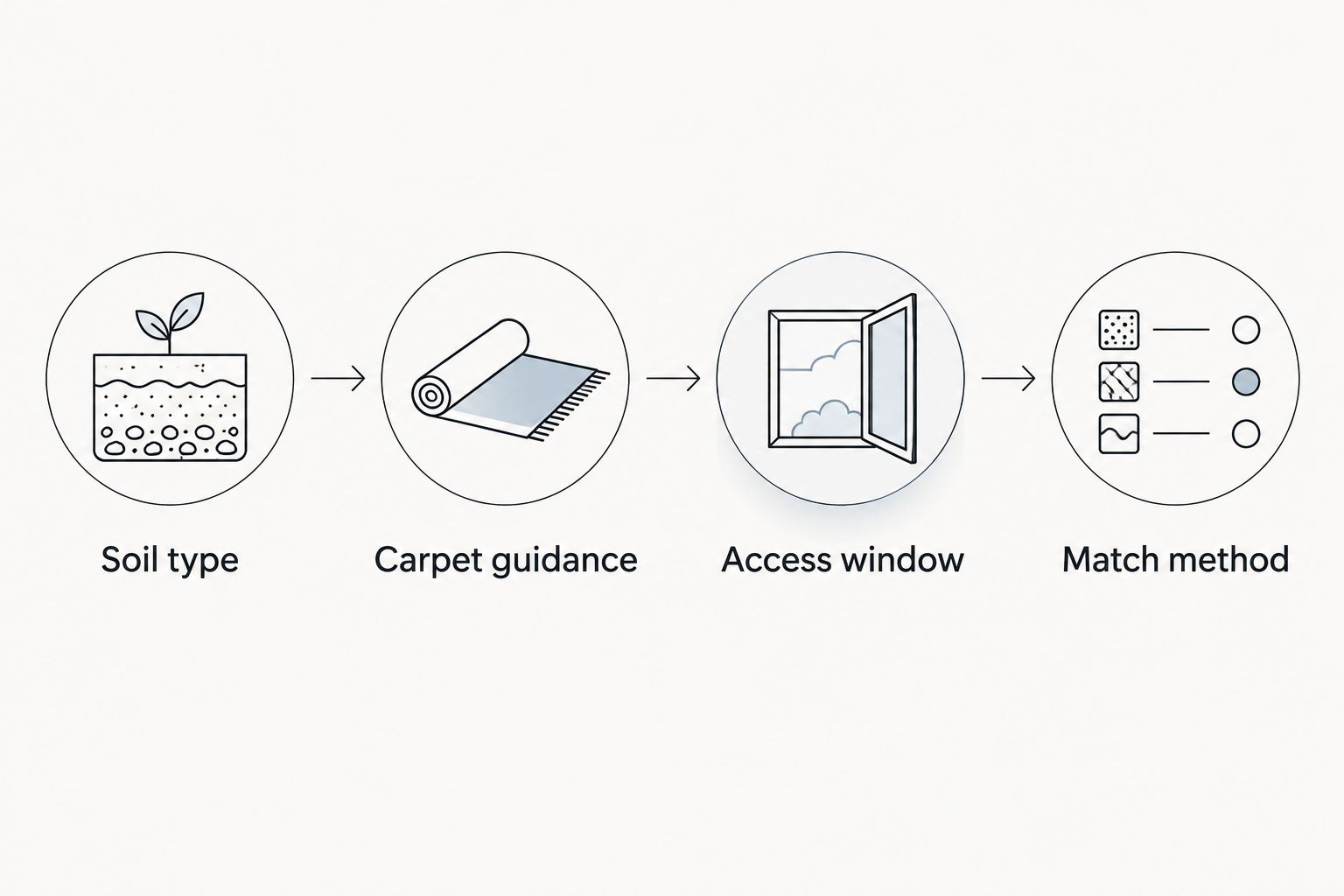
Choose the job before choosing the method. Use this sequence when discussing an office cleaning plan with a contractor:
- Soil type: Identify loose grit, traffic-lane soil, spills, or a problem extending below the surface.
- Carpet guidance: Check the manufacturer's approved methods and any warranty-related maintenance requirements.
- Access window: Establish when staff can leave the area and what conditions must be met before reopening.
- Match method: Select a process with an explicit recovery step and a realistic maintenance role.
For an undecided office manager, start by discussing low-moisture cleaning and ask whether the carpet and soil condition support it. Michaels Carpet Care serves homeowners and businesses in McKinney, Frisco, Plano, and Allen, making it a local service option for offices in those areas.
The default recommendation is low-moisture cleaning for access-sensitive offices, with restorative treatment selected when the soil requires it. Do not use fast drying as a reason to ignore a stain that needs a different approach.
Discuss your office carpet cleaning
Ask which cleaning process fits your carpet, soil conditions, and office access requirements.
FAQ
What's the best commercial carpet cleaning method for a busy office?
Dry compound cleaning is a strong starting point for an office prioritizing low moisture and continued access. Confirm that the carpet manufacturer permits the process and that compound recovery is included.
Is hot water extraction better than encapsulation?
Hot water extraction serves restorative cleaning, while encapsulation serves interim maintenance. Choose according to the soil condition rather than treating the methods as interchangeable.
Can an office use vacuuming instead of professional carpet cleaning?
Vacuuming removes loose dry soil but does not replace spill treatment or restorative cleaning. Keep vacuuming in the routine and arrange additional treatment when the carpet condition requires it.
How long does Michaels Carpet Care say its carpet cleaning takes to dry?
Michaels Carpet Care describes drying in 1–2 hours in its service information. Confirm the applicable process and expected return-to-use conditions for your office before scheduling.
Is bonnet cleaning safe for every commercial carpet?
No, bonnet cleaning is not appropriate for every commercial carpet. Check the manufacturer's guidance before approving rotating-pad treatment.
What should an office ask before booking carpet cleaning in 2026?
Ask which method suits the carpet, how soil and residue will be recovered, and when the area can reopen. Include spot treatment, access arrangements, and follow-up maintenance in the scope.
Does eco-friendly carpet cleaning remove every stain?
No cleaning approach guarantees removal of every stain. Permanent discoloration, fiber damage, and contamination beneath the carpet require separate assessment rather than a promise of complete removal.
One last thing
A clean-looking carpet and a completed cleaning process are not the same thing. Ask the contractor to explain where the loosened soil goes: into recovered liquid, an absorbent compound, a pad, or the vacuum after drying. That question exposes the difference between an appearance treatment and a soil-removal plan.
Keep that recovery step in your 2026 service scope. It is more useful than choosing a method by name alone.