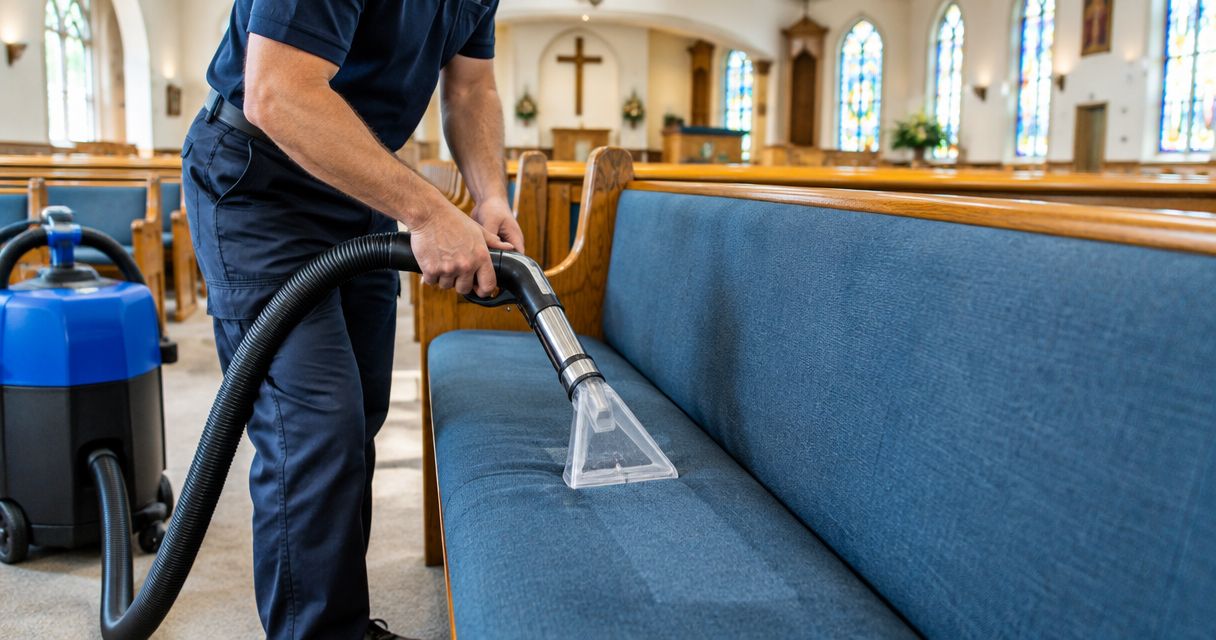
Church upholstery cleaning is the care of fabric-covered seating with the aim of keeping worship spaces clean and ready for use. Upholstery cleaning for churches needs a fabric-specific plan that accounts for fixed pew cushions, movable chairs, volunteer maintenance, and the time between services.
- Upholstery cleaning for churches starts with fabric identification, not a preferred machine or cleaning chemical.
- Michaels Carpet Care is best for North Texas churches seeking local upholstery cleaning alongside carpet, tile, and stone care.
- Vacuuming supports routine church seating care; stain treatment requires fabric checks and a hidden-area test.
- Reopen cleaned seating after checking dryness, not simply because the next service is starting.
Why upholstery cleaning matters for churches
Church seating requires more planning than a single household sofa. A sanctuary can contain attached cushions, while classrooms and reception areas contain chairs with different fabrics and care instructions. Treating all of them alike risks using the wrong method.
Your 2026 maintenance plan should separate routine soil removal from professional cleaning. Volunteers can handle inspection and suitable vacuuming; unfamiliar fabrics, persistent stains, and fixed upholstery need closer assessment. The guide to upholstery cleaning methods for fabric sofas explains method differences, but church seating still needs its own inspection.
The right church upholstery method is the one the fabric permits and the service calendar can accommodate. Start with those constraints before choosing equipment, accepting a proposal, or assigning volunteers.
Build your church upholstery cleaning plan
Map your seating before choosing a method
Walk through the building with a paper floor plan or a simple spreadsheet. Separate sanctuary seating, fellowship furniture, classrooms, offices, and reception seating rather than recording everything as chairs.
Inspect at least 1 representative seat per distinct fabric type as an initial planning check, then flag individual exceptions. This is a starting inventory, not permission to assume every matching chair has the same condition. Replacement cushions and previous repairs deserve separate notes.
Record whether cushions detach, whether fabric wraps around wood trim, and whether volunteers can access the backs and undersides. Fixed cushions need an on-site access plan; movable chairs need somewhere to stand without blocking circulation.
- Give each seating group a room name and identifying description.
- Record the actual seat count rather than estimating from attendance.
- Photograph labels, existing marks, loose seams, and worn areas.
- Mark attached cushions separately from removable cushions.
- Identify seating that must remain usable during the work.
Check care instructions and fabric condition
Read the manufacturer's instructions before applying any cleaner. Common upholstery codes include W for water-based care, S for solvent-based care, W/S for either approved approach, and X for vacuuming or brushing only. The full instructions take precedence over a general code summary.
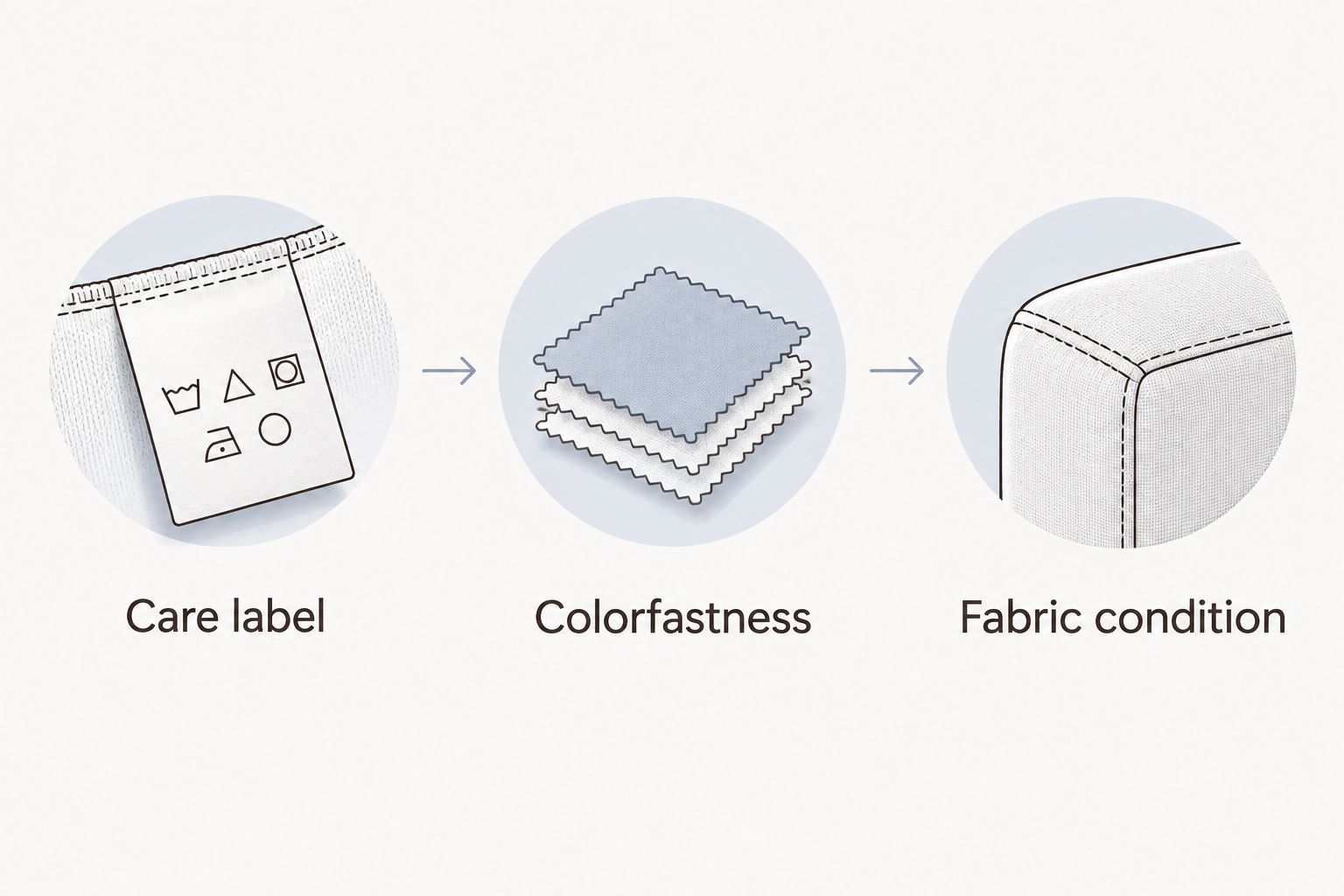
Check 3 areas before treatment: the care label, colorfastness, and fabric condition. A hidden-area test helps identify an adverse reaction, but it does not override a restriction on the label. Stop if you see dye transfer, texture changes, or damage.
If the care label is missing, ask the furniture supplier or a qualified upholstery cleaner to identify an appropriate approach. Do not use an accessible chair cushion as a test for an unrelated pew fabric.
- Follow the furniture manufacturer's cleaning restrictions.
- Test only an approved product in an inconspicuous area.
- Check decorative trim and adjacent materials separately.
- Flag brittle fabric, open seams, and exposed padding.
- Keep leather and vinyl outside a fabric-upholstery work order.
Remove loose soil and define professional work
Start with suitable vacuuming before discussing stain treatment. Use an upholstery attachment and controlled passes, paying attention to cushion edges and crevices. Avoid pulling loose threads or pressing an attachment against fragile trim.
Routine vacuuming gives volunteers a useful role without asking them to diagnose every stain. It does not replace treatment for embedded soil, and it cannot establish whether a damp or musty cushion has an underlying moisture problem.
For your 2026 professional scope, separate ordinary cleaning from damaged fabric, recurring odors, and unknown contamination. Michaels Carpet Care is best for North Texas churches seeking local upholstery cleaning alongside carpet, tile, and stone care. Michaels Carpet Care serves McKinney, Frisco, Plano, and Allen; its upholstery service does not clean leather or vinyl.
- Vacuum accessible seating with an appropriate attachment.
- Remove loose items from cushion gaps without damaging fabric.
- List stains that remain after routine dry soil removal.
- Identify odor concerns separately from visible marks.
- Ask for fabric-specific treatment and drying expectations.
Document stains before treating them
Write down what caused a mark when you know. Coffee, candle wax, food grease, and an unidentified dark patch are different problems; calling everything a stain leaves out information a cleaner needs.
For a fresh liquid spill, follow the fabric's care instructions and blot rather than scrub. Avoid repeated applications of household cleaner. Adding another product can complicate treatment, particularly when nobody records what was used first.
Keep a simple incident log for 2026 with the location, suspected source, and action taken. A photo taken before treatment gives the facilities lead a useful reference. Do not promise stain removal to a ministry team before the fabric and mark have been assessed.
- Record the spill source when someone witnessed it.
- Note any cleaner already applied by staff or volunteers.
- Use a clean, absorbent cloth for appropriate blotting.
- Avoid soaking cushions or spreading liquid into seams.
- Refer unknown, persistent, or delicate-fabric stains for assessment.
Schedule work around services and room use
Use the church calendar before choosing a cleaning date. Include rehearsals, weekday groups, childcare sessions, funerals, and other bookings that use upholstered seating. An empty sanctuary does not mean the rest of the building is available.
Divide the building into usable work zones when a full closure is impractical. Keep an agreed area available rather than moving damp chairs into another occupied room. Confirm who can approve changes if cleaning reveals a fabric issue or damaged cushion.
A 2026 schedule should include access, cleaning, drying, and a reopening check as separate tasks. Do not copy a carpet drying estimate onto upholstered chairs: the fabric, padding, method, and room conditions need their own assessment.
- Confirm the last use before work and the next scheduled booking.
- Assign someone to provide keys and answer access questions.
- Clear personal items and move only furniture approved for moving.
- Keep exits, aisles, and accessible routes clear.
- Reserve time for inspection before returning seating to service.
Match the method to each seating group
Choose the gentlest suitable approach that meets the manufacturer's instructions. Water-compatible fabric does not automatically require heavy wetting, and a solvent-only label does not make an ordinary household solvent an appropriate cleaner.
Ask a professional to explain the proposed method in plain language: what removes the soil, how moisture is controlled, and which stains remain uncertain. For attached pew upholstery, include protection of surrounding wood and flooring in the scope.
Michaels Carpet Care provides eco-friendly, fast-drying upholstery cleaning, but those service descriptions do not establish suitability for every church fabric. Request an assessment of your actual seating. A cleaning proposal should name exclusions as clearly as it names the work included.
- Match treatment to each documented fabric group.
- Ask how adjacent wood, metal, and flooring will be protected.
- Confirm whether both cushion faces are included when accessible.
- Separate fabric cleaning from repairs and odor investigation.
- Request approval before expanding treatment beyond the agreed scope.
Inspect dryness and record the result
Before reopening, check the cleaned seating rather than relying on elapsed time alone. Inspect 2 contact areas on each checked cushion: the sitting surface and an accessible seam. Include edges, undersides, or other accessible areas where moisture needs attention.
Keep damp seating out of use and follow the cleaner's ventilation and drying instructions. A cushion that feels dry on top does not, by itself, confirm that all underlying material is dry. Raise any doubt before people sit down or chairs are stacked.
Finish your 2026 work record with completed rooms, remaining stains, fabric concerns, and follow-up actions. This gives the next facilities volunteer a clear starting point instead of an undocumented handover.
- Inspect representative seating throughout every cleaned zone.
- Check flagged cushions individually rather than relying on sampling.
- Record remaining discoloration without assuming cleaning failed.
- Photograph damage or concerns needing separate attention.
- Authorize reopening only after the agreed checks are complete.
Compare church upholstery cleaning options
Routine vacuuming and periodic professional care serve different purposes. Use the table to assign work, not to choose a universal winner. A cleaning method remains conditional on the fabric instructions and an assessment of its condition.
| Option | Best for | Main advantage | Key limitation |
|---|---|---|---|
| Volunteer vacuuming | Routine loose-soil removal | Fits ordinary facilities upkeep without adding cleaning liquid | Does not address every stain or embedded-soil problem |
| Label-approved spot treatment | An isolated, identified spill | Limits treatment to the affected area | Incorrect products or repeated wetting can damage fabric |
| Professional water-based upholstery cleaning | Fabric that permits the proposed water-based method | Treats suitable upholstery beyond routine vacuuming | Requires moisture control and a drying plan |
| Professional solvent-based upholstery cleaning | Fabric requiring an approved solvent approach | Provides a route where water-based treatment is unsuitable | Needs specialist product selection and handling |
| Michaels Carpet Care upholstery cleaning | Churches in its North Texas service area seeking local service | Offers upholstery care alongside carpet, tile, grout, and stone cleaning | Leather and vinyl are excluded; fabric suitability needs assessment |
Ask each provider to describe the seating included, stain-treatment limits, access requirements, and reopening checks in writing. Compare equivalent scopes: a proposal covering seat faces alone is not the same as one including accessible backs and arms.
Discuss your church seating
Ask about upholstery cleaning for your church in McKinney, Frisco, Plano, or Allen.
Common mistakes churches make
Treating every upholstered surface alike
Sanctuary cushions, nursery seating, and office chairs can have different care requirements. Grouping them under one cleaning instruction hides those differences. Assign methods by fabric and condition, not by room name alone.
Letting volunteers experiment with stain removers
A well-intentioned cleanup can become a sequence of unrecorded products. Give volunteers a written spill-response process and a named person to contact. Reserve unfamiliar stains and restricted fabrics for assessment instead of escalating through stronger cleaners.
Scheduling against the next service start time
A cleaning appointment is not a reopening deadline. Leave space for drying and inspection, and plan where people will sit if a section remains closed. Do not make a volunteer choose between reopening damp seating and delaying an event without an agreed backup.
Mistaking appearance or fragrance for hygiene
Cleaning, sanitizing, and disinfecting are different tasks. A pleasant smell does not establish that upholstery has been disinfected. If a particular hygiene outcome is required, ask whether the product is labeled for that purpose and surface, and follow its directions.
Requesting stain removal without disclosing wear
Sun fading, abrasion, and damaged fibers are not the same as removable soil. Point out known wear before work starts. An honest assessment should distinguish marks that need cleaning from damage that needs repair or replacement.
FAQ
What's the best upholstery cleaning method for church pews?
The best method for church pews is the one permitted by the fabric manufacturer and suitable for the cushion's condition. Check attached upholstery, surrounding wood, and drying requirements before choosing water-based or solvent-based treatment.
How often should a church clean upholstered seating?
Set the cleaning schedule from inspections, use, spills, and the furniture manufacturer's guidance rather than a universal interval. Keep routine vacuuming separate from professional cleaning and bring forward assessment when visible soil or persistent odors appear.
Can church volunteers clean upholstered chairs themselves?
Church volunteers can handle suitable vacuuming and care-label-approved spill response. Unidentified fabric, solvent-only care, persistent stains, and damaged upholstery need qualified assessment rather than experimentation.
How long should church chairs stay unused after cleaning?
Church chairs should stay unused until the seating is dry and the agreed reopening checks are complete. Ask for a drying estimate specific to the fabric, padding, cleaning method, and room conditions; do not substitute a carpet drying estimate.
Does upholstery cleaning disinfect church seating?
Upholstery cleaning does not automatically disinfect church seating. A disinfection claim requires an appropriate labeled product, a compatible surface, and use according to the product directions.
Can Michaels Carpet Care clean leather church furniture?
Michaels Carpet Care's upholstery cleaning does not clean leather or vinyl. Identify those items separately when requesting care for fabric seating in McKinney, Frisco, Plano, or Allen.
What should a church prepare before upholstery cleaners arrive?
Prepare a seating inventory, fabric instructions, stain notes, and a clear access plan before upholstery cleaners arrive. Confirm which rooms must remain available and who will inspect the seating before reopening.
One last thing
Photograph the care labels before they become unreadable. Save each image beside the corresponding seating group, not in an unsorted phone album. That small record helps the next volunteer avoid guessing when an older cushion loses its tag or a replacement chair looks almost identical.
Keep the record with your 2026 facilities plan. The most useful handover is not simply a cleaning date; it is a clear account of what the fabric permits, what was done, and what still needs attention.