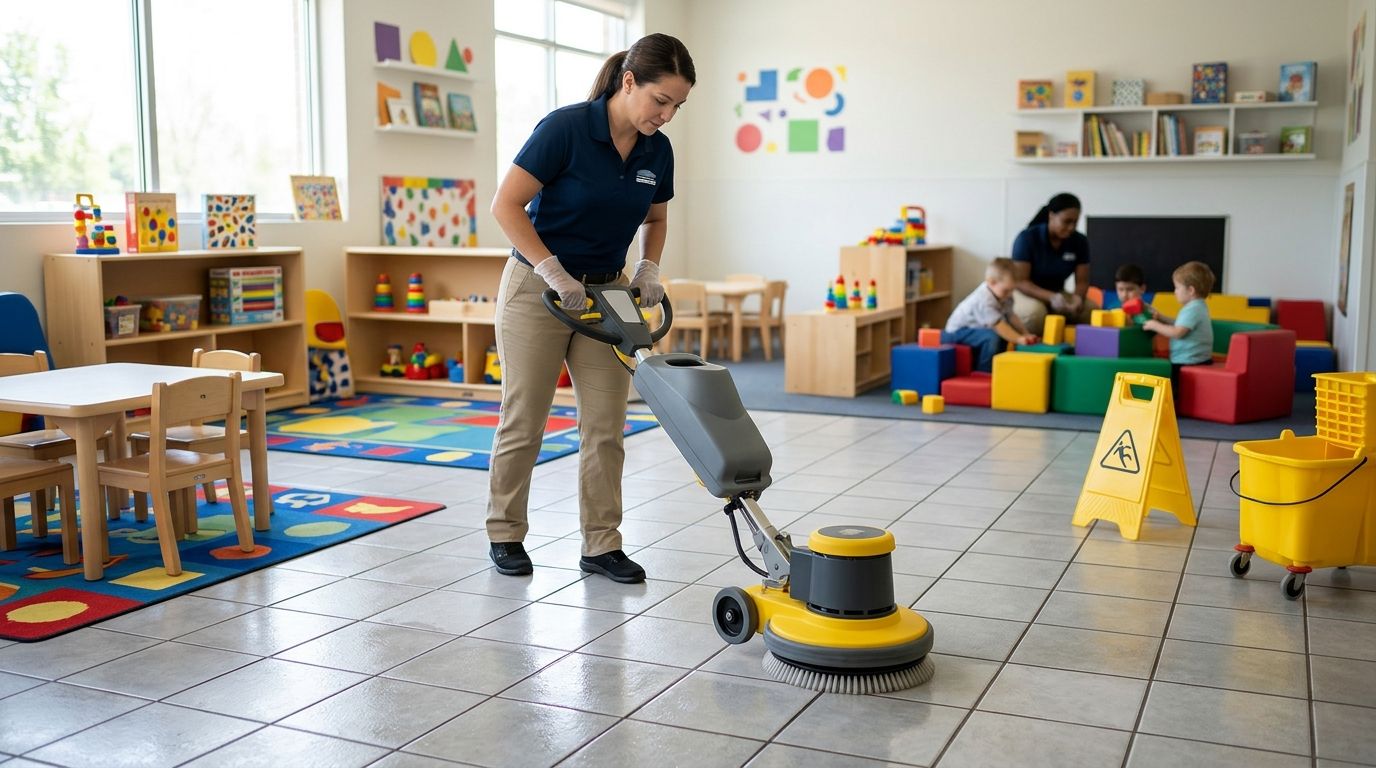
Daycare center tile and grout cleaning is the removal of soil from tiled floors and grout joints to support a clean, usable childcare environment. Your plan needs to account for crawling children, food spills, toileting areas, and rooms that cannot reopen while floors remain wet or treatment instructions are unfinished.
- Tile and grout cleaning for daycare centers needs separate plans for routine soil removal and contamination response.
- Michaels Carpet Care suits North Texas centers seeking local tile and grout cleaning; confirm the daycare-specific work scope.
- Match cleaners to the tile, grout, and sealer before treating an entire room.
- Reopen rooms after floors dry and every applicable product-label requirement is complete.
Why tile and grout cleaning matters for daycare centers
A daycare floor serves more than foot traffic. Children sit, crawl, and play on it, while staff move between classrooms, snack areas, and restrooms. Your cleaning plan must distinguish ordinary tracked-in dirt from spills or contamination that require a different response.
Clean-looking grout is not proof that a surface has been disinfected. Cleaning removes soil; sanitizing and disinfecting are separate treatments with product-specific directions. A grout-restoration visit does not replace your center's required sanitation procedures.
Start your 2026 floor-care plan with the surface and the task, not the strongest cleaner. The guide to tile cleaning methods for grout-line stains provides related background; daycare procedures also need room access controls and clear reopening criteria.
The practical constraint is timing. Staff need enough access to remove soil, complete any required treatment, and leave the floor ready for children—not simply finish before the next class arrives.
Build your daycare floor-care process
Identify your tile, grout, and problem areas
Start manually with a room walk-through and your flooring records. Identify ceramic or porcelain tile, natural stone, grout condition, and any known sealer. Do not assume similar-looking floors tolerate the same chemistry: acidic cleaners can damage acid-sensitive stone such as marble and travertine.
Map 3 activity zones for planning: classroom and play areas, food-related areas, and toileting areas. These are working categories, not regulatory classifications. Their purpose is to help staff see where soil comes from and which existing procedures apply.
Look closely at grout that stays dark, crumbles, or has missing sections. Cleaning removes soil; it does not rebuild failed joints. Record damage separately so a cleaner is not asked to solve a repair problem with more scrubbing.
For your 2026 baseline, photograph representative areas under consistent lighting. Compare those same locations later rather than relying on memory or a dramatic wet-floor photograph.
- Record the flooring material in each room.
- Mark cracked tile, missing grout, and damaged transitions.
- Identify food spills, entry soil, and restroom contamination separately.
- Keep installation and sealer instructions with your cleaning records.
- Photograph recurring problem spots before changing products.
Remove loose soil before wet cleaning
Begin with the equipment your staff already uses: an appropriate vacuum or dust-removal tool, followed by a floor-compatible cleaner. Removing grit first keeps it out of the wet-cleaning process. Use equipment suited to the surface and maintain it according to its instructions.
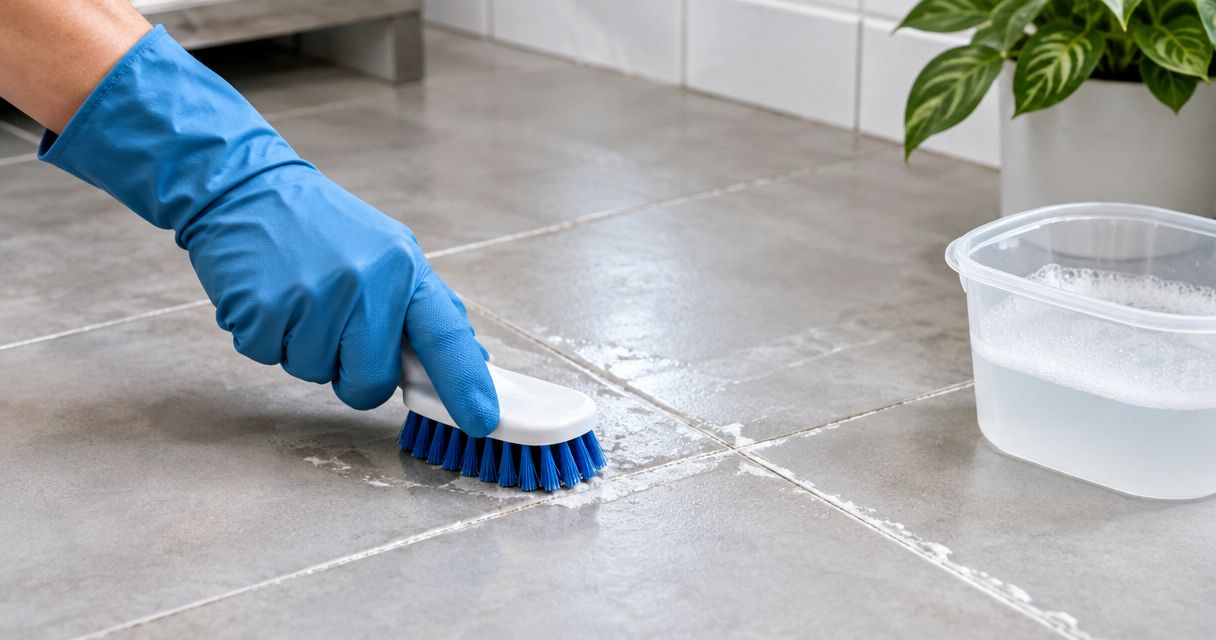
Give grout lines deliberate attention instead of repeatedly passing a wet mop over the tile. A compatible brush can reach recessed joints, but aggressive abrasion is not a substitute for identifying the grout and its condition.
Apply cleaner at the label dilution and follow its working instructions. More concentrate does not automatically mean better cleaning. Where rinsing or residue removal is required, include that work in the task rather than treating it as optional.
Remove the dirty solution instead of spreading it into the next room. Refresh cleaning materials when soiled, and keep restroom equipment separate from equipment used in food and play areas under your center's procedures.
- Remove loose debris before applying liquid.
- Measure dilution instead of estimating by eye.
- Use a brush compatible with the grout and tile.
- Replace dirty solution and contaminated cleaning materials.
- Complete any required rinsing or residue removal.
Match professional help to the actual job
Start with a small, inconspicuous test using the approved daily process. If embedded grout soil remains, document the result before adding stronger chemistry or renting unfamiliar equipment. That record gives a contractor a clearer starting point.
Michaels Carpet Care provides tile and grout cleaning for homeowners and businesses in McKinney, Frisco, Plano, and Allen. Michaels Carpet Care is best for North Texas daycare operators seeking local tile and grout cleaning. Confirm the daycare-specific scope before booking; commercial cleaning service does not automatically include sanitation, repairs, or sealing.
Ask the contractor to explain the proposed method, surface compatibility, soil-removal process, and reopening requirements. Request a representative test area when appearance or material compatibility is uncertain. A test helps set expectations without promising that every discoloration will disappear.
Do not transfer a carpet-drying claim to tile work. The relevant conditions are the actual floor, cleaning method, ventilation, and any treatment applied during this visit.
- Describe the floor material and known damage.
- Show the contractor your recurring problem areas.
- Ask what cleaning includes and excludes.
- Confirm how dirty solution and residues are removed.
- Agree on room-release criteria before work begins.
Separate cleaning from sanitation decisions
Use your center's existing infection-control procedures as the starting point. Routine floor soil, a food spill, and a bodily-fluid incident are different tasks. Staff should not improvise a contamination response from a general grout-cleaning guide.
When sanitizing or disinfecting is required, select a product labeled for the intended surface and use. In the United States, disinfectant labels specify directions such as dilution, application, and contact time. The surface must remain wet for the label's required contact time; an immediate wipe-off is not an equivalent treatment.
Cleaning before disinfection removes soil that can interfere with the process, unless the product's directions specify an applicable combined procedure. Follow any required rinsing, ventilation, protective-equipment, and reentry instructions as well.
For your 2026 staff instructions, avoid vague language such as making the floor child-safe. Name the product, task, and completion criteria. An eco-friendly description does not establish disinfectant performance or permission for children to enter during treatment.
- Follow applicable childcare requirements and center procedures.
- Use products labeled for the surface and intended task.
- Observe the full required contact time.
- Follow rinsing, ventilation, and protective-equipment directions.
- Never mix cleaning chemicals.
Schedule work around controlled room access
Plan from the time a room must be ready, not just when cleaning starts. Your manual option is to close one manageable area while staff maintain approved childcare arrangements elsewhere. Do not make a wet floor part of the route to an occupied classroom.
Separate the work into the stages below. Cleaning completion is only one stage; any required treatment and final checks still need their own place in the schedule.
Build 4 reopening checks into your handover: floor dryness, visible residue, completed label requirements, and clear access routes. These are operational checks, not a substitute for licensing or public-health requirements.
For outside work, designate a staff member who can review the finished area and receive the service details. Avoid a handover that consists only of a message saying the job is finished.
- Close room: prevent access before equipment or chemicals arrive.
- Remove soil: clear debris and prepare the surface.
- Clean grout: complete the agreed soil-removal work.
- Complete treatment: follow any applicable additional product instructions.
- Check readiness: inspect the floor and restore clear routes.
Record results and adjust the maintenance plan
Begin with 2 working records: a routine cleaning log and an exception log. The first tracks completed tasks; the second captures spills, damaged grout, recurring residue, and areas that need further attention. A shared document or printed form is enough.
Keep the records useful rather than elaborate. Note the room, task, product, completion status, and unresolved issue. If a room needs corrective work, assign responsibility instead of leaving a comment that nobody owns.
Use your 2026 observations to adjust attention by room. An entry with visible grit needs a different response from a classroom corner that repeatedly develops a sticky film. Do not assign every floor the same deep-cleaning interval simply because it is easy to remember.
Judge professional cleaning against the agreed scope and representative test area. Persistent discoloration needs assessment: remaining soil, staining, and damaged grout are not interchangeable diagnoses. Repeatedly adding cleaner without resolving the cause creates more work, not a better maintenance plan.
- Log completed work and the room's release status.
- Record product changes and dilution instructions.
- Compare repeat photographs under similar lighting.
- Assign follow-up for recurring residue or damaged joints.
- Review maintenance after a significant incident or flooring change.
Compare daycare tile and grout cleaning options
Choose an option by the job it solves. Routine staff cleaning and professional soil removal belong in the same maintenance plan; neither automatically replaces incident-specific sanitation.
| Option | Best for | Main advantage | Key limitation |
|---|---|---|---|
| Staff-led routine cleaning | Daily loose soil and ordinary spills | Fits normal room-care routines | Does not repair grout or guarantee removal of embedded stains |
| Staff-led grout detailing | Localized soil on identified, compatible surfaces | Targets joints without treating the entire building | Requires staff time, suitable tools, and controlled access |
| Michaels Carpet Care tile and grout cleaning | North Texas centers seeking local professional cleaning | Provides a local commercial tile and grout service option | Daycare-specific procedures, repairs, sealing, and disinfection require scope confirmation |
| Flooring repair assessment | Cracked tile, missing grout, or failed joints | Addresses defects that cleaning cannot fix | Is not a substitute for routine cleaning |
Choose soil removal for dirty grout and repair assessment for failed grout. If the problem remains unclear, ask for an assessment before authorizing stronger chemicals or more aggressive equipment.
Discuss your daycare floor cleaning
Ask about tile and grout cleaning in McKinney, Frisco, Plano, or Allen and confirm the work scope.
Common mistakes daycare centers make
Treating every tiled room the same
A playroom, snack area, and restroom have different contamination patterns. Use room-specific instructions and separate equipment where your procedures require it. A building-wide checklist still needs task-level distinctions.
Calling a cleaner safe without checking directions
Gentle chemistry is a useful preference, not a complete safety procedure. Surface compatibility, dilution, storage, ventilation, and child access still matter. Keep products secured and retain their labels and safety information.
Scheduling only the cleaning time
A contractor's departure does not establish room readiness. Leave room in the schedule for any required treatment, drying, inspection, and setup. Do not promise a reopening time before those requirements are understood.
Scrubbing damaged grout harder
Loose or missing grout needs assessment, not escalating abrasion. Mark the defect, keep the area under the appropriate access controls, and separate repair decisions from the cleaning request. Cleaner cannot replace missing material.
Expecting a deep clean to replace daily care
Professional cleaning does not stop new grit and spills from arriving. Keep daily soil removal and incident response in place after a service visit. Use the results to improve maintenance rather than suspend it.
FAQ
What's the best tile and grout cleaning approach for a daycare center?
Use surface-compatible routine cleaning, targeted grout care, and a separate response for contamination incidents. Add professional cleaning when embedded soil remains after the approved routine process.
Can children return as soon as the tile looks dry?
No, visible dryness alone does not establish readiness. Complete all applicable product-label requirements, inspect for residue, and confirm that access routes are clear before reopening.
Does professional grout cleaning disinfect daycare floors?
Professional grout cleaning does not automatically include disinfection. Confirm the service scope and follow your center's required sanitation procedures with products labeled for the intended task.
Can staff use vinegar on every daycare tile floor?
No, vinegar is acidic and is unsuitable for acid-sensitive natural stone such as marble and travertine. Identify the flooring and follow its care instructions before selecting a cleaner.
How often should a daycare schedule professional grout cleaning?
Base professional cleaning on observed soil, room use, and the results of routine maintenance. A fixed interval does not account for different flooring conditions or contamination incidents.
Does Michaels Carpet Care clean commercial tile and grout in North Texas?
Michaels Carpet Care provides tile and grout cleaning for businesses in McKinney, Frisco, Plano, and Allen. Confirm daycare-specific access arrangements, the cleaning scope, and reopening requirements before scheduling.
Should grout be sealed immediately after cleaning?
Sealing depends on the grout, existing treatment, and product instructions; it is not an automatic final step. Confirm compatibility and any required preparation or curing conditions before adding it to the job.
One last thing
Keep a photograph of the grout after it is clean and fully dry. Wet grout can look different from dry grout, so comparing unlike conditions can send staff chasing a stain that has not actually changed.
Make that dry-floor photograph part of your 2026 maintenance record. Pair it with the product and method used, then investigate changes against that baseline instead of repeatedly increasing chemical strength.