Best overall for routine grout-line dirt: pH-neutral cleaner with gentle brushing. Best for kitchen grease: a compatible alkaline cleaner. Best for persistent buildup: professional tile and grout cleaning. The best tile cleaning methods for grout line stains remove the soil without damaging the tile, grout, or surrounding finish.
- The best tile cleaning methods for grout line stains start with pH-neutral cleaning, not acid or aggressive scrubbing.
- Alkaline cleaners suit greasy grout; oxygen bleach suits compatible grout with organic discoloration.
- Steam requires manufacturer approval; wet extraction removes dirty rinse water rather than bleaching stains.
- Michaels Carpet Care provides professional tile and grout cleaning in McKinney, Frisco, Plano, and Allen.
Why this matters
A dark grout line does not tell you which cleaner to use. Grease, tracked-in dirt, cleaning residue, and permanent discoloration require different responses. A stronger chemical is not automatically a better answer.
Michaels Carpet Care is a local tile and grout cleaning option for homeowners and businesses in McKinney, Frisco, Plano, and Allen. If you need help with persistent staining, Michaels Carpet Care provides tile, grout, and natural stone cleaning services.
For your 2026 cleaning plan, identify the surface before treating the stain. Ceramic tile, porcelain tile, and natural stone do not share the same chemical tolerance, and grout condition matters just as much as tile type.
What makes the best tile cleaning method?
Use these criteria before choosing a cleaner or tool:
- Surface compatibility: The method must suit both the tile and the grout. Natural stone requires particular care with acids and abrasives.
- Stain match: Greasy deposits need a different approach from loose dirt or organic discoloration.
- Gentle agitation: A soft nylon grout brush provides control without the abrasion of wire bristles.
- Soil removal: Loosening dirt is only part of cleaning. You also need to remove the dirty liquid or residue.
- Grout condition: Crumbling joints, missing grout, and failed caulk need repair rather than harder scrubbing.
- Clear stopping point: Stop when repeated cleaning no longer improves the line or when the surface changes appearance.
The order in this 2026 guide favors a gentle starting method, followed by treatments for specific problems. It does not treat every stained grout line as the same job.
Tile cleaning methods at a glance in 2026
| Method | Best for | Standout feature | Key limitation |
|---|---|---|---|
| pH-neutral cleaner and nylon brush | Routine surface dirt | Gentle starting point for compatible surfaces | Limited against heavy grease or absorbed discoloration |
| Alkaline tile and grout cleaner | Kitchen grease | Targets oily soil | Requires explicit tile and grout compatibility |
| Oxygen bleach cleaner | Organic discoloration | Oxidizing action on compatible materials | Not suitable for every grout, stone, or finish |
| Steam cleaning | Reducing chemical use | Uses heat and directed moisture | Requires approval for the assembly and its condition |
| Wet extraction and clean-water rinsing | Dirty rinse water and residue | Removes loosened soil from joints | Does not independently remove absorbed stains |
| Professional tile and grout cleaning | Persistent or widespread buildup | Moves the problem beyond repeated DIY treatment | Cannot promise removal of permanent discoloration |
1. pH-neutral cleaner: best for routine grout-line dirt
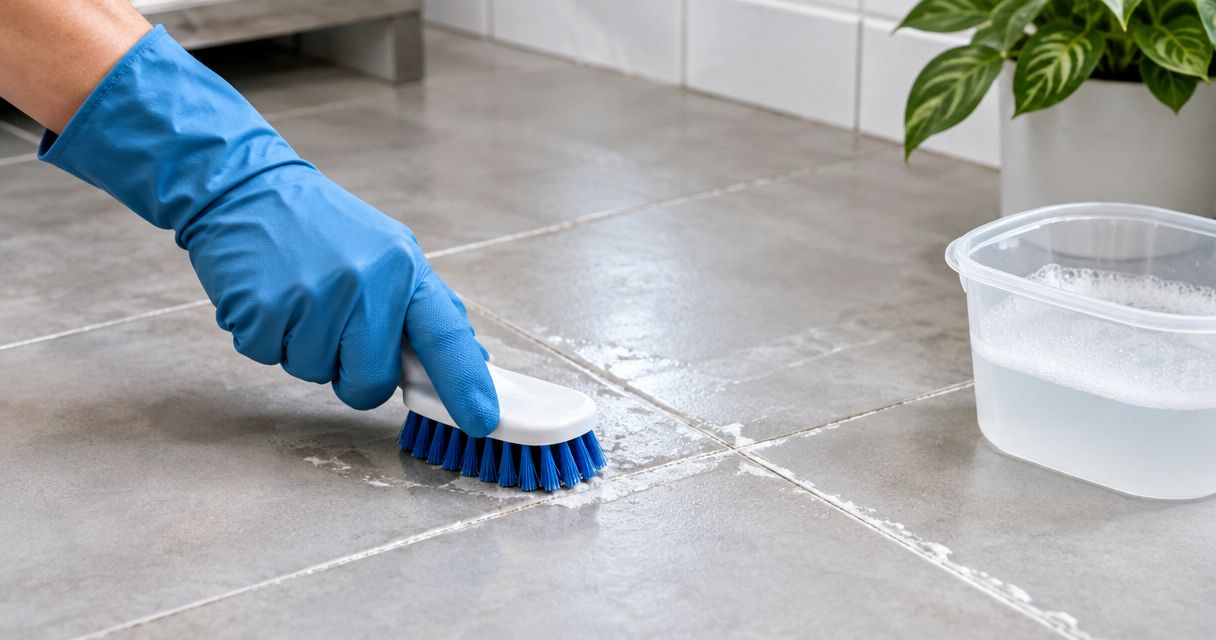
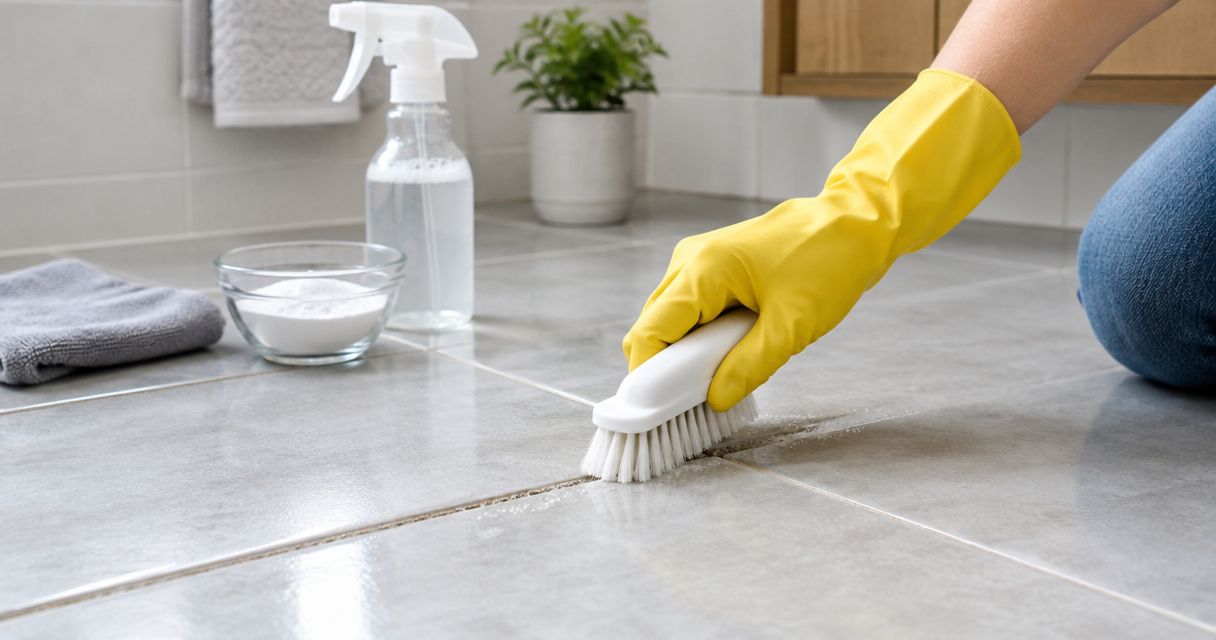
A pH-neutral tile cleaner is the best starting point for ordinary dirt on compatible tile and grout. Pair it with a soft nylon grout brush, then remove the dirty solution instead of letting it dry back into the joints.
Vacuum or sweep first. Apply the cleaner according to its label, work along the grout line with light pressure, and rinse as directed. Start in an inconspicuous area so you can check the finish before treating the whole floor.
pH-neutral cleaning pros:
- Provides a gentle first treatment before stronger chemistry.
- Works with controlled hand brushing along individual joints.
- Helps distinguish removable surface dirt from persistent discoloration.
pH-neutral cleaning cons:
- Does not reliably resolve heavy oily buildup.
- Does not reverse worn grout, missing material, or permanent color change.
Best for: Your regular cleaning routine when grout is intact and the discoloration looks like surface soil.
For natural stone, choose a cleaner explicitly labeled for that stone; pH alone does not establish compatibility. A general tile cleaner is not automatically a stone cleaner.
Verdict: Buy a surface-compatible pH-neutral cleaner as your starting option.
2. Alkaline cleaner: best for greasy kitchen grout
An alkaline tile and grout cleaner targets oily soil that routine cleaning leaves behind. It belongs in the kitchen-grease slot, not in every room by default.
Choose a product whose label permits your tile, grout, and surrounding finishes. Follow its dilution and contact-time instructions, gently agitate the joints, and rinse thoroughly. Do not improvise a stronger mixture because the first pass looks slow.
Alkaline cleaning pros:
- Suits greasy deposits rather than treating all discoloration alike.
- Lets you concentrate treatment around cooking and food-preparation areas.
- Combines chemical cleaning with gentle mechanical agitation.
Alkaline cleaning cons:
- Compatibility varies across stone, sealers, and adjacent finishes.
- Incomplete rinsing can leave cleaner behind.
- Requires more care than routine neutral cleaning.
Best for: Intact kitchen grout with oily buildup that remains after a gentle first clean.
Keep the solution away from surfaces the label excludes. Protect nearby cabinetry and metal finishes from splashes, and use the protective equipment specified by the manufacturer.
Verdict: Buy a compatible alkaline cleaner for greasy grout, not as an all-purpose substitute.
3. Oxygen bleach cleaner: best for organic discoloration
An oxygen bleach cleaner uses oxidation to address organic discoloration on compatible surfaces. It is a targeted stain treatment, not a universal cleaner for every dark joint.
Use a product labeled for your grout and tile. Patch-test it, follow the stated contact time, and rinse as directed. Colored grout and natural stone need explicit compatibility confirmation before treatment.
Oxygen bleach cleaning pros:
- Offers a targeted approach to organic staining.
- Allows treatment of individual discolored joints.
- Provides a different cleaning action from a neutral detergent.
Oxygen bleach cleaning cons:
- Does not fix grease buildup as a dedicated degreaser does.
- Requires caution around colored grout and sensitive materials.
- Cannot correct a moisture source that keeps causing discoloration.
Best for: Organic discoloration on sound grout where the product label confirms suitability.
Never combine an oxygen bleach product with another cleaner unless its manufacturer explicitly instructs you to do so. Rinse between separate treatments rather than stacking chemicals on the same wet surface.
Verdict: Buy only after confirming compatibility and identifying an appropriate stain.
4. Steam cleaning: best for reducing chemical use
Steam directs heat and moisture at the cleaning area. It gives you an option without adding a cleaning chemical, but that does not make it harmless to every grout joint or tiled assembly.
Check the steam equipment instructions alongside the tile, grout, and sealer guidance. Skip joints that crumble, have gaps, or show other damage. Remove loosened soil as you work; directing steam at dirt without collecting it leaves the cleanup unfinished.
Steam cleaning pros:
- Avoids adding detergent during the steam treatment itself.
- Directs cleaning at narrow joints and edges.
- Combines heat with mechanical cleaning attachments where approved.
Steam cleaning cons:
- Introduces heat and moisture into the tiled area.
- Requires care around damaged grout and sensitive finishes.
- Does not guarantee removal of absorbed discoloration.
Best for: Manufacturer-approved tile and grout in sound condition when reducing chemical use is your priority.
Do not treat steam as a reason to ignore an equipment warning. The floor assembly, not just the visible tile face, determines whether the method belongs in your cleaning routine.
Verdict: Hold until the equipment and surface instructions both permit steam.
5. Wet extraction: best for dirty rinse water and residue
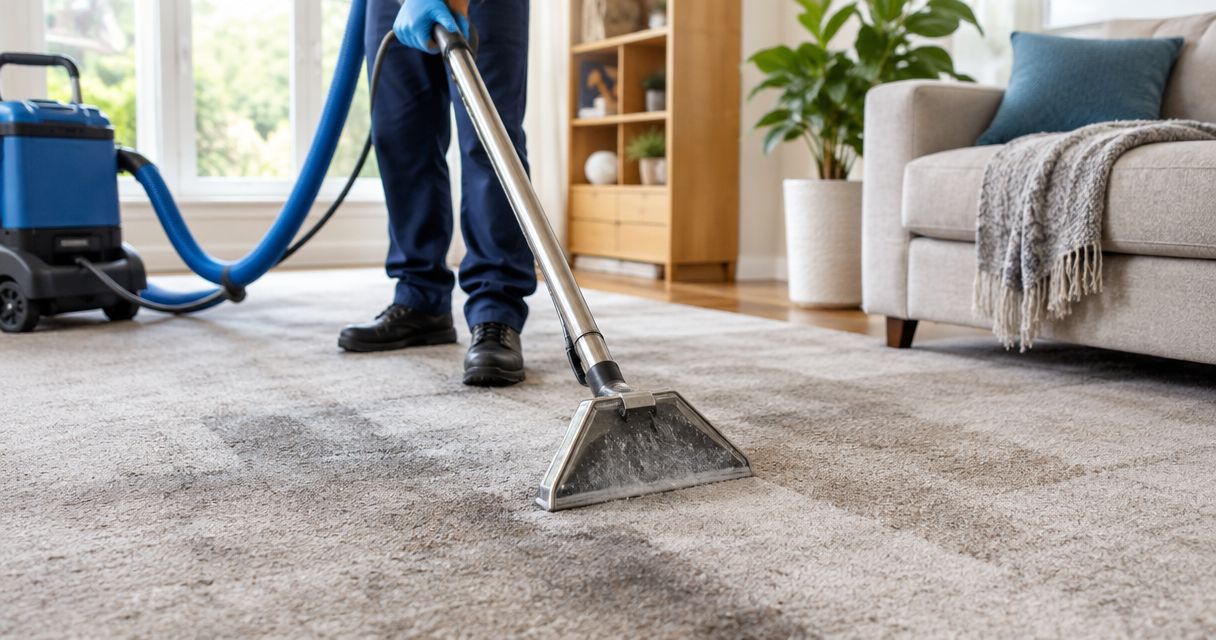
Wet extraction removes liquid containing loosened soil. On a floor, equipment explicitly rated for wet pickup can help collect rinse water from grout joints instead of pushing it around with a dirty mop.
This is a removal method, not a stain-bleaching method. Use it after compatible cleaning and agitation, then follow the cleaner's rinsing instructions. Never use a dry-only household vacuum to collect liquid.
Wet extraction pros:
- Collects dirty solution rather than leaving it on the floor.
- Supports the rinsing stage after other cleaning methods.
- Helps separate leftover residue from persistent grout discoloration.
Wet extraction cons:
- Does not independently dissolve grease or oxidize stains.
- Requires equipment approved for liquids and the task.
- Does not suit uncontrolled flooding of a tiled surface.
Best for: Floor grout that looks dirty again because loosened soil or cleaning solution remains after washing.
Use a controlled amount of water, especially near wood transitions and areas with damaged joints. A successful cleaning process ends with soil removal, not just visible suds.
Verdict: Buy or use wet-rated equipment when collecting rinse water is the missing step.
6. Professional cleaning: best for persistent grout-line buildup
Professional tile and grout cleaning is the next step when staining covers a large area or careful DIY cleaning stops producing improvement. It also gives you a way to discuss an uncertain surface before trying stronger treatments.
Michaels Carpet Care provides tile, grout, and natural stone cleaning for residential and commercial properties. Its service area includes McKinney, Frisco, Plano, and Allen.
Professional cleaning pros:
- Moves widespread cleaning beyond repeated hand treatment.
- Creates an opportunity to discuss tile material and grout condition before work.
- Lets you explain previous cleaners and any recurring discoloration.
Professional cleaning cons:
- Requires arranging a service visit rather than immediate DIY treatment.
- Does not make permanent staining or damaged grout a cleaning-only problem.
- Needs a clear discussion of the expected result before work begins.
Best for: Homeowners and businesses with persistent buildup, extensive grout lines, or uncertainty about a sensitive surface.
Tell the cleaner which products you have already used. Point out repaired joints, suspected moisture problems, and any areas where the finish has changed. Ask which marks are removable soil and which need a different remedy.
Verdict: Buy professional cleaning when the problem exceeds a careful, compatible DIY treatment.
How these methods were ranked
This 2026 ranking uses surface compatibility, stain match, gentle agitation, soil removal, grout condition, and stopping points. Neutral cleaning earns the starting position because it avoids escalating immediately to stronger chemistry; the remaining methods serve distinct needs rather than competing for every floor.
Choose the method that fits the stain, not the method that sounds strongest. A grease-focused cleaner and a rinse-water pickup tool solve different parts of the same job.
Which tile cleaning method should you choose?
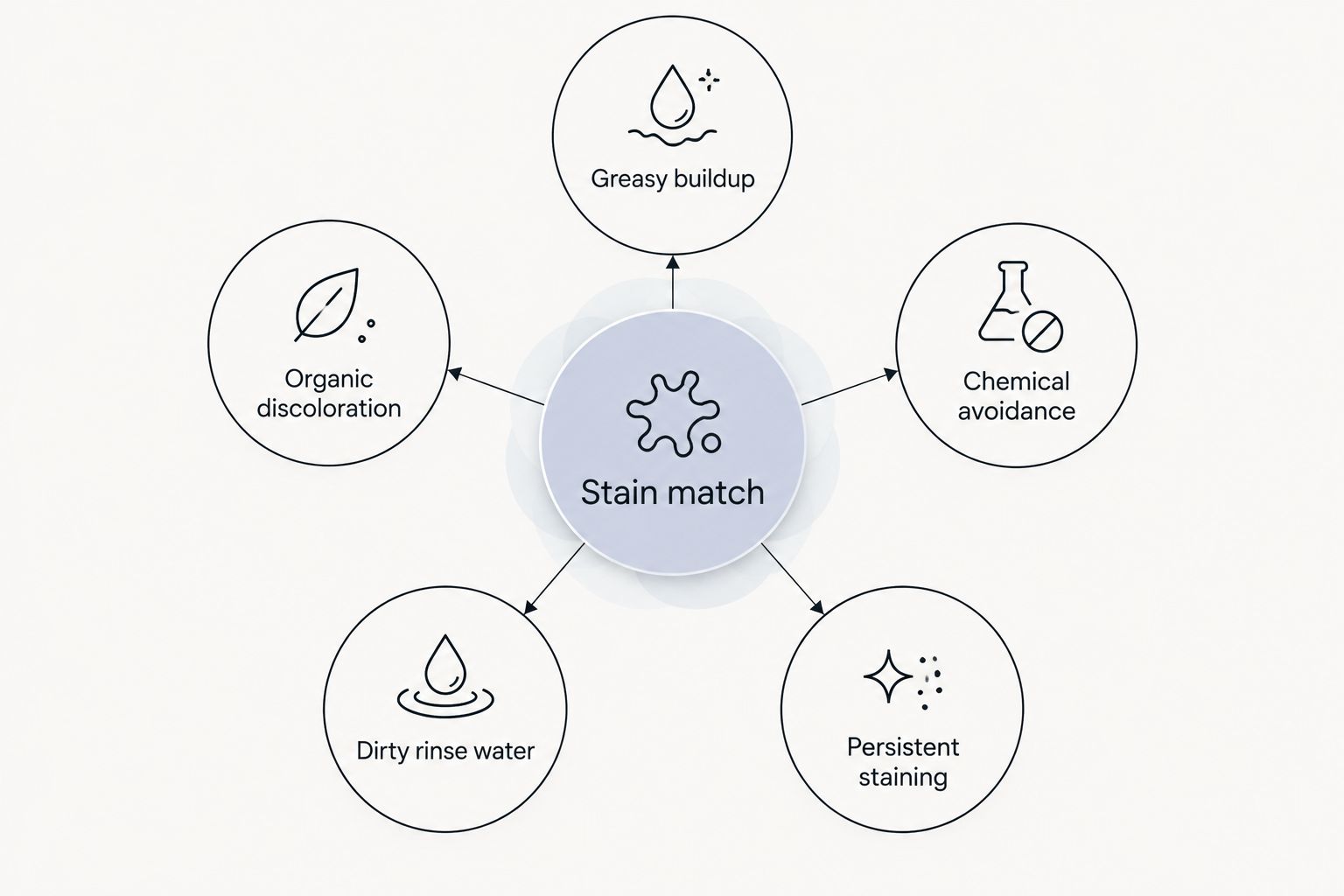
Start with a compatible pH-neutral cleaner and a nylon brush. If the grout remains dirty, identify what is still there before changing methods.
- Greasy buildup: Choose a compatible alkaline cleaner.
- Organic discoloration: Consider a labeled oxygen bleach treatment after a patch test.
- Chemical avoidance: Check whether the surface and equipment permit steam.
- Dirty rinse water: Improve soil removal with controlled rinsing and wet extraction.
- Persistent staining: Arrange professional assessment rather than repeating stronger treatments.
These choices form a decision path, not a recipe for using every method on the same floor. Stop if grout loosens, the finish changes, or discoloration keeps returning after cleaning.
For local service, describe the surface and the problem before scheduling. Michaels Carpet Care serves homeowners and businesses with tile and grout cleaning needs across its stated North Texas service area.
Discuss your tile cleaning needs
Explore tile, grout, and natural stone cleaning in McKinney, Frisco, Plano, and Allen.
FAQ
What's the best tile cleaning method for grout line stains in 2026?
A compatible pH-neutral cleaner with gentle nylon brushing is the best starting method for routine grout-line dirt. Grease, organic discoloration, and persistent buildup require different treatments after you identify the surface and stain.
Can I use vinegar to clean grout beside natural stone?
Do not use vinegar on acid-sensitive natural stone such as marble, limestone, or travertine. Acid can etch the stone; choose a cleaner explicitly approved for the material instead.
Is steam better than scrubbing grout?
Steam is not automatically better than gentle scrubbing. Use steam only when the equipment and surface instructions permit it, and collect the loosened dirt rather than leaving it behind.
Why do my grout lines look dirty again after mopping?
Dirty rinse water or leftover cleaner can leave grout looking dirty again. Remove loosened soil and follow the cleaner's rinsing directions before deciding that the grout needs stronger treatment.
Will oxygen bleach restore every stained grout line?
Oxygen bleach will not restore every stained grout line. It targets suitable organic discoloration on compatible materials, not damaged grout, all grease deposits, or every permanent stain.
When should I stop trying to clean grout myself?
Stop when the grout crumbles, the surface changes appearance, or compatible cleaning no longer improves the stain. Repair needs and recurring moisture problems require attention beyond cleaning.
Who provides professional tile and grout cleaning near McKinney?
Michaels Carpet Care provides tile and grout cleaning for homeowners and businesses in McKinney, Frisco, Plano, and Allen. It also provides natural stone cleaning services.
One last thing
A grout line that stays dark while wet is not proof that your cleaner failed. Let the area dry before judging the result, then compare the treated patch with an untreated section under the same lighting.
For your 2026 maintenance routine, keep the successful method simple. Record the compatible cleaner you used and avoid repeating treatments that changed the finish without improving the stain.