Best overall: pH-neutral cleaner with a nylon grout brush. Best for persistent buildup: professional tile and grout cleaning. Best for routine upkeep: dry debris removal. These are the best grout cleaning methods for kitchen tile in 2026 when you match the method to the tile, grout, and type of soil—not just the darkest-looking joint.
- The best grout cleaning methods for kitchen tile start with pH-neutral cleaner and gentle nylon brushing.
- Use a compatible alkaline cleaner for kitchen grease; oxygen bleach is an option for compatible, stained grout.
- Michaels Carpet Care offers tile and grout cleaning for homeowners and businesses in North Texas.
- Steam requires manufacturer approval. Loose grout and damaged joints need repair, not stronger cleaning.
Why this matters
Kitchen grout collects cooking residue, tracked-in dirt, and spills. A dark joint does not identify the problem: surface grease, embedded soil, discoloration, and damaged grout need different responses.
Start gently, then change the method only when the surface and soil justify it. Michaels Carpet Care provides tile and grout cleaning alongside natural stone cleaning in McKinney, Frisco, Plano, and Allen. Professional help belongs on your shortlist when routine cleaning stops improving the floor—not because every dirty joint needs intensive treatment.
What makes the best kitchen grout cleaning method?
For your 2026 cleaning plan, judge each method against these criteria before choosing a bottle or machine:
- Surface compatibility: The cleaner must suit both the grout and the adjacent tile. Natural stone requires particular care with acids.
- Soil match: Loose grit, greasy residue, and discoloration are different cleaning problems.
- Gentle action: A nylon brush gives you control without the aggressive contact of a wire brush.
- Residue removal: Loosened dirt must leave the floor. Scrubbing alone is not the finish line.
- Condition limits: Crumbling grout, open joints, and loose tiles need assessment before wet cleaning.
- Practical repeatability: Choose a method you can carry out correctly, including dilution, cleanup, and drying.
Kitchen grout cleaning methods at a glance
| Method | Best for | Standout feature | Key limitation |
|---|---|---|---|
| pH-neutral cleaner and nylon brush | Routine kitchen soil | Gentle starting point with targeted agitation | Does not always remove stubborn grease or discoloration |
| Compatible alkaline cleaner | Cooking grease and oily residue | Targets greasy buildup | Compatibility and thorough rinsing matter |
| Oxygen-bleach cleaner | Discoloration on approved grout | A treatment option beyond routine detergent cleaning | Not suitable for every grout, sealer, or stone |
| Manufacturer-approved steam cleaning | Compatible surfaces needing chemical-free agitation | Heat and directed moisture | Heat and moisture restrictions limit use |
| Professional tile and grout cleaning | Persistent or widespread buildup | Surface-specific assessment and cleaning | Cannot substitute for repairs or promise stain removal |
| Dry debris removal | Daily prevention and precleaning | Removes grit before wet cleaning | Does not remove bonded grease or embedded stains |
The order favors a gentle starting point, followed by increasingly specific treatments. For a closer look at cleaner categories, read the tile and grout cleaning products comparison.
1. pH-neutral cleaner: best for routine kitchen grout cleaning
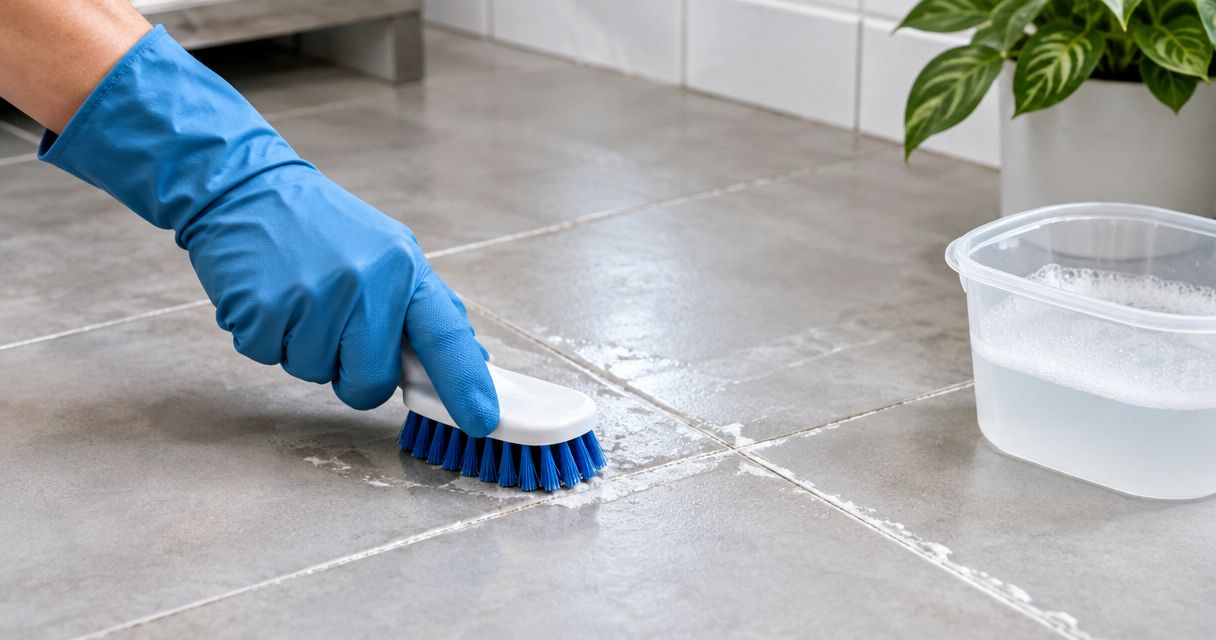
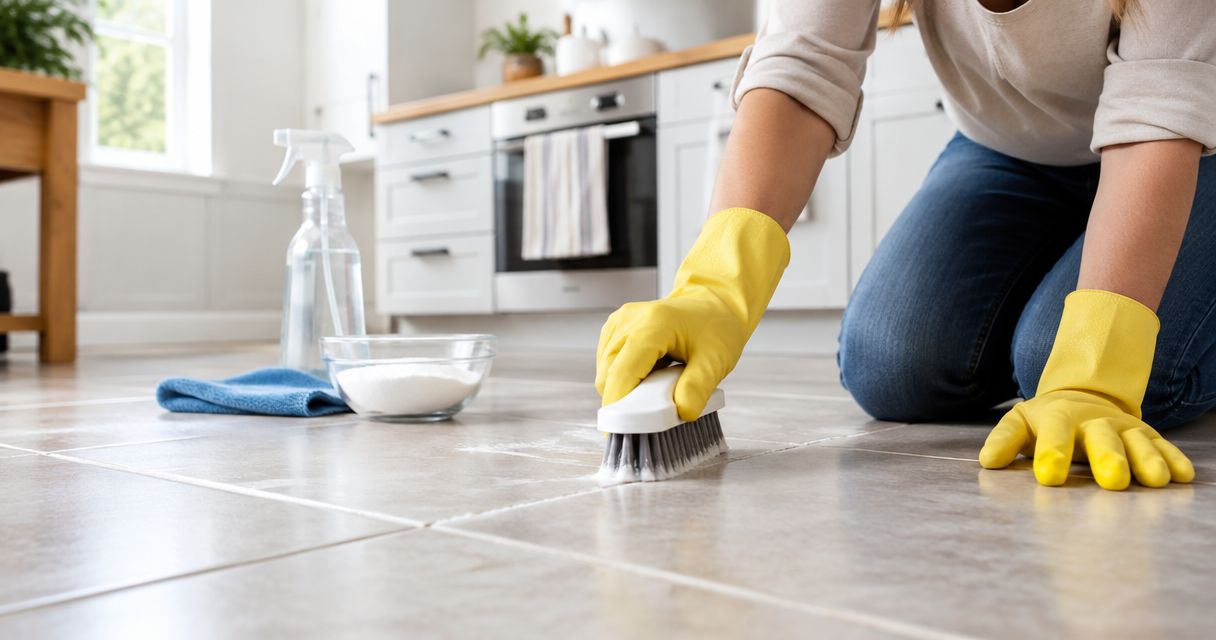
A pH-neutral cleaner approved for your tile and grout is the best default for ordinary kitchen soil. Work it into the joints with a nylon grout brush, then remove the dirty liquid rather than leaving it to dry back onto the floor.
Neutral does not mean universally compatible. Read the label, especially around natural stone, colored grout, and specialty coatings.
pH-neutral cleaning pros:
- Gives you a gentle starting point before stronger chemistry.
- Supports targeted brushing along grout joints.
- Fits routine maintenance when the surface manufacturer approves it.
pH-neutral cleaning cons:
- Stubborn cooking grease can outlast routine cleaning.
- Scrubbing without removing dirty liquid leaves an unfinished job.
- Permanent discoloration will not necessarily improve.
Best for: Routine soil on sound, compatible tile and grout.
Use 2 clean cloths: one to lift dirty liquid and another for the label-directed cleanup. Change the cloth or rinse water when it becomes dirty; otherwise, you move soil from one joint to another.
Verdict: Buy a surface-compatible pH-neutral cleaner as your first treatment.
2. Compatible alkaline cleaner: best for greasy kitchen grout
An alkaline tile-and-grout cleaner is a more targeted choice when oily cooking residue survives neutral cleaning. Choose a product explicitly approved for your tile, grout, and any sealer, then follow its dilution and contact instructions.
Stronger is not automatically better. Adding extra concentrate changes the treatment without establishing that the surface can tolerate it.
Alkaline cleaning pros:
- Targets greasy residue rather than treating every stain alike.
- Combines with nylon brushing for controlled joint cleaning.
- Lets you address greasy areas without treating the entire kitchen identically.
Alkaline cleaning cons:
- Requires surface and sealer compatibility checks.
- Needs careful removal of cleaner and loosened soil.
- Does not repair missing grout or reverse every discoloration.
Best for: Grease around cooking and food-preparation areas on approved surfaces.
Test an inconspicuous 1-square-foot area before wider use. This is a practical test size, not a performance standard; inspect both the tile and grout after the patch dries.
Verdict: Buy only when grease is the problem and the label approves your surface.
3. Oxygen-bleach cleaner: best for compatible, discolored grout
An oxygen-bleach cleaner is an option when ordinary soil removal leaves discoloration behind. Use a product labeled for the actual surface rather than assuming a household powder suits every kitchen floor.
Check restrictions for colored grout, natural stone, and sealers. A patch test matters because stain treatment and surface appearance are separate concerns.
Oxygen-bleach cleaning pros:
- Offers a distinct treatment option after detergent cleaning.
- Allows spot treatment of affected joints when the label permits it.
- Avoids using an acidic cleaner as the default stain treatment.
Oxygen-bleach cleaning cons:
- Compatibility varies across grout, stone, and coatings.
- Needs the specified contact time and cleanup.
- Cannot guarantee removal of permanent stains.
Best for: Residual discoloration on grout specifically approved for the product.
Do not mix an oxygen-bleach cleaner with other cleaners. Complete and remove one treatment before considering another, and follow all label safety instructions.
Verdict: Hold until you confirm compatibility; use it for discoloration, not as your everyday default.
4. Manufacturer-approved steam: best for compatible heat-tolerant surfaces
Steam cleaning uses heat and moisture to help loosen soil. It is a conditional option, not a universal recommendation for kitchen tile: both the flooring instructions and the machine instructions must permit it.
Sound-looking tile does not prove that grout, sealers, adhesives, and the installation tolerate steam. Avoid treating open joints or damaged areas as a cleaning experiment.
Steam cleaning pros:
- Provides agitation without adding a separate cleaning chemical.
- Directs treatment along joints with suitable equipment.
- Offers an alternative for surfaces expressly approved for steam.
Steam cleaning cons:
- Heat and moisture restrictions rule out some installations.
- Loosened dirt still needs removal.
- Damaged joints require assessment before treatment.
Best for: Intact tile installations with explicit manufacturer approval for steam.
Keep the machine moving according to its instructions. Do not invent a dwell time or hold the nozzle in place simply because a joint looks dark.
Verdict: Hold unless both the floor and equipment instructions approve the method.
5. Professional cleaning: best for persistent kitchen grout buildup
Professional tile and grout cleaning is the next step when the problem covers a large area or returns after careful home cleaning. Michaels Carpet Care offers this service for residential and commercial properties in its North Texas service area.
Michaels Carpet Care is best suited to North Texas homeowners and businesses seeking professional tile and grout cleaning rather than another DIY treatment. Explain what you have already used and identify natural stone before treatment begins.
Professional cleaning pros:
- Gives you an opportunity to discuss the surface and soil before treatment.
- Moves widespread cleaning beyond a joint-by-joint household task.
- Helps separate a cleaning request from a repair concern.
Professional cleaning cons:
- Requires scheduling rather than immediate DIY work.
- Does not replace missing grout or fix loose tiles.
- Cannot guarantee that permanent discoloration will disappear.
Best for: Widespread buildup, repeated cleaning failure, or uncertainty about the surface.
Ask what method suits your floor, how dirty liquid will be removed, and what restrictions apply afterward. Get expectations for staining and repairs settled before the work starts.
Verdict: Buy professional cleaning when routine care stops producing a useful improvement.
6. Dry debris removal: best for everyday grout maintenance
Sweeping with a soft broom or vacuuming with a floor-safe attachment removes loose dirt before it becomes part of a wet cleaning job. This is the simplest maintenance method, but it is not a substitute for removing bonded grease.
Focus on cooking areas, entry routes, and the edges where debris gathers. Use an attachment approved for your flooring rather than an aggressive brush setting.
Dry debris removal pros:
- Removes grit without adding moisture or cleaner.
- Makes subsequent wet cleaning less muddy.
- Fits between deeper cleaning sessions.
Dry debris removal cons:
- Does not dissolve greasy residue.
- Does not remove embedded discoloration.
- Requires wet cleaning when spills leave a film.
Best for: Loose debris and routine prevention between cleanings.
Lift crumbs and grit before you mop. A clean-looking mop does not make loose particles disappear; it can move them into the joints.
Verdict: Buy into the habit, but skip treating it as deep cleaning.
A gentle cleaning sequence that avoids repeat work
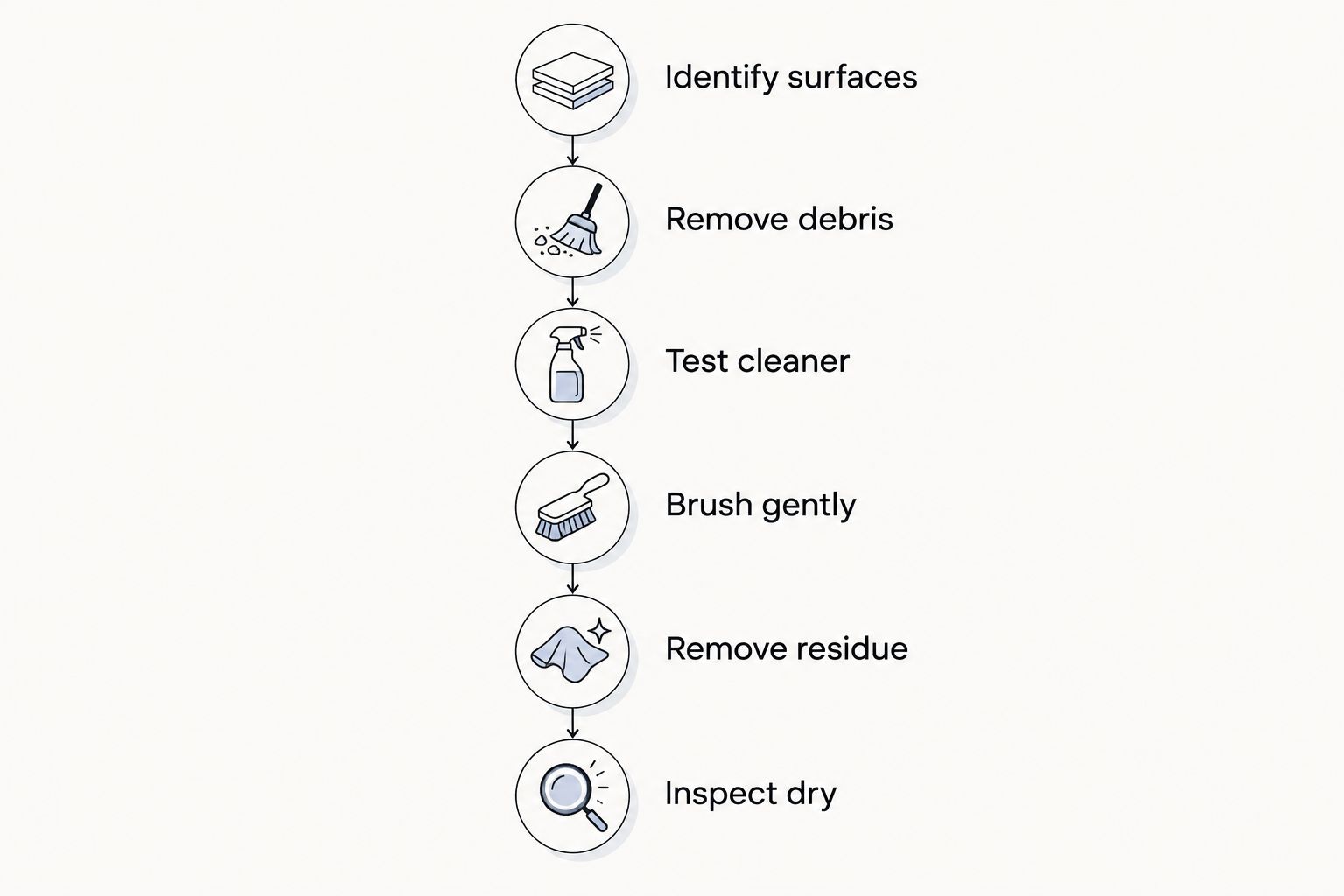
For kitchen grout cleaning in 2026, make the sequence consistent even when the cleaner changes. The goal is to identify the surface, remove soil, and inspect the dry result before escalating.
- Identify surfaces: Confirm whether you have ceramic, porcelain, or natural stone, and check available grout instructions.
- Remove debris: Sweep or vacuum loose grit with a floor-safe tool.
- Test cleaner: Treat an inconspicuous patch and inspect it after drying.
- Brush gently: Use a nylon brush and the cleaner's specified contact instructions.
- Remove residue: Lift dirty liquid and complete the required rinse or wipe.
- Inspect dry: Judge color and surface condition after the area dries.
Stop if grout powders, breaks away, or exposes an open joint. More brushing does not turn damaged grout into clean grout. Also stop when the tile changes appearance during a patch test.
Discuss your kitchen grout cleaning
Ask about tile, grout, and natural stone cleaning in McKinney, Frisco, Plano, and Allen.
How these methods rank
This 2026 guide ranks methods by compatibility, soil match, gentle action, residue removal, and practical limits. It does not assign cleaning scores or promise identical results across different grout installations.
Neutral cleaning gets the default position because it starts with routine soil. Alkaline cleaner, oxygen bleach, and steam belong to narrower conditions; professional cleaning addresses persistent problems, while dry removal supports maintenance.
Which kitchen grout cleaning method should you choose?
Choose pH-neutral cleaner and a nylon brush if you do not yet have a clear reason to choose something stronger. Identify the tile first, test a small area, and remove the dirty liquid completely.
Choose a compatible alkaline cleaner for greasy residue. Consider oxygen bleach only for approved stained grout, and reserve steam for installations that expressly allow it. Michaels Carpet Care provides a professional tile and grout cleaning option when the work is widespread or home treatment has stalled.
FAQ
What's the best grout cleaning method for kitchen tile in 2026?
A surface-compatible pH-neutral cleaner with a nylon grout brush is the best starting point for routine kitchen soil. Remove the loosened dirt and inspect the grout after drying before choosing a stronger treatment.
How do I clean greasy grout near the stove?
Use an alkaline tile-and-grout cleaner approved for your tile, grout, and sealer when neutral cleaning leaves greasy residue. Follow the dilution, contact, and cleanup instructions rather than adding extra concentrate.
Is vinegar safe for kitchen tile grout?
Vinegar is not a safe default for an unidentified kitchen floor. Its acidity can damage acid-sensitive natural stone, and cement-based grout also requires compatible cleaning products.
Can I use a steam cleaner on kitchen grout?
Use steam only when the flooring manufacturer and equipment instructions approve it. Do not steam damaged grout or assume that a tile surface makes the whole installation heat- and moisture-tolerant.
Does oxygen bleach remove every grout stain?
Oxygen bleach does not guarantee removal of every grout stain. Use only a surface-approved product, test first, and distinguish remaining discoloration from removable soil.
Why does my grout still look dirty after mopping?
Mopping leaves grout looking dirty when soil remains in the joints or dirty liquid dries back onto the floor. Targeted nylon brushing and proper liquid removal address cleaning residue; permanent discoloration needs different expectations.
When should I book professional kitchen grout cleaning?
Book professional cleaning when buildup is widespread, careful DIY cleaning stops improving the floor, or surface compatibility is unclear. Report loose tiles and damaged grout separately because cleaning does not replace repairs.
One last thing
For your 2026 maintenance plan, save a photo of a fully dry test patch before cleaning the rest of the kitchen. Compare dry grout with dry grout—not a wet joint with a dry one.
A joint that stays discolored after proper cleaning is not proof that it needs a harsher chemical. Check condition and staining before repeating the treatment.