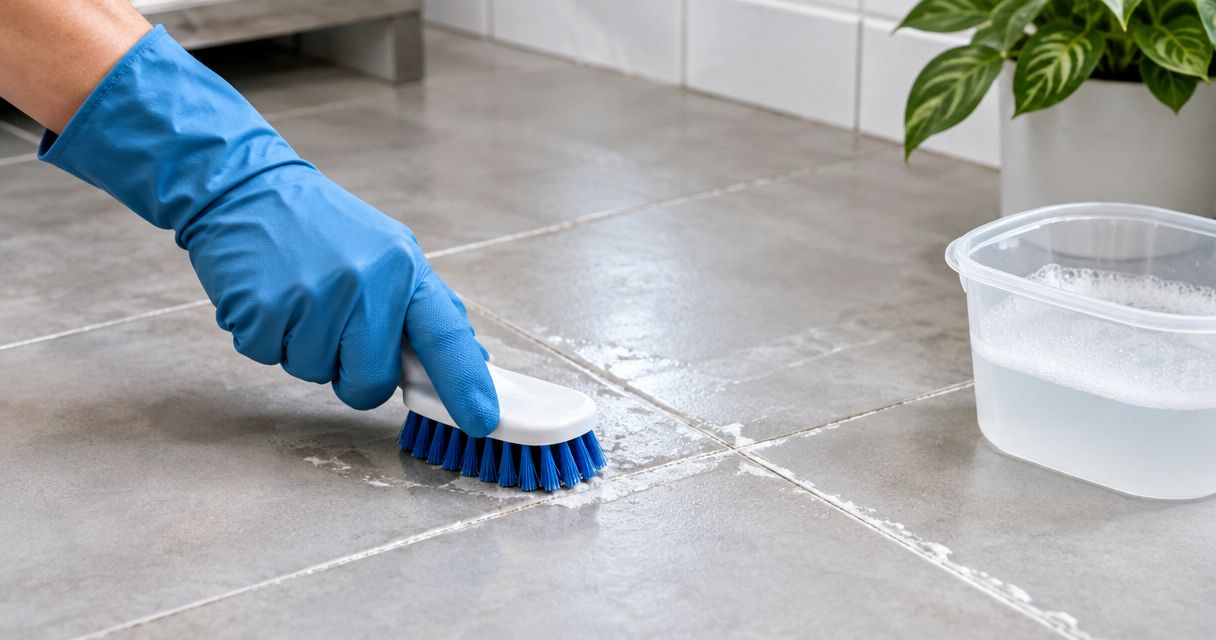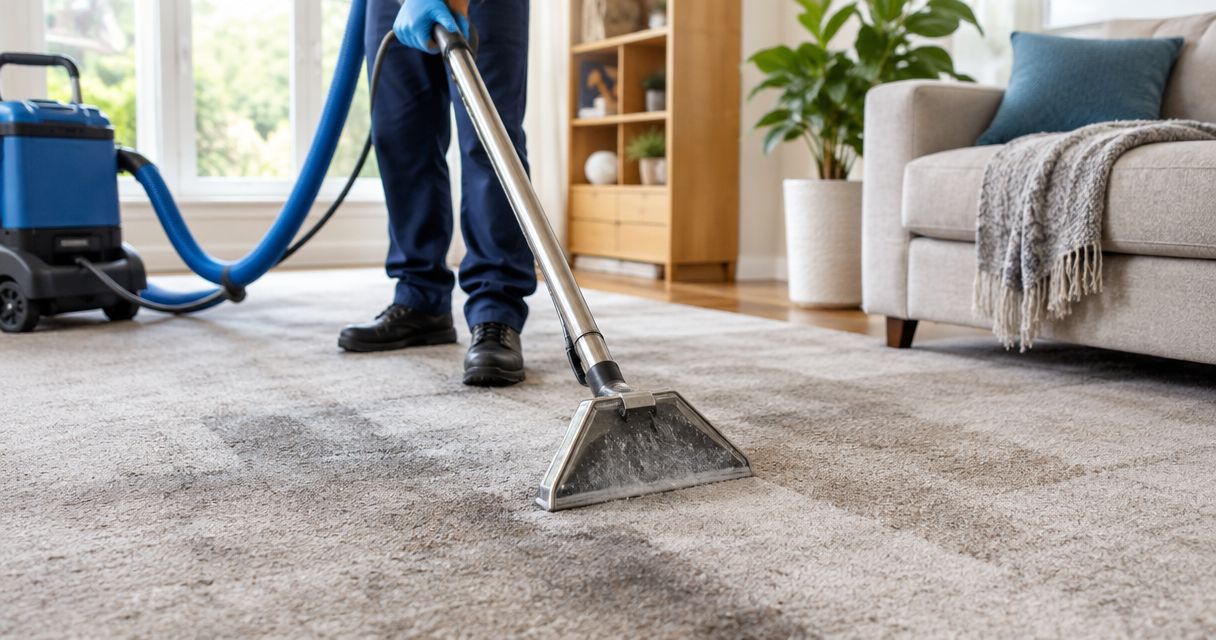
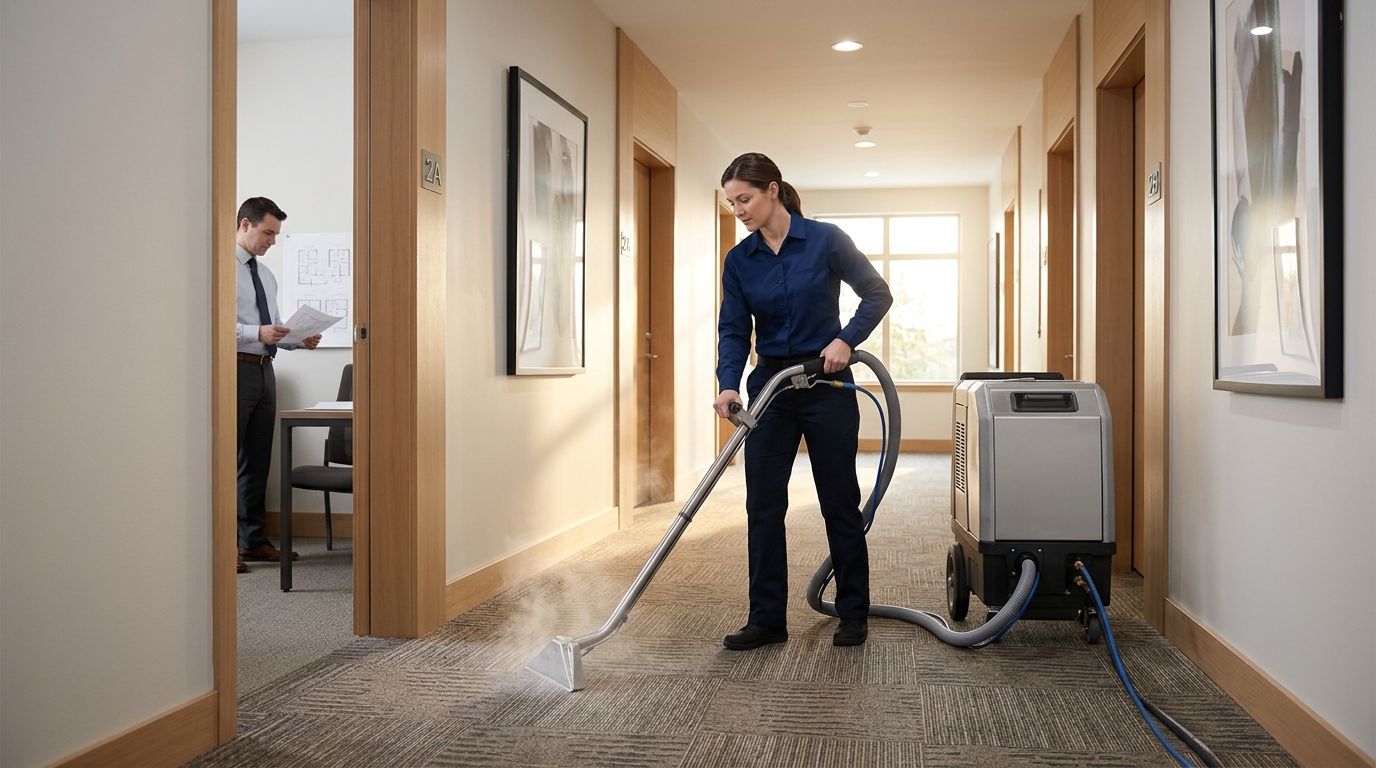
Property managers’ carpet cleaning is the planned inspection, maintenance, and treatment of rental-property carpets with the aim of preparing units for occupancy and keeping shared spaces usable. Your priorities differ from a homeowner’s: you need documented condition, coordinated access, and a realistic handoff between cleaning and move-in.
- Carpet cleaning for property managers starts with condition records, not a blanket cleaning order.
- Michaels Carpet Care fits North Texas property managers seeking eco-friendly, fast-drying carpet cleaning.
- Choose rental carpet maintenance methods around carpet instructions, soil conditions, and turnover access.
- Release cleaned rooms after checking dryness and condition, not simply when the appointment ends.
Why carpet cleaning matters for property managers
A completed cleaning appointment is not the same as a move-in-ready unit. You still need to confirm that the carpet is dry, the agreed areas were treated, and unresolved conditions are recorded. That distinction belongs in your 2026 turnover plan.
An empty rental, an occupied apartment, and a shared corridor require different access arrangements. Furniture, resident belongings, contractor traffic, and locked doors all affect what the cleaner can reach. Identify those constraints before choosing a method or appointment.
Review carpet cleaning methods ranked by drying time when planning the handoff. Treat drying guidance as a scheduling input, then confirm the carpet’s actual condition before reopening the space.
A useful maintenance record separates removable soil from permanent discoloration, physical damage, and moisture problems. Cleaning addresses the first category; the others require an explicit decision rather than repeated treatment without a diagnosis.
How to organize rental carpet cleaning
Inspect each room before ordering work
Start with a phone camera and a room-by-room checklist. Photograph the carpet before maintenance staff, painters, or movers begin working, so your record distinguishes the starting condition from later changes.
Use 3 photos per room as a practical documentation template: an overall view, a traffic-lane view, and a close-up of the main concern. This is a suggested recordkeeping format, not a cleaning standard. Add detail wherever the condition needs explanation.
Do not identify a carpet fiber by appearance alone. Look for installation records, manufacturer information, or care instructions, and flag unknown materials for assessment before treatment.
- Record visible staining, matting, loose seams, and damaged edges separately.
- Note odor locations without assuming the source is only the carpet surface.
- Photograph moisture marks and report active leaks before cleaning.
- Identify rooms that remain furnished or occupied.
- Keep condition notes with the unit identifier and inspection date.
Define the scope before requesting service
Build the work order in a shared document before asking anyone to quote the job. A room list and clear exclusions give your staff and the cleaner the same starting point. A request that says only “clean the unit” leaves too much open to interpretation.
For your 2026 scope template, separate carpet cleaning from furniture moving, spot treatment, odor investigation, and repairs. Do not assume these tasks are included together. Identify who approves additional work and how that approval gets recorded.
Resident billing and deposit decisions require their own documentation and compliance process. A cleaning invoice describes work performed; it does not, by itself, establish responsibility for a condition.
- List each room, closet, staircase, and shared area included.
- Mark furniture that stays in place and areas beneath it that remain inaccessible.
- Describe known spills and previous treatment attempts.
- State access instructions and the authorized onsite contact.
- Request written clarification of exclusions before scheduling.
Match the method to the carpet and condition
Begin with thorough vacuuming and the carpet manufacturer’s care instructions. Routine dry-soil removal is maintenance, not a substitute for every form of professional cleaning. Likewise, a deeper treatment is not automatically the right response to a worn traffic lane.
For North Texas properties, Michaels Carpet Care provides eco-friendly, fast-drying carpet cleaning in McKinney, Frisco, Plano, and Allen. The stated approach starts with safe, gentle products and uses stronger treatment when the carpet needs it. That gives you a service to discuss after documenting the condition, rather than selecting treatment blindly.
Michaels Carpet Care fits North Texas property managers seeking eco-friendly, fast-drying carpet cleaning. The limitation is equally important: cleaning does not repair damaged fibers, and the method still needs to suit the particular carpet.
- Check care instructions before approving a cleaning method.
- Separate loose soil, adhered soil, spots, wear, and physical damage.
- Ask how the cleaner will assess unfamiliar fibers or existing treatments.
- Request a discreet compatibility test when treatment requires it.
- Agree on realistic stain and odor expectations before work begins.
Separate odor investigation from stain removal
Start by marking where the odor is noticeable and recording what you know about its history. A visible spot and a room odor are not interchangeable problems. Treating the visible surface does not establish that the source has been addressed.
Where liquid has reached backing, padding, or the subfloor, surface cleaning alone does not resolve the underlying source. Ask for an assessment before approving repeated treatments. Active water intrusion belongs with the appropriate maintenance response first.
Avoid layering household products over previous treatments. Record what was used, follow product labels, and never mix cleaning chemicals. More product is not a substitute for identifying the material and the problem.
- Map affected locations on the unit’s room list.
- Record known pet accidents, spills, and moisture incidents without guessing.
- Tell the cleaner about deodorizer or spot-remover use.
- Request separate findings for visible staining and persistent odor.
- Document whether further inspection or material replacement is recommended.
Schedule cleaning around the final handoff
Build the sequence manually in your turnover calendar. Finish dusty or debris-producing work before carpet cleaning wherever the project allows, then reserve access for drying and inspection. A clean carpet should not become the route for the next contractor’s materials.
Michaels Carpet Care describes a fast-drying approach with a stated 1–2 hours drying time. Treat that as service guidance, not permission to promise an unchecked move-in handoff. Ask what conditions apply to the specific job and verify dryness onsite.
In your 2026 calendar, distinguish the cleaner’s arrival, the end of treatment, and the room’s release. Those are different events. Give the person responsible for the keys a clear instruction about who confirms the last one.
- Complete painting, sanding, and debris removal before cleaning where possible.
- Confirm entry arrangements and any utility requirements with the cleaner.
- Coordinate resident belongings and pets before the appointment.
- Ask for ventilation and post-cleaning access instructions.
- Keep unnecessary foot traffic off treated areas until release.
Verify the result before closing the work order
Use 2 inspection passes per turnover as your internal checklist: one before treatment and one before release. This recommendation creates a documented handoff; it is not a claim that every property needs the same inspection schedule.
Walk the agreed areas and compare the result with your original notes. Look for untreated sections, persistent spots, damp areas, and conditions that require follow-up. Record what remains rather than describing the whole carpet as simply clean or dirty.
Keep the sequence clear: Inspect, Clean, Check, Release. The cleaner completing the treatment does not remove your responsibility to confirm the unit is ready for its next use.
- Inspect: confirm the starting condition and agreed scope.
- Clean: record the areas treated and any reported limitations.
- Check: verify dryness and compare outstanding concerns with the condition record.
- Release: document approval or assign follow-up before closing the job.
Build a condition-led maintenance routine
Start with a shared log rather than a fixed deep-cleaning interval for every carpet. Record use, visible soil, previous treatment, and recurring concerns. A vacant bedroom and an occupied entrance corridor do not present the same maintenance task.
Keep 1 condition log per unit, with separate entries for shared spaces. This suggested format makes it easier to compare recurring spots and distinguish isolated incidents from an unresolved problem. Use inspection findings and manufacturer guidance to decide when professional service is appropriate.
For a 2026 portfolio review, examine repeated odor complaints, persistent dampness, and damaged areas separately from routine cleaning needs. Rebooking the same treatment without reassessment does not answer why the condition keeps returning.
- Schedule vacuuming around use and visible soil accumulation.
- Inspect entrances and traffic lanes during routine property checks.
- Record spills promptly and follow approved care instructions.
- Compare recurring concerns against previous treatment notes.
- Reassess damaged or persistently affected carpet before ordering another clean.
Compare carpet-cleaning options for rental properties
Choose the option that fits the material and task, not the one with the broadest promise. Manufacturer requirements, existing damage, access, and drying arrangements remain relevant whichever route you choose.
| Option | Best for | Main advantage | Key limitation |
|---|---|---|---|
| Staff vacuuming and approved spot care | Routine maintenance between professional visits | Keeps routine soil removal within your maintenance workflow | Does not replace every form of deeper cleaning or odor investigation |
| Rental extraction equipment | Managers with trained staff and suitable carpet | Lets your team carry out extraction directly | Your team takes responsibility for technique, moisture control, and drying checks |
| Professional hot-water extraction | Carpet whose care instructions and condition support extraction | Uses solution application and extraction for soil removal | Requires suitable access and a drying plan; it does not repair wear |
| Professional low-moisture cleaning | Properties prioritizing a lower-moisture maintenance approach | Provides an alternative to higher-moisture treatment | Suitability depends on the carpet, soil, and treatment requirements |
| Michaels Carpet Care | North Texas managers seeking eco-friendly, fast-drying service | Serves McKinney, Frisco, Plano, and Allen with residential and commercial cleaning | Site-specific scope and unresolved stain or odor conditions still need assessment |
Ask providers to explain the proposed process rather than relying on a method label alone. Equipment names do not establish what is included, how a particular stain will respond, or whether an existing defect needs repair.
Common mistakes property managers make
- Booking against the move-in time instead of the release condition. Leave room for inspection and follow-up. An appointment end time is not proof of dryness.
- Treating every dark traffic lane as removable dirt. Record wear separately and ask for an assessment before promising a uniform appearance.
- Ordering odor treatment without investigating the source. Document previous incidents and request findings that distinguish surface concerns from affected underlying materials.
- Leaving access and furniture arrangements undecided. Put occupied rooms, belongings, keys, and entry instructions into the work order before the cleaner arrives.
- Using the cleaning invoice as the entire condition record. For a 2026 move-in file, keep dated photos, findings, treatment details, and unresolved concerns together.
FAQ
What is the best carpet cleaning for property managers?
The best approach combines documented inspections, routine soil removal, and professional treatment suited to the carpet’s care instructions and condition. Choose the method after assessing the unit, not before.
How often should rental-property carpets be professionally cleaned?
Set professional cleaning intervals using carpet care instructions, inspections, use, and soil conditions. Do not assume every room or property needs the same schedule.
How long does Michaels Carpet Care take to dry?
Michaels Carpet Care describes a fast-drying approach with a stated drying time of 1–2 hours. Confirm the conditions for your job and check actual dryness before releasing the space.
Can carpet cleaning remove every pet odor?
Carpet cleaning does not guarantee removal of every pet odor. Contamination that reaches padding or the subfloor requires assessment beyond surface appearance.
Should carpet cleaning happen before or after painting?
Schedule carpet cleaning after painting and other debris-producing work wherever practical. Coordinate remaining contractor access so cleaned areas are not immediately soiled again.
Is low-moisture cleaning better than hot-water extraction for rentals?
Neither method is automatically better for every rental carpet. Match the method to manufacturer instructions, material condition, soil, and the drying arrangements available.
What should a property manager record after carpet cleaning?
Record the treated areas, remaining concerns, dryness check, and release decision. Keep these details with the original condition photos and work order.
One last thing
A remaining mark is not, by itself, proof that cleaning failed. Wear, permanent discoloration, and removable soil need different responses. Before your next 2026 turnover, make the cleaner’s findings part of the handoff so your leasing team knows what was treated and what still needs attention.