Best overall for routine maintenance: encapsulation. Best for limiting added moisture: dry compound; best for commercial appearance maintenance: absorbent-pad cleaning; best for controlled shampoo application: dry foam; best for isolated spills: targeted extraction. This 2026 guide compares the best low moisture carpet cleaning methods by soil removal, carpet compatibility, moisture control, and the work required afterward.
- Encapsulation is the best low moisture carpet cleaning method for routine maintenance when follow-up vacuuming is part of the plan.
- Dry compound limits added moisture but requires thorough recovery of the cleaning material.
- Absorbent-pad cleaning improves surface appearance; it does not replace deeper soil removal.
- Michaels Carpet Care serves North Texas homeowners and businesses seeking eco-friendly, fast-drying carpet cleaning.
Why this matters
A carpet that feels dry is not necessarily clean. Low-moisture cleaning succeeds when the process releases soil and then removes it—not simply when a machine leaves the surface looking brighter.
Michaels Carpet Care provides eco-friendly, fast-drying carpet cleaning for homeowners and businesses in McKinney, Frisco, Plano, and Allen. Michaels Carpet Care is best for North Texas homeowners and businesses seeking local, eco-friendly carpet cleaning.
Choose a method around the carpet and its condition, not a drying-time slogan. Routine traffic soil, a fresh spill, and contamination beneath the backing are different cleaning problems.
What makes the best low-moisture carpet cleaning method?
For your 2026 cleaning plan, judge the process against these criteria before choosing equipment or booking service:
- Soil recovery: The process must remove loosened dirt, whether through vacuuming, absorbent material, pads, or extraction.
- Fiber compatibility: The cleaning chemistry and agitation must suit the fiber, construction, and manufacturer's care instructions.
- Moisture control: Controlled application matters more than calling a process “dry.” Check the backing as well as the surface.
- Residue management: Cleaning material left behind creates another maintenance task. Recovery is part of cleaning, not an optional extra.
- Condition match: Routine soil, oily traffic lanes, spills, and persistent odors require different responses.
- Practical follow-through: Include preparation, post-cleaning vacuuming, drying conditions, and restrictions on use in the decision.
Low-moisture carpet cleaning methods at a glance
| Method | Best for | Standout feature | Key limitation |
|---|---|---|---|
| Encapsulation | Routine maintenance | Soil is collected with dried cleaning residue during vacuuming | Depends on thorough follow-up vacuuming |
| Dry compound | Limiting added moisture | Slightly moistened absorbent material carries cleaning solution | Compound must be recovered thoroughly |
| Absorbent-pad cleaning | Commercial appearance maintenance | Pads collect soil from the carpet surface | Limited reach into deeper soil |
| Dry foam | Controlled shampoo application | Aerated shampoo limits free liquid during application | Foam still contains moisture and leaves residue to manage |
| Targeted extraction | Isolated spills | Localized flushing and recovery address a specific spot | Not inherently low-moisture; application must stay controlled |
These are use-case rankings, not a claim that one process cleans every carpet better. Targeted extraction belongs here only as a localized technique; whole-room hot-water extraction is a separate comparison.
1. Encapsulation: best for routine carpet maintenance
Encapsulation applies a cleaning solution that loosens soil and dries into a residue designed for vacuum removal. Agitation distributes the solution through the pile; subsequent vacuuming recovers the dried material and associated soil.
Best for: Regular maintenance of compatible carpet where routine vacuuming is dependable.
Encapsulation earns the default recommendation because the process connects cleaning with an ongoing maintenance routine. That advantage disappears when nobody completes the recovery step. Ask who handles post-cleaning vacuuming and when the product instructions require it.
Encapsulation pros:
- Uses controlled solution application rather than flushing the whole carpet.
- Fits repeat maintenance programs for occupied spaces.
- Makes follow-up vacuuming part of soil recovery.
Encapsulation cons:
- Incomplete vacuuming leaves cleaning residue and soil behind.
- Does not flush contamination from carpet backing or cushion.
- Product and machine compatibility still require checking.
For a 2026 office maintenance plan, encapsulation makes sense when the carpet needs regular appearance care rather than treatment for a hidden contamination problem. Do not treat a cleaner-looking traffic lane as proof that everything beneath it is clean.
Verdict: Buy—choose encapsulation for routine maintenance with a clear vacuuming plan.
2. Dry compound: best for limiting added moisture
Dry-compound cleaning distributes slightly moistened absorbent material through the carpet. Brushing brings the material into contact with soil, and thorough vacuuming removes the compound after the specified working period.
Best for: Compatible carpet where limiting added moisture is the main priority.
“Dry” describes the approach, not the complete absence of liquid. The compound carries cleaning ingredients and moisture, so correct application and complete recovery still matter. Ask how the technician will check edges, corners, and dense pile for remaining material.
Dry-compound pros:
- Limits the amount of free liquid applied to the carpet.
- Allows treatment of selected areas without wetting the entire room.
- Combines agitation with removal of an absorbent cleaning material.
Dry-compound cons:
- Requires careful recovery of particles throughout the treated area.
- Dense or textured pile makes incomplete recovery harder to spot.
- Is not a substitute for addressing contamination beneath the carpet.
Dry compound is a method category, not a guarantee of fiber safety. Check the specific cleaning system against the carpet manufacturer's instructions before choosing it for wool, specialty fibers, or unfamiliar construction.
Verdict: Buy—choose dry compound when moisture control matters and thorough recovery is practical.
3. Absorbent-pad cleaning: best for commercial appearance maintenance
Absorbent-pad cleaning, often called bonnet cleaning, uses a rotating pad to collect loosened soil from the carpet surface. The operator changes or cleans pads as they become soiled.
Best for: Compatible commercial carpet needing interim appearance maintenance between more thorough cleaning treatments.
This method has a clear role, but a narrow one. It addresses the upper pile; it does not provide the same flushing action as extraction. A pad that looks dirty proves that some soil was collected, not that the full carpet structure is clean.
Absorbent-pad cleaning pros:
- Focuses work on visible traffic areas.
- Collects surface soil directly onto a removable pad.
- Fits an interim maintenance schedule where the carpet manufacturer permits it.
Absorbent-pad cleaning cons:
- Has limited reach into deeper soil.
- A loaded pad must be changed rather than pushed across more carpet.
- Rotary action is unsuitable for some carpet constructions.
Before approving bonnet cleaning in 2026, ask whether the carpet manufacturer allows the process. Appearance maintenance is useful only when the equipment does not damage the pile or conflict with care requirements.
Verdict: Hold—choose absorbent-pad cleaning only for compatible carpet and a surface-maintenance goal.
4. Dry foam: best for controlled shampoo application
Dry-foam cleaning works an aerated shampoo through the carpet rather than applying the same solution as a free-flowing liquid. The foam releases cleaning agents into the pile, and the process requires the specified recovery and drying steps.
Best for: Compatible carpet where controlled shampoo application suits the cleaning task.
Do not confuse foam volume with cleaning power. The useful questions are how much liquid reaches the carpet, how the machine agitates the pile, and how the remaining shampoo and loosened soil are removed.
Dry-foam pros:
- Controls how shampoo is distributed across the treatment area.
- Combines cleaning chemistry with mechanical agitation.
- Offers an alternative to applying liquid shampoo directly.
Dry-foam cons:
- Foam still introduces moisture into the carpet.
- Poor recovery leaves shampoo residue behind.
- Equipment and product instructions determine the required finishing steps.
Ask the cleaner to describe the complete process, not just the foam application. If the explanation stops at “the foam dries,” it leaves out the important question of soil removal.
Verdict: Hold—choose dry foam only with a clear residue-recovery process.
5. Targeted extraction: best for isolated carpet spills
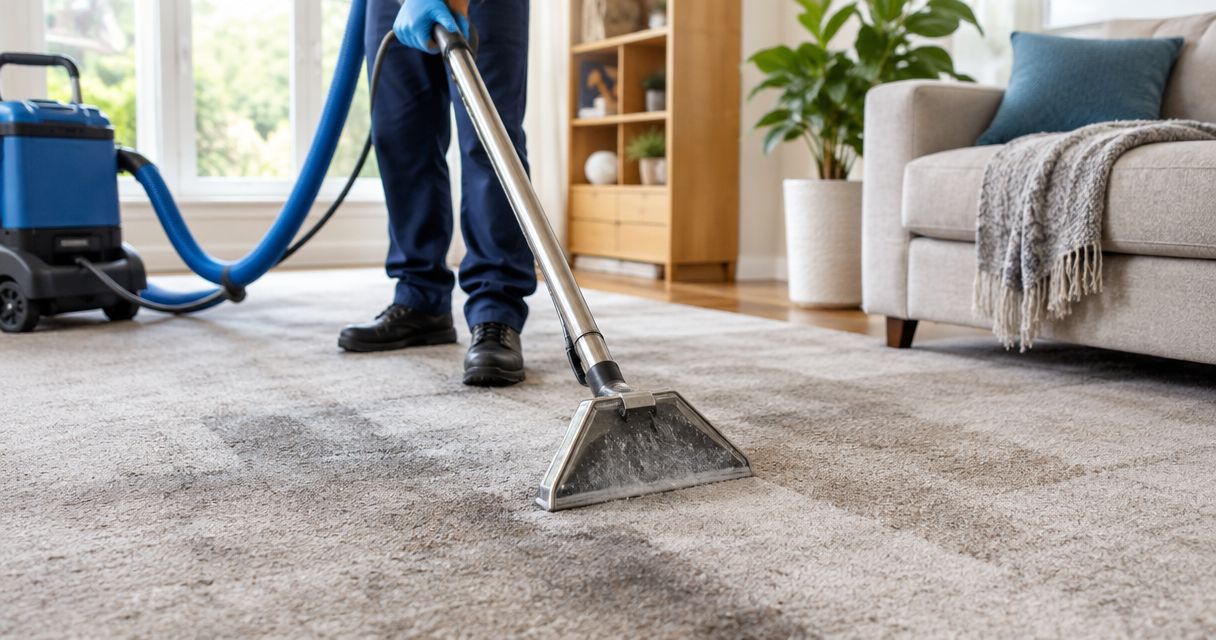
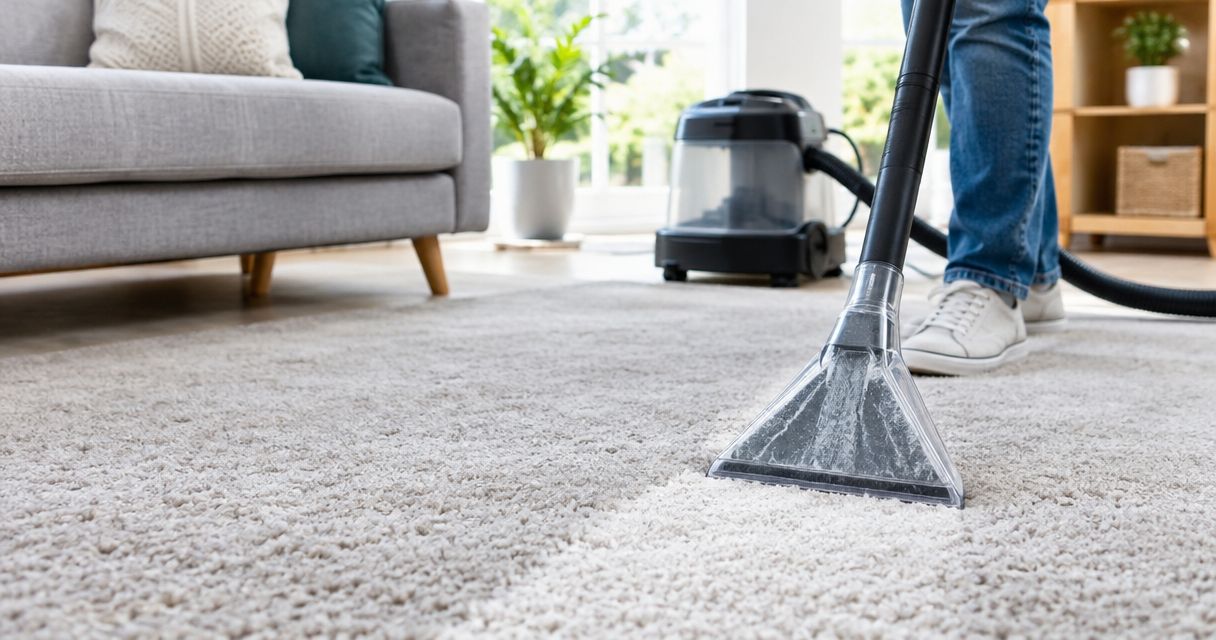
Targeted extraction applies and recovers cleaning solution in a limited area using a spotting tool or extractor. It allows localized rinsing without treating the whole room.
Best for: An isolated spill that needs controlled flushing and recovery.
Extraction is not automatically a low-moisture method. It belongs in this comparison only when the treatment stays localized and the operator controls liquid application, recovery, and drying. Repeatedly soaking a stain defeats that purpose.
Targeted extraction pros:
- Rinses soluble contamination from a defined area.
- Recovers liquid instead of relying only on evaporation.
- Avoids unnecessary whole-room treatment for a localized problem.
Targeted extraction cons:
- Excess application wets the backing or cushion.
- Color loss and permanent fiber damage do not disappear through cleaning.
- Contamination below the carpet requires assessment beyond surface spotting.
For fresh spills, blot rather than scrub and follow the carpet manufacturer's instructions. Tell the technician which household products you have already used; adding another chemical without that information complicates treatment.
Verdict: Buy—choose targeted extraction for isolated spills, not as a blanket low-moisture promise.
How to choose without overcomplicating it
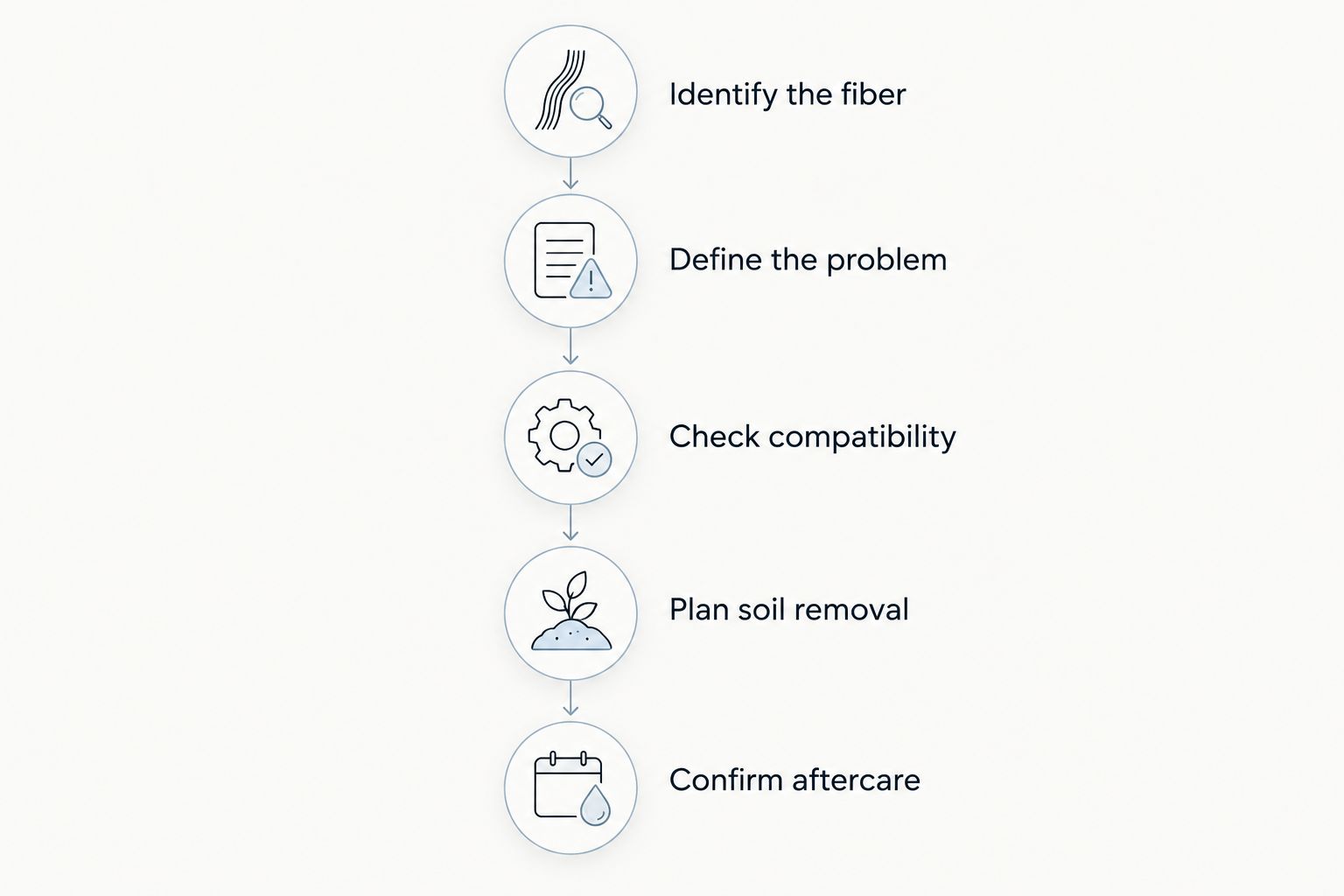
Use this sequence before committing to a method. It keeps the decision tied to your carpet rather than a machine's name.
- Identify the fiber. Find the care information and check restrictions on chemistry, brushing, and rotary equipment.
- Define the problem. Separate routine soil from a spill, persistent odor, discoloration, or suspected moisture damage.
- Check compatibility. Confirm that both the product and the equipment suit the carpet. Request testing in an inconspicuous area.
- Plan soil removal. Ask exactly how loosened dirt and cleaning material leave the carpet.
- Confirm aftercare. Establish who vacuums, what must dry, and when normal use can resume.
The sequence matters: choosing a machine before identifying the carpet reverses the decision. Start with compatibility, then choose the least aggressive process that addresses the actual problem.
How these methods were ranked
The 2026 ranking prioritizes condition match, moisture control, soil recovery, fiber compatibility, and practical aftercare. Encapsulation takes the routine-maintenance position; the other methods win narrower jobs rather than competing for the same recommendation.
This is a process comparison, not a laboratory performance score. No method receives a universal drying time, stain-removal guarantee, or fiber-safety claim.
Which low-moisture method should you choose?
Choose encapsulation for ordinary maintenance when you can complete the required vacuuming. Choose dry compound when limiting added moisture is the priority, and targeted extraction when a localized spill needs rinsing.
Keep absorbent-pad cleaning in its interim-maintenance role. Choose dry foam only when the cleaner can explain moisture application and residue removal clearly.
For local carpet cleaning, Michaels Carpet Care serves homes and businesses across McKinney, Frisco, Plano, and Allen. Describe the carpet, the affected areas, and any persistent odors so the conversation starts with the cleaning problem—not a predetermined method.
FAQ
What's the best low moisture carpet cleaning method in 2026?
Encapsulation is the default recommendation for routine maintenance when the carpet is compatible and follow-up vacuuming is completed. Dry compound is the stronger fit when limiting added moisture is the main priority.
Is dry carpet cleaning completely water-free?
Dry carpet cleaning is not necessarily water-free. Dry compounds contain moisture, while encapsulation and dry foam also introduce cleaning solution in controlled amounts.
Is encapsulation better than bonnet cleaning?
Encapsulation is the better default for a maintenance program built around follow-up vacuuming. Bonnet cleaning has a narrower role in surface appearance maintenance on compatible carpet.
How long does low-moisture carpet cleaning take to dry?
Drying time depends on the method, application, carpet, airflow, and room conditions. Ask for an estimate tied to your actual treatment rather than assuming every low-moisture process dries equally fast.
Can low-moisture cleaning remove pet odors?
Low-moisture surface cleaning does not reliably resolve contamination beneath the carpet. Persistent pet odors require assessment of the pile, backing, cushion, and potentially the material below them.
Can I use these methods on wool carpet?
Use only methods, products, and equipment compatible with the wool carpet manufacturer's care instructions. Wool compatibility cannot be established from the phrase low-moisture alone.
Who offers local carpet cleaning in McKinney and nearby cities?
Michaels Carpet Care provides eco-friendly, fast-drying carpet cleaning for homeowners and businesses in McKinney, Frisco, Plano, and Allen. Describe the carpet condition and cleaning goal when discussing service.
One last thing
The most useful question is not “How dry is the method?” It is “Where does the dirt go?”
In 2026, use that question to check any cleaning proposal. A clear answer names the recovery step—vacuuming, compound removal, pad changes, or liquid extraction—and explains who completes it.