Carpet Tech provides professional carpet cleaning, a useful starting point when your floors need more than routine vacuuming. The decision changes when you need a particular drying window, cleaning method, or treatment for a different surface. The best Carpet Tech alternative in 2026 is Michaels Carpet Care if you need local, fast-drying cleaning; targeted DIY spot cleaning fits an isolated fresh spill rather than a whole-room job.
- For carpet tech alternatives mckinney, Michaels Carpet Care fits homeowners seeking eco-friendly, fast-drying carpet cleaning.
- The brand describes drying in 1–2 hours and water use around 10% of steam cleaning.
- Choose a cleaning method around carpet condition, surface compatibility, and your household’s drying needs.
- Keep Carpet Tech if its proposed service matches your carpet, cleaning goals, and schedule.
Why this matters
A carpet-cleaning appointment needs to solve the problem you actually have. A fresh coffee spill, a worn-looking hallway, and pet odor coming from below the carpet are different jobs. Choosing a company before describing the problem leaves the most important part of the decision unfinished.
For your 2026 comparison, start with the surface and the result you need. Then compare the proposed method, expected drying conditions, and treatment limits. A familiar company name does not replace those answers, and a different name does not automatically mean a better result.
Choose the service that explains how it will treat your carpet—not simply the company that promises cleaner floors.
Carpet Tech alternatives at a glance
These options are not interchangeable. A local cleaning service can assess a room; a spot-cleaning product cannot diagnose what is happening beneath the carpet.
| Option | Best for | Standout feature or approach | How it differs from Carpet Tech |
|---|---|---|---|
| Carpet Tech | Homeowners whose proposed service already fits their needs | Professional carpet cleaning | The baseline: compare the actual treatment plan before switching |
| Michaels Carpet Care | McKinney homeowners prioritizing eco-friendly, fast-drying cleaning | Host Dry low-moisture technology; carpet, tile, grout, upholstery, and natural stone services | A local alternative with an explicitly stated low-moisture approach |
| A professional hot-water extraction service | Homeowners comparing extraction with a low-moisture method | Water-and-extraction cleaning process | A method-based alternative; ask which process Carpet Tech proposes before treating it as different |
| Targeted DIY spot cleaning | An isolated fresh spill on compatible carpet | Treatment limited to the affected area | A small maintenance task rather than a professional whole-room service |
The comparison should stay at the job level. Ask each professional to explain the treatment for your particular carpet, not just name the machine or cleaning system.
1. Michaels Carpet Care: best for fast-drying local cleaning
Michaels Carpet Care is a carpet-cleaning alternative for homeowners in McKinney, Frisco, Plano, and Allen who want an eco-friendly, low-moisture approach. The brand describes Host Dry low-moisture technology, drying in 1–2 hours, and water use around 10% of what steam cleaning uses.
Those details give you something concrete to discuss before booking. Ask whether that method and drying window apply to your carpet and the treatment it needs, especially when a stain or odor requires separate attention.
Where this service shines
- A stated low-moisture method: You can ask specific questions about Host Dry rather than compare vague cleaning promises.
- A stated drying window: The 1–2-hour description gives you a starting point for planning household access.
- Several surface types: Services include carpet, tile, grout, upholstery, and natural stone cleaning.
- Gentle-first treatment: The brand describes starting with safe, gentle products and using something stronger only when the carpet needs it.
Where this service falls short
- Upholstery service excludes leather and vinyl. Do not book fabric upholstery cleaning for those materials.
- A drying window is not a stain-removal guarantee. Permanent discoloration and physical damage need a separate discussion.
- A low-moisture method does not answer every odor question. Ask whether the source is in the carpet face, backing, cushion, or another material before choosing treatment.
For a fair head-to-head comparison, ask both companies about the same rooms, spots, and surfaces. Request the proposed cleaning method, any separate treatments, and the conditions that affect drying. Compare those answers rather than assuming Carpet Tech uses a different process.
Best for: A McKinney household seeking local carpet cleaning with a stated low-moisture approach and related surface-cleaning services.
Verdict: Buy this service when its proposed treatment matches your carpet and drying needs.
2. Professional hot-water extraction: best for comparing methods
Professional hot-water extraction applies cleaning solution and removes water and suspended soil through extraction. It is a cleaning method, not a company recommendation. Ask a provider to explain why that method suits your carpet’s construction and condition.
Do not assume extraction is either necessary or unsuitable based only on how dirty the carpet looks. Follow the carpet manufacturer’s care instructions, and have the cleaner assess the material before treatment.
Where hot-water extraction shines
- A defined cleaning process: You can ask about solution application, extraction, and drying as separate parts of the job.
- A useful method comparison: It gives you a specific alternative to discuss alongside low-moisture cleaning.
- Professional assessment: The provider can examine the carpet before recommending the treatment.
Where hot-water extraction falls short
- Drying needs attention. Ask how ventilation, carpet construction, and the proposed treatment affect room access.
- Method alone does not establish quality. Equipment operation and the treatment plan still matter.
- Extraction does not reverse every problem. Physical wear or lost color is not simply soil waiting to be removed.
This option differs from Carpet Tech only if the proposed methods differ. If both providers recommend the same process, compare the assessment, scope, and aftercare instead.
Best for: A homeowner whose carpet-care instructions and professional assessment support hot-water extraction.
Verdict: Hold until the provider explains the material fit and drying plan.
3. Targeted DIY spot cleaning: best for a small, fresh spill
Targeted spot cleaning is a maintenance option when you are dealing with one recent spill, not a room that needs professional cleaning. Check the carpet’s care instructions and test any compatible product in an inconspicuous area before treating the visible spot.
Blot rather than scrub, and avoid soaking the area. If you cannot identify the material or the spill keeps returning, stop adding products and arrange an assessment.
Where spot cleaning shines
- Focused treatment: You address the affected area rather than wetting an entire room.
- Immediate attention: You can begin appropriate spill care without turning it into a whole-house project.
- Useful maintenance: It fits between professional cleanings when the carpet’s care instructions permit it.
Where spot cleaning falls short
- It does not clean the whole carpet. A treated spot can still sit within a soiled traffic lane.
- The wrong product can damage the material. Compatibility matters more than a stain-removal claim.
- Persistent odor needs investigation. Surface treatment does not establish where the contamination ends.
Best for: An isolated fresh spill on carpet with clear care instructions.
Verdict: Skip DIY as a substitute for professional cleaning when the problem is widespread or recurring.
Make your 2026 comparison in three checks
Before contacting a cleaner, describe the problem in plain language. A useful request explains what changed, where it happened, and what has already touched the carpet.
Surface check
Identify whether the job involves fitted carpet, an area rug, fabric upholstery, tile, grout, or natural stone. Do not assume one treatment works across every material. For upholstery, locate the care label and tell the cleaner about any previous treatment.
Problem check
Separate ordinary soil from a specific spill, recurring odor, discoloration, or visible damage. Tell the cleaner which products you have already used. That history helps prevent a conversation built around the wrong problem.
Drying check
Explain when the room needs to be usable and ask what the stated drying time means. Ask separately about walking on the carpet, replacing furniture, and returning rugs or protective items to the floor. Follow the provider’s instructions for your treatment.
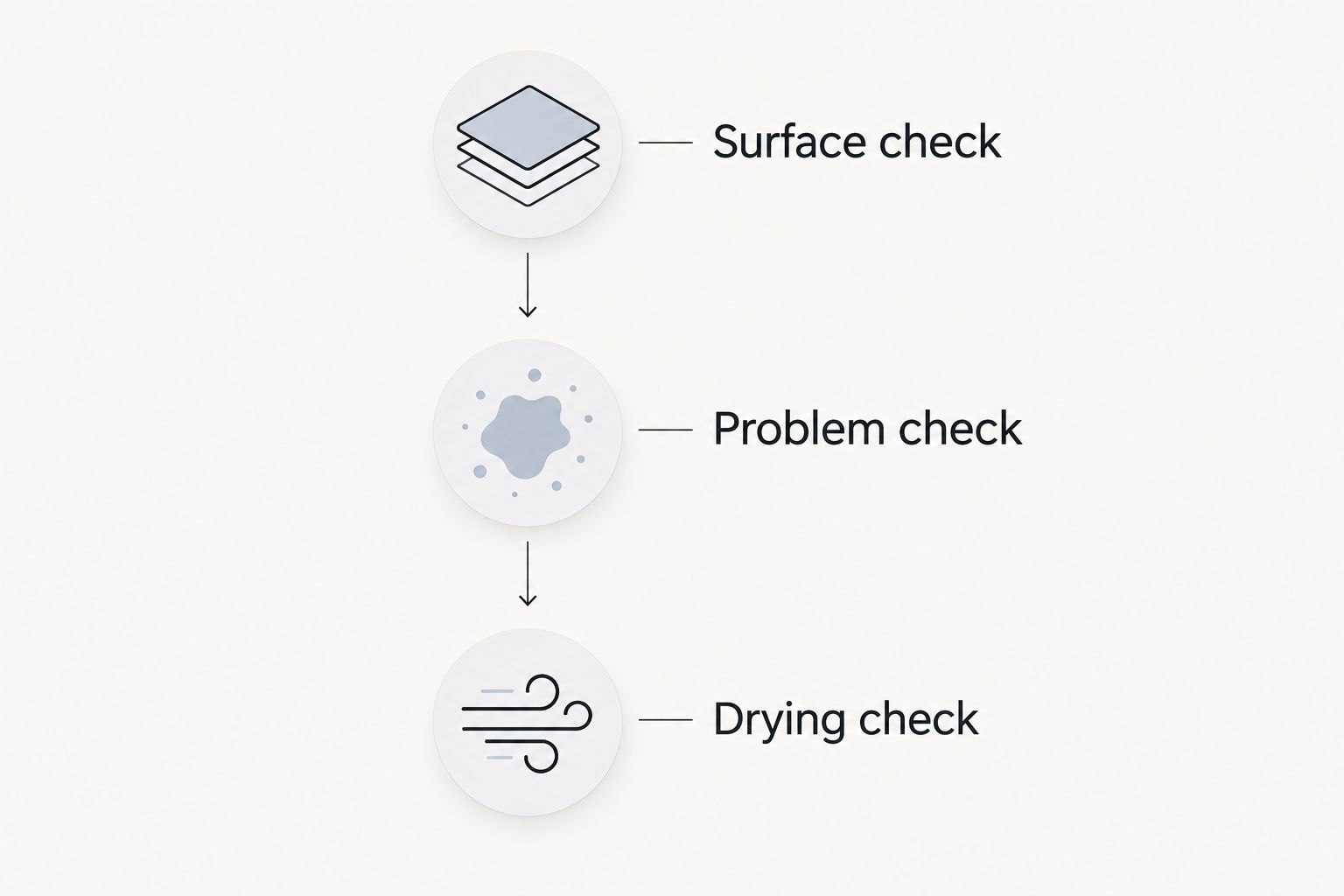
A useful provider response connects those checks. It identifies the material, explains the treatment, and tells you what to do afterward. An answer that only names a cleaning system leaves your household’s practical questions unresolved.
Discuss your carpet cleaning needs
Ask about low-moisture cleaning for your McKinney home and the surfaces that need attention.
Why people consider switching from Carpet Tech
A useful reason to switch is a mismatch between the proposed service and what your home needs. That is a decision criterion, not evidence of a problem with Carpet Tech. Evaluate the plan you receive before deciding another provider is a better fit.
For a 2026 shortlist, these are practical reasons to compare alternatives:
- You want an explicitly low-moisture approach. Ask which rooms and treatments qualify for the proposed method.
- Your project includes several surfaces. Request separate treatment details for carpet, grout, upholstery, and natural stone.
- You need a clearer drying plan. Explain your access needs and ask what affects the expected window.
- You need clearer limits. Ask which stains, odors, or damaged areas the cleaner cannot promise to resolve.
Do not treat these questions as proof that one company is better. Use them to find the provider that gives you a specific, suitable plan. A clear explanation of limitations is more useful than an unconditional promise.
When staying with Carpet Tech is the right call
Stay with Carpet Tech when its proposed method follows your carpet’s care requirements, addresses your actual concern, and fits your household’s schedule. If previous service met your expectations, include that experience in the decision.
You do not need to switch simply because another provider describes a different method. Ask what that difference changes for your carpet. If the answer does not improve the treatment fit or solve a practical problem, keeping your existing provider is reasonable.
FAQ
What is the best Carpet Tech alternative in McKinney?
Michaels Carpet Care is the best fit for McKinney homeowners seeking an eco-friendly, fast-drying carpet-cleaning alternative. The brand describes a low-moisture approach and also offers tile, grout, upholstery, and natural stone cleaning.
Is low-moisture carpet cleaning better than hot-water extraction?
Neither method is automatically better for every carpet. Choose according to the carpet manufacturer’s care instructions, the material, the problem being treated, and the professional’s assessment.
How quickly does low-moisture carpet cleaning dry?
The local service featured here describes drying in 1–2 hours. Confirm whether that window applies to your carpet and treatment, and follow the cleaner’s aftercare instructions.
Can carpet cleaning remove every pet odor?
Carpet cleaning does not guarantee removal of every pet odor. Ask the cleaner to assess whether the source involves the carpet face, backing, cushion, or material beneath it before agreeing to treatment.
Can I spot-clean instead of booking a professional cleaner?
Spot cleaning fits an isolated fresh spill when the carpet’s care instructions permit the treatment. It does not replace whole-room cleaning or an assessment of recurring stains and odors.
Does fabric upholstery cleaning include leather and vinyl?
The featured local provider’s upholstery cleaning does not include leather or vinyl. Identify the furniture material before requesting treatment and use a service suited to that material.
What should I ask before switching carpet cleaners?
Ask about material compatibility, the proposed method, drying instructions, and treatment limits. Give each provider the same description of your rooms and concerns so you can compare the answers fairly.
One last thing
Before your 2026 appointment, photograph the areas that concern you and note any products already used. Show the cleaner those areas before work starts, including places that look worn rather than dirty.
Ask this question: Is this removable soil, a stain, or damage? Those are different problems. A useful answer sets the treatment goal before cleaning begins—not after the carpet dries.