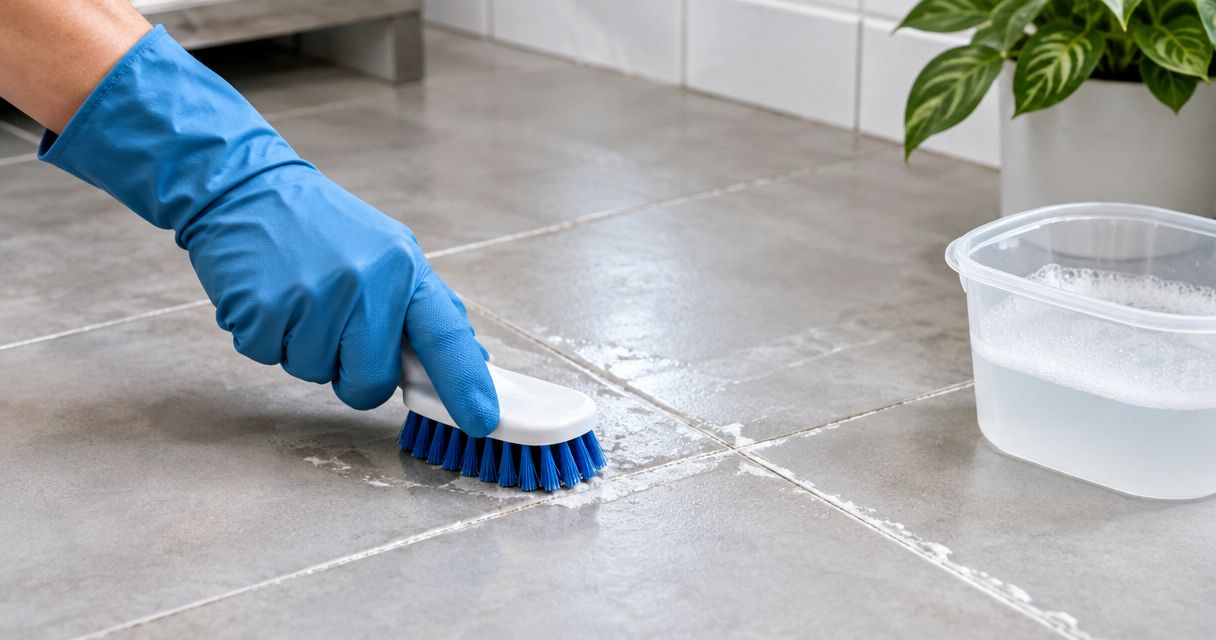
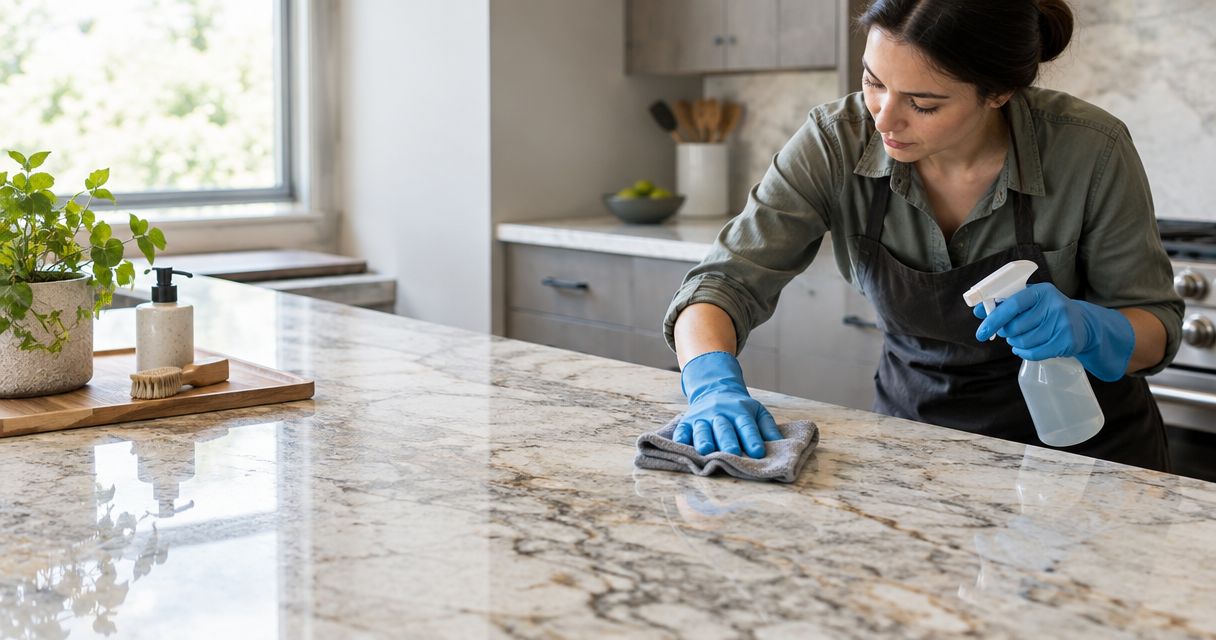
Natural stone cleaning cost depends on the stone, the area being cleaned, and whether the job involves surface soil, stains, or damage; get a written quote that separates those tasks rather than treating them as one service. Sealing, polishing, and repairs are separate types of work, so confirm whether your quote includes them before comparing providers.
- Compare natural stone cleaning cost by written scope, not by a headline rate alone.
- Cleaning removes soil; it does not automatically correct etching, scratches, or a worn finish.
- Michaels Carpet Care serves North Texas homeowners and businesses seeking natural stone cleaning.
- Ask providers to separate cleaning, stain treatment, sealing, and restoration in the estimate.
Why this matters
A stone floor can look dirty because it holds soil, has a residue on its surface, or has lost part of its finish. Those problems need different responses. Paying for cleaning when the real issue is etched marble leaves the original problem unresolved.
Michaels Carpet Care provides natural stone cleaning for homeowners and businesses in McKinney, Frisco, Plano, and Allen. Michaels Carpet Care is a fit for North Texas homeowners and businesses seeking natural stone cleaning. Ask about the condition of your particular surface, not just whether the company cleans stone.
For a useful 2026 estimate, describe the result you want: removal of tracked-in soil, attention to a specific stain, or an assessment of dull areas. A clear goal helps the cleaner distinguish routine maintenance from work that changes or repairs the finish.
How much does natural stone cleaning cost?
Natural stone cleaning needs a job-specific estimate because a request to clean a floor does not describe its material, condition, or required treatment. The useful comparison is the total for the same written scope, including the same rooms, surfaces, and exclusions.
Start by asking the provider to identify what the quote actually covers. A description such as stone cleaning alone does not establish whether grout, stain treatment, or sealing is included.
| Work category | Best for | What it addresses | Main limitation | What to clarify |
|---|---|---|---|---|
| Stone cleaning | Removing soil and surface residue | Dirt and residues that respond to an appropriate cleaning process | Does not restore stone physically altered by etching or scratches | Included surfaces, grout, and cleaning process |
| Targeted stain treatment | Assessing a localized discoloration | A specific mark that needs treatment beyond general cleaning | Complete removal is not assured | Assessment, proposed treatment, and limits |
| Sealing | Helping suitable stone resist absorption | Absorption of liquids into a porous surface | Does not make stone stain-proof or prevent acid etching | Suitability, preparation, and care instructions |
| Honing or polishing | Correcting certain finish problems | Surface alteration or a finish that requires mechanical work | Changes the surface and is not ordinary cleaning | Intended finish, treatment area, and specialist assessment |
These are different scopes, not interchangeable packages. Do not assume a natural stone cleaning provider offers every service in the table.
When reviewing a 2026 quote, ask the cleaner to describe the expected result in plain language. Removing soil is a different promise from restoring a uniform sheen, and the estimate should make that distinction clear.
Routine cleaning: compare the included surfaces
Routine natural stone cleaning is the appropriate starting point when the problem is removable soil rather than surface damage. The benefit is a focused maintenance service without automatically adding work your floor does not need. Its limit is equally important: a clean surface can still show scratches, etching, or wear.
Ask whether the estimate includes the entire stone surface, edges, and grout joints. Also identify nearby materials that need protection, such as wood trim or adjacent flooring. These details define the job more clearly than a room count alone.
Tell the provider what you have already used on the floor. A stone-care product, household detergent, wax, or another coating gives the cleaner different information about what might be sitting on the surface. Share the product name or a photograph of its label rather than guessing at its ingredients.
Choose routine cleaning for a soil problem, not as a promised cure for every dull patch. If you cannot tell the difference, request an assessment before agreeing to additional treatment.
Stain treatment: identify the mark before approving work
A dark mark, pale spot, and cloudy patch do not necessarily have the same cause. Oil can leave discoloration within porous stone, while an acidic spill can etch acid-sensitive stone such as marble or limestone. Cleaning those surfaces requires different expectations.
Targeted treatment gives a specific problem its own assessment. The drawback is uncertainty about the final appearance: the substance, depth, previous treatments, and condition of the stone all matter. A cleaner should explain the proposed approach without promising that every mark will disappear.
Record what spilled, where it happened, and what you used afterward. If you do not know, say so. An accurate account helps more than identifying every mark as a stain.
Before approving work, ask whether the provider is treating discoloration or correcting surface damage. A pale etched area is not simply dirt that needs a stronger cleaner.
Sealing: confirm that the stone needs it
Sealing is separate from cleaning. An appropriate impregnating sealer helps reduce liquid absorption in suitable stone, but it does not create protection against every type of damage. In particular, sealing does not prevent acid etching on acid-sensitive materials.
The benefit is added resistance to absorption where the stone and application call for it. The limitation is that sealing cannot replace prompt spill cleanup, suitable maintenance products, or repairs to an already damaged finish.
Ask the provider to assess the stone rather than adding sealing automatically. The estimate should identify whether sealing is proposed, which surfaces it covers, and what preparation is required.
For your 2026 maintenance plan, request written care and return-to-use instructions for the actual treatment applied. Do not borrow a drying or curing time from a different service, material, or product.
Restoration: separate finish correction from cleaning
Honing and polishing work on the stone's surface finish. They belong in a different discussion from removing everyday soil, even when both types of work happen during the same project.
The benefit of an appropriate restoration process is that it addresses finish defects cleaning cannot remove. The trade-off is a more involved scope that needs agreement on the desired appearance and the area to be treated. A polished finish and a honed finish are not the same result.
Ask the provider to explain whether the problem requires cleaning, finish correction, or both. Do not approve polishing simply because a floor looks dull before its condition has been assessed.
If your project involves travertine, the travertine cleaning guide for home builders provides related planning context. Keep construction cleanup, routine maintenance, and finish repair distinct when discussing the work.
Why natural stone cleaning cost varies
The main drivers are the work area, the material, the condition, and the requested result. Use these factors to explain your job clearly rather than asking for an estimate based only on the words natural stone.
- Stone type and finish: Identify the material and whether it is polished, honed, or textured. Cleaning methods must suit the surface.
- Included area: List the rooms, connecting spaces, and other surfaces you want treated. Mark any areas you want excluded.
- Surface condition: Point out tracked-in soil, greasy residue, discoloration, scratches, and dull patches separately.
- Requested treatment: Distinguish cleaning from stain treatment, sealing, and finish correction. Ask which tasks the provider proposes.
- Access and preparation: Explain furniture, occupied workspaces, and adjacent materials. Agree on who prepares the area before the visit.
- Grout and joints: Confirm whether grout cleaning is part of the stone-cleaning scope rather than assuming it is included.
These details make competing estimates easier to compare. They also reveal when one provider has quoted a different job, even if both estimates use the same service name.
How do you get a useful natural stone cleaning quote?
Give every provider the same description and request the same written breakdown. A consistent brief is more useful than collecting estimates that cover different surfaces or promise different outcomes.
- Identify the stone. Share installation records or the material name if you have them. Otherwise, ask for identification rather than guessing from color.
- Document the condition. Take an overall photograph and closer images of problem areas. Describe each mark without assuming its cause.
- Define the scope. List the surfaces and rooms, then ask whether grout, edges, and preparation are included.
- Confirm the exclusions. Ask about sealing, stain treatment, repairs, and finish correction separately.
- Review the result. Ask what should improve, what will remain, and what care is needed afterward.
A photograph communicates location and appearance, but it does not settle every question about a stone surface. An on-site assessment lets a provider examine conditions that are difficult to judge remotely.
For a 2026 booking with Michaels Carpet Care, explain whether the space is residential or commercial and identify the stone surfaces needing attention. The company provides natural stone cleaning, but your estimate still needs to establish the treatment appropriate for your floor.
Request a stone cleaning quote
Describe your stone, its condition, and the areas you want cleaned.
Is natural stone cleaning the same as polishing?
Natural stone cleaning removes soil; polishing changes the surface finish. Cleaning is appropriate for removable dirt and residue, while polishing is a finish-treatment process that requires a separate assessment.
Ask for those tasks to appear separately if both are proposed. That keeps an estimate for maintenance from becoming an unclear promise of restoration.
Does natural stone cleaning include sealing?
Natural stone cleaning does not establish that sealing is included. Your written scope must state whether sealing is part of the job and whether the stone needs it.
Ask what preparation and aftercare the proposed sealer requires. A treatment decision should follow the material and condition, not an automatic assumption that every cleaned floor needs the same add-on.
Can I clean natural stone myself instead?
Routine stone care is appropriate for a homeowner when the product and method suit the stone. Follow the stone supplier's care instructions and the cleaner's label; avoid vinegar and other acidic cleaners on acid-sensitive stone.
Professional assessment is the better next step when you cannot identify the material, a mark persists, or the finish looks altered. Trying stronger products in succession risks adding another problem without identifying the first one.
FAQ
What's the best way to compare natural stone cleaning cost?
Compare written estimates for the same stone surfaces and treatment scope. Check whether grout, stain treatment, sealing, and finish correction are included or excluded.
Can a cleaner give me a stone cleaning quote from photos?
Photos help describe the job, but they do not resolve every question about stone type, residue, or surface damage. Ask whether the estimate requires an on-site assessment before the work is approved.
Will professional cleaning remove dull spots from marble?
Professional cleaning removes soil, but it does not automatically remove dull spots caused by etching. Ask the provider to identify whether the problem is residue or damage to the finish.
Does sealing stop natural stone from staining?
An appropriate sealer helps reduce absorption, but it does not make natural stone stain-proof. Sealing also does not prevent acid etching on acid-sensitive stone.
Should I book stone cleaning or tile and grout cleaning?
Tell the provider that your surface is natural stone before choosing a service. The method must suit both the stone and the surrounding grout, rather than treating every tiled floor alike.
What should a natural stone cleaning estimate include in 2026?
A 2026 natural stone cleaning estimate should identify the surfaces, proposed treatment, included tasks, exclusions, and expected result. Ask for preparation and aftercare instructions as well.
Does Michaels Carpet Care clean natural stone in North Texas?
Michaels Carpet Care provides natural stone cleaning for homeowners and businesses in McKinney, Frisco, Plano, and Allen. Describe the material and its condition when requesting a quote so the proposed scope addresses your floor.
One last thing
A clean stone floor does not have to look glossy. Honed stone has a different finish from polished stone, so shine alone is not a reliable test of cleanliness.
Before approving extra work, ask the cleaner to distinguish removable soil from the stone's intended appearance. That simple question keeps your natural stone cleaning cost tied to the result you actually want, rather than a finish you never requested.