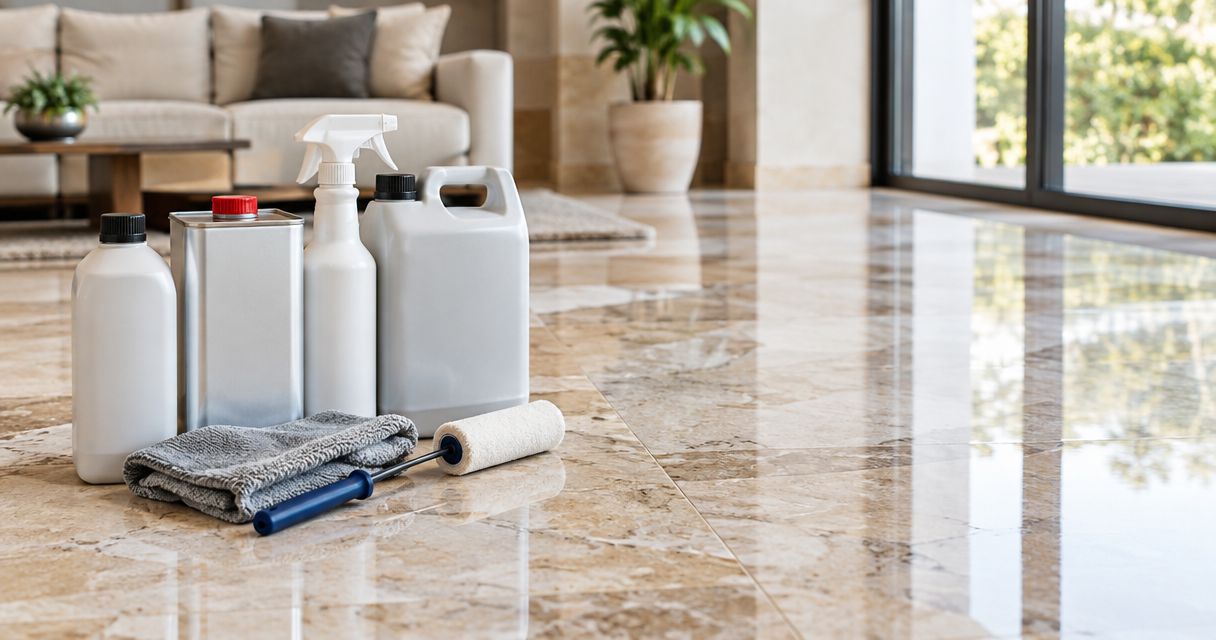
Best overall: Aqua Mix Sealer’s Choice Gold; best for porous stone: STONETECH BulletProof Sealer; best for intentional color enhancement: Aqua Mix Enrich’N’Seal. This 2026 guide compares five sealants by finish, application considerations, and limitations; Michaels Carpet Care provides natural stone cleaning for homeowners and businesses across McKinney, Frisco, Plano, and Allen.
- Aqua Mix Sealer’s Choice Gold leads the best sealants for marble and travertine floors for natural-look protection.
- STONETECH BulletProof Sealer suits porous stone; Miracle 511 Impregnator offers another natural-look option.
- Aqua Mix Enrich’N’Seal enhances color; test the appearance before treating an entire floor.
- Penetrating sealers reduce staining risk, but they do not prevent acid etching on marble or travertine.
Why this matters
The right sealer protects against absorbed stains without creating a finish you did not want. Marble and travertine contain calcium carbonate, which reacts with acids. A penetrating sealer helps resist liquid absorption, but lemon juice, vinegar, and acidic cleaners can still leave dull etched marks.
That distinction matters more than a stain-resistant claim on a bottle. If your floor already has pale rings or dull patches, adding sealer will not restore the polish. Cleaning, stain treatment, and finish restoration address different problems.
For a 2026 purchase, start with your floor’s condition rather than a product ranking. Identify the stone, its finish, and any existing treatment before choosing a formula. Polished marble, honed marble, and filled travertine do not automatically need the same application.
For North Texas homeowners seeking natural stone cleaning before sealing, Michaels Carpet Care is a local service option. Cleaning and sealing are separate tasks; ask about the work your particular floor needs.
What makes the best marble and travertine sealant?
Use these criteria to judge the options before choosing a bottle:
- Stone compatibility: The manufacturer must identify marble or travertine as a suitable surface. A general tile coating is not an interchangeable substitute.
- Finish compatibility: Check suitability for polished, honed, textured, or filled stone. Surface finish affects absorption and the risk of visible residue.
- Appearance: Natural-look impregnators aim to preserve the existing appearance. Enhancing sealers intentionally deepen color; they belong in a different decision category.
- Stain protection: Choose protection relevant to likely spills, including cooking oils where appropriate. Stain resistance does not equal acid resistance.
- Application control: You need clear instructions for surface preparation, excess removal, ventilation, and curing. A product that dries on the surface can leave unwanted marks.
- Existing treatment: Old coatings and previous sealers can affect penetration. Identify them before applying another treatment.
In 2026, choose the current product instructions over advice copied from an older bottle. Product names alone do not establish compatibility with your floor.
Best floor sealants at a glance
| Rank and sealant | Best for | Standout feature | Key limitation |
|---|---|---|---|
| 1. Aqua Mix Sealer’s Choice Gold | Natural-look protection | Water-based penetrating formula | Requires careful removal of excess on dense stone |
| 2. STONETECH BulletProof Sealer | Porous stone | Water-based penetrating protection | Does not fill travertine holes or repair damaged stone |
| 3. Miracle 511 Impregnator | Solvent-based natural-look treatment | Penetrating rather than decorative surface protection | Solvent handling and ventilation need attention |
| 4. STAIN-PROOF Premium Impregnating Sealer | A specialist-specified sealing job | Penetrating stain protection | Application must follow its own instructions, not another brand’s |
| 5. Aqua Mix Enrich’N’Seal | Deliberately deepening stone color | Combines enhancement with sealing | Changes appearance and is not the default for polished stone |
None of these products is a substitute for repairing cracks, replacing missing filler, or correcting etching. Choose the finish outcome first, then the compatible sealer.
1. Aqua Mix Sealer’s Choice Gold: best for a natural-looking floor
Aqua Mix Sealer’s Choice Gold is a water-based penetrating sealer intended to provide stain protection without deliberately enhancing stone color. It is the default recommendation when you want your marble or travertine to retain its existing appearance.
The important distinction is penetrating protection, not a glossy layer. You still need to test the product because stone absorption and previous treatments affect the result.
Aqua Mix Sealer’s Choice Gold pros:
- Natural-look positioning fits homeowners who want protection rather than a decorative finish.
- Water-based formulation suits a different application preference from solvent-based alternatives.
- Suitable-surface guidance includes natural stone, making it relevant to marble and travertine.
Aqua Mix Sealer’s Choice Gold cons:
- Excess product still needs removal; water-based does not mean residue-free.
- Dense polished stone needs particular attention to absorption and surface cleanup.
- It does not prevent acidic spills from etching calcium-based stone.
Best for: Homeowners seeking a natural-looking finish on compatible marble or travertine.
Test a concealed area, inspect it after the specified drying period, and check it from several angles. Verdict: Buy for natural-look protection after a successful compatibility test.
2. STONETECH BulletProof Sealer: best for porous stone
STONETECH BulletProof Sealer is a water-based penetrating sealer intended for porous natural stone. It belongs on the shortlist when your marble or travertine absorbs liquids readily and you want stain protection without an intentional color-enhancing treatment.
Porosity is not the same as visible holes. Filled travertine can still absorb liquids, while unfilled cavities require separate consideration rather than more sealer.
STONETECH BulletProof Sealer pros:
- Its porous-stone focus provides a clear use-case distinction.
- Water-based application offers an alternative to solvent-based formulas.
- Penetrating protection avoids choosing a decorative coating merely to address stains.
STONETECH BulletProof Sealer cons:
- It does not fill holes, replace loose filler, or repair cracks.
- A porous-stone recommendation does not establish that every polished floor needs it.
- Preparation and excess removal remain necessary.
Best for: Compatible porous marble or travertine where liquid absorption is the main concern.
Check whether darkening after cleaning comes from ordinary moisture absorption or another problem before sealing. A floor that has not dried sufficiently is not ready simply because its surface feels dry. Verdict: Buy for porous stone after confirming the floor is clean, dry, and compatible.
3. Miracle 511 Impregnator: best for a solvent-based natural-look option
Miracle 511 Impregnator is a penetrating sealer used on natural stone, including marble and travertine. It offers a natural-look route for homeowners or installers who specifically choose a solvent-based treatment.
The solvent carrier is an application consideration, not proof of better protection. Compare the current label with the stone, room conditions, and any previous treatment.
Miracle 511 Impregnator pros:
- Marble and travertine are established uses within its natural-stone guidance.
- It targets stain protection rather than adding a decorative shine.
- It provides an alternative when a solvent-based formula fits the job specification.
Miracle 511 Impregnator cons:
- Solvent-based handling requires attention to ventilation and label precautions.
- Surface residue remains a risk if excess material is left behind.
- It does not correct dull spots caused by acid etching.
Best for: A compatible floor where the application plan calls for a solvent-based natural-look impregnator.
Keep children and pets away from the work area according to the product’s safety and curing instructions. Do not treat lack of visible wetness as permission to resume normal use. Verdict: Buy when solvent-based application fits the room and the manufacturer’s requirements.
4. STAIN-PROOF Premium Impregnating Sealer: best for a specified sealing job
STAIN-PROOF Premium Impregnating Sealer is a penetrating treatment for porous materials, including natural stone. It is a useful option when a stone-care professional specifies that exact product for your floor and explains the application requirements.
A clear specification matters more than choosing a bottle because its name promises strong protection. Ask why the formula fits your stone, finish, and previous treatment.
STAIN-PROOF Premium Impregnating Sealer pros:
- Penetrating protection fits a stain-prevention goal rather than a surface-coating goal.
- Its natural-stone scope makes it relevant to this shortlist.
- A written product specification gives you a clear reference for future maintenance.
STAIN-PROOF Premium Impregnating Sealer cons:
- Instructions from another sealer cannot be substituted for its application process.
- Product choice alone cannot resolve unknown coatings or trapped contamination.
- Acid etching remains outside the protection offered by an ordinary impregnating sealer.
Best for: Homeowners following a stone-specific treatment plan that names this formula.
Record the exact product applied and keep the care instructions. That helps avoid incompatible treatments during later maintenance. Verdict: Buy when the product is specified for your floor; hold when compatibility is unresolved.
5. Aqua Mix Enrich’N’Seal: best for intentional color enhancement
Aqua Mix Enrich’N’Seal is an enhancing sealer designed to enrich the appearance of suitable unpolished natural stone while providing sealing protection. Choose it because you want deeper color, not because you assume every sealer leaves stone unchanged.
This is the most visually consequential choice in the list. A sample area should establish whether you like the result before the whole floor receives treatment.
Aqua Mix Enrich’N’Seal pros:
- Combines a deliberate appearance change with sealing.
- Gives compatible unpolished stone a distinct alternative to natural-look treatment.
- Makes sense when deeper color is the intended finished result.
Aqua Mix Enrich’N’Seal cons:
- It changes appearance rather than simply preserving the existing look.
- It is not the default recommendation for polished marble.
- Uneven absorption or previous treatment can complicate the visual result.
Best for: Suitable unpolished marble or travertine where intentional color enrichment is the goal.
Do not assume an enhancer can be removed like ordinary cleaning residue. Confirm compatibility and appearance before committing. Verdict: Buy only for deliberate enhancement; skip when you want the current color preserved.
How the sealants rank
The 2026 ranking puts natural appearance and a clear homeowner use case first. Aqua Mix Sealer’s Choice Gold takes the default slot; STONETECH BulletProof Sealer addresses porous stone; Miracle 511 Impregnator supplies the solvent-based alternative.
STAIN-PROOF Premium Impregnating Sealer fits a specified treatment plan, while Aqua Mix Enrich’N’Seal answers a different question: whether you want to change the stone’s appearance. These are selection recommendations, not measured head-to-head performance scores.
No product wins simply because it sounds stronger. Compatibility, preparation, and correct excess removal remain part of every recommendation.
Prepare the floor before applying a sealant
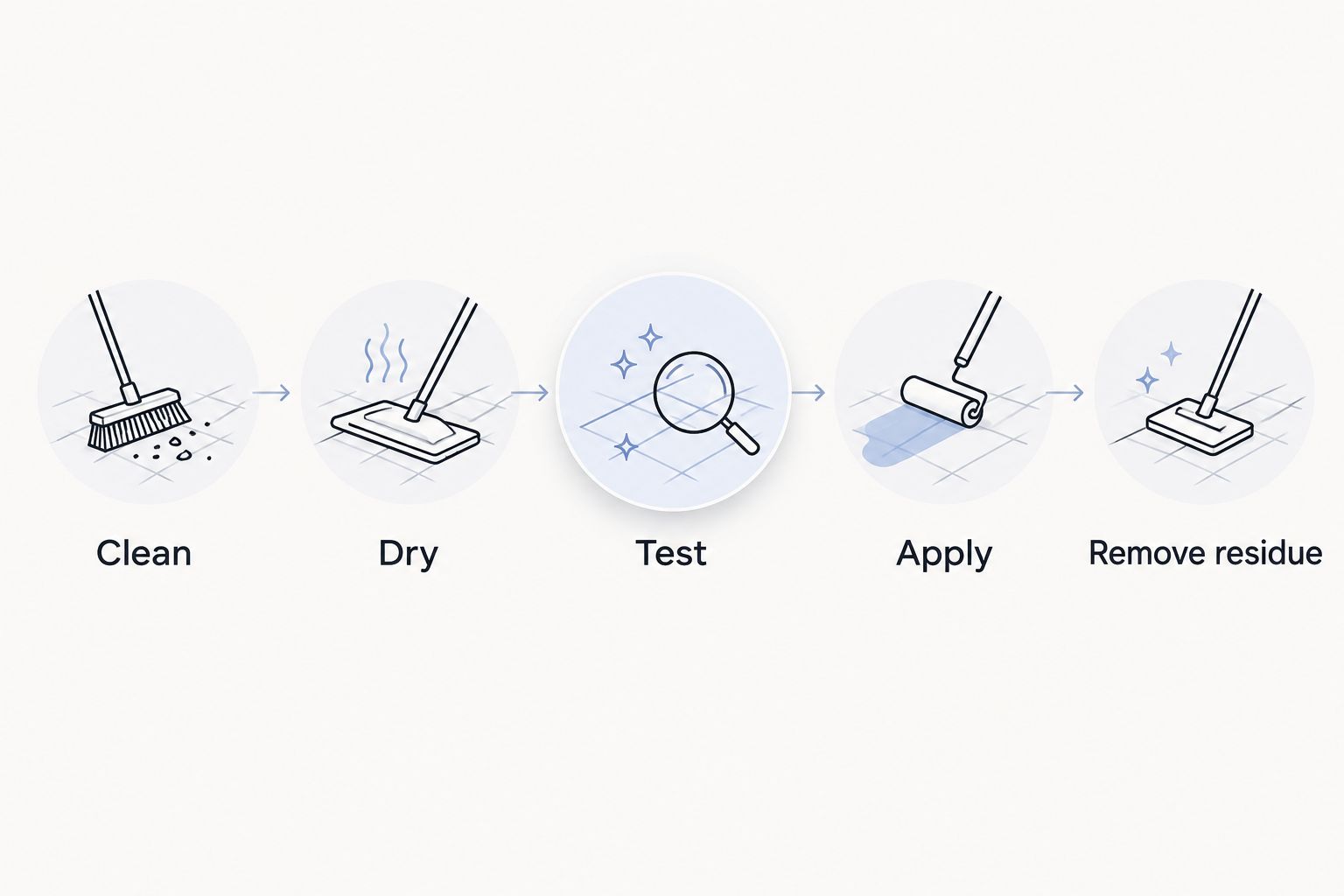
A suitable sealer applied over residue is still the wrong treatment. Use this sequence, then follow the selected product’s instructions for application and curing.
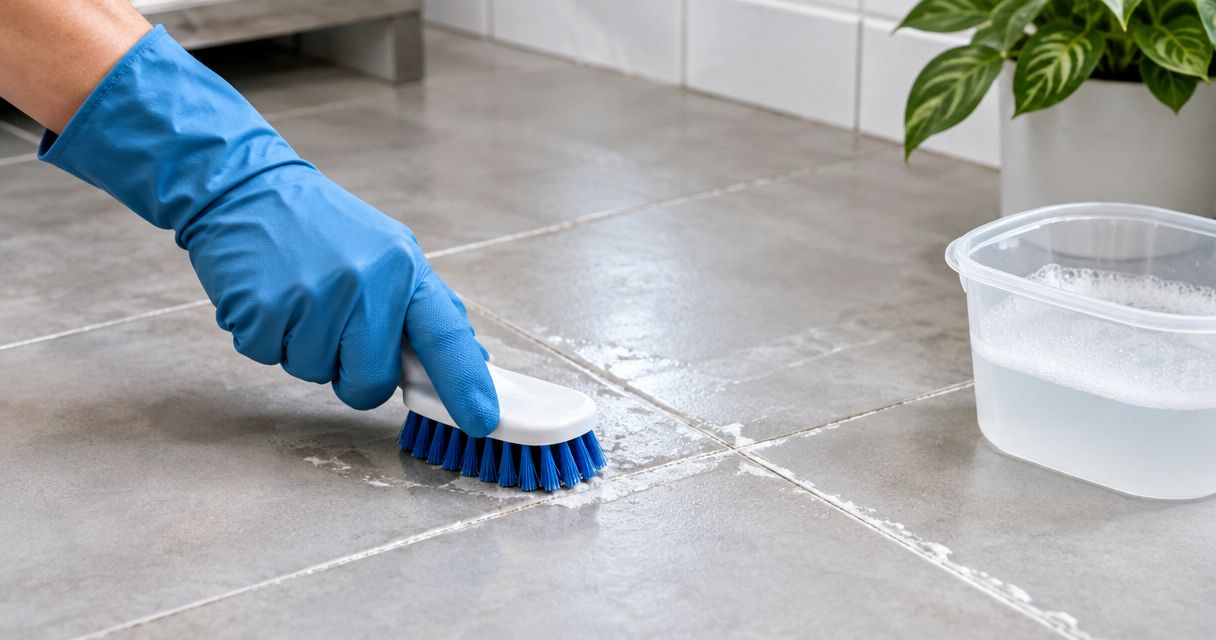
Clean
Remove loose grit and clean with a product labeled for your stone. Neutral is pH 7; acidic solutions fall below pH 7, and alkaline solutions rise above pH 7. However, pH alone does not establish cleaner compatibility—use the stone-care label, not a homemade vinegar recipe.
Dry
Let the stone dry as required before sealing. Residual moisture can interfere with the process, and visible surface dryness does not establish that porous stone is ready.
Test
Apply the proposed treatment in an inconspicuous area. Check the appearance, absorption, and residue after the manufacturer’s specified interval.
Apply
Work in manageable sections using the product’s stated method. Do not copy coat counts or timing from a different formula.
Remove residue
Remove excess within the instructed application window. Penetrating sealer belongs within absorbent material, not as an accidental film on top.
Keep this sequence with your 2026 floor-care records. Also record the product name and application date so future maintenance starts with known information.
Which floor sealant should you choose?
Choose Aqua Mix Sealer’s Choice Gold as the default natural-look option, provided its current instructions match your floor. Choose STONETECH BulletProof Sealer for a compatible porous surface, and consider Miracle 511 Impregnator when a solvent-based approach fits the job.
Use STAIN-PROOF Premium Impregnating Sealer when it is part of a clear specification. Reserve Aqua Mix Enrich’N’Seal for intentional enhancement of suitable unpolished stone.
If the floor has unexplained marks, residue, or damaged filler, address those conditions before buying sealer. Michaels Carpet Care provides natural stone cleaning in North Texas; describe the stone and the problem when discussing cleaning needs.
Discuss your natural stone cleaning
Get help with marble or travertine cleaning in McKinney, Frisco, Plano, and Allen.
FAQ
What’s the best sealant for marble and travertine floors?
Aqua Mix Sealer’s Choice Gold is the default recommendation for natural-look protection on a compatible floor. Choose by stone finish, absorption, and current manufacturer instructions rather than product name alone.
Will a marble sealer stop lemon juice from leaving marks?
A penetrating marble sealer does not prevent acid etching from lemon juice. It helps resist absorbed stains, while acid can still react with the stone and dull its finish.
Is STONETECH BulletProof Sealer better for porous travertine?
STONETECH BulletProof Sealer is a suitable shortlist option for compatible porous travertine. It does not fill open holes or replace missing travertine filler.
Can I use an enhancing sealer on polished marble?
Do not choose an enhancing sealer for polished marble without explicit product compatibility. Aqua Mix Enrich’N’Seal is intended for suitable unpolished stone and deliberately changes its appearance.
How often should I reseal a marble or travertine floor?
Reseal according to the applied product’s care instructions and the floor’s condition, not an automatic annual schedule. Keep the product name and application record so you can assess the existing treatment before adding another.
Can I seal a floor immediately after cleaning it?
Seal only after the floor has dried as required by the sealer manufacturer. Moisture within porous stone matters even when the surface looks dry.
Does Michaels Carpet Care clean natural stone floors?
Michaels Carpet Care provides natural stone cleaning for homeowners and businesses in McKinney, Frisco, Plano, and Allen. Discuss the floor’s material, finish, and existing problems before deciding what treatment it needs.
One last thing
A dull mark is not automatically a stain. If a spot looks pale or loses its reflection without looking darker, consider etching before reaching for stain remover or more sealer.
For your 2026 maintenance plan, save a photograph of the clean, dry floor beside the product record. Compare future marks under similar lighting. That simple reference helps you describe the problem accurately without escalating immediately to a stronger cleaner.