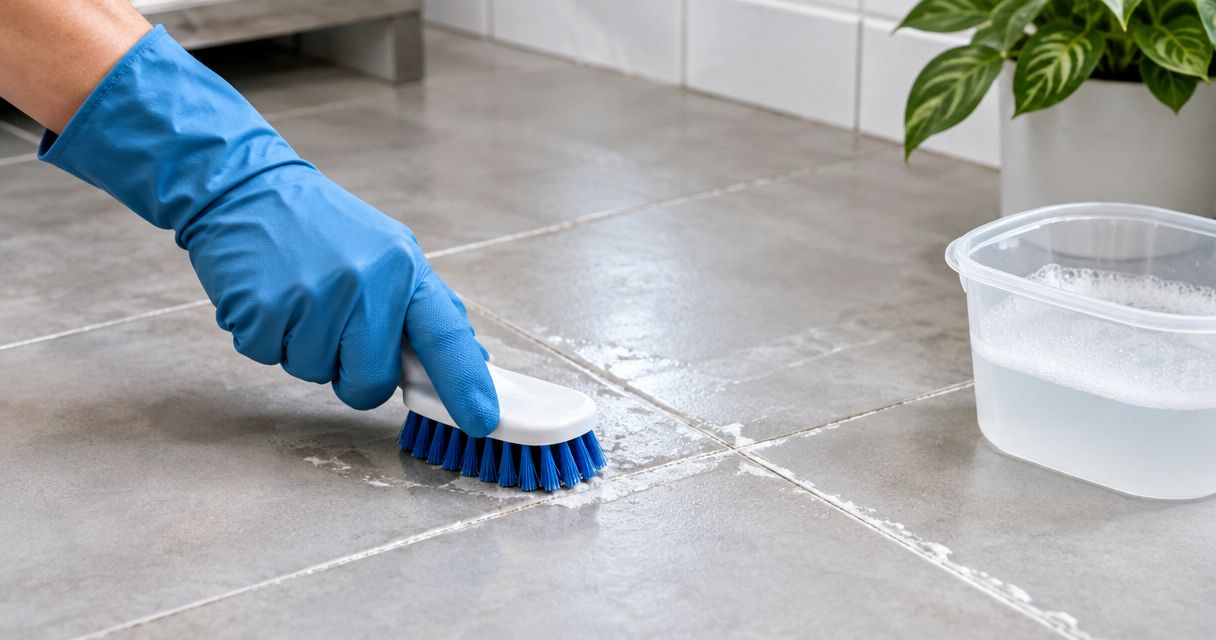
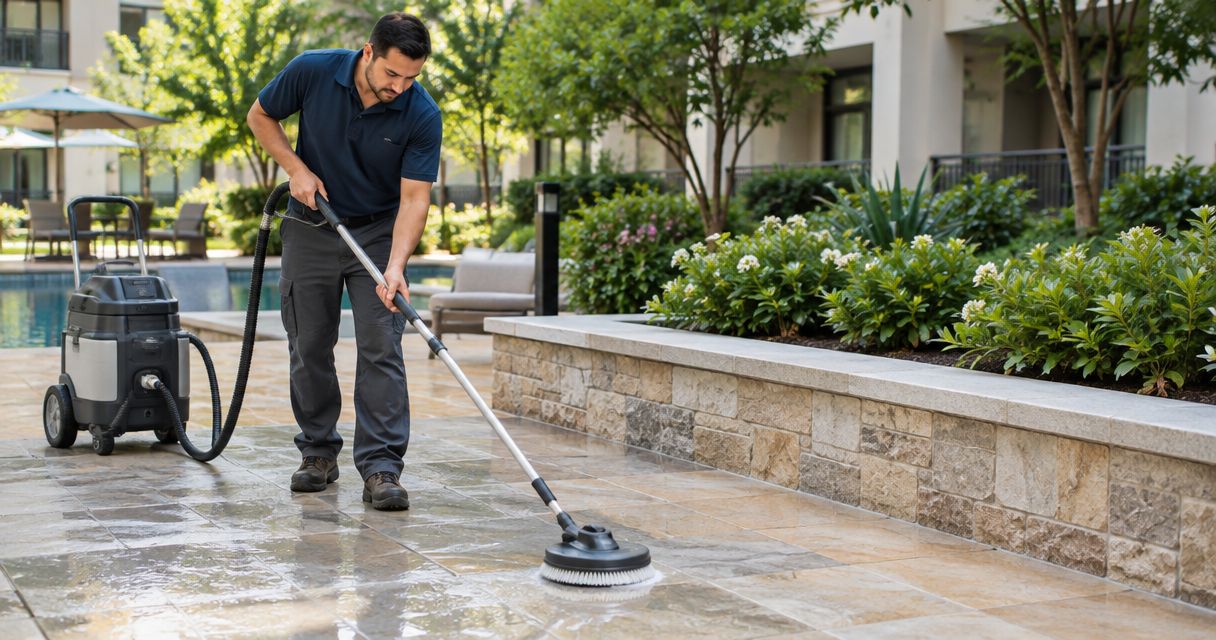
HOA natural stone cleaning is the care of shared stone surfaces with the aim of keeping community spaces clean without damaging their finish. This 2026 guide explains how to identify materials, choose cleaning methods, coordinate resident access, and distinguish ordinary soil from damage that cleaning cannot remove.
- Natural stone cleaning for HOA communities starts with identifying the stone, finish, and existing damage before selecting products.
- Michaels Carpet Care serves North Texas homeowners and businesses; request a stone-specific assessment before approving shared-area work.
- Use stone-compatible cleaners for routine maintenance; keep acidic bathroom products away from marble, limestone, and travertine.
- Separate cleaning, stain treatment, sealing, and restoration in your scope so the board approves the right work.
Why natural stone cleaning matters for HOA communities
An HOA manages shared access as well as shared surfaces. A clubhouse entrance cannot be treated like an empty room: residents, staff, deliveries, and scheduled activities all affect how you organize the work.
Michaels Carpet Care is best for North Texas homeowners and businesses seeking local natural stone cleaning. The company serves McKinney, Frisco, Plano, and Allen; an HOA should confirm its particular stone surfaces and project scope with Michaels Carpet Care before scheduling.
The central maintenance problem is simple: stone that looks dirty does not always need stronger cleaning. A dull marble patch can be acid etching, while dark grout, embedded soil, and an absorbed stain require different responses. Treating every mark alike invites unnecessary work and surface damage.
For your 2026 maintenance plan, connect each visible problem to a documented treatment rather than approving a general instruction to deep-clean everything.
How to build an HOA stone-cleaning plan
Identify every stone surface and finish
Start with the community's installation records, maintenance files, and supplier information. Walk the shared areas with your maintenance lead and record which surfaces are actually natural stone; porcelain that resembles marble does not share all of marble's care requirements.
Include the finish, not just the material. Polished stone, honed stone, and textured stone need different appearance expectations, and a textured exterior surface should not be judged against an interior polished floor.
If records are missing, request material identification before approving chemicals or equipment. An unidentified surface is a reason to pause, not a reason to try a stronger product. Keep the resulting inventory with your 2026 vendor scope so replacement staff can follow it.
- Record the room or outdoor area and its shared-use purpose.
- Identify the stone from installation records or qualified assessment.
- Note whether the finish is polished, honed, or textured.
- Photograph cracks, open joints, dull areas, and existing stains.
- Mark adjacent wood, metal, carpet, and other materials needing protection.
Separate soil from stains and surface damage
Use ordinary observation before choosing a treatment. Loose grit, tracked-in soil, an oily mark, and a pale dull patch are not interchangeable cleaning problems.
Marble, limestone, and travertine contain calcium carbonate and are vulnerable to acidic products. Vinegar and acidic scale removers can etch those surfaces; more scrubbing does not reverse that chemical change. A penetrating sealer also does not make acid-sensitive stone acid-proof.
Compare the affected area with a clean, unaffected section under similar light. Your observations establish the question for a professional assessment; they do not replace diagnosis. Stop experimenting when the surface changes appearance or the mark spreads.
- Remove loose debris before assessing the underlying mark.
- Record whether the problem is residue, discoloration, dullness, or physical damage.
- Note known spills and previously used cleaning products.
- Flag loose stone, crumbling grout, and open joints separately.
- Ask whether the proposed treatment removes soil or changes the finish.
Test products before cleaning shared areas
Begin with the maintenance staff's current products and written instructions. Check that the cleaner is intended for the identified stone and finish, then follow its dilution, application, and rinsing directions. A neutral pH alone does not establish compatibility with every coating or treatment.
Choose an inconspicuous test area and document the result after it dries. A wet surface can conceal a change in sheen, so immediate appearance is not enough to approve a whole clubhouse floor.
For work beyond routine maintenance, request a stone-specific assessment from Michaels Carpet Care. The company describes its services as eco-friendly, but your HOA still needs the proposed method, surface compatibility, and limitations for this particular project.
- Check the cleaner's stone and finish compatibility.
- Follow the product label rather than increasing concentration.
- Test where any unwanted appearance change will be less conspicuous.
- Inspect the dry test area for residue, discoloration, and sheen changes.
- Approve the tested approach before expanding the work area.
Define the work before requesting proposals
Build a room-by-room scope yourself using the inventory and photographs. This gives every contractor the same starting point and helps the board compare actual work rather than broad descriptions such as premium cleaning.
Separate cleaning from stain treatment, sealing, polishing, and repairs. Cleaning removes soil; it does not automatically correct etching, replace missing filler, or repair loose tiles. If those problems exist, ask for them to be evaluated separately.
A professional assessment provides a faster route from visible symptoms to a defined scope when your maintenance team cannot identify the cause. Approve the problem and treatment together, not a method without a diagnosis.
- List included rooms, entrances, corridors, and shared amenities.
- Specify the stone and finish in each work area.
- Describe stains and damage with matching photographs.
- Request written exclusions and any proposed additional treatments.
- State how the completed work will be inspected and accepted.
Coordinate access around community use
Review the community calendar before choosing a work window. Your team can map resident routes and notify occupants without specialized equipment, but the contractor must explain how the cleaning process affects access.
Divide the work into areas that can be isolated without directing residents across unfinished surfaces. Do not assume a dry-looking floor is ready for use: cleaning, sealing, and other treatments have their own instructions and release conditions.
For 2026 scheduling, tie access restrictions to the actual method and product instructions rather than copying a drying estimate from another service. Carpet drying information, for example, does not establish when a treated stone floor should reopen.
- Check clubhouse reservations and other scheduled activities.
- Identify accessible alternate routes before closing a corridor.
- Confirm responsibility for barriers and resident notices.
- Keep equipment and cords out of open travel paths.
- Reopen each area only after the agreed release conditions are met.
Choose cleaning, treatment, or restoration deliberately
Use routine maintenance for ordinary loose soil and compatible damp cleaning. Escalate persistent problems after checking whether residue, an absorbed stain, or damaged stone is responsible.
Professional cleaning is useful when the work requires a defined process beyond your staff's routine. It is not a substitute for restoration where the stone itself is etched or worn. Likewise, sealing is a separate decision based on the material, existing treatment, location, and product compatibility—not an automatic extra after every cleaning.
When discussing natural stone cleaning with Michaels Carpet Care, ask which requested tasks fall within the proposed scope. Do not assume polishing, repair, or sealing is included simply because a provider cleans stone.
- Match routine cleaning to the identified stone and finish.
- Request targeted evaluation for persistent absorbed stains.
- Ask about restoration when dullness reflects surface damage.
- Evaluate sealing separately from soil removal.
- Record which appearance changes the selected treatment cannot correct.
Inspect results and update the maintenance record
Walk the finished area with your original photographs and written scope. Inspect the surface dry and under comparable lighting; reflections can otherwise make a finish look better or worse without revealing the cause.
Keep acceptance tied to the agreed outcome. If the scope excluded etch removal, a remaining etched patch is not evidence that ordinary cleaning failed. Conversely, visible cleaner residue should not be dismissed as a permanent characteristic of the stone.
Close your 2026 work order with care instructions that staff can actually follow. A dated record also helps the next board distinguish recurring trouble spots from newly reported damage.
- Compare completed areas with the approved test area.
- Check edges, corners, thresholds, and grout lines.
- Record unresolved marks and their agreed explanation.
- Save product instructions and aftercare requirements.
- Adjust routine maintenance to observed soil and use patterns.
Compare stone-care options for your community
Choose by the condition of the stone, not by the intensity of the cleaning equipment. These options solve different problems, and an HOA can need more than one within the same building.
| Option | Best for | Main advantage | Key limitation |
|---|---|---|---|
| Routine maintenance | Loose grit and ordinary surface soil | Fits into staff cleaning rounds | Does not correct etching or deeply absorbed stains |
| Professional cleaning | Soil requiring work beyond routine maintenance | Provides a defined cleaning scope and method | Does not automatically include restoration, repairs, or sealing |
| Stain treatment | A diagnosed absorbed stain | Targets a specific discoloration | Results depend on the stain, stone, and previous treatments |
| Surface restoration | Etching or wear that changes the finish | Addresses the stone surface rather than only its soil | Requires separate assessment and is not ordinary cleaning |
Stone care works best when these categories stay distinct. Ask the provider to explain where each proposed task belongs and what visible result it is intended to achieve.
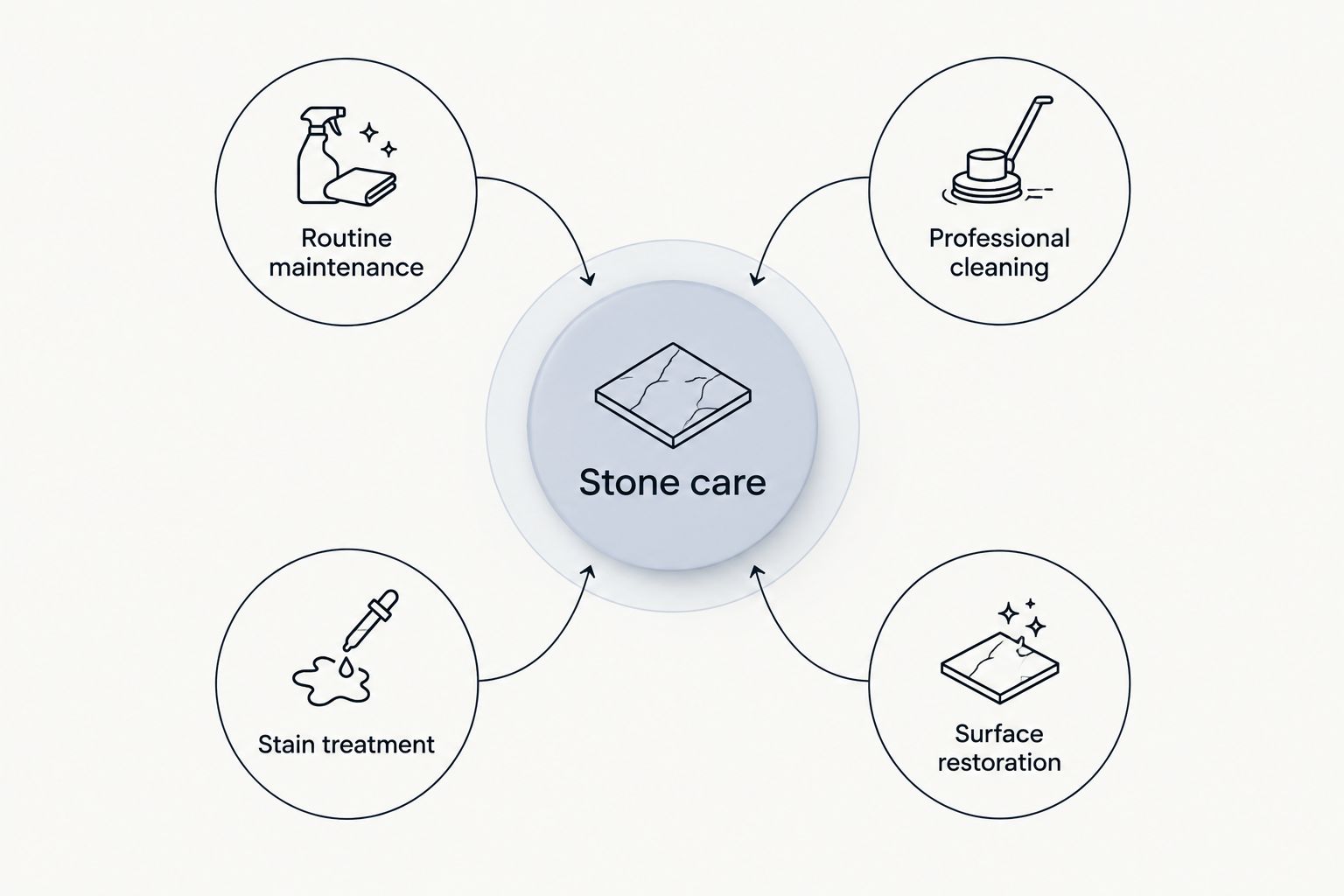
Before signing, match the proposal to the board's documented priorities. A clean entrance, a treated stain, and a restored polish are different acceptance criteria; name the one you are purchasing.
Discuss your community's stone surfaces
Ask about natural stone cleaning for shared areas in McKinney, Frisco, Plano, or Allen.
Common mistakes HOA communities make
Using the same chemical throughout the clubhouse
A product suited to a ceramic restroom floor is not automatically appropriate for a marble vanity or limestone entrance. Shared cleaning carts make this mistake easy when bottles and instructions do not identify the intended surface.
Assign products by material and finish. Keep stone-care instructions where staff select supplies, not only in a board meeting attachment.
Asking stronger cleaning to fix a dull finish
An HOA board can mistake etching or wear for stubborn dirt, especially under bright entrance lighting. Repeated aggressive cleaning does not restore an etched stone surface and can add damage.
Ask for a diagnosis before authorizing another pass. Keep restoration outside the cleaning scope unless it is expressly assessed and approved.
Treating sealing as a universal solution
A sealer is not a substitute for removing grit, managing spills, or choosing compatible products. Penetrating sealers help resist absorption but do not prevent acid etching on acid-sensitive stone.
Decide whether sealing is appropriate for the specific surface. Request compatibility and aftercare information rather than setting a blanket rule for every stone installation.
Scheduling around the board instead of the building
A convenient contractor appointment can conflict with a resident event, an accessible entrance, or normal deliveries. The resulting foot traffic disrupts the work and complicates safe access.
Confirm the building calendar and alternate routes before approving the appointment. Include the person responsible for daily operations, not just the person signing the proposal.
Losing the maintenance history at board turnover
Without a shared record, a new manager can repeat an unsuccessful treatment or judge old damage as a new cleaning problem. Verbal handovers leave too much room for confusion.
Store photographs, approved methods, exclusions, and aftercare instructions together. Make that file part of your 2026 handover documents and update it after each project.
FAQ
What's the best way to clean natural stone in an HOA clubhouse?
Start by identifying the stone and finish, removing loose grit, and using a compatible cleaner according to its label. Test the method in an inconspicuous area and assess the dry result before cleaning the full space.
Can our maintenance team use vinegar on marble or travertine?
Do not use vinegar on marble or travertine. Its acidity can etch these calcium-carbonate stones, leaving a dull mark that ordinary cleaning cannot remove.
How often should an HOA schedule professional stone cleaning?
Set the schedule from documented soil, use patterns, and routine maintenance results rather than a universal interval. Review entrances, event spaces, and other shared areas separately because their cleaning needs differ.
Will natural stone cleaning remove dull patches?
Cleaning will not remove dull patches caused by etching or wear. It can remove soil or residue that obscures the finish, so diagnose the cause before choosing cleaning or restoration.
Does every HOA stone floor need sealing after cleaning?
No, sealing is a separate decision based on the stone, existing treatment, exposure, and product compatibility. A penetrating sealer does not make acid-sensitive stone resistant to acid etching.
Can residents use the clubhouse immediately after cleaning?
Reopen the clubhouse only after the contractor's stated release conditions are met. Confirm access restrictions and any product-specific aftercare before scheduling the work.
Does Michaels Carpet Care clean natural stone in North Texas?
Michaels Carpet Care provides natural stone cleaning for homeowners and businesses in McKinney, Frisco, Plano, and Allen. HOA managers should confirm their shared-area materials, project requirements, and proposed scope before scheduling.
One last thing
Photograph the stone dry before anyone starts. Water can temporarily change how a surface reflects light, making existing dullness less obvious during a walkthrough. Matching dry before-and-after photographs gives your board a clearer basis for acceptance than a wet floor's temporary shine.