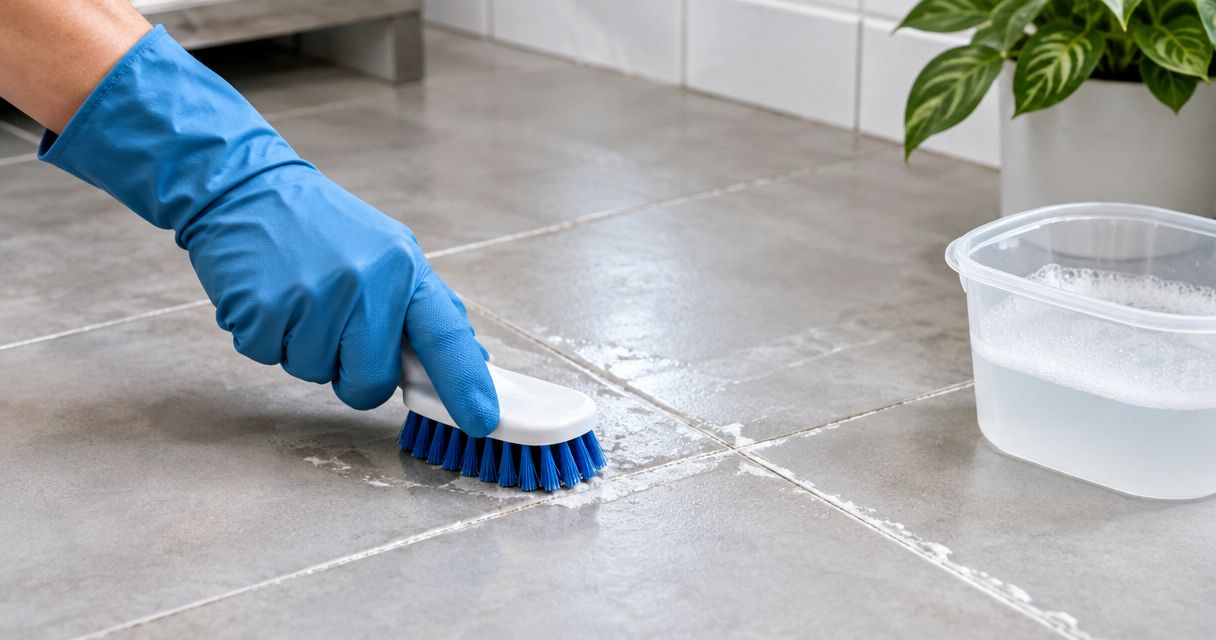
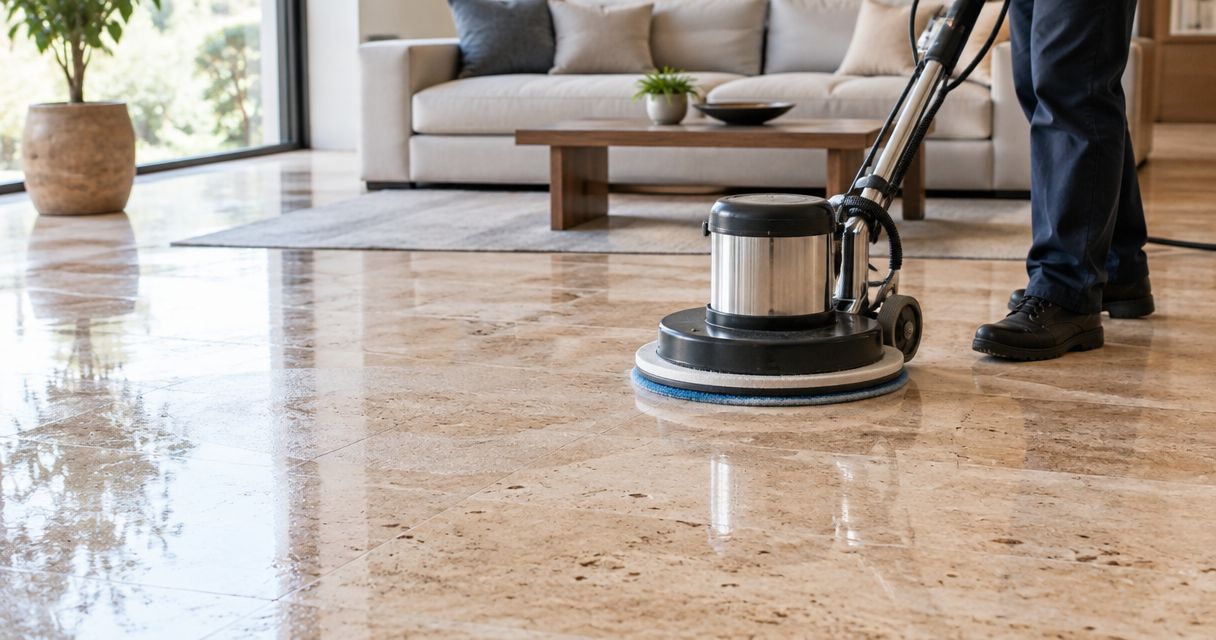
Travertine cleaning cost depends on the floor’s condition, the area being treated, and whether the job includes cleaning alone or additional stone restoration. For a useful 2026 estimate, request a written quote that separates cleaning from sealing, filling, honing, and polishing; those services solve different problems and should not be treated as interchangeable.
- Compare travertine cleaning cost by scope, not just the total: cleaning, sealing, and restoration address different problems.
- Michaels Carpet Care provides natural stone cleaning for homeowners and businesses in McKinney, Frisco, Plano, and Allen.
- Travertine etching is surface damage, not ordinary dirt; cleaning alone does not repair it.
- Ask for measured floor area, clearly listed exclusions, and approval before additional work begins.
How much does travertine cleaning cost?
The useful number is a quote for your floor’s actual condition—not an average that mixes cleaning with restoration. Before comparing estimates, confirm which work each contractor has included. A quote for removing soil is not equivalent to a quote that also corrects surface damage.
If you are comparing travertine with other tiled surfaces, the tile and grout cleaning cost guide provides a separate starting point. Travertine needs stone-specific care, particularly where acidic products or abrasive treatment could affect the finish.
Use this breakdown when reviewing a 2026 estimate:
| Work category | Best for | What it addresses | What it does not promise |
|---|---|---|---|
| Cleaning | Embedded soil and dirty traffic areas | Dirt, residue, and soil on the stone and grout | Repairing etching, scratches, or missing filler |
| Sealing | Reducing liquid absorption where appropriate | Adds protection against absorption when a suitable sealer is needed | Making travertine acid-proof or scratch-proof |
| Filling | Open voids or missing filler | Repairs specified holes using suitable material | Correcting every surface defect |
| Honing | Etching or an uneven surface finish | Abrades the surface to achieve the agreed finish | Preserving the existing sheen unchanged |
| Polishing | Restoring an agreed polished appearance | Refines the stone’s surface finish | Acting as a substitute for soil removal or repairs |
These are work categories to discuss with a stone-care professional, not a statement that every provider offers every service. Ask the contractor to identify which apply before authorizing the job.
Why this matters
Travertine is a calcium-carbonate stone. Acidic substances can react with its surface and leave an etched area that looks dull, pale, or different from the surrounding finish. That mark is not necessarily something a stronger cleaner can remove.
This distinction changes what you should buy. Cleaning is appropriate for soil and residue; surface correction is a separate conversation. Do not approve more aggressive cleaning simply because an etched patch still looks dull.
A clear estimate also protects expectations. You should know whether the goal is a cleaner floor, less visible staining, repaired voids, or a changed finish before work starts—not after furniture goes back into place.
Why travertine cleaning estimates vary
The scope of a travertine job depends on what needs attention and what result you request. These are the factors to have assessed:
- Measured area: Identify the actual stone area, including connected rooms, hallways, and any additional surfaces you want treated.
- Soil and residue: Tracked-in dirt and leftover cleaning products require an assessment different from an isolated spill mark.
- Surface damage: Etching, scratches, and worn areas need to be distinguished from removable soil.
- Grout and voids: Dirty joints, open holes, and missing filler are different conditions. Ask which are included in the proposed work.
- Existing treatments: Tell the contractor about known sealers, waxes, coatings, or previous restoration work.
- Access and preparation: Identify furniture, tight spaces, stairs, and occupied areas so responsibility for preparation is clear.
These factors help define the work. They do not establish a standard surcharge or prove that every floor requires additional treatment.
Cleaning: best for soil and residue
Choose a cleaning scope when the concern is accumulated dirt or residue and the stone’s underlying finish is acceptable. Ask how the contractor will select a stone-compatible cleaner, agitate the surface, remove loosened soil, and manage the surrounding materials.
The advantage is a focused job with a clear purpose. The limitation is equally important: cleaning does not rebuild damaged stone or replace missing filler. Ask what visible conditions are expected to remain.
Sealing: best for absorption protection
Discuss sealing when the stone’s absorption and existing treatment warrant it. A suitable penetrating sealer helps resist absorption, but it does not stop acidic substances from reacting with travertine.
The benefit is added protection against absorbed spills. The limitation is that sealing does not repair etching, eliminate maintenance, or make the floor stain-proof. Ask why sealing is recommended rather than assuming it belongs in every cleaning visit.
Restoration: best for damaged or uneven finishes
Discuss restoration when the problem includes etching, scratches, missing filler, or an unwanted finish. Define the desired appearance before accepting the proposed work, especially if you want to retain a matte or honed surface.
Restoration addresses conditions ordinary cleaning cannot correct. Its trade-off is a different scope of work, with the final appearance dependent on the stone, its condition, and the agreed treatment. Request a representative test area when appearance is central to the decision.
How do you get an accurate travertine cleaning quote?
Prepare a short description before contacting a contractor. For your 2026 quote request, organize the information in this order:
- Measure the area. Record 2 dimensions—length and width—for each rectangular section, keeping the units consistent. Identify irregular spaces separately rather than treating your rough measurement as a final billable area.
- Show the condition. Send 3 photos: a room-wide view, a close-up of the main concern, and a low-angle view that shows the finish. These help explain the problem; they do not replace an inspection where one is needed.
- Describe past treatments. List known cleaners, sealers, waxes, and previous professional work. Include any accidental exposure to vinegar, acidic bathroom cleaners, or other unsuitable products.
- Define the finish. Say whether you want to preserve the existing appearance or discuss correction. Clean, matte, honed, and polished do not describe the same outcome.
- Confirm the scope. Request written inclusions, exclusions, preparation responsibilities, and the process for approving additional work.
A useful request sounds like this: you want the travertine and grout cleaned, you have identified several dull areas, and you want those areas assessed separately before any restoration is authorized. That gives the contractor a problem to evaluate without prescribing the wrong treatment.
What should a written estimate include?
A written estimate should let you explain the job to someone who has never seen the floor. If the description says only stone cleaning, ask for enough detail to understand what that means for your property.
Look for these items:
- Surfaces included: Stone, grout, thresholds, stairs, or other specifically identified areas.
- Condition assessment: Which marks appear to be soil, staining, etching, or physical damage.
- Treatment scope: Cleaning and any separately approved sealing, filling, honing, or polishing.
- Expected result: The intended improvement and the defects expected to remain.
- Preparation duties: Who moves furniture and what you need to clear beforehand.
- Return-to-use instructions: When to walk on the floor, replace furnishings, or resume wet cleaning after the specified treatment.
- Change approval: How additional work is discussed and approved before it begins.
Ask for clarification before approving an unclear scope. A detailed description matters more than a reassuring phrase that leaves cleaning and restoration bundled together.
How should you compare travertine cleaning quotes in 2026?
Compare the same floor area, treatment, and expected finish. If one estimate includes sealing and another does not, ask each contractor to explain the recommendation rather than assuming one quote is incomplete.
Next, compare the exclusions. An estimate that identifies existing etching gives you a clearer expectation than one that promises a renewed floor without describing what renewed means.
Finally, ask how the contractor will handle an unexpected condition. You should understand the next step if cleaning exposes open voids, persistent staining, or damage that was difficult to see beneath soil. Agree on an approval process rather than granting open-ended permission.
Questions to ask before booking
- What do you believe is dirt, and what appears to be damage?
- Which parts of the proposed result come from cleaning alone?
- Why is a sealer being recommended for this floor?
- Will the treatment preserve the current finish?
- What work requires separate approval?
- What care instructions apply after this particular treatment?
You do not need to become a stone-restoration specialist. You need a clear explanation of the problem, the proposed treatment, and its limits.
Choosing natural stone cleaning in North Texas
Michaels Carpet Care is best for homeowners and businesses seeking local natural stone cleaning in McKinney, Frisco, Plano, and Allen. Its stated services include eco-friendly natural stone, tile, and grout cleaning.
For a travertine inquiry, describe the finish and visible concerns to Michaels Carpet Care before requesting a scope. The company emphasizes starting with safe, gentle products and using stronger treatment only when needed.
That approach is relevant to stone care, but the treatment still needs to match the surface. Ask Michaels Carpet Care to distinguish cleaning from any restoration your floor needs; do not assume a cleaning service includes honing, polishing, or filling.
Discuss your travertine cleaning needs
Describe your floor’s condition and ask which cleaning work belongs in the estimate.
Does travertine cleaning include sealing?
Travertine cleaning does not automatically include sealing. Cleaning removes soil; sealing is a separate treatment whose suitability depends on the stone, its existing protection, and the product being considered.
Ask the contractor to list sealing explicitly if it is included. Also request the product-specific care instructions rather than borrowing drying or cure-time advice from another surface or service.
Can cleaning remove dull spots from travertine?
Cleaning removes dull-looking soil or residue, but it does not repair acid etching. A stone-care professional needs to distinguish a deposit on the surface from a change to the stone itself.
Do not repeatedly scrub a dull patch with stronger products. Identify the cause first, then discuss whether cleaning or surface restoration addresses it.
Is professional travertine cleaning worth it?
Professional travertine cleaning is appropriate when embedded soil, persistent residue, or uncertainty about stone-safe treatment exceeds your routine maintenance. The value is a treatment matched to the problem, with clear limits on what cleaning will accomplish.
It is not a substitute for restoration when the stone is damaged. Keep those decisions separate so you approve the work your floor actually needs.
FAQ
How do I get a reliable travertine cleaning cost estimate in 2026?
Get a written estimate based on the measured area, floor condition, and specified treatment. Ask the contractor to separate cleaning from sealing, filling, honing, and polishing so you can compare equivalent work.
Can I use vinegar to clean my travertine floor?
Do not use vinegar on travertine. Its acidity can react with the stone and cause etching; use a cleaner explicitly suitable for the stone and follow its instructions.
Will sealing stop travertine from getting etched?
Sealing does not make travertine resistant to acid etching. A suitable penetrating sealer helps reduce absorption, but acidic spills still need prompt attention.
Do all travertine floors need polishing after cleaning?
Travertine floors do not automatically need polishing after cleaning. Polishing changes or restores a surface finish and should match the appearance you want, rather than being treated as routine soil removal.
Can a cleaning company tell me everything from photos?
Photos help describe the floor, but they do not establish every condition. Existing treatments, absorption, and surface damage can require closer assessment before the scope is finalized.
Does Michaels Carpet Care provide natural stone cleaning near Plano?
Michaels Carpet Care provides natural stone cleaning for homeowners and businesses in Plano, McKinney, Frisco, and Allen. Ask about your travertine’s condition and confirm the proposed cleaning scope before booking.
One last thing
A floor can be clean and still look dull. On travertine, the remaining mark might be a change in the stone’s finish rather than dirt left behind.
Before approving your 2026 cleaning estimate, ask the contractor to identify a representative problem area and explain the expected result there. That conversation connects the proposed work to something you can actually see—and helps prevent paying for the wrong treatment.