Best overall: a pH-neutral natural-stone floor cleaner; best for countertops: a ready-to-use stone spray; best for immediate spill cleanup: distilled water. This 2026 guide ranks the safest travertine cleaning products by task, with clear limits on what each product can safely address.
- The safest travertine cleaning products explicitly list compatibility with travertine or calcareous natural stone.
- Choose pH-neutral stone floor cleaner for routine maintenance; avoid vinegar, acidic descalers, and abrasive powders.
- Distilled water suits fresh spills, not grease buildup, embedded stains, or disinfection.
- Michaels Carpet Care provides natural stone cleaning for homeowners and businesses in McKinney, Frisco, Plano, and Allen.
Why this matters
Travertine contains calcium carbonate, which reacts with acids. Vinegar, lemon juice, and acidic bathroom cleaners can leave a dull, etched patch rather than a cleaner surface. A sealer does not make travertine acid-proof.
Michaels Carpet Care is best for North Texas homeowners and businesses seeking professional natural stone cleaning. For help beyond routine maintenance, Michaels Carpet Care serves McKinney, Frisco, Plano, and Allen.
Here, safe means appropriate for the stone, finish, and cleaning task when used as directed. It does not mean harmless to skin, safe to swallow, or suitable around children and pets without following the label.
What makes the best travertine cleaning products in 2026
Choose by the label and the problem, not by a natural-sounding ingredient or a promise of extra strength. These criteria separate useful maintenance products from cleaners that risk damaging your finish.
- Stone compatibility: The label must support use on travertine or the relevant calcareous natural stone. A ceramic-tile claim is not enough.
- Finish compatibility: Confirm suitability for polished, honed, or tumbled stone, including any coating or filler present.
- Task match: Routine soil, shower residue, grease, and absorbed stains require different approaches.
- Controlled chemistry: Prefer pH-neutral products for maintenance; specialty treatments need explicit stone compatibility.
- Clear directions: Follow dilution, application, removal, rinsing, and protective-equipment instructions.
- Surface condition: Loose filler, crumbling grout, or a changing finish calls for assessment before stronger cleaning.
Neutral water has a pH of 7 at 25°C. That reference point explains the term pH-neutral, but pH alone does not establish compatibility: abrasive particles, solvents, and other ingredients also matter.
Safest travertine cleaning products at a glance
These are six product types, not interchangeable formulas. The ranking follows routine maintenance first, then increasingly specific cleaning needs.
| Product type | Best for | Standout feature | Key limitation |
|---|---|---|---|
| pH-neutral natural-stone floor cleaner | Routine floor maintenance | Designed for regular stone cleaning | Does not repair etching |
| Ready-to-use stone spray | Countertops and small surfaces | No concentrate dilution | Not an efficient choice for large floors |
| Nonacidic stone-safe soap-scum remover | Shower soap residue | Targets buildup without an acidic descaler | Must explicitly suit travertine |
| Nonacidic stone-safe degreaser | Kitchen grease | Targets oily surface soil | Stronger chemistry requires closer attention |
| Travertine-compatible poultice stain remover | Absorbed stains | Draws targeted staining material from stone | Must match the stain type |
| Distilled water | Immediate fresh-spill cleanup | Adds no detergent residue | Cannot replace a cleaner for oily soil |
1. pH-neutral stone floor cleaner: best for routine maintenance
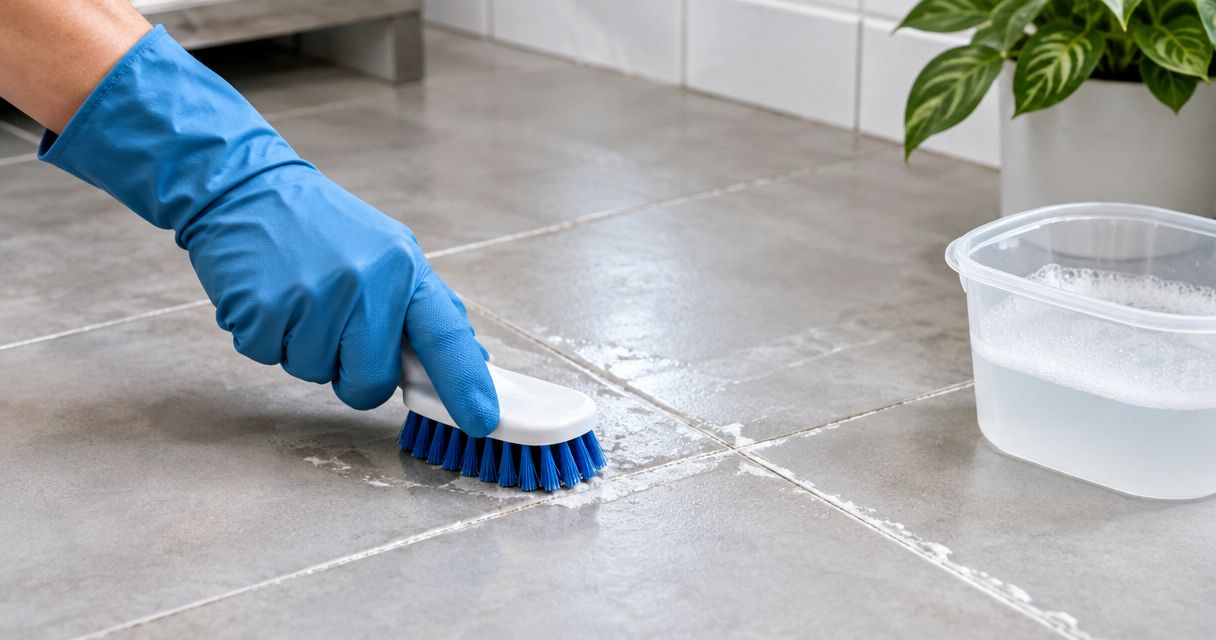
A pH-neutral natural-stone floor cleaner is the default choice for ordinary tracked-in dirt and routine damp cleaning. Choose a formula whose instructions include travertine and your floor finish. Remove loose grit first so cleaning does not drag abrasive debris across the surface.
Use the label dilution rather than adding extra concentrate. More detergent can leave residue, and residue can make a clean floor look streaky or feel unpleasant underfoot.
pH-neutral stone floor cleaner pros:
- Suits a repeatable maintenance routine when approved for the stone.
- Cleans ordinary soil without relying on acidic descaling.
- Provides instructions for consistent dilution and application.
pH-neutral stone floor cleaner cons:
- Does not restore a finish damaged by acid.
- Does not automatically address deep oil stains or heavy shower buildup.
Best for: Homeowners maintaining intact travertine floors between deeper cleanings.
Verdict: Buy a travertine-compatible formula for routine cleaning.
2. Ready-to-use stone spray: best for countertops
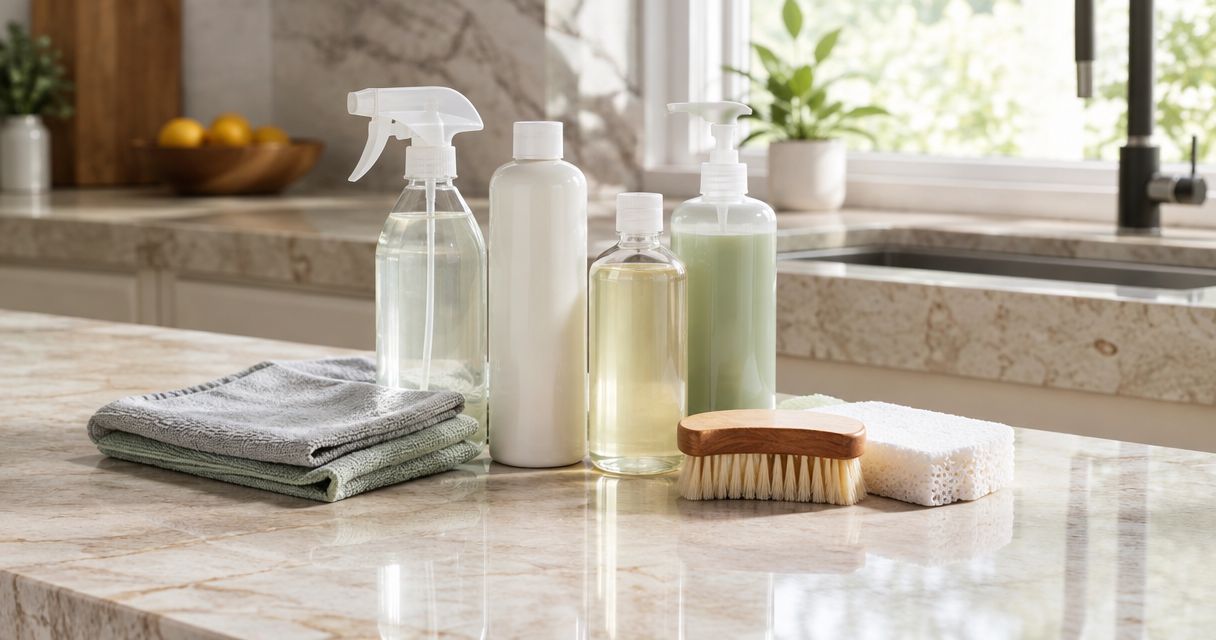
A ready-to-use stone spray suits vanities, counters, shelves, and other small surfaces. It removes the need to measure concentrate, but you still need to check the stone and finish instructions.
Apply and remove the product as directed rather than letting overspray collect around seams or nearby materials. A stone-cleaning spray is not a disinfectant unless its label specifically establishes that use.
Ready-to-use stone spray pros:
- Avoids concentrate-mixing errors.
- Makes small-area cleaning straightforward.
- Allows controlled application with a suitable cloth.
Ready-to-use stone spray cons:
- Individual formulas differ in stone compatibility and residue.
- A spray format is cumbersome for cleaning an entire floor.
Best for: Small travertine surfaces that need frequent wiping rather than full-floor maintenance.
Check the current label in 2026 even when replacing a familiar bottle. A familiar product name is not a substitute for compatibility instructions.
Verdict: Buy for small surfaces; skip it as your main floor-cleaning format.
3. Nonacidic stone-safe soap-scum remover: best for showers
A nonacidic soap-scum remover specifically approved for travertine addresses shower residue without treating the stone like ceramic tile. That distinction matters because many bathroom descalers use acids to dissolve mineral deposits.
First establish whether the surface has removable residue or a damaged finish. A chalky-looking patch is not automatically soap scum, and repeated chemical applications will not repair etching.
Nonacidic stone-safe soap-scum remover pros:
- Targets a problem routine floor cleaner does not always resolve.
- Avoids an acidic descaling approach when correctly selected.
- Provides a task-specific option for approved shower surfaces.
Nonacidic stone-safe soap-scum remover cons:
- Nonacidic wording alone does not prove travertine compatibility.
- Damaged grout, filler, or coatings can complicate cleaning.
Best for: Confirmed soap residue on sound travertine shower surfaces.
Keep the product off incompatible fixtures and follow ventilation and rinsing directions. Never combine bathroom cleaners to create a stronger mixture.
Verdict: Buy only when the label explicitly permits your stone and application.
4. Nonacidic stone-safe degreaser: best for kitchen grease
A stone-compatible degreaser targets cooking oils and greasy surface soil. It belongs in a task-specific cleaning kit, not automatically in every routine mopping session.
Start by removing loose debris and checking whether the grease sits on the surface or has darkened the stone beneath it. Surface cleaning and absorbed-stain treatment solve different problems.
Nonacidic stone-safe degreaser pros:
- Targets oily soil rather than relying on repeated general cleaning.
- Offers a defined approach for greasy kitchen areas.
- Can address surface contamination before stain treatment is considered.
Nonacidic stone-safe degreaser cons:
- Some alkaline cleaners are unsuitable for particular finishes or coatings.
- Surface degreasing does not guarantee removal of absorbed oil.
Best for: Greasy surface buildup on travertine approved for the selected formula.
Respect dilution and removal instructions. Do not leave a stronger cleaner on longer simply because the first application did not deliver the desired appearance.
Verdict: Buy for confirmed surface grease; hold if the finish or coating is uncertain.
5. Travertine-compatible poultice: best for absorbed stains
A poultice combines an absorbent material with a treatment selected for the staining substance. It is a targeted stain-removal method, not a substitute for mopping or a general-purpose paste for every mark.
Identify the likely stain before choosing the product. Oil, organic staining, and metal-related discoloration require different treatment decisions, and some stains need professional assessment.
Travertine-compatible poultice pros:
- Addresses absorbed staining rather than surface dirt alone.
- Keeps treatment focused on the affected area.
- Offers a next step when ordinary cleaning leaves a genuine stain.
Travertine-compatible poultice cons:
- Incorrect treatment can fail or change the surrounding appearance.
- It cannot rebuild a finish etched away by acid.
Best for: An identified absorbed stain with a compatible treatment and sound surrounding stone.
Michaels Carpet Care provides natural stone cleaning, an appropriate service category when you need help assessing a mark before escalating treatment. Do not experiment with household chemical mixtures on a conspicuous area.
Verdict: Hold until the stain type and treatment compatibility are established.
6. Distilled water: best for immediate spill cleanup
Distilled water is useful for promptly lifting fresh, water-soluble spills without adding detergent. Blot the spill first, then use a lightly dampened cloth and dry the surface.
This is a limited cleanup method, not a complete maintenance product. Water does not turn oily residue into an easily removable solution, and wiping with water does not establish disinfection.
Distilled water pros:
- Introduces no detergent residue.
- Supports immediate cleanup of suitable fresh spills.
- Offers a simple first response before specialty treatment.
Distilled water cons:
- Does not adequately address greasy buildup by itself.
- Cannot reverse damage already caused by an acidic spill.
Best for: Fresh spills that lift with gentle blotting and a damp cloth.
Use 2 clean cloths: one for damp wiping and one for drying. Keep both free of grit, and avoid spreading the spill over a larger area.
Verdict: Buy for simple spill response; skip it as your only cleaning method.
Check before you clean
For your 2026 cleaning routine, make the compatibility check a habit before opening a stronger product. A small test reduces uncertainty, but it does not override an incompatible label.
- Read the label: Confirm travertine, finish, dilution, and removal directions.
- Inspect the surface: Look for loose filler, damaged joints, or an existing dull patch.
- Test discreetly: Follow the manufacturer's test instructions in an inconspicuous location.
- Inspect when dry: Compare the finish and feel before treating the visible area.
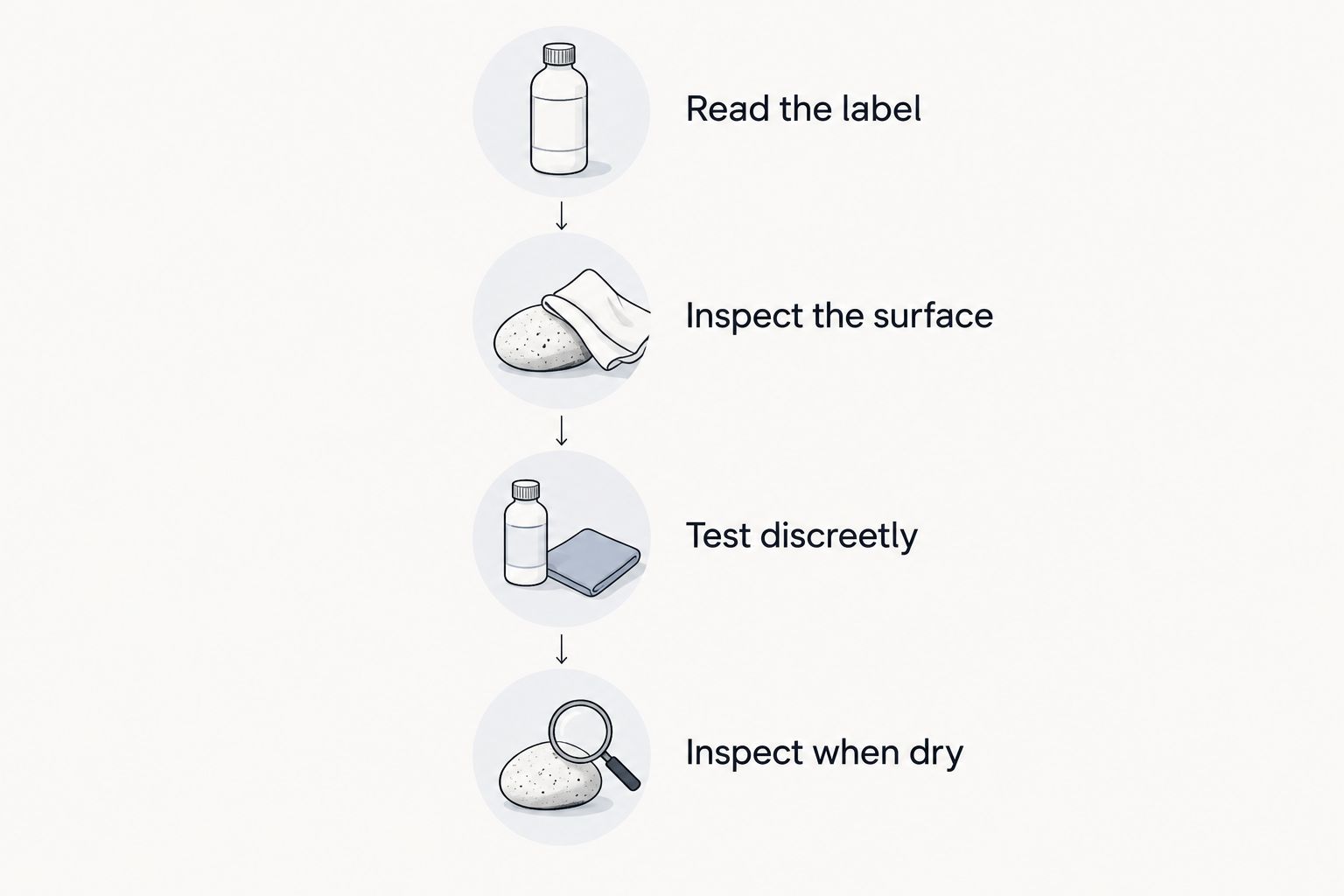
Stop if the test changes gloss, color, or texture. Scrubbing harder is not the next step when the surface itself is changing.
How the 2026 ranking works
The ranking prioritizes routine usefulness, explicit stone compatibility, finish protection, and a clear match between product and problem. General maintenance comes first because specialty stain treatments are unnecessary for ordinary tracked-in dirt.
The specialty options rank by their distinct jobs, not by cleaning strength. No product earns a recommendation simply for being stronger, scented, labeled natural, or advertised for tile.
Which travertine cleaner should you choose?
Choose a pH-neutral, travertine-compatible stone floor cleaner as your 2026 default. Add a ready-to-use spray for small surfaces, and choose a specialty treatment only after identifying the residue or stain.
For deeper natural stone cleaning in McKinney, Frisco, Plano, or Allen, Michaels Carpet Care serves both homeowners and businesses. Explain what happened to the stone and which products have already touched it before discussing treatment.
Discuss your natural stone cleaning
Ask about natural stone cleaning in McKinney, Frisco, Plano, and Allen.
FAQ
What's the safest cleaner for travertine floors?
A pH-neutral natural-stone floor cleaner explicitly approved for travertine is the best routine choice. Confirm compatibility with your finish and follow the dilution and removal directions.
Can I clean travertine with vinegar?
No, vinegar can etch travertine because its acid reacts with calcium carbonate. Diluting vinegar does not make it an appropriate routine stone cleaner.
Is a pH-neutral cleaner always safe for travertine?
No, pH-neutral wording alone does not establish travertine compatibility. Check the full label for stone suitability, finish restrictions, abrasive ingredients, and application instructions.
Can I use ordinary bathroom cleaner on a travertine shower?
Use a bathroom cleaner only if its label explicitly permits travertine and your finish. Acidic limescale removers can damage the stone even when they work well on ceramic tile.
Does sealing travertine protect it from acidic cleaners?
No, sealing does not make travertine acid-proof. An impregnating sealer helps resist absorption, but it does not prevent an acid from reacting with the stone surface.
Will travertine cleaner remove a dull ring?
Cleaner will not repair a dull ring caused by etching. Residue and etching can look similar, so identify the problem before applying stronger chemicals.
Can I use only water to clean travertine?
Water is useful for prompt cleanup of suitable fresh spills, but it is not a complete replacement for stone cleaner. Greasy soil and absorbed stains need a different approach.
What should I check when buying travertine cleaner in 2026?
Check the current label for travertine compatibility, finish restrictions, dilution, and removal directions. Choose the product for the actual cleaning task rather than its scent or strength claim.
One last thing
A mark that looks worse after cleaning is not necessarily stubborn dirt. When a clean, dry patch stays dull, stop treating it as a stain until etching has been ruled out. Another application of cleaner cannot replace stone surface that acid has dissolved.