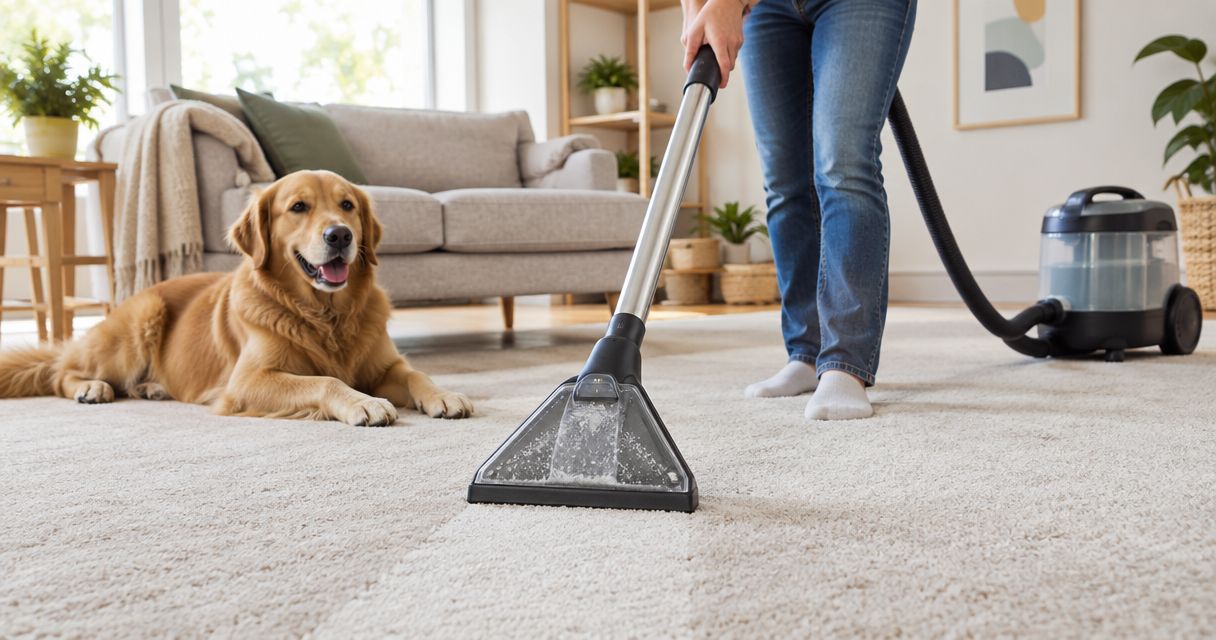
Best overall: sealed HEPA vacuuming. Best for occupied homes needing fast-drying professional care: low-moisture cleaning. Best for targeted maintenance: fragrance-free spot cleaning. This 2026 guide compares the best low allergen carpet cleaning methods by particle removal, moisture, and residue; Michaels Carpet Care provides eco-friendly, fast-drying carpet cleaning for North Texas homeowners and businesses.
- Sealed HEPA vacuuming leads the best low allergen carpet cleaning methods for routine removal of loose particles.
- Michaels Carpet Care is best for homeowners seeking eco-friendly, fast-drying professional carpet cleaning in North Texas.
- Hot water extraction suits embedded soil; dry compound cleaning suits carpets with moisture restrictions.
- Fragrance-free carpet cleaning addresses scent exposure, not guaranteed allergen removal.
- Choose the method your carpet permits, and confirm how soil, cleaning residue, and moisture leave the carpet.
Why this matters
Carpet cleaning needs two separate decisions: how to remove soil and how to avoid introducing something that bothers you. Pollen, pet dander, and dust are different problems from a strong perfume or leftover detergent. A fresh smell does not demonstrate that allergens have been removed.
No carpet cleaning method makes a room allergen-free. Carpet is only one part of the space; upholstered furniture, bedding, and incoming dust also need attention. Cleaning does not replace medical advice or address the source of every allergy symptom.
For your 2026 cleaning plan, start with particle removal rather than a deodorizer. Then choose deeper cleaning around the carpet's care instructions, the kind of soil present, and your household's sensitivities. An eco-friendly description alone does not establish that a product is suitable for a particular person.
What makes the best low-allergen carpet cleaning method?
- Particle capture: The process must collect loosened soil, not simply redistribute it across the carpet or into the room.
- Controlled moisture: Water use, recovery, airflow, and drying must fit the carpet and its backing.
- Product suitability: Check fragrance, added deodorizer, and cleaning chemistry against your sensitivities and the manufacturer's instructions.
- Residue removal: Ask what happens to detergent, dry compound, or encapsulated soil after treatment.
- Carpet compatibility: Fiber, backing, dyes, and installation affect which methods are appropriate.
- Repeatable maintenance: A practical upkeep method matters between professional appointments.
These criteria guide the 2026 ranking below. The order reflects different jobs, not a claim that one machine or chemical removes every allergen. Professional low-moisture cleaning is a service approach; dry compound and encapsulation are specific processes that can fall within it.
The methods at a glance
| Rank and method | Best for | Standout feature | Key limitation |
|---|---|---|---|
| 1. Sealed HEPA vacuuming | Routine loose-particle removal | Collects dry soil through a filtered vacuum system | Does not wash away sticky or embedded soil |
| 2. Professional low-moisture cleaning | Occupied homes prioritizing fast drying | Coordinates soil removal with limited wetting | Results depend on the specific process and recovery steps |
| 3. Hot water extraction | Embedded soil and broader restorative cleaning | Applies cleaning solution and extracts it with suspended soil | Requires moisture control and complete drying |
| 4. Dry compound cleaning | Compatible carpets with moisture restrictions | Uses an absorbent compound followed by recovery | Compound and loosened soil need thorough removal |
| 5. Encapsulation cleaning | Commercial maintenance between deeper cleans | Prepares treated soil for subsequent vacuum removal | Follow-up vacuuming is part of the process |
| 6. Fragrance-free spot cleaning | Localized spills and scent-sensitive maintenance | Limits treatment to the affected area | Does not clean the whole carpet or guarantee allergy safety |
1. Sealed HEPA vacuuming: best for routine particle removal
Sealed HEPA vacuuming is the first choice for routine removal of loose carpet soil. The vacuum collects debris while its filtration system controls exhaust particles. It is maintenance, not a substitute for cleaning sticky spills or heavily soiled fibers.
The U.S. Environmental Protection Agency describes HEPA filtration as removing at least 99.97% of particles measuring 0.3 micrometers from air passing through the filter. That is a filter specification, not a percentage of allergens removed from your carpet. The vacuum's seals, airflow, brush condition, and use still matter.
Sealed HEPA vacuuming pros:
- Removes loose soil without adding water or cleaning chemicals.
- Fits regular maintenance between professional cleanings.
- Provides a defined filtration standard rather than a scent-based cleanliness claim.
Sealed HEPA vacuuming cons:
- Does not dissolve oily deposits or remove every embedded particle.
- A HEPA filter does not compensate for a leaking vacuum housing.
- Emptying collected debris can expose you to dust again.
Use the carpet manufacturer's recommended attachment and maintain the filters as directed. Empty the collector carefully, away from someone sensitive to dust; avoid shaking debris into the room. If vacuuming aggravates symptoms, have another household member handle it.
Best for: Households needing a repeatable dry-soil maintenance method.
Verdict: Buy a sealed HEPA vacuum for routine upkeep; do not treat its filter rating as an allergy guarantee.
2. Professional low-moisture cleaning: best for occupied homes
Professional low-moisture cleaning limits wetting while using a defined process to loosen and recover soil. The term describes a family of methods, not one standardized treatment. Ask which process the cleaner will use and how the loosened material leaves your carpet.
Michaels Carpet Care is best for North Texas homeowners seeking eco-friendly, fast-drying professional carpet cleaning. The business serves McKinney, Frisco, Plano, and Allen. For a low-allergen carpet cleaning appointment, explain any fragrance or product sensitivities before treatment begins.
Professional low-moisture cleaning pros:
- Makes moisture management a central part of the appointment.
- Gives you a professional assessment of carpet condition and soil.
- Supports a cleaning plan around rooms that remain in daily use.
Professional low-moisture cleaning cons:
- The label alone does not identify the chemistry or soil-recovery method.
- Fast drying does not establish allergen-removal performance.
- A maintenance-oriented process does not automatically suit deeply embedded contamination.
Before booking in 2026, ask about dry-soil removal, product selection, and the finishing steps. Describe pet accidents, previous treatments, and recurring spots rather than asking only for a general clean. Those details help define the actual job.
Best for: Occupied homes where professional assessment and fast-drying care are priorities.
Verdict: Buy professional low-moisture cleaning when the carpet permits it and the provider explains both cleaning and recovery.
3. Hot water extraction: best for embedded soil
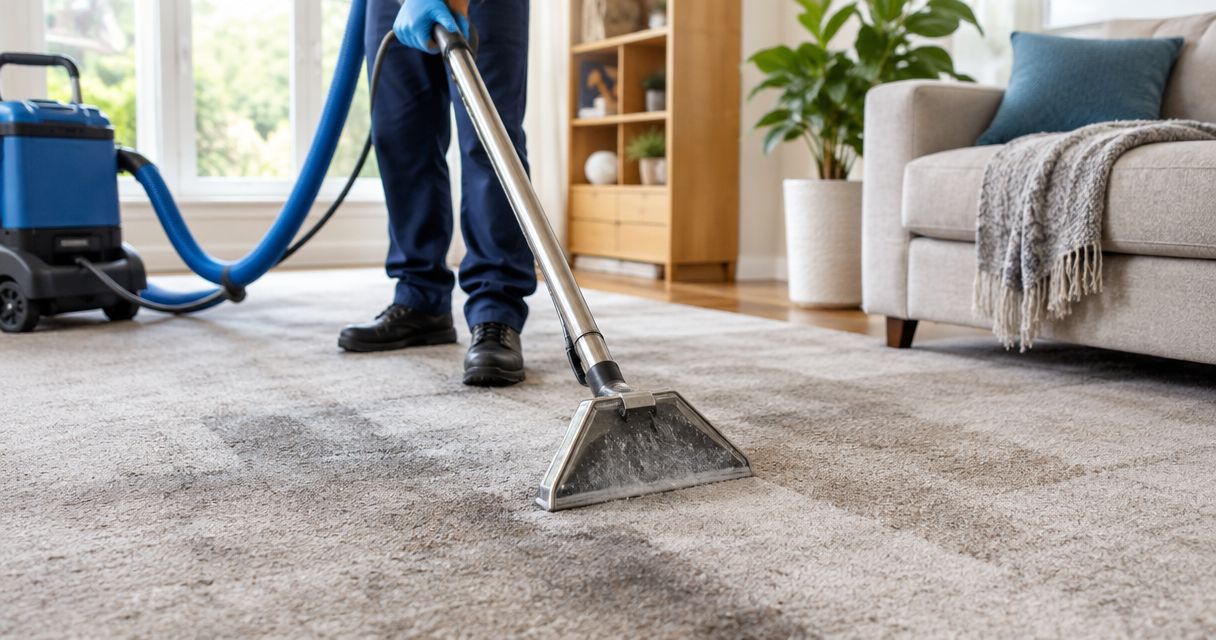
Hot water extraction applies water or cleaning solution and recovers it with suspended soil. It is often called steam cleaning, although that name does not explain the equipment, water temperature, or treatment conditions. Judge the process by soil recovery and drying, not the word steam.
This method belongs on the shortlist when dry maintenance leaves the carpet visibly soiled. It needs a compatible carpet, suitable chemistry, and careful extraction. Hot water extraction is not automatically a sanitizing treatment or proof that dust mites have been eliminated.
Hot water extraction pros:
- Combines wet cleaning with recovery of suspended soil.
- Can include a rinse step to address cleaning residues.
- Provides an option for restorative cleaning beyond dry vacuuming.
Hot water extraction cons:
- Adds moisture that must be extracted and dried.
- Excess wetting creates problems for the backing and underlying materials.
- Poor product selection or rinsing can leave residue behind.
Ask how the technician controls wetting, checks the carpet's condition, and supports drying. Tell the cleaner about any recurring damp smell before work starts. That requires investigation rather than another pass with a machine.
EPA indoor-moisture guidance recommends keeping relative humidity below 60%, ideally 30–50%. Humidity is a room condition, not a carpet-cleaning result, but it belongs in your drying plan.
Best for: Compatible carpets needing broader removal of embedded soil.
Verdict: Buy hot water extraction for restorative cleaning when moisture recovery and drying are clearly addressed.
4. Dry compound cleaning: best for moisture-restricted carpets
Dry compound cleaning distributes an absorbent cleaning material through the carpet, works it into the fibers, and removes it afterward. The compound carries cleaning chemistry; dry does not mean chemical-free. Confirm compatibility before treating a moisture-sensitive carpet or rug.
The recovery step deserves as much attention as application. Material left in the pile is not a finished cleaning result, particularly when your priority is limiting particles and residue. Ask how the cleaner checks that the compound has been removed.
Dry compound cleaning pros:
- Limits the need for wet extraction.
- Offers an alternative where carpet care instructions restrict wetting.
- Includes a defined removal step after agitation.
Dry compound cleaning cons:
- Compound can remain if recovery is incomplete.
- Product ingredients and scent still need review.
- It does not resolve contamination in the backing or underlay simply by treating the surface.
Do not choose dry compound solely because someone calls it natural. Review the actual product and the carpet instructions. If you have a known sensitivity, give the cleaner the ingredient or product name rather than a broad request for something gentle.
In your 2026 comparison, treat dry compound as a specific method, not a synonym for all low-moisture services. The method's suitability depends on both the carpet and the recovery procedure.
Best for: Compatible carpets whose care requirements limit wet cleaning.
Verdict: Buy dry compound cleaning only when compatibility and thorough compound removal are confirmed.
5. Encapsulation cleaning: best for commercial maintenance
Encapsulation cleaning uses chemistry designed to leave treated soil in a form that subsequent vacuuming can remove. It is a maintenance approach for compatible carpets, including commercial spaces where regular cleaning must fit around use. The later vacuuming is part of the method, not an optional extra.
For a low-allergen cleaning plan, ask who owns that follow-up task. A facility team needs instructions that match the product and equipment. Otherwise, the process stops before the intended soil-removal step is complete.
Encapsulation cleaning pros:
- Fits scheduled maintenance of commercial carpet.
- Makes follow-up dry recovery part of the cleaning plan.
- Provides a defined treatment for suitable traffic-lane soil.
Encapsulation cleaning cons:
- Depends on effective subsequent vacuuming.
- Does not automatically address deeply embedded contamination.
- Chemistry and fragrance suitability still require checking.
Keep this option separate from restorative cleaning. A maintenance program needs to recognize when soil, staining, or previous residues require another approach. Repeating the same treatment without checking the carpet is not a diagnosis.
For commercial carpet cleaning, Michaels Carpet Care serves businesses as well as homeowners. Ask which process fits the installation and how staff should maintain the carpet after treatment; do not assume a particular method from the service category alone.
Best for: Commercial spaces with a reliable follow-up vacuuming program.
Verdict: Buy encapsulation as a maintenance method only when the recovery routine is assigned and followed.
6. Fragrance-free spot cleaning: best for localized spills
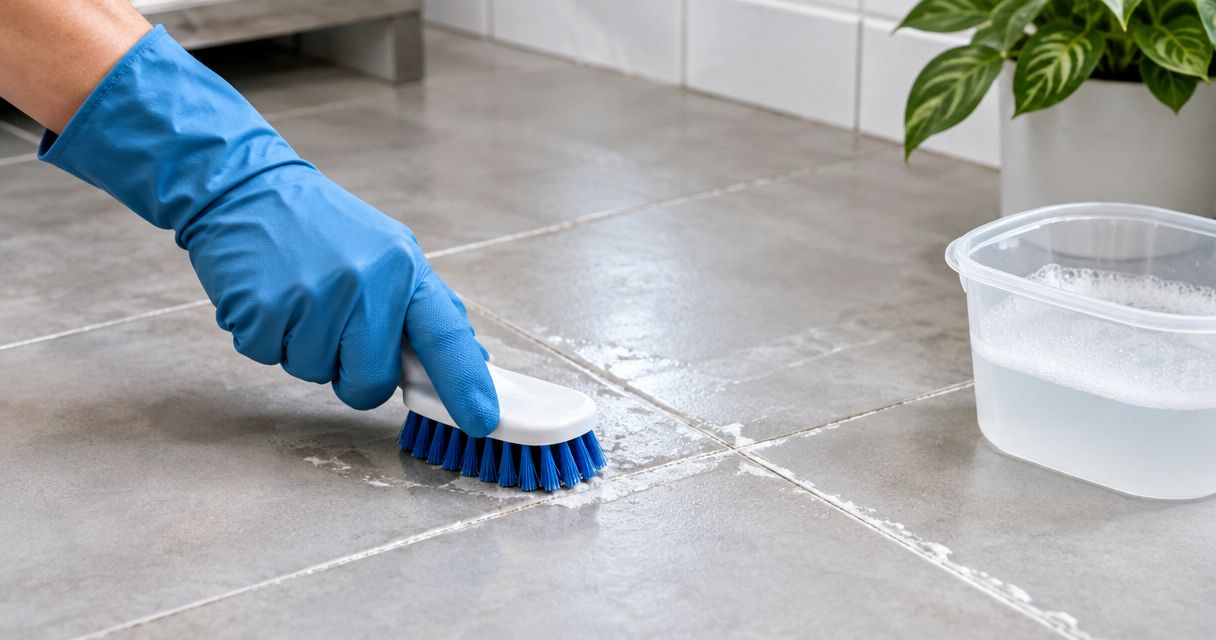
Fragrance-free spot cleaning treats a limited area with a carpet-compatible product that does not add fragrance. It addresses scent exposure while handling a spill; it does not establish that the product is hypoallergenic. Fragrance-free and allergen-free are different claims.
Remove loose material first, then follow the carpet and product instructions. Test in an inconspicuous area, blot rather than scrub, and remove cleaning residue as directed. Adding more product after a spot stops improving can create another problem.
Fragrance-free spot cleaning pros:
- Keeps treatment focused on the affected area.
- Avoids deliberately adding perfume to the cleaning step.
- Lets you address a spill without treating the entire room.
Fragrance-free spot cleaning cons:
- Does not remove distributed dust or dander from the carpet.
- Other ingredients can still cause irritation or sensitivity.
- Repeated wetting can reach the backing or spread the spot.
Do not mix cleaning products or substitute a household recipe without checking compatibility. Tell a professional what you have already applied, including stain treatments and deodorizers. That history matters when a mark returns or a treated area remains sticky.
Best for: Localized spill care when avoiding added scent is a priority.
Verdict: Buy a compatible fragrance-free spot cleaner for small spills; skip it as a whole-room allergy solution.
Turn the choice into a cleaning plan
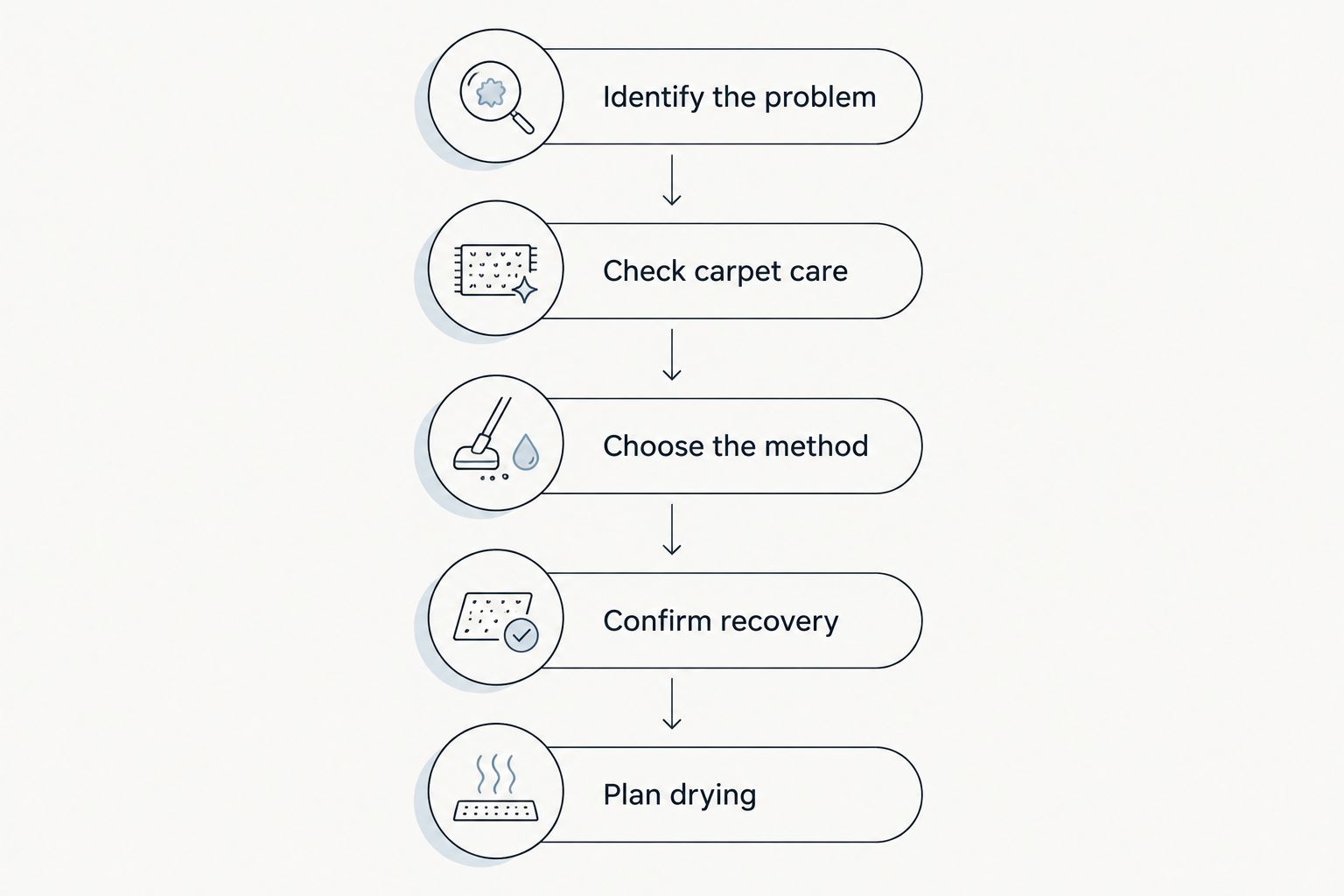
Use this sequence before scheduling work or applying a product. It separates the problem from the treatment and makes the recovery step explicit.
- Identify the problem: Distinguish loose dust, embedded soil, a localized spill, and a reaction to scent.
- Check carpet care: Read the manufacturer's instructions and flag existing damage or persistent dampness.
- Choose the method: Match the cleaning process to the carpet and the job, not a general green claim.
- Confirm recovery: Establish how particles, cleaning material, residue, and moisture will be removed.
- Plan drying: Follow the cleaner's instructions before replacing furniture or returning to normal use.
How the methods were ranked
This 2026 ranking prioritizes particle capture, moisture control, suitable chemistry, residue removal, carpet compatibility, and practical upkeep. It is a task-based comparison, not a clinical trial or a measured ranking of allergy-symptom improvement. Sealed HEPA vacuuming comes first because routine loose-soil removal belongs in the maintenance plan regardless of which compatible deeper-cleaning method you choose.
Which method should you choose?
Start with sealed HEPA vacuuming, then select professional cleaning for the soil that remains. Choose hot water extraction for compatible carpets needing restorative cleaning; consider a defined low-moisture process when limited wetting and fast drying matter. Use spot treatment for localized spills, not distributed particles.
Michaels Carpet Care offers eco-friendly, fast-drying carpet cleaning for homes and businesses in its North Texas service area. Explain your sensitivities and ask which products and recovery steps fit your carpet. A clear treatment plan is more useful than a promise that one method solves every allergy concern.
FAQ
What's the best low allergen carpet cleaning method?
Sealed HEPA vacuuming is the best starting point for routine removal of loose carpet particles. Embedded soil needs a compatible deeper-cleaning method, and no process makes a room allergen-free.
Is low-moisture carpet cleaning better than steam cleaning for allergies?
Neither method is automatically better for allergies. Compare particle recovery, product suitability, residue removal, and drying rather than relying on the method's name.
Does a HEPA vacuum remove all allergens from carpet?
No, a HEPA vacuum does not remove all allergens from carpet. A HEPA filter rating describes filtration of air passing through the filter, not a guaranteed carpet-cleaning result.
Is fragrance-free carpet cleaner safe for everyone with allergies?
No, fragrance-free carpet cleaner is not guaranteed safe for everyone with allergies. Other ingredients can still cause irritation or sensitivity, so check the product against your known triggers.
Can hot water extraction kill all dust mites?
Hot water extraction is not a guarantee that all dust mites have been killed. The method name does not establish the treatment temperature, exposure conditions, or results throughout the carpet.
Who provides fast-drying carpet cleaning around McKinney and Frisco?
Michaels Carpet Care provides eco-friendly, fast-drying carpet cleaning in McKinney, Frisco, Plano, and Allen. Explain fragrance sensitivities and ask how the proposed treatment fits your carpet.
Should I clean carpet that keeps smelling damp?
Investigate persistent dampness before arranging another routine carpet cleaning. Repeated cleaning does not correct an underlying moisture source, and the carpet, backing, and surrounding area need assessment.
One last thing
A carpet that smells clean has not demonstrated that it is low-allergen. Before your 2026 appointment, say plainly that you want soil removal and no added deodorizer. Then ask how the cleaner will recover the loosened soil. Those instructions focus the visit on the work you need rather than a fragrance you did not request.