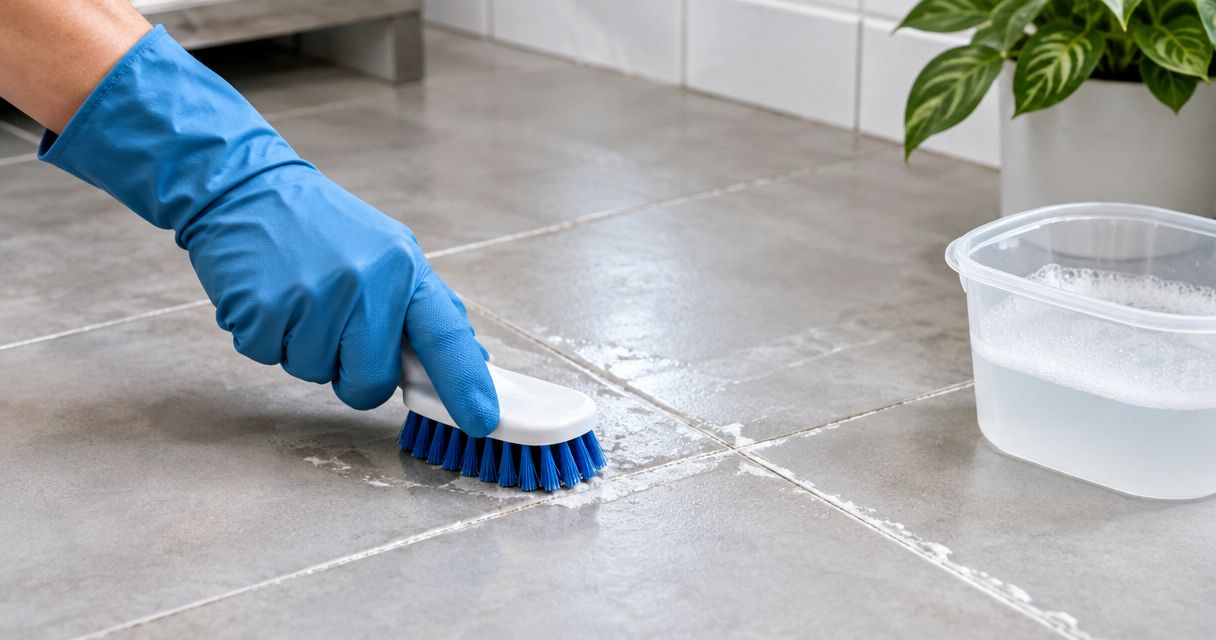
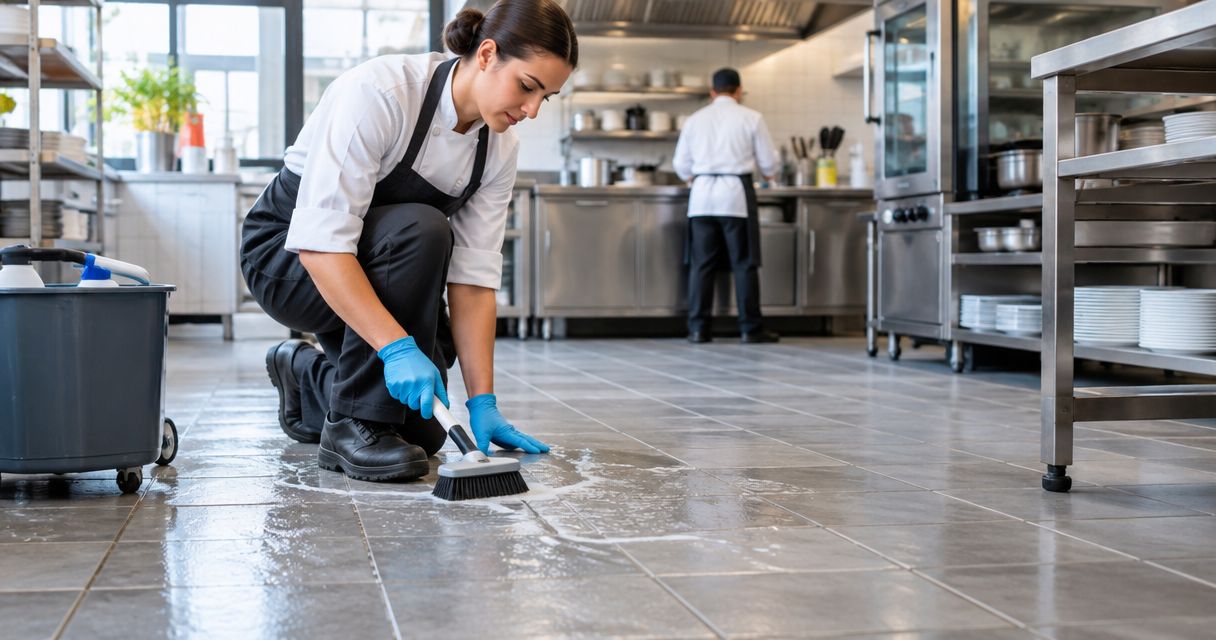
Best overall: a zone-based schedule. Best for greasy kitchens: shift-based cleaning. Best for dining rooms: a closing reset. Best for restrooms: inspection-led cleaning. Best for persistent buildup: condition-based professional cleaning. The best tile cleaning schedule for restaurants combines these routines rather than choosing just one; Michaels Carpet Care fits North Texas businesses seeking local tile and grout cleaning support.
- The best tile cleaning schedule for restaurants separates kitchens, dining rooms, and restrooms instead of assigning one blanket frequency.
- Start with daily closing cleaning, weekly condition reviews, and immediate attention to spills; adjust to actual soil.
- Michaels Carpet Care provides professional tile, grout, and natural stone cleaning for North Texas homes and businesses.
- Schedule professional cleaning when routine work leaves residue or embedded soil, not simply because a calendar date arrives.
Why this matters
Restaurant tile faces different problems in different rooms. A kitchen floor collects food soil and grease, while an entrance receives tracked-in grit and a restroom needs its own inspection routine. Giving every floor the same treatment misses those differences.
For your 2026 cleaning plan, separate immediate spill response from routine washing and deeper restoration. A closing checklist cannot handle a spill during service, and a professional appointment cannot replace daily housekeeping. Each task needs an owner and a clear completion check.
Michaels Carpet Care provides tile, grout, and natural stone cleaning in McKinney, Frisco, Plano, and Allen. Keep that professional support separate from your staff's everyday cleaning responsibilities: both belong in the plan, but they solve different problems.
What makes the best restaurant tile cleaning schedule
Choose a schedule using these criteria, not a blanket promise to clean more often:
- Soil source: Match the work to grease, food debris, tracked-in grit, or restroom soil.
- Floor compatibility: Identify ceramic, porcelain, or natural stone before selecting chemicals and equipment.
- Service interruption: Leave enough time to clean, recover dirty solution, and dry the floor before reopening access.
- Clear ownership: Assign each zone to a role and name who checks the result.
- Observable results: Look for remaining film, dirty edges, sticky patches, and grout soil after cleaning.
- Escalation rules: Define when staff should repeat a task, change the method, or request professional help.
A useful schedule tells you what triggers action, not just what day to mop. Record the floor type and approved product alongside the task so a replacement employee does not have to guess.
Restaurant tile cleaning schedules at a glance
These ranked approaches have distinct jobs. Use the zone-based plan as the framework, then add the other routines where they fit.
| Rank and approach | Best for | Standout feature | Key limitation |
|---|---|---|---|
| 1. Zone-based schedule | Managing the whole restaurant | Assigns different routines to different soil sources | Needs a floor map and clear ownership |
| 2. Shift-based kitchen schedule | Active food preparation areas | Connects cleaning to changes in kitchen activity | Requires safe access around working staff |
| 3. Closing dining-room reset | Guest-facing tile floors | Provides an uninterrupted cleaning window | Cannot replace spill response during service |
| 4. Inspection-led restroom schedule | Restrooms and connecting tile | Responds to observed conditions | Fails when inspections become a paperwork exercise |
| 5. Condition-based professional cleaning | Persistent grout soil and residue | Adds work beyond the routine staff process | Does not replace everyday maintenance |
1. Zone-based schedule: best for whole-restaurant control
A zone-based schedule divides your restaurant by use rather than treating all tile as one surface. Kitchens, dining areas, entrances, and restrooms receive separate instructions, even when the tiles look alike.
For a 2026 starting plan, assign 1 closing clean per operating day, 1 condition review per week, and 1 schedule reassessment per month. These are recommended planning intervals, not universal requirements; spills and visible contamination require attention between scheduled tasks.
Build the zone sheet
For each area, record the floor material, soil source, approved cleaning method, responsible role, and completion check. Include an access plan so people do not walk through wet cleaning work.
Zone-based schedule pros:
- Makes responsibility visible across shifts.
- Separates kitchen equipment from restroom cleaning equipment.
- Lets you increase attention where problems actually occur.
Zone-based schedule cons:
- Takes initial work to document correctly.
- Becomes outdated when layouts or operating patterns change.
Best for: Owners and managers coordinating multiple rooms and shifts.
Verdict: Buy into this approach as your default framework. Keep one master plan, with room-specific instructions underneath it.
2. Shift-based cleaning: best for greasy kitchen tile
A shift-based kitchen schedule ties work to kitchen activity. Staff remove loose debris and address spills during service, then perform fuller cleaning when the area can be taken out of use safely.
Distinguish a spot response from a full floor wash. Cleaning around an active cooking line requires a different access plan from cleaning an empty kitchen after production ends.
Set practical kitchen triggers
- During service: Address spills promptly and restrict access to the affected area.
- At handoff: Check traffic lanes, cooking-line edges, and areas around waste handling.
- After production: Remove loose soil, apply a compatible cleaner as directed, agitate where appropriate, and recover dirty solution.
- Before reopening: Check for remaining grease, cleaning residue, and wet patches.
Follow the product label for dilution, contact time, and rinsing. Adding extra concentrate is not a substitute for removing dirty solution.
Shift-based kitchen schedule pros:
- Connects tasks to actual work patterns.
- Makes handoff problems visible.
- Creates a defined opportunity for fuller cleaning.
Shift-based kitchen schedule cons:
- Needs coordination with kitchen staff.
- A rushed handoff can leave edges and grout untouched.
Best for: Kitchens where soil accumulates while food preparation continues.
Verdict: Buy into shift-based cleaning for kitchen zones. Do not use the closing shift as the only opportunity to address grease or spills.
3. Closing reset: best for dining-room tile
A closing reset gives staff an uninterrupted window to clean guest-facing floors. Chairs, accessible table bases, entrance edges, and corners need attention alongside the open walking lanes.
Remove loose grit before wet cleaning so it does not simply travel around the room. Use the floor-compatible method specified in your zone sheet, and leave access restricted until the surface is ready for use.
Make the closing check specific
In your 2026 checklist, separate cleaning completed from floor checked. The second task asks whether soil remains around table bases, whether dirty solution collected along edges, and whether the entrance needs additional work.
A floor can look acceptable from the doorway while still carrying residue near seating. Inspect from inside the room rather than signing off from the service station.
Closing-reset schedule pros:
- Provides a predictable working window.
- Gives staff access to areas occupied during service.
- Makes opening conditions easier to verify.
Closing-reset schedule cons:
- Does not address spills while guests are present.
- Fails when furniture is never moved enough to reach surrounding soil.
Best for: Dining rooms and guest entrances with a dependable after-service cleaning window.
Verdict: Buy into a closing reset for guest areas. Pair it with immediate spill response rather than treating closing time as permission to wait.
4. Inspection-led cleaning: best for restroom tile
An inspection-led schedule uses planned checks plus immediate action when conditions require it. The inspection covers the floor, not just supplies and fixtures.
Check entrances, sink areas, corners, and the route back toward the dining room. Record whether the floor needs debris removal, spot cleaning, a fuller clean, or restricted access while a problem is resolved.
Make inspections accountable
Assign the check to a role and record the action taken. A tick beside a time slot does not explain whether someone found a spill or corrected it.
For your 2026 operating plan, review the inspection pattern against actual restroom use. Increase checks when recorded conditions show the existing routine leaves problems between visits; do not copy a kitchen schedule simply to keep the paperwork uniform.
Inspection-led restroom schedule pros:
- Responds to changing conditions.
- Identifies wet areas between full cleans.
- Makes corrective action part of the record.
Inspection-led restroom schedule cons:
- Depends on staff completing meaningful checks.
- Can overlook grout buildup if attention stays on obvious spills.
Best for: Restrooms whose condition changes throughout service.
Verdict: Buy into inspection-led cleaning for restrooms. Require a recorded response when a check finds a problem, not merely another signature.
5. Condition-based professional cleaning: best for persistent buildup
Condition-based professional cleaning starts when the routine process no longer produces an acceptable result. Examples include recurring film, embedded grout soil, or areas that remain dirty after correct cleaning and recovery.
Michaels Carpet Care offers professional tile, grout, and natural stone cleaning for North Texas homes and businesses. When discussing a restaurant floor, identify the material, describe the current routine, and show where that routine stops working.
Separate soil from surface damage
Not every dark grout line or dull patch is removable soil. Grout discoloration, worn finishes, and stone etching need different assessment; repeating stronger cleaning is not a reliable answer to all three.
Before setting a recurring appointment, ask what the proposed work addresses and what will remain. Then use the floor's documented condition to decide when another visit is needed.
Condition-based professional cleaning pros:
- Focuses attention on problems staff cannot resolve routinely.
- Creates an opportunity to review material compatibility.
- Connects future appointments to observed results.
Condition-based professional cleaning cons:
- Requires downtime planning around the actual work.
- Cannot repair every stain, damaged surface, or deteriorated grout joint through cleaning alone.
Best for: Managers facing persistent residue or grout soil despite a correctly followed daily routine.
Verdict: Buy professional cleaning when the floor's condition supports it. Do not substitute an arbitrary recurring appointment for daily care.
Turn the ranking into a working routine
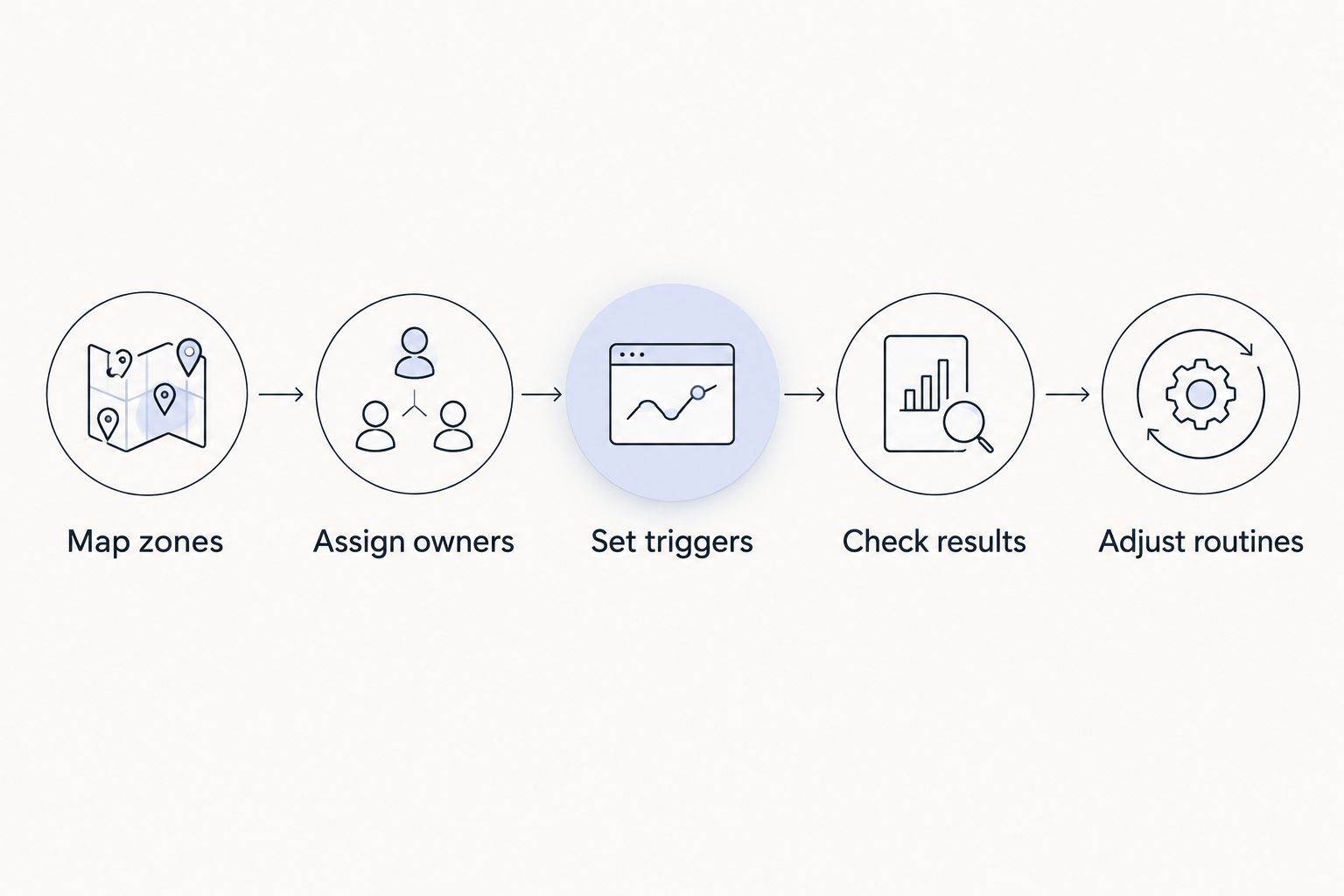
Use this sequence to build your restaurant's 2026 floor-care sheet. It connects the ranked schedules without making every room follow the same instructions.
- Map zones: Mark kitchens, dining areas, entrances, restrooms, and changes in floor material.
- Assign owners: Name the role responsible for each task and the role checking completion.
- Set triggers: Distinguish spills, shift handoffs, closing work, and persistent buildup.
- Check results: Inspect after cleaning rather than judging only the effort spent.
- Adjust routines: Change the method or timing when the record shows repeated problems.
Keep the sheet where staff can consult it during a shift. A detailed document stored away from the work is less useful than a short, accurate instruction at the point of use.
How the schedules are ranked
The ranking prioritizes soil source, material compatibility, access, ownership, and observable results. Zone-based scheduling comes first because it coordinates the whole restaurant; the remaining approaches solve narrower problems within that framework.
This is a planning guide, not a substitute for product labels or applicable food-safety requirements. Floor-cleaning instructions also do not replace cleaning and sanitizing procedures for food-contact surfaces.
Which restaurant tile cleaning schedule should you choose?
Choose a zone-based schedule, then attach shift-based kitchen work, a dining-room closing reset, and restroom inspections. Add professional cleaning when documented conditions show routine care is no longer enough.
Start your 2026 plan with clear ownership rather than extra tasks. If nobody owns the result, increasing the frequency only produces more unchecked work.
For persistent tile or grout soil, Michaels Carpet Care is a local service option in McKinney, Frisco, Plano, and Allen. Describe the floor and the remaining problem before deciding what work to arrange.
FAQ
What's the best tile cleaning schedule for restaurants?
The best tile cleaning schedule for restaurants is zone-based, with immediate spill response, routine closing work, and condition checks. Add shift-based kitchen cleaning, restroom inspections, and professional cleaning where the floor's condition requires them.
How often should restaurant tile floors be cleaned?
Start with a closing clean each operating day and address spills when they happen. Increase attention in areas where inspections show grease, debris, or wet patches developing between scheduled cleans.
Should restaurant kitchens and dining rooms follow the same schedule?
Restaurant kitchens and dining rooms need separate schedules because their soil sources and access windows differ. Kitchen tasks should follow food-production activity, while dining rooms benefit from an uninterrupted closing reset.
Does restaurant grout need professional cleaning every month?
A monthly professional appointment is not a universal requirement. Review grout condition, the results of routine cleaning, and material compatibility before setting a professional cleaning interval.
Can restaurant staff use the same cleaner on tile and natural stone?
Staff should use only products approved for the specific floor material. Acidic cleaners can damage acid-sensitive stone such as marble, so identify the surface before choosing a product.
Why does restaurant tile still feel sticky after mopping?
Remaining food soil or cleaning-product residue can leave tile feeling sticky. Check dilution, agitation, dirty-solution recovery, and any label-required rinsing before increasing chemical strength.
When should a restaurant request professional tile and grout cleaning?
Request an assessment when correct routine cleaning leaves persistent residue or embedded grout soil. Explain the floor material and current method, and ask which problems cleaning can address versus damage that needs another treatment.
One last thing
The useful evidence is what remains after cleaning, not how dark the mop water becomes. Dirty water shows that some soil moved; it does not establish that edges, grout, and traffic lanes are clean.
Check those areas before signing off. When the same patch repeatedly fails inspection, investigate the method and material instead of simply adding another mop pass.