Carpet cleaning can improve matted carpet when embedded soil, residue, or compressed pile causes the flat appearance, but it cannot restore fibers that are permanently worn or damaged. The key is to separate removable buildup from physical wear before you expect cleaning to bring the texture back.
- Can carpet cleaning fix matted carpet? Yes for soil-related flattening; not for permanent fiber damage.
- Michaels Carpet Care is best suited to North Texas homeowners seeking eco-friendly, fast-drying carpet cleaning—not carpet reconstruction.
- Compare the traffic lane with a protected area before deciding whether cleaning or repair addresses the problem.
- Judge texture after the carpet dries; fresh grooming marks do not prove lasting pile recovery.
Can carpet cleaning fix matted carpet?
Cleaning fixes the soil problem, not every texture problem. Dirt and oily residue can hold carpet fibers together, making the pile look flattened. Removing that buildup and using appropriate grooming can improve separation and appearance. Worn, frayed, or permanently distorted fibers remain damaged after cleaning.
For a 2026 cleaning appointment, use this distinction to set the scope: are you asking for cleaner carpet, improved pile appearance, or restoration of damaged material? Those are different outcomes. Michaels Carpet Care provides residential and commercial carpet cleaning in McKinney, Frisco, Plano, and Allen; cleaning should not be confused with replacing worn fibers.
| Condition or approach | Best for | What it can accomplish | Main limitation |
|---|---|---|---|
| Professional cleaning | Matted-looking carpet with embedded soil or residue | Removes contamination that contributes to a stiff, flattened appearance | Cannot rebuild worn fibers |
| Manufacturer-approved grooming | Intact pile lying in an uneven direction | Helps align or separate suitable carpet pile | Aggressive brushing can damage unsuitable constructions |
| Carpet repair assessment | Loose carpet, localized damage, or persistent deformation | Identifies whether a repair addresses the physical problem | Does not substitute for soil removal |
| Replacement assessment | Carpet with extensive irreversible wear | Addresses damaged material rather than repeatedly cleaning it | Requires a separate decision beyond cleaning |
Why this matters
A dark walkway does not automatically mean the carpet needs replacing. It also does not prove that another cleaning will restore its original texture. Soil, pile direction, and wear can produce similar-looking patches from across the room.
The useful question is not simply whether the carpet looks flat. Ask what is holding the pile down, and whether the fibers are still intact. That distinction keeps your expectations tied to what cleaning actually changes.
Soil-related matting: cleaning can improve the appearance
Carpet that feels sticky, stiff, or clumped deserves a soil assessment before you write it off. Tracked-in dirt and residues from spills or previous spot treatments can interfere with the way the pile separates. Cleaning targets that contamination rather than adding more brushing force.
Look at the difference between the affected walkway and a protected area of the same carpet. If the exposed section looks dirty but the fibers still appear intact, cleaning is a reasonable next step. A visual comparison helps frame the conversation; it does not establish the fiber type or guarantee recovery.
Ask the cleaner to explain what the treatment is intended to remove. “Remove embedded soil and improve pile appearance” is a clearer goal than “make it new again.” Even a successful cleaning leaves existing wear in place.
Compression-related flattening: recovery depends on the carpet
Furniture legs and repeated foot traffic press carpet pile down. Cleaning and suitable grooming can improve some compressed areas, but there is no universal recovery time or guaranteed result. Carpet construction and the condition of the fibers matter.
A furniture indentation is also different from a dirty traffic lane. The indentation follows the load placed on it; a traffic lane usually follows a walking route. Show both to the cleaner rather than assuming they need the same treatment.
Do not apply direct heat, soak the indentation, or scrub harder to force recovery. Check the carpet manufacturer's care instructions first. A home remedy that changes the backing or damages the face fibers creates a new problem without resolving the original one.
Wear-related matting: cleaning cannot rebuild the fibers
Abrasion changes carpet physically. Fibers can become frayed, lose their original structure, or wear away, leaving a traffic lane that looks different even after soil removal. Cleaner does not replace missing material.
This is the main limit to discuss when planning carpet care in 2026. A cleaner can remove dirt from a worn section, but that section can remain flatter or reflect light differently than protected carpet. Better cleanliness and restored texture are separate results.
If the backing is visible, fibers are coming loose, or the surface has become noticeably thin, request a repair or replacement assessment. Repeated cleaning is not a substitute for addressing damaged material. Keep the cleaning decision separate from the repair decision.
Why improvement varies
The result depends on the carpet and the cause of the flattening, not simply on how strong the cleaning solution is.
- Fiber condition: Intact fibers and abraded fibers do not respond the same way. Permanent physical damage remains after soil removal.
- Carpet construction: Cut pile and loop pile require appropriate handling. A grooming tool suitable for one construction is not automatically suitable for another.
- Type of buildup: Loose dry soil, oily residue, and leftover spot-cleaning product present different cleaning problems.
- Pressure and traffic: A furniture dent and a heavily walked hallway involve different patterns of compression and wear.
- Care instructions: The manufacturer's approved methods establish the starting point for cleaning and agitation.
- Previous treatment: Tell the cleaner about spot products, rented machines, and unsuccessful attempts. That history helps explain what is on the carpet now.
A gentle-first approach makes sense because force is not a diagnosis. Increasing heat, moisture, or brushing pressure without identifying the material and problem does not establish that the carpet will recover.
How should you check matted carpet before booking?
Use this inspection to describe the problem, not to diagnose the carpet yourself. Stop if you find loose fibers, damaged loops, or a section separating from its backing.
- Compare protected pile. Look at a nearby area that receives less traffic. Use the same lighting so shadows do not become the main difference.
- Vacuum appropriately. Follow the manufacturer's instructions and use settings suited to the carpet. Avoid repeatedly attacking a damaged patch with an aggressive brush roll.
- Check the texture. Notice whether the surface feels gritty, sticky, tightly clumped, thin, or frayed. Describe what you feel rather than guessing the cause.
- Photograph the area. Take an overall room view and a close view. Include the edge of the affected patch so its shape is clear.
- Explain the history. Tell the cleaner where people walk, where furniture stood, and what products have already been used.
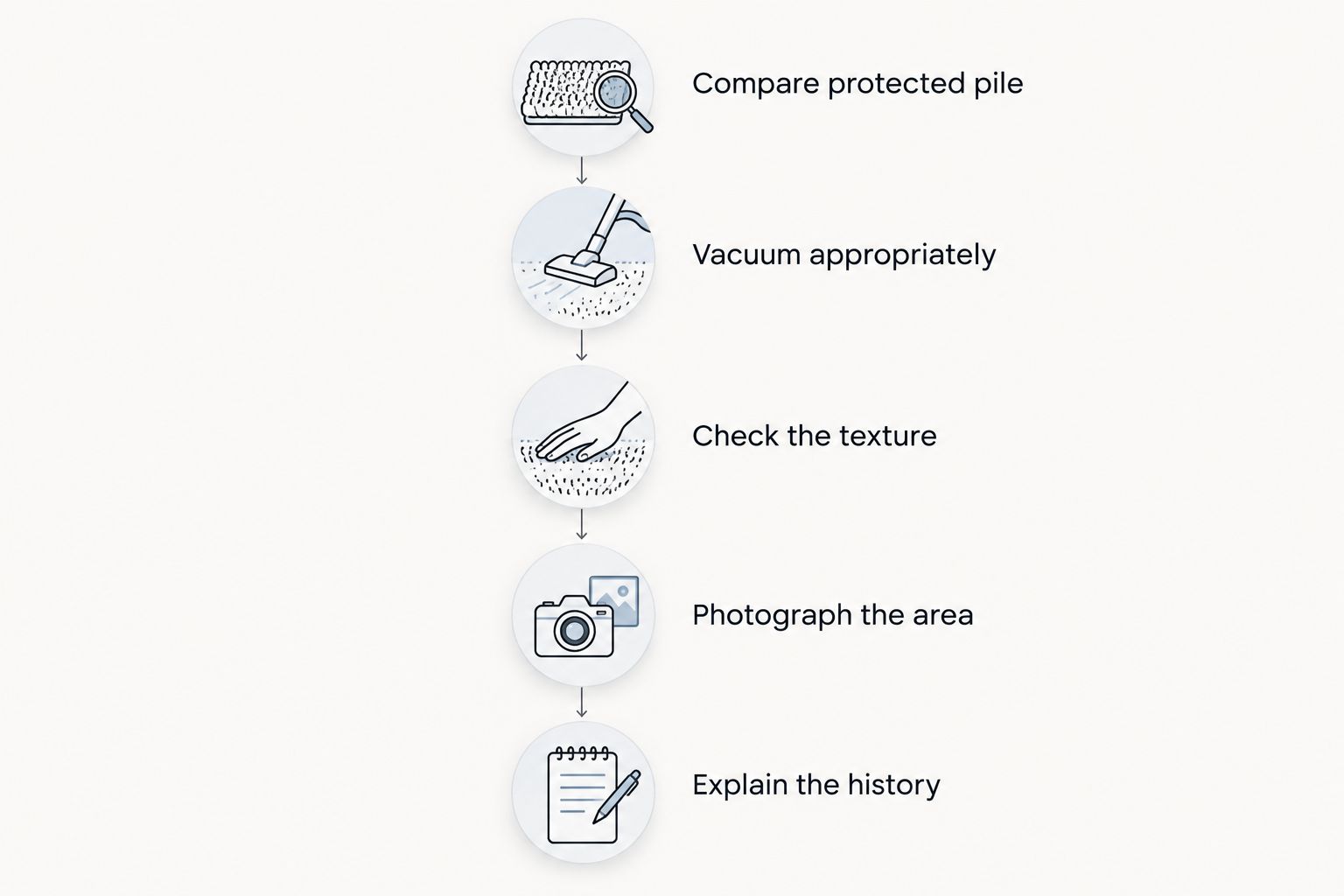
These observations give the cleaner something specific to assess. They also make it easier to identify a realistic goal: removing residue, improving pile alignment, or explaining why the texture is unlikely to recover.
What should you ask a professional cleaner?
For your 2026 service discussion, ask for an explanation of the limitation before agreeing to the work. A useful answer distinguishes what the cleaner expects to remove from what will remain because of wear.
- “Does this look like soil buildup, compression, or damaged fibers?”
- “What cleaning and grooming methods suit this carpet?”
- “Can you assess an affected area before treating the whole room?”
- “What appearance difference should I expect after it dries?”
- “What signs would make you recommend repair instead?”
Michaels Carpet Care offers eco-friendly, fast-drying carpet cleaning for North Texas homes and businesses. That service fits a cleaning problem; it is not a promise to reverse permanent matting. Mention stubborn traffic lanes when discussing the job so texture concerns are part of the conversation.
Discuss your carpet's condition
Describe the flattened areas and ask what cleaning can realistically improve.
How do you judge the result after cleaning?
Assess the carpet after it is fully dry, not just after the final grooming pass. Wet pile, directional marks, and changing light can affect how the surface looks. Follow the cleaner's instructions for drying and returning the area to use.
Compare the cleaned section with your original photographs under similar lighting. Check cleanliness and texture separately: does the surface feel less sticky or gritty, and does the pile separate more readily? A cleaner feel without full texture recovery is still a different result from a failed soil-removal treatment.
For a useful 2026 maintenance record, keep the photographs and note the method used. If the same lane remains flat after cleaning, share that result before booking another attempt. Do not assume that repeating the treatment with more water or stronger chemicals will restore damaged fibers.
Will matted carpet become fluffy again?
Matted carpet can regain some lift when intact fibers are held down by soil or temporary compression. Permanently worn or distorted fibers will not regain their original structure through cleaning. Ask for an assessment of the affected area rather than a room-wide promise of fluffiness.
Is steam cleaning better for matted carpet?
Hot-water extraction is not automatically better for matted carpet. Method selection should follow the carpet's care instructions, construction, and soil condition. Neither hot-water extraction nor low-moisture cleaning can reconstruct worn fibers, so choose the method for the cleaning problem rather than the promise of pile restoration.
Should you replace carpet that stays flat after cleaning?
Persistent flattening does not by itself require replacement. If the carpet is clean, intact, and acceptable to you, a texture difference is an appearance decision. Visible backing, loose fibers, damaged seams, or other physical defects call for a separate repair or replacement assessment.
FAQ
Can carpet cleaning fix matted carpet in a hallway?
Carpet cleaning can improve a matted-looking hallway when embedded soil or residue contributes to the flattening. It cannot restore fibers permanently damaged by repeated traffic.
Will a carpet rake fix flattened carpet?
A carpet rake can help align suitable pile, but it cannot repair worn fibers. Check the manufacturer's instructions before using one, especially on loop-pile carpet.
Can I use a steam iron to lift matted carpet?
Do not apply a steam iron directly to carpet to lift matted fibers. Heat can damage carpet materials; follow the manufacturer's care instructions instead of improvising a heat treatment.
Why does my carpet still look flat after professional cleaning?
Carpet can remain flat after cleaning because soil removal does not reverse permanent wear or fiber distortion. Assess the appearance after it dries and ask whether pile direction or physical damage explains the remaining difference.
Does low-moisture cleaning repair worn carpet?
Low-moisture cleaning does not repair worn carpet. It is a cleaning approach, and its suitability depends on the carpet's construction, care instructions, and soil condition.
Can Michaels Carpet Care help with matted-looking carpet?
Michaels Carpet Care provides carpet cleaning for homeowners and businesses in McKinney, Frisco, Plano, and Allen. Describe the flattened areas when discussing service, and distinguish soil-removal goals from expectations of repairing worn fibers.
How do I keep a traffic lane from getting matted again?
Use manufacturer-approved vacuuming and cleaning practices to manage soil in traffic lanes. Removing soil addresses contamination, but it does not eliminate the physical effects of repeated foot traffic.
One last thing
A carpet that changes shade when you brush it in opposite directions is showing how pile direction affects reflected light. That change alone does not establish that the carpet is dirty or permanently damaged. Before your next cleaning in 2026, photograph the same patch from opposite ends of the room and show both views to the cleaner.
Ask for a cleaner carpet and an honest texture assessment—not a promise to erase wear. That is the practical way to decide whether cleaning addresses the problem you actually have.