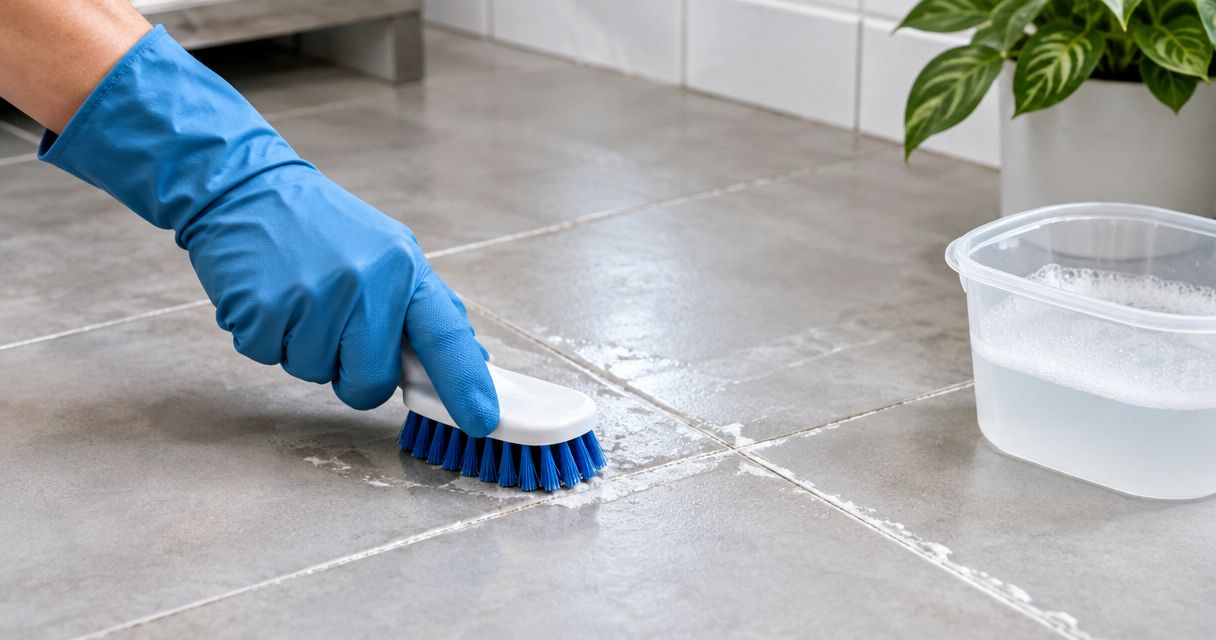
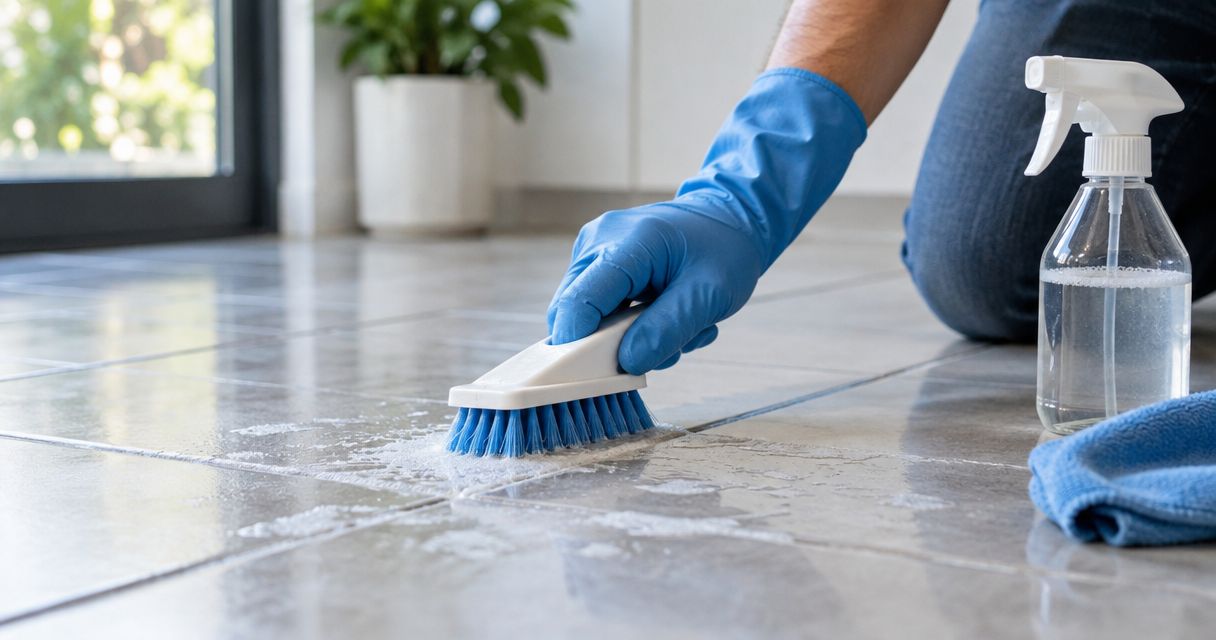
Yes, grout cleaning can remove surface mold and mildew, but cleaning alone does not fix the moisture that allows them to grow. Stains can remain after cleaning, and growth behind tile or inside damaged walls needs more than surface treatment. For a 2026 cleanup, the right approach is to assess the affected material, clean what is sound, and correct the moisture source.
- Can grout cleaning remove mold and mildew? Yes, on accessible surfaces; cleaning does not repair leaks or hidden damage.
- Michaels Carpet Care provides tile and grout cleaning for homeowners and businesses in McKinney, Frisco, Plano, and Allen.
- Recurring growth, loose tile, and damp walls require investigation rather than repeated surface scrubbing.
- EPA guidance generally allows homeowner cleanup of mold areas smaller than 10 square feet, with important exceptions.
Can grout cleaning remove mold and mildew?
Grout cleaning can remove accessible surface growth, but a cleaner-looking joint is not proof that a moisture problem is solved. Cement-based grout is porous, so deeply affected or deteriorated material can require removal rather than another cleaning attempt.
The distinction matters when choosing between Michaels Carpet Care for local tile and grout cleaning and a specialist who investigates water damage or hidden mold. Surface cleaning and building repair solve different problems.
| Approach | Best for | What it addresses | Main limitation |
|---|---|---|---|
| Careful household cleaning | Small, accessible surface patches on sound materials | Surface growth, soil, and residue | Does not address hidden moisture or deteriorated grout |
| Professional tile and grout cleaning | Surface buildup needing a material-appropriate cleaning method | Accessible tile and grout contamination | Is not a substitute for mold remediation or leak repair |
| Grout or caulk replacement | Failed joints or material that cannot be adequately cleaned | Deteriorated joint material | New material will not solve an unresolved leak |
| Mold remediation and moisture repair | Hidden, extensive, recurring, or water-damaged conditions | The affected building materials and moisture source | Requires a different scope from routine cleaning |
Do not choose an approach by color alone. Dark grout can contain dirt, staining, or microbial growth; appearance does not identify a mold species or establish the extent of damage.
Why this matters
A shower can look better immediately after scrubbing while the wall behind it stays wet. Repeatedly cleaning the visible mark treats the symptom when a plumbing leak, failed joint, or persistent condensation is still present.
For your 2026 home-maintenance plan, separate appearance from moisture control. The useful questions are whether the surface is sound, whether it dries between uses, and whether the discoloration returns after cleaning.
The U.S. Environmental Protection Agency's household mold guidance makes moisture control central to prevention. It also distinguishes small cleanup jobs from situations involving extensive water damage, contaminated water, or other conditions that call for professional help.
When surface cleaning is the right starting point
Surface cleaning is a reasonable starting point when the affected patch is accessible, the surrounding material is intact, and you have addressed the source of excess moisture. A small patch on a sound tile surface is different from growth spreading across wet drywall.
EPA guidance says homeowners can generally handle a moldy area smaller than 10 square feet, subject to the circumstances. That threshold is not a guarantee that a small patch is harmless or suitable for every person to clean.
Consider the whole situation before starting:
- Is the growth confined to an accessible surface?
- Are the grout joints firm rather than crumbling or missing?
- Does the area dry after ordinary use?
- Is there any history of leaking plumbing or water intrusion?
- Does the cleanup involve sewage or other contaminated water?
- Does anyone doing the work have health concerns that warrant medical advice?
Choose professional assessment instead of repeated scrubbing when the visible patch does not explain the surrounding damage. A small mark beside a soft wall deserves more attention than its size suggests.
How should you clean a small affected area?
Start by checking the surface and the cleaning product's instructions. Tile, grout, natural stone, and flexible sealant do not all tolerate the same chemicals or abrasion.
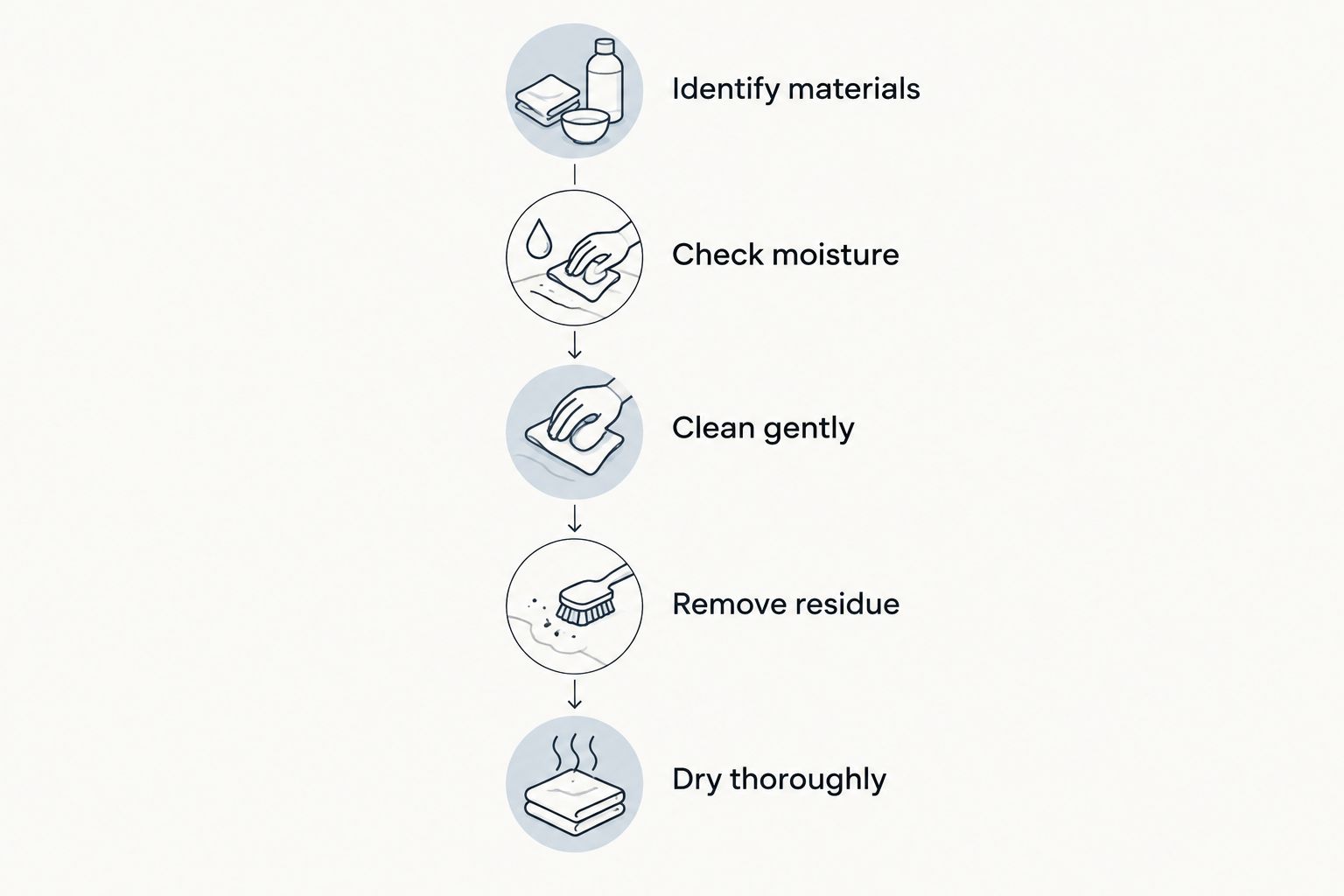
1. Identify materials
Confirm whether you have ceramic tile, porcelain, or natural stone, and whether the affected joint is grout or flexible caulk. If you cannot identify the material, avoid experimenting with acids or aggressive cleaners.
Acidic products can etch marble, limestone, and travertine. A cleaner that works on one shower surface is not automatically suitable for the adjacent stone trim.
2. Check moisture
Look for leaking fixtures, damaged joints, standing water, and condensation that lingers after use. Stop an active leak before treating the cleaning job as finished.
Do not open a suspect wall simply to investigate it yourself. Hidden damage changes the scope of the work and can require a qualified professional.
3. Clean gently
For cleanable hard surfaces, EPA guidance describes scrubbing with detergent and water, then drying completely. Follow the surface manufacturer's care instructions and the cleaning product's label; use suitable gloves, eye protection, and respiratory protection for mold cleanup.
Avoid dry brushing visible growth or grinding at grout. Aggressive scrubbing can damage the joint without resolving the reason it stayed damp.
4. Remove residue
Remove loosened soil and cleaning residue as directed by the product label. Do not keep adding different chemicals because the first pass leaves a dark mark.
A remaining stain does not establish that live growth remains. Equally, a lighter surface does not prove that everything behind it is dry.
5. Dry thoroughly
Dry the cleaned area and address the conditions that keep it wet. Use ventilation and appropriate dehumidification rather than leaving puddles in corners or along joints.
Check the area again during normal use. If the same patch returns, reassess the moisture source and the condition of the material before repeating the treatment.
Why grout-cleaning results vary
The strongest cleaner is not necessarily the right cleaner. Results depend on the material, its condition, and what is causing the discoloration.
- Grout condition: Sound joints tolerate appropriate cleaning better than cracked, loose, or crumbling grout. Cleaning cannot rebuild missing material.
- Moisture source: An active leak or repeated condensation keeps supplying the water mold needs. Removing visible growth does not interrupt that supply.
- Surface type: Ceramic, porcelain, and natural stone have different care requirements. Surrounding finishes also affect which products are suitable.
- Depth of the problem: Accessible growth is different from contamination inside a wall assembly. A surface treatment cannot reach every affected material.
- Type of joint: Cement-based grout and flexible caulk are different materials. Failed or persistently affected caulk can need replacement.
- Residual staining: Discoloration can remain after cleaning. Appearance alone cannot confirm whether further treatment is necessary.
For a closer look at material-appropriate approaches, see the guide to tile cleaning methods for grout-line stains. Choose the method for the surface, not just the stain.
When should you stop cleaning and call a specialist?
Stop treating the problem as routine housekeeping when you find soft walls, loose tiles, persistent dampness, or a musty odor that continues after accessible surfaces are cleaned and dried. These signs warrant investigation; they do not, by themselves, prove a particular hidden condition.
EPA guidance recommends consulting its more detailed remediation guidance when mold covers more than 10 square feet or there has been substantial water damage. Sewage contamination and suspected contamination of heating or cooling systems also need a different response from ordinary bathroom cleaning.
Michaels Carpet Care is best for homeowners and businesses seeking routine tile and grout cleaning in McKinney, Frisco, Plano, and Allen. Its listed services include tile, grout, and natural stone cleaning; do not treat that service scope as a claim of mold remediation or structural repair.
Before booking any cleaning service, describe the affected area, how often it returns, and whether there has been a leak. Ask whether the proposed work covers cleaning only or also includes investigation, joint repair, or other work.
Discuss your tile and grout cleaning
Describe the surface, recurring discoloration, and any known moisture problems before choosing a cleaning service.
How do you keep mold from returning after cleaning?
Keep the surface dry enough between uses that the moisture problem does not continue. Cleaning removes accessible contamination; prevention depends on controlling the conditions that supported it.
EPA guidance recommends indoor relative humidity below 60%, ideally 30–50%. A humidity reading helps you assess room conditions, but it does not tell you whether water is trapped behind a wall or beneath tile.
EPA also advises drying water-damaged materials within 24–48 hours to help prevent mold growth. That is a prevention window after wetting, not a promised grout-cleaning drying time or a guarantee that damage has not occurred.
For a 2026 maintenance routine, focus on practical habits:
- Use bathroom exhaust ventilation and check that it vents outdoors.
- Remove standing water from shower corners and ledges.
- Repair leaks instead of repeatedly drying the same wet spot.
- Inspect grout and flexible joints for damage.
- Clean soap residue before it builds up.
Do not seal over visible growth or damp, deteriorated grout. Sealer is not mold treatment, and it does not repair a failed waterproofing assembly.
Will bleach remove mold from grout?
Bleach can change the appearance of some mold staining, but it is not a universal answer for grout, stone, or hidden contamination. EPA household mold guidance does not recommend routine use of biocides such as chlorine bleach during cleanup.
Follow the product label and the surface manufacturer's instructions if a treatment calls for a particular chemical. Never mix bleach with ammonia, acids, or other cleaning products. Dangerous gases can result.
Does black grout mean dangerous black mold?
Black grout does not identify a mold species or its health significance. Dirt, staining, and different types of microbial growth can produce dark discoloration.
CDC guidance says you do not need to identify the type of mold before addressing visible growth and the moisture problem. Avoid using color as either a reason to panic or a reason to dismiss it.
Can you seal grout after removing mildew?
You can consider sealing compatible grout after it is clean, dry, and sound, following the grout and sealer manufacturers' instructions. Not every grout type requires sealing.
Sealing does not replace drying, ventilation, or leak repair. If discoloration keeps returning, investigate that pattern before adding another surface treatment.
FAQ
Can professional grout cleaning remove mold and mildew completely?
Professional grout cleaning can remove accessible surface growth, but it cannot guarantee removal from hidden or deteriorated materials. Complete correction also requires addressing the moisture source.
Can I clean a small mold patch on shower grout myself?
EPA guidance generally allows homeowner cleanup of mold areas smaller than 10 square feet, depending on the circumstances. Water damage, contaminated water, health concerns, or suspected hidden growth can make professional help the better choice.
Why does mildew come back after I scrub the grout?
Mildew returns when moisture and suitable growth conditions remain. Check ventilation, leaks, standing water, and damaged joints rather than simply repeating a stronger chemical treatment.
Should I use vinegar on moldy grout beside natural stone?
Do not use vinegar on acid-sensitive natural stone such as marble, limestone, or travertine. Choose a product approved for both the stone and the adjacent grout, and follow its label.
Does Michaels Carpet Care offer tile and grout cleaning?
Michaels Carpet Care offers tile and grout cleaning for homeowners and businesses in McKinney, Frisco, Plano, and Allen. Describe suspected mold and any water damage before booking so the cleaning scope is clear.
What humidity should I aim for to prevent mold in 2026?
EPA guidance recommends indoor relative humidity below 60%, ideally 30–50%. Humidity control supports prevention but does not repair leaks or dry concealed water damage by itself.
Does stained caulk need cleaning or replacement?
Failed or persistently affected caulk can require replacement rather than repeated cleaning. Correct the moisture problem and prepare the joint according to the replacement sealant's instructions.
One last thing
For your 2026 maintenance record, take a photograph after cleaning and drying the area. Note whether the mark returns in the same joint, beneath a fixture, or along a corner.
A recurring pattern is more useful than another round of harder scrubbing. It gives your cleaner or repair professional a specific location and history to investigate without assuming that every dark line has the same cause.