Grout is ready after cleaning when the joints have dried sufficiently for the next activity—not simply when the tile feels dry. There is no single drying time that applies to every floor in 2026; moisture left behind, grout condition, ventilation, and any sealer applied determine when you can walk, replace rugs, or use a shower.
- How long does grout take to dry after cleaning? Follow the floor’s condition and any sealer instructions, not a universal deadline.
- Dry tile does not prove that porous grout joints are dry underneath.
- Cleaning, grout drying, and sealer curing are different stages with different restrictions.
- Michaels Carpet Care provides tile and grout cleaning for homeowners and businesses in McKinney, Frisco, Plano, and Allen.
Why this matters
A floor can look finished before it is ready for normal use. Ceramic or porcelain tile and the grout between it do not necessarily release moisture at the same rate. Replacing a bath mat or washing the floor too soon interrupts the drying you are waiting for.
If you are arranging Michaels Carpet Care tile and grout cleaning, ask for separate instructions for foot traffic, rugs, and water exposure. Those are different decisions, especially if the work includes a protective treatment.
For your 2026 cleaning appointment, plan around the room’s next use rather than a generic promise of fast drying. A kitchen walkway, a shower, and a business entrance each need a different handover conversation.
How long does tile and grout cleaning take to dry?
The useful answer is a condition-based handover: the surface must be safe, the grout must be ready for its next use, and any applied treatment must meet its instructions. A dry-looking tile alone does not establish all of those conditions.
Use this comparison to understand what you are waiting for. These are stages of readiness, not interchangeable drying estimates.
| Stage | Best for deciding | Useful sign or instruction | Limit |
|---|---|---|---|
| Surface drying | Whether the tile still has visible moisture | No puddles, wet film, or obvious damp patches | Does not establish dryness inside grout |
| Grout drying | Whether joints are ready for covering or further treatment | Grout returns toward its usual dry appearance; the technician confirms next steps | Color alone is not a moisture measurement |
| Sealer curing, if applied | When to resume activities restricted by the treatment | Follow the exact product’s traffic and water-exposure instructions | A dry-to-touch surface does not establish full cure |
Cleaning existing grout is also different from installing new grout. Do not use a new-grout installation timetable to decide when a cleaned floor is ready, or assume cleaning means the grout needs to harden again.
Before the technician leaves, establish which stage applies to your floor. If no sealer or coating was applied, ask about drying; if a treatment was applied, ask about both drying and the treatment’s restrictions.
Cleaned grout: check the joints, not just the tile
For existing grout that has only been cleaned, the immediate task is removing the remaining cleaning moisture. Cement-based grout is porous, so its appearance and drying behavior differ from the tile beside it.
Look across the room rather than checking only the open center. Compare joints near walls, behind doors, beneath cabinet overhangs, and in other sheltered spots. Different conditions within the same room can produce uneven drying.
Use appearance as a clue, not a clearance test. A darker joint can contain moisture, but discoloration, staining, or previous repairs can also affect its color. If a patch does not return to its familiar appearance, ask the cleaner before adding another product.
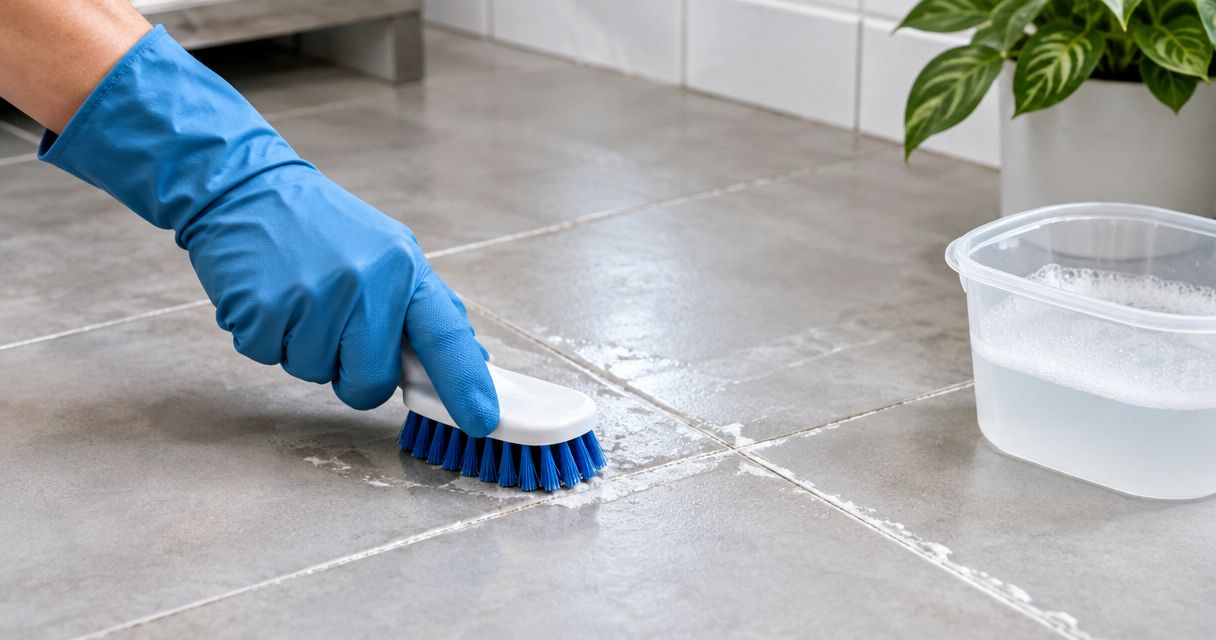
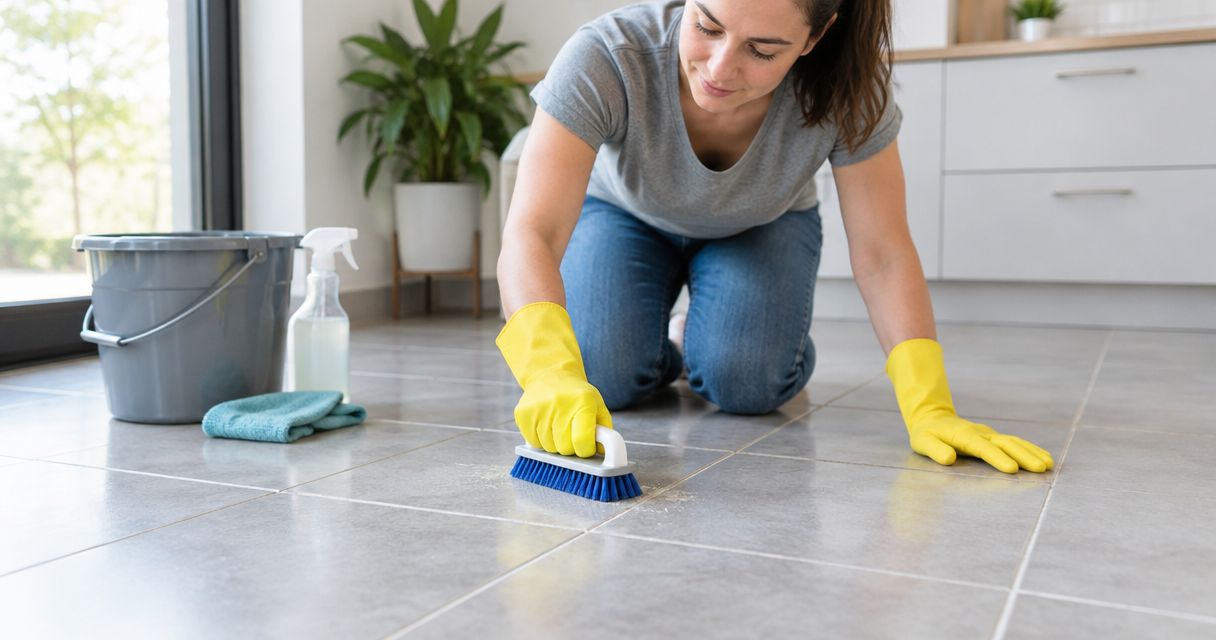
Do not repeatedly mop the floor to see whether it is clean. That adds water and makes it harder to judge the drying already underway. If you notice residue, describe the texture and location to the cleaner and ask how to address it.
Sealed grout: drying is not the same as curing
If cleaning includes a sealer, the product’s instructions determine the restrictions after application. Do not substitute a general tile-cleaning estimate for the sealer’s directions.
Ask whether the treatment is an impregnating sealer, a surface coating, or a color-sealing product. These are different treatments; the fact that each is sometimes called sealing does not make its aftercare interchangeable.
You need answers to separate questions: when light traffic is permitted, when rugs can return, and when the surface can get wet. Permission for one activity does not automatically permit the others.
For a 2026 appointment, request the applied product’s name and written aftercare instructions. Keep them with your cleaning record so a household member or building employee does not restart mopping or shower use based only on how the floor looks.
Why grout drying time varies
The amount of moisture remaining and the conditions around the floor determine drying. The word tile alone does not describe the whole installation.
- Water removal: Moisture left in joints and low spots still needs to evaporate after cleaning ends. Removing excess water is different from waiting for it to disappear.
- Grout type: Cement-based and epoxy grout have different absorption characteristics. Identify the material before treating every joint as equally porous.
- Air movement: Moving air across an exposed floor supports evaporation. A closed, still room provides different drying conditions from a ventilated space.
- Indoor humidity: Moist air limits evaporation compared with drier air under otherwise similar conditions. An open window is not automatically helpful when outdoor air is humid.
- Floor coverings: Rugs, mats, and items left over joints restrict exposure to room air. Keep those areas uncovered until the floor is ready.
- Added treatments: Sealer or coating instructions introduce requirements beyond the removal of cleaning moisture. Follow the actual treatment, not an unrelated drying estimate.
North Texas weather does not replace an indoor assessment. For homeowners in McKinney, Frisco, Plano, and Allen, the relevant conditions are those around the cleaned floor—not simply the afternoon temperature outside.
How to help grout dry without damaging the floor
Support drying without adding water, residue, or concentrated heat. The aim is to expose the cleaned joints to suitable room conditions while respecting any treatment instructions.
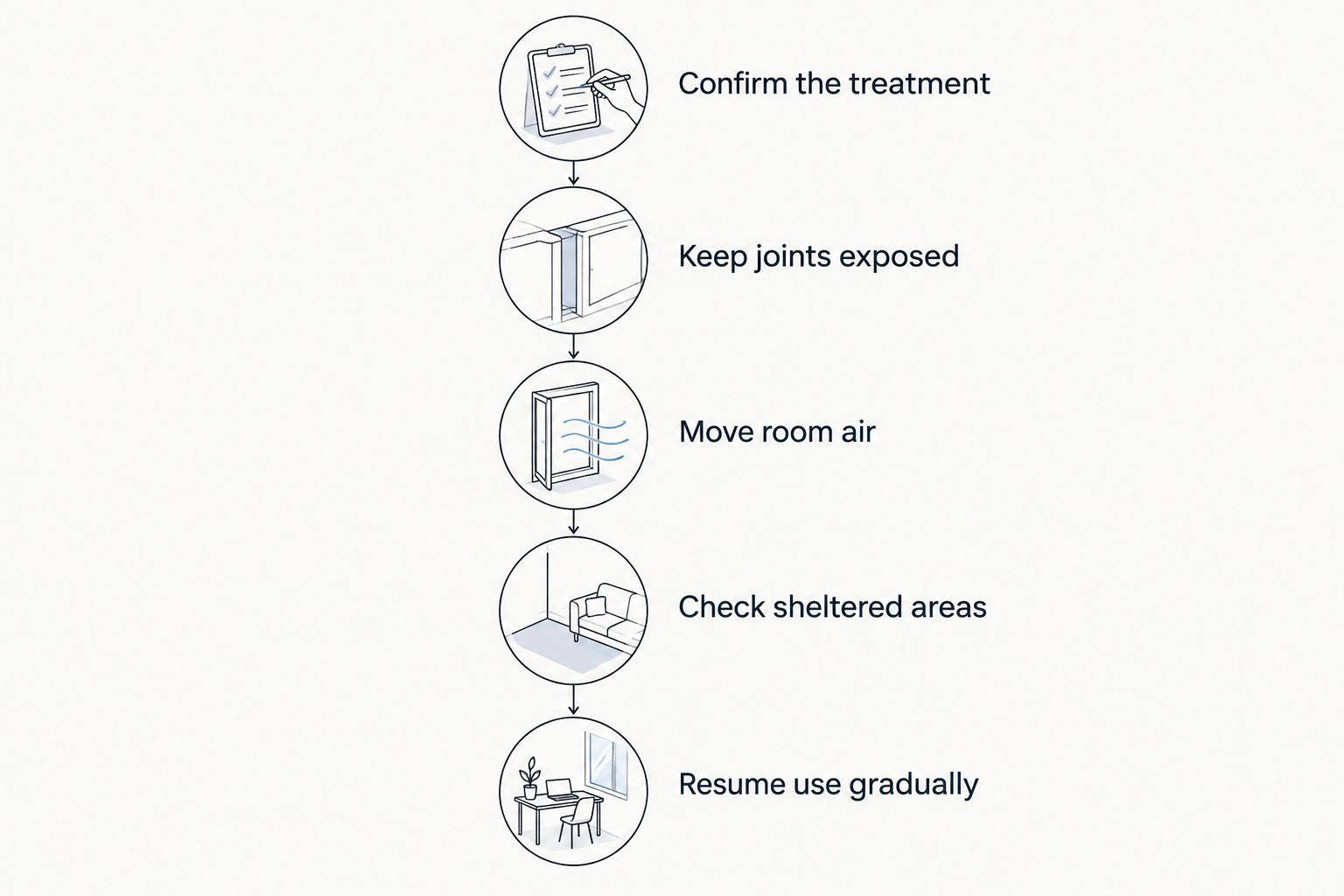
- Confirm the treatment. Ask whether the visit involved cleaning only or included a sealer or coating. Get activity-specific aftercare before deciding how to dry the room.
- Keep joints exposed. Leave rugs and bath mats off the floor until the cleaner’s instructions permit replacement. Avoid using towels as temporary floor coverings.
- Move room air. Use normal ventilation or a fan when appropriate for the treatment. Keep cords and equipment out of walking routes.
- Check sheltered areas. Inspect corners and other slower-looking patches as well as the open floor. Do not decide the whole room is ready from one convenient spot.
- Resume use gradually. Follow the separate instructions for walking, covering, washing, and shower use. Stop and ask if the surface remains slippery, tacky, or unexpectedly damp.
Do not aim a heat gun or other concentrated heat source at grout to hurry the process. You also should not add a household cleaner as a drying aid; an extra chemical does not establish that the original moisture has left the joints.
For your 2026 aftercare plan, choose simple room management over improvised treatment. If normal ventilation is not resolving persistent dampness, contact the cleaner rather than escalating heat or chemicals.
When can you walk on tile after grout cleaning?
Walk on the floor only after the surface is safe and the cleaner permits foot traffic. Visible water, a slippery film, or an applied treatment with traffic restrictions means the floor is not ready just because you need to cross it.
Ask about a necessary access route before cleaning begins. If the room connects occupied areas, agree on how people will move without tracking soil onto wet joints or stepping across a restricted treatment.
When can you put rugs back after grout cleaning?
Replace rugs only after the grout is ready to be covered and any treatment permits it. An uncovered floor can continue exchanging moisture with room air; a rug and its backing change those conditions.
Check the rug as well as the floor. A damp bath mat placed over dry grout reintroduces moisture, so both surfaces need attention before you restore the room.
When can you use a shower after grout cleaning?
Use the shower only when the cleaner confirms water exposure is allowed and any applied sealer meets its instructions. Permission to walk across a bathroom floor does not establish that shower walls or joints are ready for repeated wetting.
Keep cleaning moisture separate from a recurring moisture problem. If joints repeatedly darken in the same area even without shower use, report the pattern rather than assuming more drying time will resolve it.
What to ask before booking tile and grout cleaning
Tell the cleaner what the room needs to do after the visit. A household bathroom needs a shower-use answer; a business entrance needs a safe-access plan. These details are more useful than asking only whether the service dries quickly.
Michaels Carpet Care is a fit for North Texas homeowners and businesses seeking tile and grout cleaning in McKinney, Frisco, Plano, and Allen. The service area and cleaning scope match those needs; they do not establish a universal grout-drying deadline.
Before your appointment, identify any known stone surfaces, previous sealers, stained joints, or areas that stay damp. For a closer look at the cleaning decision itself, read the guide to tile cleaning methods for grout-line stains.
Ask for the handover in plain language: what was cleaned, what was applied, what stays off the floor, and what allows normal use to resume. That gives everyone responsible for the room the same instructions.
FAQ
How long does grout take to dry after cleaning in 2026?
Grout drying after cleaning has no universal deadline; remaining moisture, grout type, room conditions, and any applied treatment determine readiness. Ask for separate instructions for walking, rugs, and water exposure.
Can I walk on the floor if the tile looks dry?
Dry-looking tile alone does not establish that the floor is ready for walking. Check for moisture or slippery residue and follow any traffic restrictions from the cleaner or treatment instructions.
Does a fan help grout dry after cleaning?
A fan supports evaporation by moving air across the exposed floor. Use it only in a way consistent with any applied treatment’s instructions, and keep equipment out of walking routes.
Why is some grout still dark after cleaning?
Dark grout can reflect remaining moisture, staining, or an existing difference in the joint. Compare it with its normal appearance and contact the cleaner if the discoloration persists rather than repeatedly wetting the area.
Can I mop tile immediately after professional cleaning?
Do not immediately mop a floor that is still drying or has treatment restrictions. Mopping adds moisture, and an applied sealer or coating can have its own cleaning requirements.
Is carpet drying time a useful guide for tile and grout?
Carpet drying time is not a reliable guide for grout drying. Carpet, grout, and tile are different materials, and grout sealing introduces separate aftercare requirements.
What should I ask Michaels Carpet Care about drying?
Ask Michaels Carpet Care whether the work includes cleaning only or an applied treatment, then request separate instructions for walking, replacing rugs, and water exposure. Describe any room-access needs before the appointment.
One last thing
Ask for the time water can return, not just the time you can walk. That distinction catches the most consequential ambiguity in a bathroom handover: safe access and permission to shower are not the same instruction.
Put that question on your 2026 cleaning checklist before the visit. A clear answer tied to the work performed is more useful than borrowing a drying estimate from another material or another home.