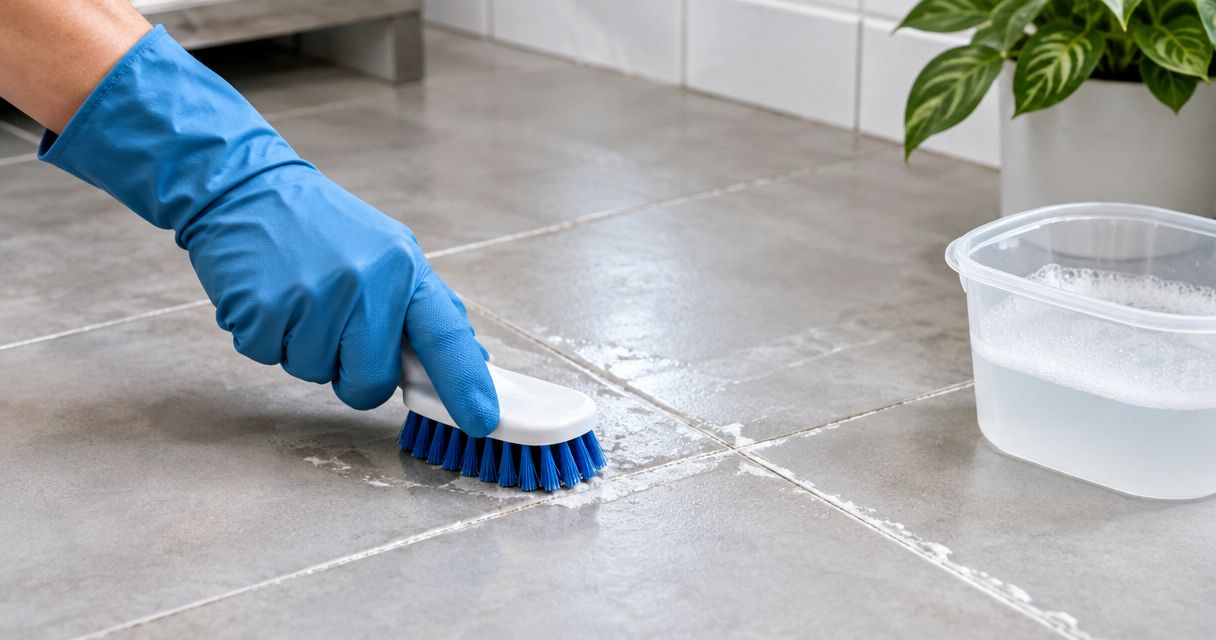
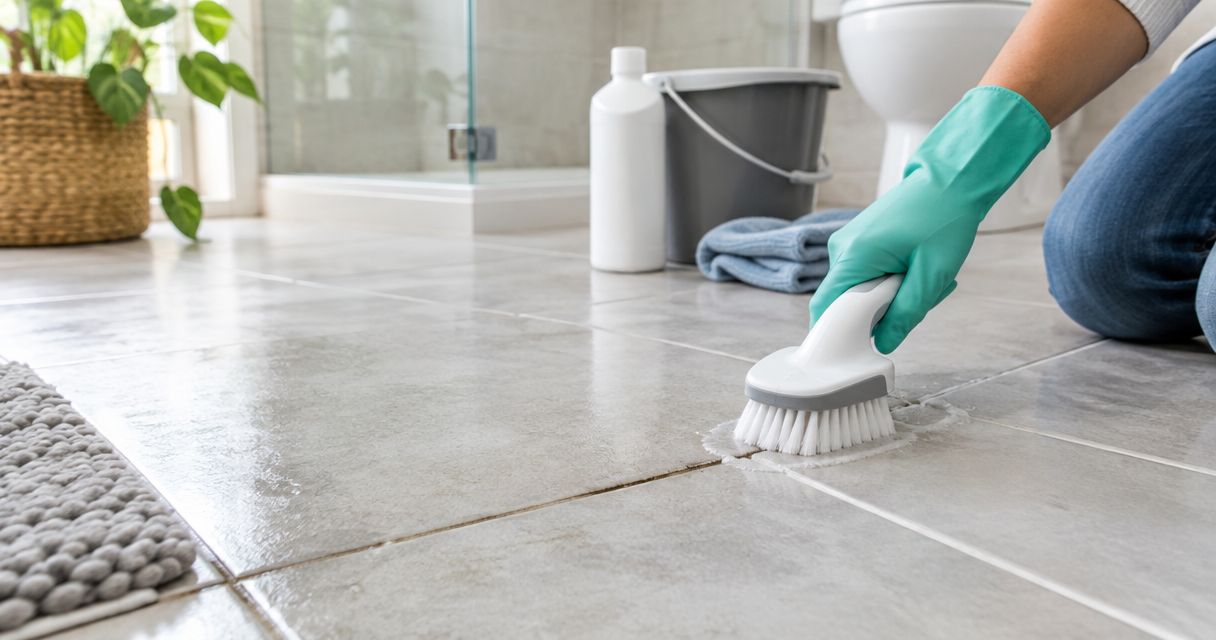
Yes, grout cleaning can restore the original color when dirt, grease, or cleaner residue is hiding it. Cleaning does not reverse permanent discoloration, replace missing grout, or remove an existing color coating without a separate treatment. Start with a small test area and judge the result after it dries before choosing a whole-floor treatment in 2026.
- Can grout cleaning restore original color? Yes, when removable soil covers intact grout; permanent discoloration needs a different approach.
- Compare a cleaned, dry test patch with protected grout before deciding whether cleaning has restored the color.
- Michaels Carpet Care provides tile and grout cleaning for homeowners and businesses in McKinney, Frisco, Plano, and Allen.
- Cleaning reveals existing grout color; color sealing changes its appearance, while regrouting replaces damaged material.
Can grout cleaning restore grout to its original color?
Cleaning restores the appearance of the original color only when the discoloration is removable. A dark kitchen grout line coated with greasy soil presents a different problem from a pale line damaged by an unsuitable cleaner. Both look uneven, but they need different responses.
Before booking Michaels Carpet Care for tile and grout cleaning, identify what you want corrected: surface dirt, persistent staining, inconsistent color, or deteriorating joints. That distinction keeps a cleaning request from turning into an expectation that cleaning alone will repair the floor.
| What you see | What cleaning can address | What cleaning cannot promise |
|---|---|---|
| Dark traffic paths | Remove accumulated soil and residue | An exact match if underlying discoloration remains |
| Greasy kitchen grout | Remove compatible, removable greasy deposits | Eliminate every absorbed stain |
| Uneven grout color | Reveal differences hidden beneath dirt | Correct different grout batches or previous repairs |
| White or chalky deposits | Address deposits after identifying their cause | Stop moisture-related deposits from returning |
| Cracked or missing grout | Clean sound surrounding material | Rebuild or stabilize damaged joints |
| Previously color-coated grout | Clean the coating with compatible products | Reveal the original grout color through an intact coating |
A clean floor and a uniformly colored floor are not always the same result. Establish which outcome matters before approving the work.
Why this matters
A successful grout-cleaning job removes soil without creating a second problem. Chasing a lighter color with stronger chemicals or harder scrubbing can damage grout or surrounding tile, especially when natural stone is involved.
For a 2026 cleaning project, make the decision around a dry test result rather than a promise that every joint will look new. A test patch gives you something concrete to compare, and it helps separate a cleaning issue from a repair or appearance issue.
How to check whether the original color is still underneath
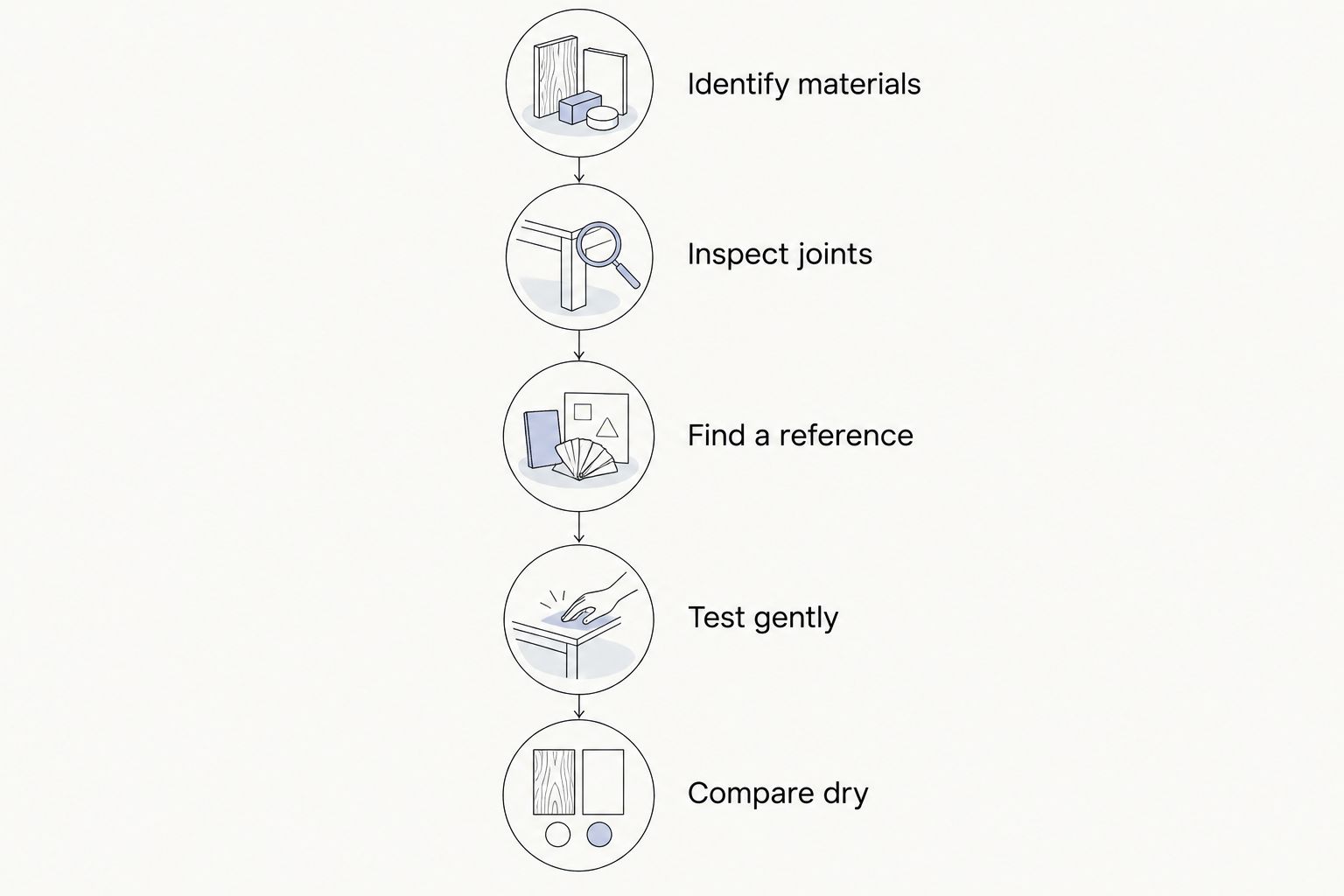
Use this sequence before treating an entire room. The purpose is to identify a safe method and a realistic endpoint, not to find the strongest cleaner.
- Identify materials. Confirm the tile and grout type as far as possible, including whether the floor contains natural stone. Look for records of previous sealing or color treatments.
- Inspect joints. Check for cracks, loose edges, gaps, and crumbling material. Damaged grout needs assessment before aggressive cleaning.
- Find a reference. Look for a protected section beneath movable furniture or beside a less-used edge. Treat it as a comparison, not proof of the exact original shade.
- Test gently. Use a cleaner and tool approved for the materials. Follow the product directions for dilution, contact time, and removal.
- Compare dry. Remove the cleaning residue as directed and let the test area dry before assessing its color. Wet grout often appears darker.
Photograph the test patch and reference area under the same lighting. A bright window on one side and a shadow on the other can make matching grout look different, so compare like with like.
If the test removes the dark film but leaves scattered marks, you have learned something useful: general cleaning works, but the remaining marks need separate evaluation. Repeating the same treatment indefinitely is not a plan.
Cleaning: best for removable soil and residue
Cleaning is the first choice for sound grout covered by removable dirt. Kitchen grease, tracked-in soil, and accumulated cleaning residue can obscure the grout underneath. Removing those layers reveals the existing surface rather than adding a new color.
The limitation is straightforward: cleaning cannot guarantee that the exposed grout will match your memory of the installation. Old repairs, absorbed stains, and material differences remain possible even after the dirt is gone.
For kitchen-specific treatment choices, review these grout cleaning methods for kitchen tile. Choose by material compatibility and soil type, not by how dramatic a wet before-and-after photograph looks.
Color sealing: best for appearance changes on suitable grout
Color sealing applies a colored coating to suitable grout. It changes the visible surface instead of simply uncovering what was already there, making it a different service from cleaning.
The benefit is control over the finished appearance. The trade-off is that compatibility, preparation, application, and future care become part of the decision; a coating is not a repair for loose or crumbling grout.
If you are considering color sealing in 2026, ask whether the proposal means preserving the original grout color or covering it. Those outcomes should not share an unclear description such as restoring the grout.
Regrouting: best for damaged or failing joints
Regrouting removes and replaces grout where replacement is appropriate. It addresses material that cleaning cannot put back, such as missing sections or deteriorated joints.
Replacement involves more disruption than cleaning and requires care around the tile edges. Cracks also deserve a cause assessment: replacing grout does not correct movement or a moisture problem underneath the tiled surface.
Do not approve replacement solely because grout looks dirty. First establish whether the existing material is sound and whether a compatible cleaning test changes its appearance.
| Approach | Best for | Main benefit | Main limitation |
|---|---|---|---|
| Cleaning | Sound grout with removable soil | Reveals the existing surface | Does not repair damage or guarantee stain removal |
| Color sealing | Suitable grout needing a more uniform appearance | Changes the visible color | Adds a coating and requires compatible preparation |
| Regrouting | Missing, crumbling, or otherwise failing grout | Replaces damaged material | Does not fix underlying movement or moisture causes |
These are treatment categories, not interchangeable versions of the same job. Ask the provider to name the proposed treatment clearly.
Why grout color restoration results vary
Several conditions determine whether cleaning reveals the color you expect. Use these factors to discuss the floor rather than accepting a blanket promise.
- The cause of discoloration. Removable soil responds differently from an absorbed stain or chemical damage. Similar-looking marks do not establish the same cause.
- The grout material. Cement-based grout and epoxy grout have different care requirements. Confirm compatibility instead of assuming one cleaner fits every installation.
- Previous treatments. A sealer, color coating, or leftover maintenance product changes what is being cleaned. Unknown treatment history makes a test patch especially useful.
- The surrounding tile. A cleaner suitable for some ceramic tile installations can be unsuitable for acid-sensitive natural stone. Protecting the tile matters as much as cleaning the joints.
- The condition of the joints. Intact grout and crumbling grout cannot tolerate the same approach. Structural deterioration is not stubborn dirt.
- Moisture and residue. Wet grout can look darker, and incomplete residue removal can distort the finished appearance. Assess the floor only after the cleaning process is complete.
What should you avoid when trying to lighten grout?
Do not treat a lighter shade as proof of better cleaning. Grout can look lighter because soil was removed, but it can also change appearance because the surface was damaged or coated with residue.
Avoid vinegar and other acidic cleaners on marble, travertine, and other acid-sensitive stone. Acids can etch these materials, and unsuitable acidic treatment can also attack cement-based grout. A household ingredient is not automatically a gentle choice for a tiled floor.
Do not mix cleaning products. In particular, mixing bleach with acids or ammonia can release dangerous gases; follow the label and keep incompatible products separate.
Skip abrasive tools that scratch the tile or remove grout material. If the method starts loosening grains, roughening the joints, or damaging adjacent surfaces, stop and reassess rather than scrubbing harder.
Can you tell the original grout color without installation records?
A protected section gives you a useful reference, but it does not prove the installation color. That section can still carry old residue, a coating, or changes from previous use.
Original product records, leftover grout packaging, and installation photographs offer additional clues. Compare several sources when available, and avoid promising an exact shade based on a single hidden corner.
Will sealing bring back the original grout color?
A clear penetrating sealer is not a substitute for cleaning or a color-restoration treatment. Its appearance effects depend on the product and material, so test it before applying it broadly.
A color sealer intentionally changes the visible surface. If your 2026 goal is to keep the original shade, ask specifically whether the proposed product is clear, enhancing, or colored and what its manufacturer says about appearance.
What should you ask a professional before approving cleaning?
Ask for an explanation tied to your floor, not a general promise. A useful conversation covers the tile material, grout condition, previous treatments, and the result of a small test.
- What appears to be causing the discoloration?
- Which products and tools are compatible with this tile and grout?
- Will the result be assessed after the test patch dries?
- Which marks are expected to remain?
- Does the scope include cleaning only, or a separate coating or repair?
Michaels Carpet Care is a local tile and grout cleaning option for homeowners and businesses in McKinney, Frisco, Plano, and Allen. Cleaning is the relevant starting service when removable soil is the problem; it does not replace a separate assessment of damaged joints or permanent color changes.
Discuss your tile and grout
Ask about cleaning for your floor and explain the color changes you want assessed.
FAQ
Can professional grout cleaning make old grout look new?
Professional grout cleaning can reveal a cleaner original surface when removable soil is causing the discoloration. It cannot replace missing grout, reverse every stain, or guarantee a like-new match.
Why is my grout still dark after cleaning?
Grout can remain dark because it is still wet, stained, coated, or carrying cleaning residue. Let it dry and assess the remaining marks before repeating treatment.
Can grout cleaning restore white grout?
Grout cleaning can reveal white grout when removable soil is hiding the white surface. Permanent discoloration or an existing color coating requires a different assessment.
Is color sealing the same as grout cleaning?
Color sealing is not the same as grout cleaning: it adds a colored coating to suitable grout. Cleaning removes soil to reveal the existing surface.
Can I use vinegar to restore grout color?
Vinegar is not a suitable default grout-restoration treatment. Its acidity can damage acid-sensitive stone and attack cement-based grout, so choose a material-compatible cleaner instead.
Should I replace discolored grout before trying cleaning?
Try compatible cleaning first when the grout is sound and discoloration appears to be soil-related. Missing, loose, or crumbling grout needs a repair assessment rather than stronger cleaning.
Does Michaels Carpet Care provide local tile and grout cleaning?
Michaels Carpet Care provides tile and grout cleaning for homeowners and businesses in McKinney, Frisco, Plano, and Allen. Describe the discoloration and any known damage when discussing your floor.
One last thing
The most useful result from a test patch is not always a perfect color match. A patch that becomes clean but remains uneven tells you where cleaning ends and a separate appearance or repair decision begins.
For your 2026 project, agree on a dry test patch as the reference before treating the whole floor. That gives you a visible standard instead of an undefined promise to make old grout look new.