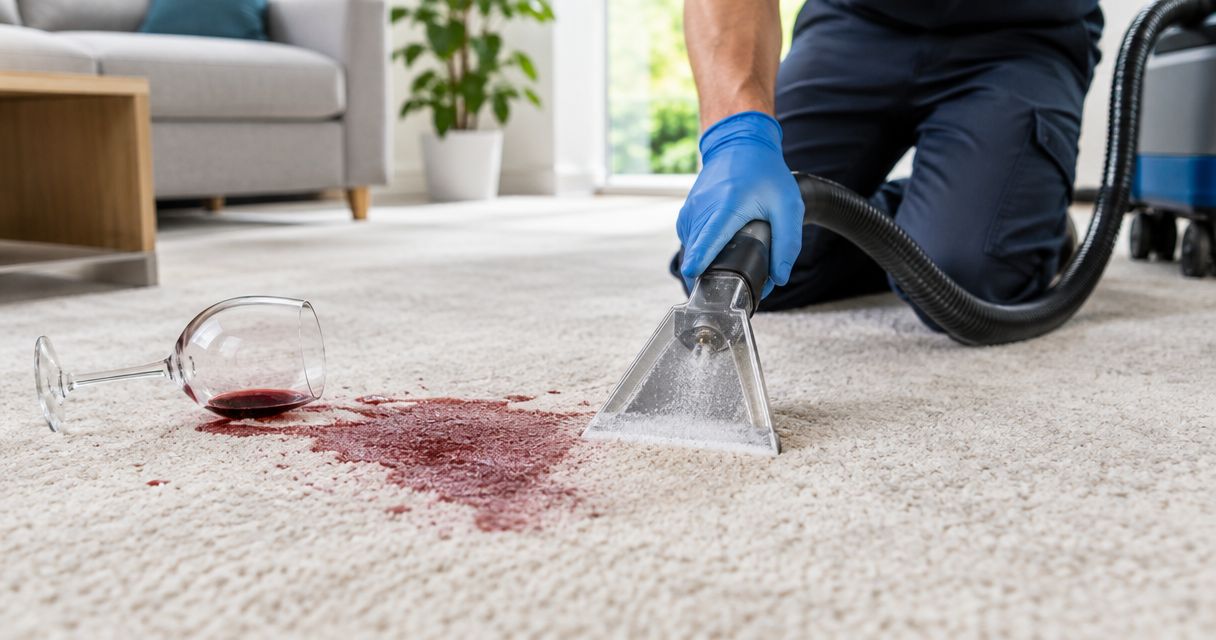
Yes, professional carpet cleaning can remove red wine stains, but complete removal depends on the carpet fiber, how long the spill has been there, and what has already been applied. Cleaning cannot reverse permanent dye damage or restore color removed by bleach. For a spill in 2026, the safest first move is to blot gently, avoid heat and household chemical mixtures, and arrange a stain assessment before trying stronger treatments.
- Can professional carpet cleaning remove wine stains? Yes, but permanent discoloration can remain after cleaning.
- Blot red wine with a clean white cloth; avoid scrubbing, heat, and mixed cleaning chemicals.
- Michaels Carpet Care suits North Texas homeowners seeking gentle-first carpet cleaning, not a promise of complete stain removal.
- Judge the treated area after drying; a wet carpet does not show the final result.
Can professional carpet cleaning remove red wine stains?
Professional carpet cleaning can remove red wine staining when the discoloration responds to a treatment that is safe for the carpet. The important distinction is between removing spilled wine and correcting permanent changes to the carpet's own color. Those are different jobs.
A technician assesses the material, checks previous treatments, and tests a suitable cleaning product before treating the visible mark. General carpet cleaning removes soil; a concentrated wine stain can need separate spotting work. More aggressive treatment is not automatically better.
| Condition | Best for | What cleaning can address | Main limitation |
|---|---|---|---|
| Fresh spill | Prompt blotting followed by assessment | Unabsorbed liquid and treatable wine residue | A fresh spill still does not guarantee complete removal |
| Dried stain | Targeted professional assessment | Dried residue and discoloration that responds safely | Age and previous treatment complicate the result |
| Previously treated spot | Checking product history before further work | Residue and staining compatible with additional treatment | Earlier chemicals can affect carpet dye or leave residue |
| Permanent color change | Discussing repair rather than repeated cleaning | Remaining soil around the affected area | Cleaning cannot replace missing carpet dye |
If you are planning around access to the room, read how long carpet takes to dry after professional cleaning. Drying and stain removal are separate questions: a short drying time does not prove that a wine stain will disappear.
Why this matters
A wine spill invites quick experimentation, especially on a light-colored carpet. The wrong experiment can create a second problem: damaged fibers, a bleached patch, or cleaning residue around the original stain.
Your goal is not simply to make the red look lighter while the carpet is wet. It is to remove what can be removed without sacrificing the carpet's texture or original color. In 2026, the useful question remains straightforward: what treatment is safe for this particular carpet?
What should you do immediately after spilling red wine?
Start with containment, not a homemade stain-removal recipe. Keep people and pets off the spill so they do not spread it into nearby carpet.
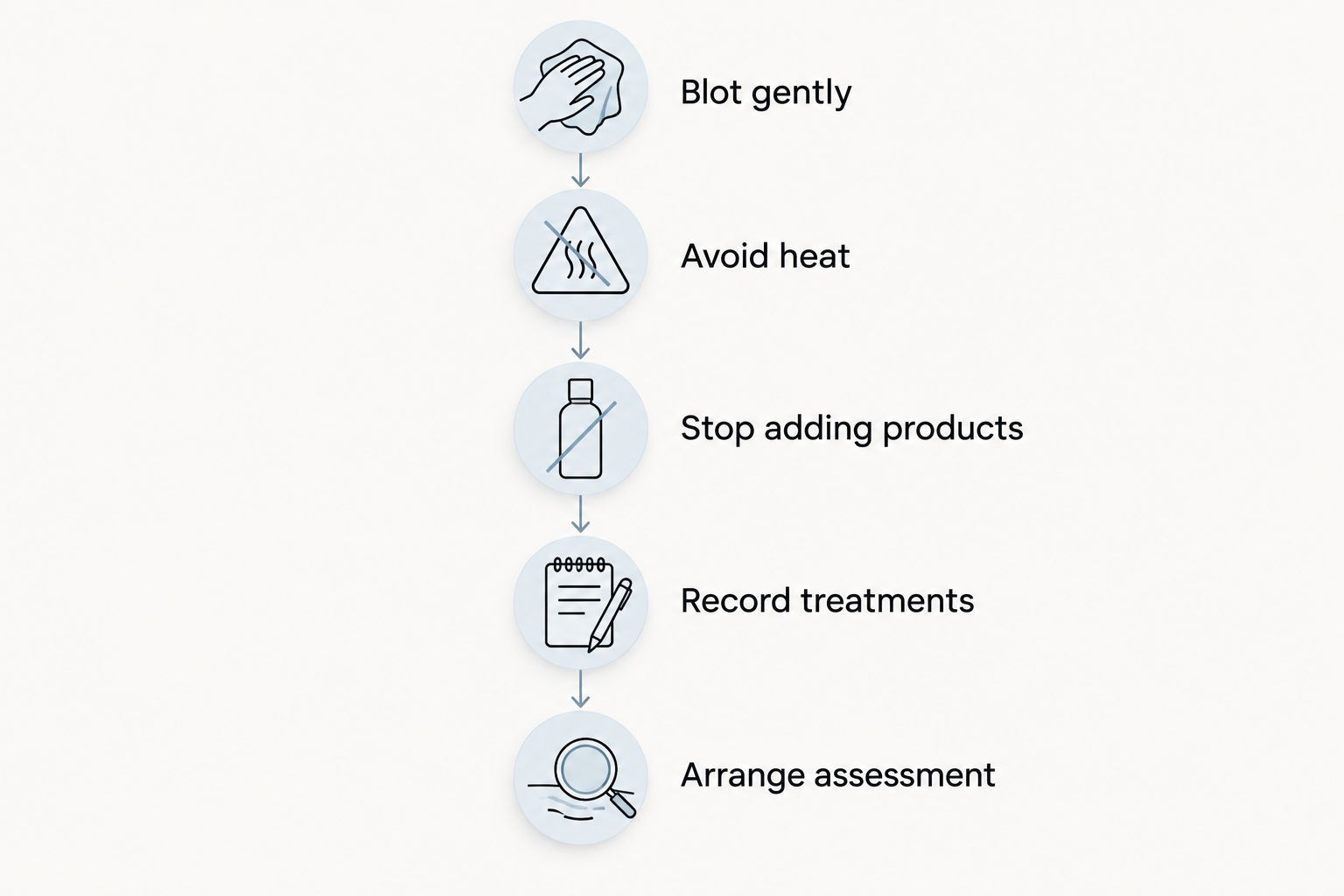
- Blot gently. Use a clean white absorbent cloth and press rather than rub. Work from the outside toward the center, moving to a clean part of the cloth as it picks up liquid.
- Avoid heat. Do not use an iron, hair dryer, or steam appliance as an improvised stain treatment. Heat-based spotting requires control over the fiber, product, and process.
- Stop adding products. Do not layer bleach, peroxide, vinegar, dish detergent, or other cleaners onto an unknown carpet. Never mix cleaning chemicals.
- Record treatments. Note what spilled, when it happened, and anything already applied. Keep the product containers or photographs of their labels for the technician.
- Arrange assessment. Tell the cleaner whether the carpet is wool or another known fiber, whether the spot has dried, and whether its color changed during home treatment.
These steps preserve useful information and avoid unnecessary chemical exposure. If your carpet manufacturer provides specific spill instructions, follow those instructions rather than an unrelated online recipe.
Do not keep working at a spot simply because it remains visible. Once blotting stops transferring liquid, repeated rubbing adds friction without establishing whether the remaining color is safely removable.
Fresh red wine spills: remove liquid before treating color
A fresh spill gives you an opportunity to lift liquid before it spreads farther into the carpet. Use clean sections of the cloth rather than pressing the wine back into the pile.
Best for a fresh spill: careful blotting and an early assessment. The advantage is that you can remove unabsorbed wine without choosing a chemical treatment. The limitation is that blotting alone does not establish whether the remaining pigment will release.
Avoid pouring water over the spot. Excess liquid can move the spill beyond the visible area and make drying more difficult. If the carpet's care instructions call for a cleaning solution, use only the specified product and method.
Dried red wine stains: assessment comes before stronger chemistry
A dried wine stain is not automatically permanent. It does, however, require a different expectation from a spill that is still transferring onto a cloth.
Best for a dried stain: targeted spotting after a compatibility test. A professional can assess whether the remaining mark is residue, persistent wine discoloration, or damage related to earlier treatment. The limitation is that a test can reveal that further treatment would risk the carpet's own dye.
Do not judge a dried stain by a photograph alone. A picture helps show its location and size, but it cannot reliably establish fiber content, colorfastness, or the condition of the backing.
Previously treated wine stains: disclose every product
Tell the cleaner about every home treatment, even if it seemed harmless or did not change the stain. Dish detergent, stain sprays, peroxide, and rented-machine solutions all belong in that history.
Best for a previously treated spot: a complete product history before additional cleaning. That information helps the technician avoid incompatible treatments and identify residue. Its limitation is simple: disclosing a product does not undo damage it has already caused.
Describe changes as well as products. A red mark that became pale, orange, or noticeably lighter after treatment needs a different assessment from an untouched wine spill. Do not assume every remaining color is still wine.
Why red wine stain removal varies
The same treatment does not suit every carpet. These factors determine both the possible result and the point at which further treatment should stop:
- Fiber type: Wool, nylon, polyester, and other fibers have different care requirements. A product suitable for one carpet is not automatically suitable for another.
- Original carpet dye: Stain treatment must preserve the carpet's intended color. A cleaner needs to distinguish wine discoloration from dye loss.
- Time since the spill: Fresh liquid and dried residue present different cleaning conditions. Age alone does not establish whether removal is possible.
- Previous products: Earlier treatments can leave residue, alter the stain's appearance, or affect the carpet itself. Product names matter more than a description such as household cleaner.
- Depth of penetration: Liquid that reaches below the surface pile is harder to assess from above. The visible spot does not necessarily show the full affected area.
- Safe treatment response: A test determines whether a product improves the stain without unacceptable changes. Continuing after the carpet shows damage is not progress.
This is why a blanket removal promise is less useful than a clear explanation of the test result. Ask what improved, what remains, and what risk another treatment would introduce.
Does low-moisture carpet cleaning remove wine stains?
Low-moisture cleaning and wine-stain treatment address related but different needs. A cleaning method describes how the carpet is cleaned; successful spotting also depends on selecting a treatment compatible with the stain and fiber.
Michaels Carpet Care uses Host Dry low-moisture technology and describes its carpet cleaning as using about 10% of the water used by steam cleaning, with drying in 1–2 hours. Those figures describe the cleaning approach, not a guarantee for red wine removal or every treated spot.
Michaels Carpet Care is best for North Texas homeowners seeking gentle-first carpet cleaning. The service covers McKinney, Frisco, Plano, and Allen, and starts with gentle products before moving to stronger treatment when needed. The limit remains the carpet: cleaning cannot restore dye that has been permanently removed.
For your 2026 appointment, ask Michaels Carpet Care about the wine stain specifically rather than booking on drying time alone. Explain whether you need a single spot assessed or the surrounding room cleaned as well.
Ask about your wine stain
Share the spill history and previous treatments before choosing carpet cleaning.
Can professional cleaning remove an old red wine stain?
Professional cleaning can remove an old red wine stain if the discoloration responds safely to treatment. There is no reliable age cutoff that turns every wine stain permanent.
For an older stain, tell the technician whether previous cleaning lightened it, spread it, or changed its color. That history helps separate a persistent stain from treatment damage and avoids repeating an unsuccessful approach.
Will steam cleaning remove red wine from carpet?
Steam cleaning, commonly used to describe hot-water extraction, does not guarantee red wine removal. Extraction can remove soil and treatment residue, while the remaining discoloration can require separate spotting.
Ask how the cleaner will test the spot and protect the fiber. Choosing by machine type alone leaves out the decisions that determine whether treatment is appropriate.
Why did the wine stain come back after cleaning?
A wine stain can reappear when moisture carries residue from deeper in the carpet toward the surface during drying, a process called wicking. Reappearance does not, by itself, prove that the original cleaning caused permanent damage.
Contact the cleaner before applying another product. Note whether the returning mark is the same size, whether it feels sticky, and whether it appeared only after the area dried.
What should you ask before booking carpet cleaning in 2026?
A useful conversation focuses on the carpet and the spill, not a universal promise. Ask for an explanation you can understand before treatment begins.
- Will you test the carpet's colorfastness before treating the wine?
- Does the planned service include assessing this spot?
- What result would make you stop rather than use a stronger product?
- Does the spill appear to extend below the surface pile?
- When should I inspect the final result after drying?
You should leave that conversation knowing the proposed next step and its limits. A technician who distinguishes improvement from complete removal gives you a clearer basis for deciding than one who promises an identical result for every carpet.
FAQ
Can professional carpet cleaning remove wine stains completely?
Professional carpet cleaning can remove wine stains completely when the discoloration responds to a treatment that is safe for the carpet. Permanent dye damage or color loss can remain even after the wine residue is removed.
Should I scrub a fresh red wine spill?
Do not scrub a fresh red wine spill; blot it gently with a clean white absorbent cloth. Scrubbing adds friction and can spread the spill or damage the pile.
Is a dried red wine stain always permanent?
A dried red wine stain is not always permanent. A professional assessment and compatibility test establish whether further treatment is appropriate.
Can I put hydrogen peroxide on a red wine carpet stain?
Do not apply hydrogen peroxide to an unknown carpet without manufacturer guidance and a suitable compatibility test. It can affect the carpet's own color as well as the stain.
How long does Michaels Carpet Care say carpet takes to dry?
Michaels Carpet Care describes drying in 1–2 hours for its low-moisture carpet cleaning. Confirm the expected drying conditions for your appointment and any separate wine-spot treatment.
Does a lighter patch mean the wine stain is gone?
A lighter patch does not necessarily mean the wine stain is gone; it can indicate loss of the carpet's original dye. Cleaning removes residue but does not replace missing color.
Should I wait until the carpet dries to check the result?
Check the final appearance after the carpet dries because moisture changes how the area looks. Report returning discoloration to the cleaner before adding another treatment.
One last thing
A perfectly pale spot is not always a successful result. If treatment removes the carpet's own color along with the wine, the stain has been exchanged for a different problem.
Before your 2026 cleaning, photograph the dry stain and save the labels of anything you applied. After cleaning, inspect the dry carpet under similar lighting. That gives you a more useful comparison than judging a damp spot immediately after treatment.