Wait until your carpet is dry before returning to normal walking after cleaning; for the fast-drying service described here, the stated drying guideline is 1–2 hours, not a universal deadline. Damp areas, added treatments, and your cleaner’s instructions take priority over the clock. This 2026 guide explains how to check the carpet, handle an unavoidable crossing, and decide when furniture and everyday activity can return.
- How long to wait to walk on carpet after cleaning depends on dryness, not just elapsed time.
- Michaels Carpet Care describes fast-drying carpet cleaning with a 1–2 hour drying guideline; check before resuming normal traffic.
- Keep children, pets, and furniture off damp carpet until drying and any treatment instructions allow their return.
- If crossing is unavoidable, ask your cleaner about limited access and take care at carpet-to-tile transitions.
Why this matters
A carpet that looks finished is not necessarily ready for normal use. Walking across damp fibers introduces dirt from footwear, while moving straight onto a smooth floor creates a separate slipping concern.
Treat drying time as a checkpoint, not permission by itself. The guide to carpet drying after professional cleaning explains the broader drying question; this page focuses on when you should put feet, paws, and furniture back on the cleaned surface.
Before your 2026 cleaning appointment ends, get separate instructions for necessary walking, unrestricted household use, and replacing furniture. Those activities do not place the same demands on a freshly cleaned carpet.
How long should you wait to walk on carpet after cleaning?
Wait until the carpet is dry and your cleaner has cleared any treatment restrictions before resuming normal traffic. If you must cross earlier, ask whether limited access is appropriate for the method and products used.
Use this comparison to distinguish a necessary crossing from reopening the whole room:
| Activity | Best for | When to proceed | Benefit | Limitation |
|---|---|---|---|---|
| Keep the room closed | Households that can use another room | Until the carpet is dry and treatment instructions permit use | Avoids unnecessary traffic during drying | Temporarily removes the room from use |
| Make a necessary crossing | Reaching an essential room or exit | Only when your cleaner permits limited access | Preserves essential access | Does not mean normal traffic is appropriate |
| Resume normal walking | Everyday household or workplace use | After checking representative areas for dryness | Restores ordinary use of the room | A dry doorway does not establish that every area is dry |
| Return furniture | Restoring the room layout | When the carpet and furniture-contact areas are dry, following the cleaner’s directions | Lets you finish putting the room back together | Moving furniture too early can trap moisture or transfer staining |
Avoid using the first dry-looking patch as your test for the entire room. Check the route you need to use and any area that received extra attention during cleaning.
Fast-drying service: 1–2 hours, then check
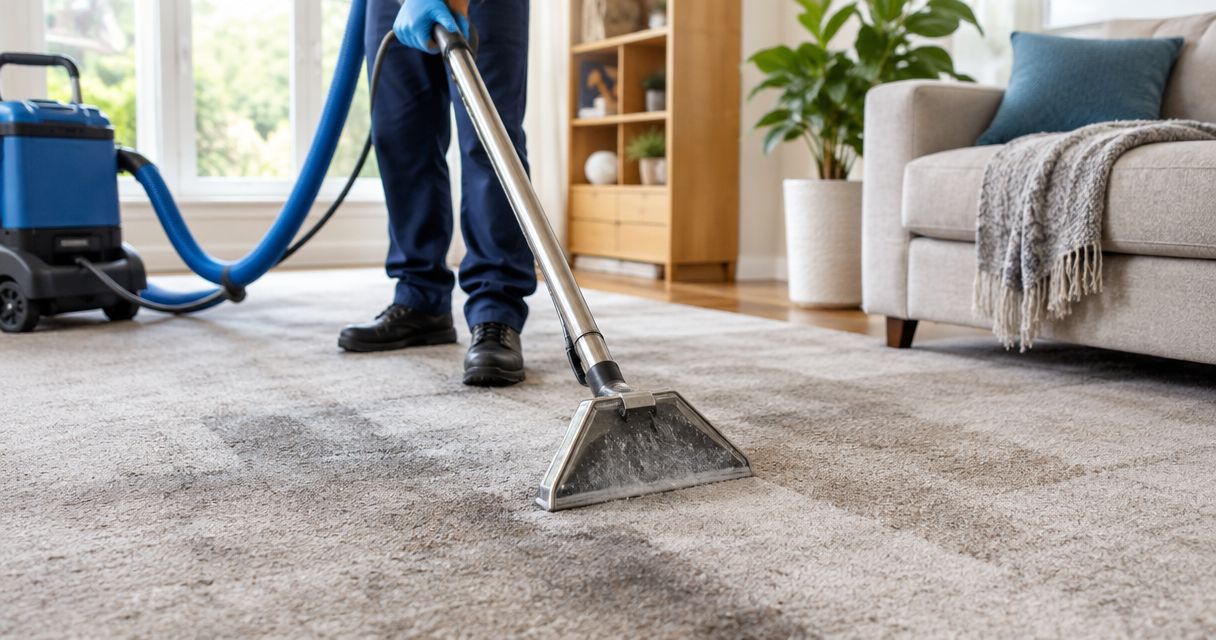
Michaels Carpet Care describes its fast-drying carpet cleaning with a 1–2 hour drying guideline and Host Dry low-moisture technology. Its brand guidance describes water use as about 10% of what steam cleaning uses. That lower-moisture approach addresses the amount of water introduced, but it does not replace a check of the actual carpet.
For your 2026 booking, confirm which method applies to your carpet and whether spot treatments change the instructions. A service-level drying statement is not a promise that every treated area will be ready at the same moment.
The practical advantage is a shorter stated drying window. The limitation is that a clock cannot tell you whether a particular spot remains damp or whether an added treatment requires a separate waiting period.
Use the 1–2 hour guideline to plan a check, not to skip one. If an area still feels damp, keep normal traffic off it and ask the cleaner for direction rather than assuming the guideline guarantees readiness.
How do you check whether carpet is ready for walking?
Check more than the visible surface near the entrance. A useful inspection includes the room’s main walking route, a less ventilated area, and any spot that needed additional treatment.
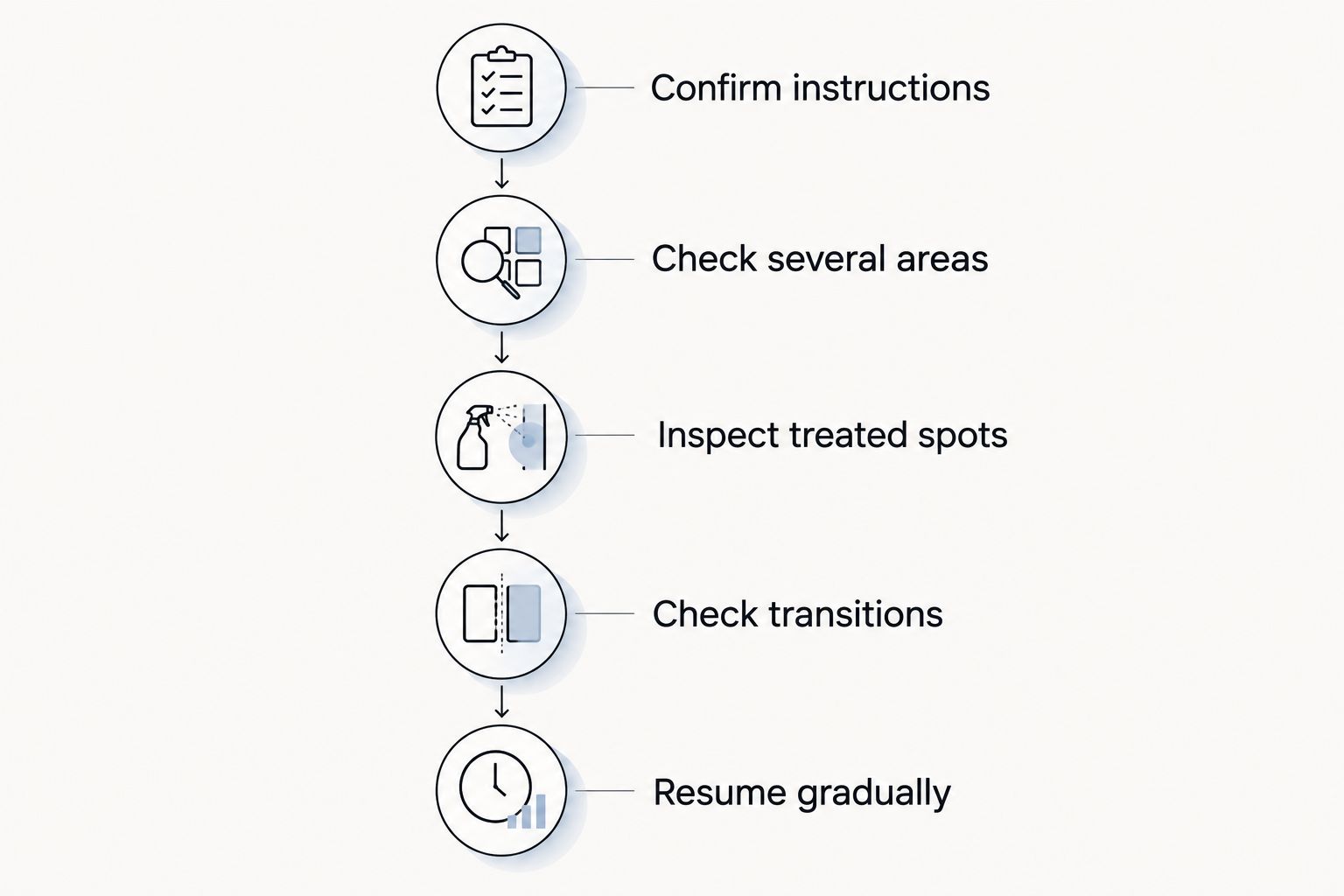
- Confirm instructions. Ask which cleaning method was used and whether any treatment has its own access restrictions. Follow the carpet manufacturer’s care guidance as well.
- Check several areas. With a clean, dry hand, gently feel representative sections of the pile. Notice dampness rather than relying only on appearance.
- Inspect treated spots. Check areas the cleaner identified as needing extra work. Do not assume they match the surrounding carpet.
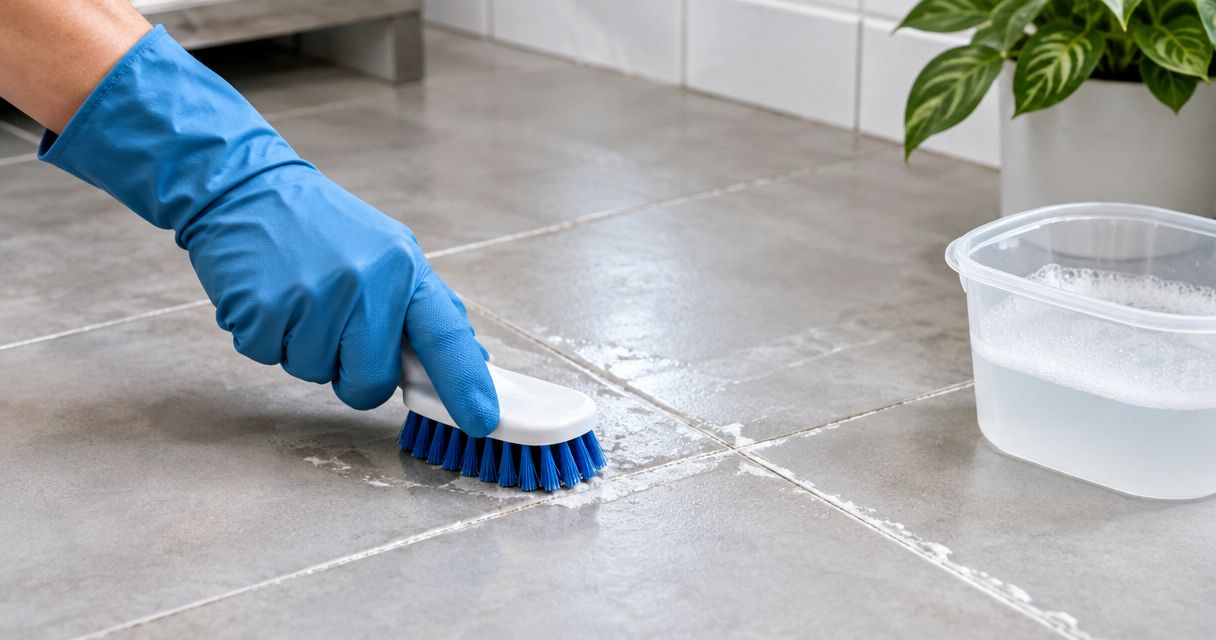
- Check transitions. Look at where carpet meets tile, stone, or another smooth surface. Avoid carrying moisture onto the adjacent floor.
- Resume gradually. Reopen the room when it is dry and any treatment restrictions have ended. Keep furniture decisions separate from the first walking check.
This is a practical household check, not a measurement of moisture inside the backing or underlay. If the carpet seems unusually wet, has a new musty odor, or is not drying as the cleaner described, contact the provider rather than repeatedly testing it with foot traffic.
Why the waiting time varies
Drying depends on both the moisture left in the carpet and the room’s ability to remove it. These factors explain why a single waiting period does not fit every cleaning appointment:
- Cleaning method. Different methods introduce and recover moisture differently. Ask about the method actually used rather than treating every service as steam cleaning.
- Additional spot treatment. A heavily treated area needs its own check. The cleaner should identify any places that require different aftercare.
- Carpet construction. Fiber, pile, backing, and the underlying installation affect where moisture remains. Surface appearance alone does not establish dryness throughout the carpet.
- Air movement. Air circulating across the cleaned area supports evaporation. Furniture and closed-off spaces can limit that circulation.
- Indoor humidity. Moisture evaporates less readily into already humid air. Opening a window is not automatically helpful when outdoor air is humid.
- Room temperature. Temperature affects evaporation, but excessive heat is not a substitute for appropriate ventilation and the cleaner’s instructions.
For a 2026 cleaning appointment, give the provider useful information before work starts: whether the room has limited ventilation, whether you need access to a bedroom, and whether pets must pass through it. That lets you agree on an access plan instead of improvising afterward.
Can you walk on damp carpet if you really need to?
Necessary access is different from normal use. Ask your cleaner before crossing damp carpet, especially if a protector or another finishing treatment was applied.
If limited access is permitted, use clean indoor footwear suitable for the conditions and keep the route short. Do not assume disposable shoe covers are slip-resistant; their traction varies, and stepping from damp carpet onto tile or stone deserves particular care.
Avoid turning a permitted crossing into repeated trips, exercise, or moving boxes through the room. Each trip creates another opportunity to bring soil onto the damp surface.
If the carpet blocks your only practical route to a bathroom or exit, discuss that before cleaning begins. Arrange the cleaning order around essential access wherever possible, rather than discovering the problem after the room is wet.
When can children and pets return to the room?
Children and pets should return when the carpet is dry and the product-specific re-entry instructions allow it. Walking readiness alone does not answer whether crawling, floor play, or contact with treated fibers is appropriate.
Keep toys, pet bedding, and floor cushions outside the cleaned area while it dries. Bring them back clean so you do not immediately reintroduce soil to the carpet.
For a pet that must pass through, ask about a supervised route rather than reopening the whole room. If your pet has an accident before the carpet is dry, tell the cleaner what happened before applying another product.
An eco-friendly service description does not replace individual product instructions. Ask directly about the products used, especially when a household member or animal has a known sensitivity.
When can you put furniture back after carpet cleaning?
Return furniture when the carpet is dry and the cleaner says it is appropriate to remove any protective blocks or tabs. Furniture contact deserves a separate decision because legs and bases cover the surface and restrict airflow underneath.
Wood finishes and metal components can also transfer marks under damp conditions. Leave the cleaner’s protective materials in place until the stated removal point; do not remove them simply because you can walk across the room.
Avoid dragging furniture over freshly cleaned carpet. Once the room is ready, lift pieces carefully and check the contact areas before restoring the full layout.
Treat rugs and floor cushions the same way: do not cover damp carpet. A surface that is ready for a brief crossing is not automatically ready to sit underneath a broad, moisture-trapping object.
How should you plan cleaning around a busy household?
Choose the access plan before choosing when everyone returns to the room. Set aside another place for children, pets, and frequently used belongings, and move essential items before cleaning starts.
For your 2026 appointment, ask the provider to explain the expected drying window, identify exceptions, and show you any areas that need extra attention. Leave with clear instructions rather than a general assurance that the room will be ready soon.
Michaels Carpet Care is best for North Texas homeowners and businesses seeking eco-friendly, fast-drying carpet cleaning. The service covers McKinney, Frisco, Plano, and Allen; discuss your access needs with Michaels Carpet Care before scheduling.
The fit is practical when reducing disruption matters. The boundary remains the same: fast-drying does not mean every carpet, treatment, and room has an identical return-to-use time.
FAQ
How long should I wait to walk on carpet after cleaning?
Wait until the carpet is dry and any treatment-specific restrictions have ended before resuming normal walking. Michaels Carpet Care describes a 1–2 hour fast-drying guideline, but you should check the actual carpet rather than rely only on elapsed time.
Can I walk on freshly cleaned carpet in clean socks?
Clean socks do not make damp carpet ready for normal traffic. Ask the cleaner whether limited walking is permitted, and take care when moving onto smooth flooring.
Is low-moisture carpet cleaning immediately dry?
Low-moisture carpet cleaning does not automatically mean immediately dry. Follow the method-specific instructions and check treated areas before reopening the room.
Can my dog walk on carpet right after cleaning?
Keep your dog off the carpet until it is dry and the cleaning product instructions permit re-entry. Ask the cleaner about a supervised crossing if the room blocks an essential route.
Can I put my sofa back as soon as I can walk on the carpet?
Walking readiness does not automatically mean the carpet is ready for furniture. Follow the cleaner’s directions for replacing the sofa and removing protective blocks or tabs.
Should I open windows to help cleaned carpet dry?
Open windows only when outdoor conditions support drying and the cleaner recommends it. Humid outdoor air is not automatically helpful; suitable indoor air circulation can be the better choice.
What should I do if my carpet is still damp after the expected drying time?
Keep normal traffic off damp areas and contact the cleaner for advice. Explain where the dampness remains, whether those spots received extra treatment, and what airflow the room has.
One last thing
The doorway deserves as much attention as the carpet. Even when a necessary crossing is permitted, moisture carried onto nearby tile or stone creates a different problem from damp fibers.
Before reopening the room, check the exit route as well as the cleaned area. That small final check helps you separate carpet readiness from safe movement through the rest of your home.