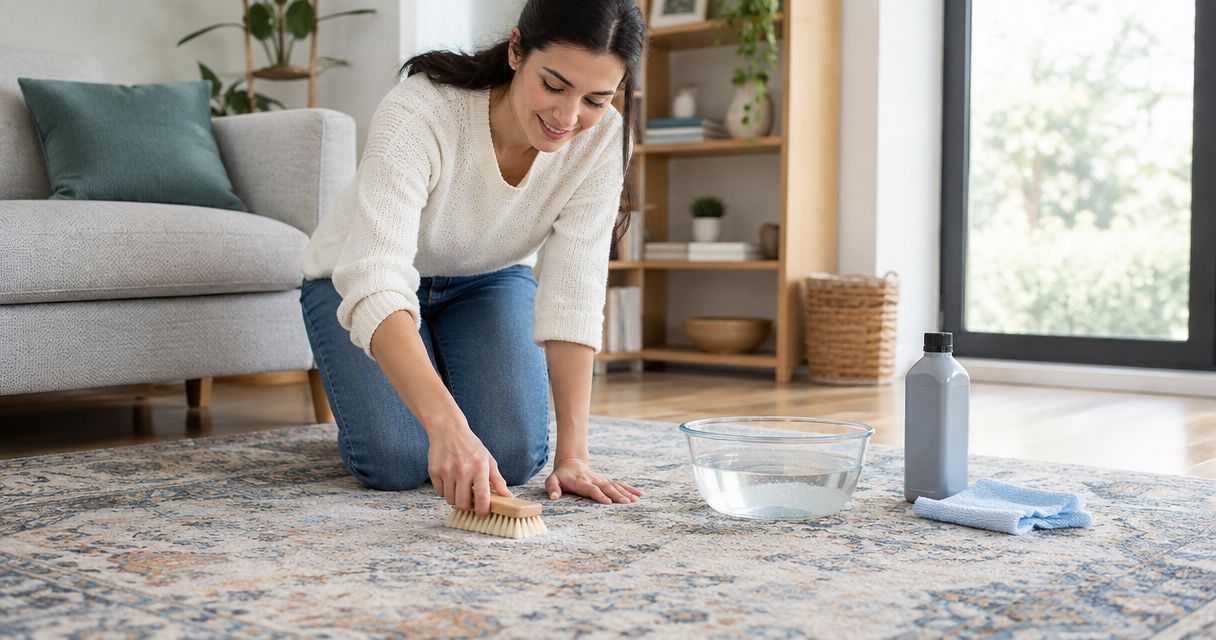
Yes, you can clean an area rug at home instead of hiring a pro when its care instructions permit the method, its dyes stay stable during testing, and you can dry it thoroughly. For your 2026 cleaning plan, keep routine vacuuming and permitted spot treatment at home, but get a rug specialist’s assessment before wet-cleaning delicate, valuable, damaged, or unidentified rugs.
- Can you clean an area rug at home instead of hiring a pro? Yes, when its care instructions allow it.
- Vacuuming and permitted spot cleaning are different from washing an entire area rug.
- Michaels Carpet Care offers eco-friendly carpet cleaning in North Texas; confirm suitability separately for your area rug.
- Choose a rug specialist when fiber, dye stability, backing, or drying requirements are uncertain.
Can you clean an area rug at home instead of hiring a pro?
Home cleaning is appropriate only when the rug and the cleaning method are compatible. A washable label supports washing according to its instructions; a synthetic-fiber label alone does not. Backing, adhesives, fringe, dyes, and construction also matter.
For local carpet-cleaning help, Michaels Carpet Care serves homeowners and businesses in McKinney, Frisco, Plano, and Allen. Ask separately whether your particular area rug is suitable for the service you need.
| Approach | Best for | Main benefit | Main limitation |
|---|---|---|---|
| Routine vacuuming | Loose, dry surface soil | Removes debris without wetting the rug | Does not treat absorbed spills or embedded contamination |
| Label-approved spot cleaning | A small, fresh spill | Limits treatment to the affected area | Can leave discoloration or a visible treatment boundary |
| Label-approved home washing | Rugs explicitly labeled washable | Allows whole-rug cleaning at home | Requires suitable equipment, handling, and complete drying |
| Professional rug assessment | Delicate, valuable, damaged, or unidentified rugs | Matches treatment to the rug’s materials and condition | Requires arranging service; permanent damage can remain |
Why this matters
An area rug is not simply a loose piece of installed carpet. Its face fibers can tolerate a treatment that its backing, adhesive, or dyes cannot. Cleaning the visible surface successfully does not prove the whole rug has tolerated the process.
For your 2026 decision, separate maintenance from restoration. You can remove loose dirt routinely without attempting to correct deep staining, recurring odor, dye damage, or a deteriorating backing. A stain that survives gentle treatment is a reason to reassess, not to keep adding cleaner.
Make 3 checks before you wet the rug
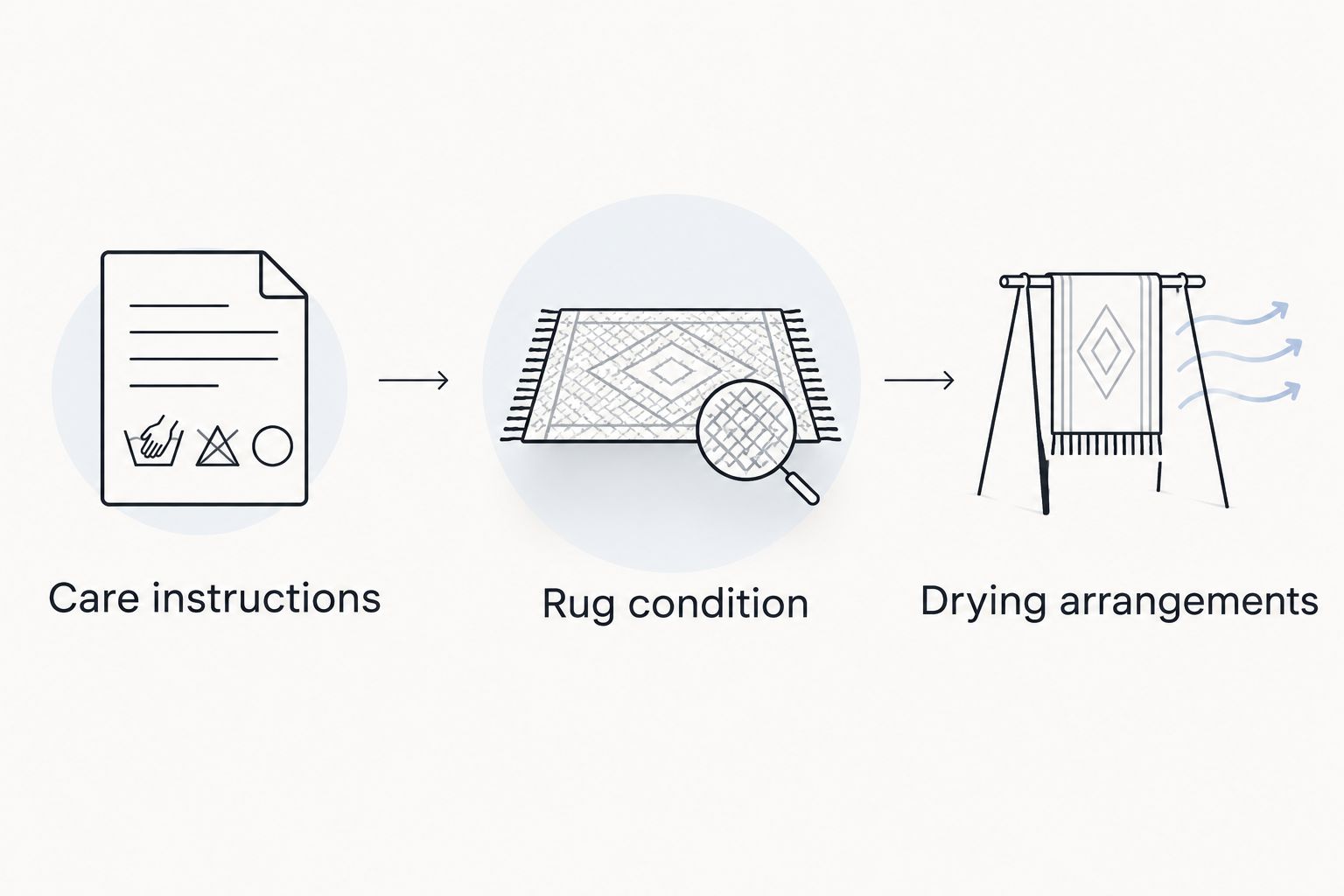
These 3 checks establish whether a home method is appropriate: care instructions, condition, and drying arrangements. If you cannot resolve any of them, stop before applying water or cleaning solution.
Care instructions
Find the sewn-in label and any manufacturer guidance. Identify the fiber, permitted cleaning method, drying instructions, and restrictions on agitation or heat. Follow those instructions rather than a general online recipe.
A missing label is not permission to experiment. If you cannot identify the material or construction, restrict your work to gentle maintenance that does not damage the rug, then seek an assessment.
Rug condition
Look at the face, edges, fringe, and underside before cleaning. Loose stitching, brittle backing, existing color bleeding, and separated layers are reasons to avoid washing the rug yourself.
Photograph visible stains and damage before starting. That gives you a useful record when discussing treatment with a cleaner and helps distinguish an existing mark from a change caused by cleaning.
Drying arrangements
Decide where the rug will dry before introducing moisture. You need a location that follows the manufacturer’s directions and protects the floor underneath from dampness or transferred dye.
A rug that is manageable while dry can become difficult to move when wet. If you cannot handle and dry it safely, whole-rug washing is not a practical home job, even when the care label permits washing.
How to clean an area rug at home in 6 steps
These 6 steps apply to routine maintenance and label-approved spot treatment. They are not instructions for immersing every rug, using a rental extractor, or machine-washing a rug without explicit permission.
1. Remove loose soil
Vacuum using the setting and attachment appropriate for the rug. Keep rotating brushes away from loose fringe and damaged edges; follow the manufacturer’s advice for delicate piles.
If the instructions allow it, clean the underside and the floor beneath the rug too. Do not drag a dirty backing across a delicate floor or assume that vigorous shaking is safe for weakened edges.
2. Blot a fresh spill
Lift solid material carefully, then blot liquid with a clean, absorbent white cloth. Avoid rubbing: friction can spread the spill and disturb the pile.
Work gently and keep checking the cloth. If you see the rug’s own color transferring, stop wet treatment and ask a rug specialist how to proceed.
3. Check the proposed cleaner
Use only a product and method compatible with the rug’s care instructions. A cleaner intended for installed carpet is not automatically suitable for every area rug.
Do not mix cleaning products or improvise stronger combinations. A household ingredient being familiar, plant-derived, or described as natural does not establish that it is suitable for your rug’s dyes and fibers.
4. Test an inconspicuous area
Test the permitted solution on a hidden area according to the product and rug instructions. Check for color transfer, texture changes, and visible discoloration, including after the test area dries.
A successful test reduces uncertainty; it does not guarantee that whole-rug washing is safe. Different colors, worn areas, and backing components can respond differently to treatment.
5. Treat only the affected area
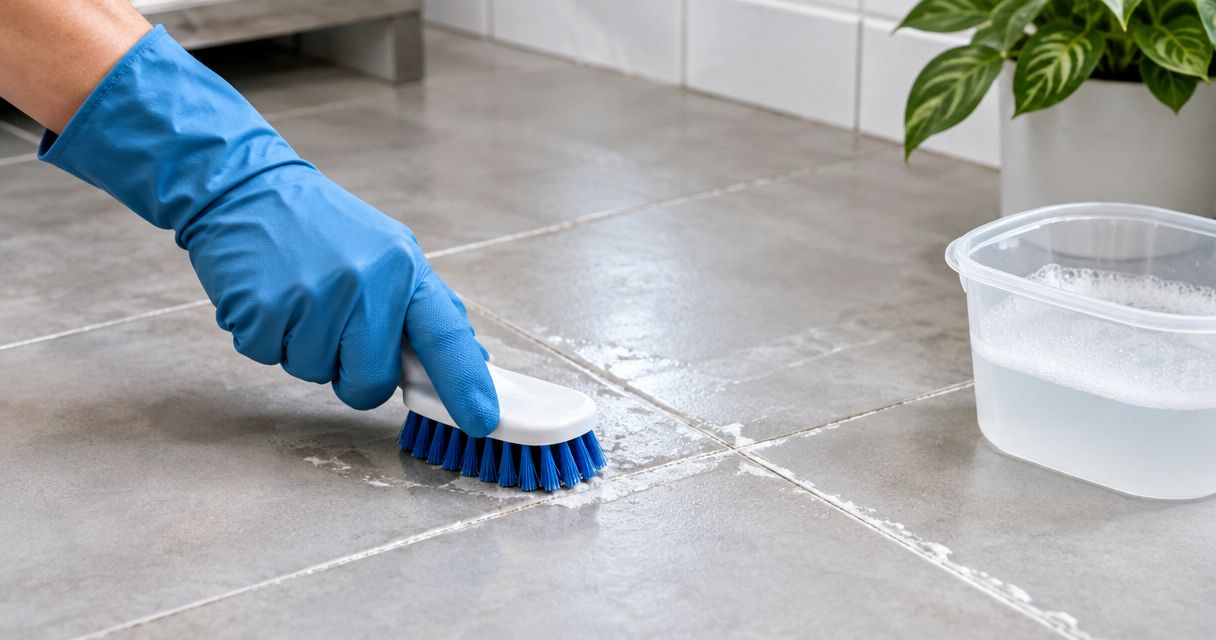
Apply the approved treatment as directed and avoid unnecessary wetting. Blot rather than scrub, and remove treatment residue only as the instructions specify.
Do not repeatedly soak a stubborn mark. If the stain spreads, color transfers, or the texture changes, stop and document what you used before contacting a professional.
6. Dry and inspect
Follow the rug’s drying instructions and keep it off moisture-sensitive flooring while damp. Check 2 surfaces—the face and the underside—before returning it to normal use.
Do not roll, stack, or replace a damp rug over its pad. For your 2026 cleaning checklist, make drying a required finishing step rather than an assumption based on how the pile feels.
For a broader comparison before choosing equipment, see area rug cleaning methods compared. A method suitable for one construction can be unsuitable for another.
When should you hire a rug specialist?
Hire a rug specialist when cleaning requires more certainty than your label and home setup provide. Professional assessment is especially useful when the consequences of a mistake extend beyond a remaining stain.
- Delicate or unidentified fibers: Ask for fiber identification and a suitable treatment plan before wet cleaning.
- Handmade, antique, or valuable rugs: Discuss construction, dyes, condition, and preservation priorities rather than requesting a generic carpet treatment.
- Color transfer or existing bleeding: Stop home wet treatment; further moisture can spread the problem.
- Damaged backing or edges: Have the condition assessed before adding agitation or moisture.
- Recurring odor or extensive contamination: Identify whether the rug, pad, floor, or several layers need attention.
Professional cleaning also has limits. It cannot promise to reverse fiber wear, restore missing dye, or repair every stain, and some rugs need repair or specialist treatment beyond cleaning. Ask what improvement is realistic before approving the work.
Michaels Carpet Care is best for North Texas homeowners seeking eco-friendly carpet cleaning. For an area rug, first confirm material suitability, the proposed process, and whether a rug specialist is needed; do not transfer a carpet-cleaning promise to a different textile.
Why the right area rug cleaning method varies
The useful question is not whether home cleaning is always better or worse. It is whether the chosen method fits the rug and the problem.
- Fiber: Wool, silk, synthetic fibers, and plant fibers do not share identical cleaning requirements.
- Construction: Woven, tufted, glued, and layered rugs can respond differently to moisture and handling.
- Dye stability: A treatment can lift soil while also moving color into neighboring areas.
- Type of contamination: Dry grit, a fresh beverage spill, and absorbed pet urine require different decisions.
- Existing condition: Worn fibers, loose edges, and failing backing change what treatment the rug can tolerate.
- Drying conditions: A permitted wet-cleaning method still requires a workable way to dry the whole rug.
Use these factors when comparing services in 2026. A useful explanation connects the proposed treatment to your rug; “we clean all carpets the same way” does not answer the material question.
Can I use a carpet-cleaning machine on my area rug?
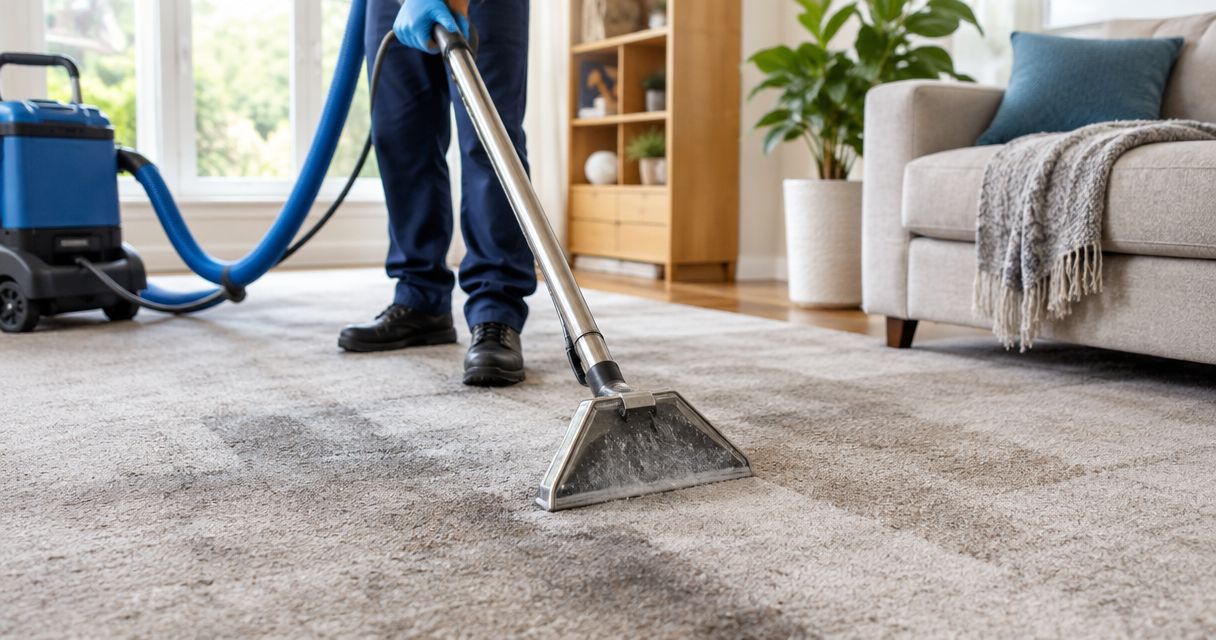
Use a carpet-cleaning machine only when the rug manufacturer permits that method and the machine’s instructions support it. The fact that a machine can pass over a rug does not establish that its moisture, agitation, or cleaning solution is appropriate.
Be especially cautious when the rug sits directly over wood or another moisture-sensitive surface. Protecting the floor is part of the job, not a separate concern after cleaning begins.
Can I wash an area rug outside with a hose?
Do not hose down an area rug unless its care instructions explicitly permit that washing method. Outdoor space does not solve dye instability, fragile construction, backing damage, or the difficulty of drying a saturated rug.
Likewise, sunlight is not a substitute for checking the drying directions. Follow the manufacturer’s instructions for exposure, support, and handling rather than leaving a wet rug outside indefinitely.
Will home cleaning remove pet urine odor completely?
Home spot cleaning does not guarantee complete pet urine odor removal. Liquid can reach the backing, pad, and floor, so treating only the visible patch can leave contamination elsewhere.
Tell the cleaner where accidents occurred and which products you already used. A realistic plan identifies affected layers and explains any limits on odor removal without promising that fragrance or surface cleaning will solve everything.
FAQ
Can you clean an area rug at home instead of hiring a pro?
Yes, when the rug’s care instructions permit your chosen method and you can dry it thoroughly. Use a rug specialist when the material, dyes, backing, or condition makes home treatment uncertain.
What’s the safest way to start cleaning an area rug?
Start by reading the care instructions and removing loose soil with a suitable vacuum setting. Before any permitted wet treatment, test an inconspicuous area and check for color transfer or texture changes.
Can I put my area rug in the washing machine?
Machine-wash an area rug only when its care label permits it and your washer can accommodate it according to the appliance instructions. Follow the rug’s washing and drying directions rather than selecting a cycle by guesswork.
Is a synthetic area rug always safe to shampoo?
No, synthetic fibers do not make every rug safe to shampoo. Backing, adhesives, dyes, and construction can impose different restrictions from the face fibers.
Can I use vinegar or baking soda on every rug?
No, vinegar and baking soda are not universal rug treatments. Use only a product and method compatible with the rug’s care instructions, and avoid mixing cleaners.
How long does an area rug take to dry after home cleaning?
There is no single drying time for every area rug. Moisture level, construction, airflow, and the drying method affect the result; check the face and underside before replacing the rug over its pad.
Does professional cleaning guarantee every rug stain will disappear?
No, professional cleaning does not guarantee removal of every stain. Permanent dye changes, fiber damage, and prior treatments can limit the result, so ask for an assessment before work begins.
One last thing
The underside can change the decision even when the top looks washable. Before your next 2026 cleaning session, turn back a corner and inspect the backing, label, edges, pad, and floor beneath.
That simple inspection can reveal a problem you would miss by looking only at the stain. If the backing is deteriorating or the floor is affected, pause the surface treatment and address the full problem first.