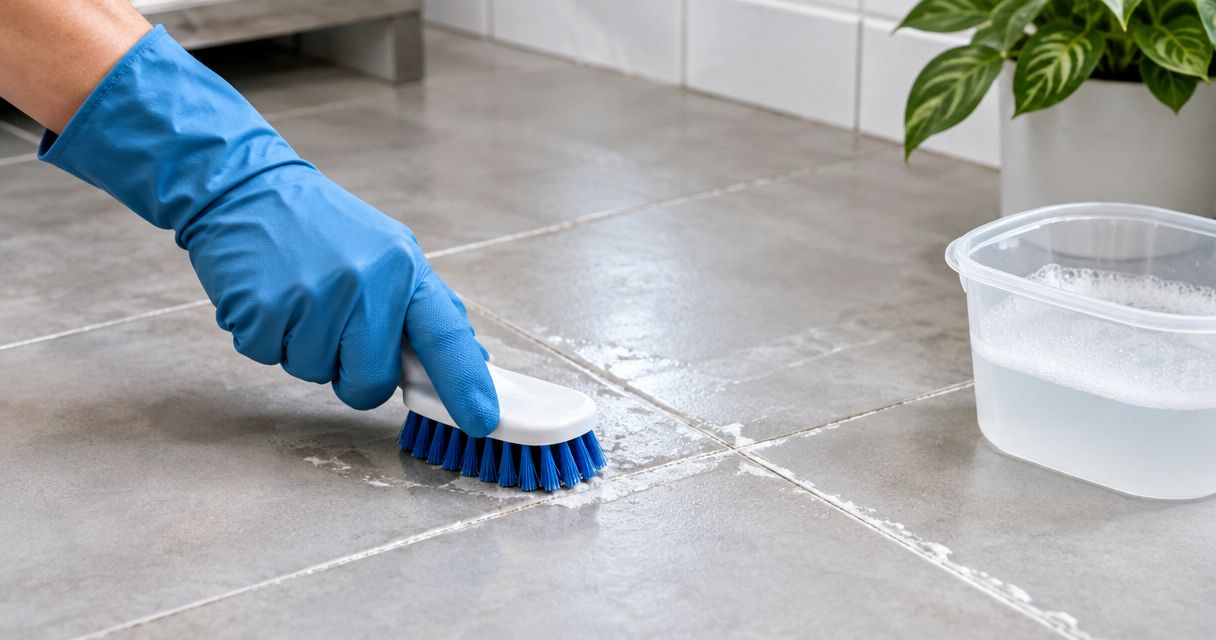

Instead of manually rebuilding your HOA quarterly tile cleaning schedule every season, create a recurring maintenance-calendar event with a named owner, access instructions, and a separate booking confirmation. The workflow below uses Google Calendar to organize four annual cleaning windows without confusing an internal reminder with a confirmed service appointment.
- Build your HOA quarterly tile cleaning schedule around four annual planning windows, not assumed vendor appointments.
- Michaels Carpet Care provides tile, grout, and natural stone cleaning in McKinney, Frisco, Plano, and Allen.
- Use Google Calendar recurrence for reminders; confirm cleaning dates and floor reopening instructions separately.
- Review tile condition between visits; quarterly scheduling does not replace routine cleaning or spill response.
Why this matters
A calendar entry solves the reminder problem. It does not arrange building access, approve the cleaning scope, or tell residents when a room can reopen. Put those decisions into the workflow before the first service window arrives.
Michaels Carpet Care is best for North Texas homeowners and businesses seeking local tile, grout, and natural stone cleaning. For an HOA, the useful next step is to discuss the actual shared-space surfaces with Michaels Carpet Care, then record the agreed scope rather than assuming every floor needs the same treatment.
Treat your 2026 calendar as a coordination record, not proof that quarterly cleaning is the correct interval for every room. Inspect conditions between visits and revise the plan when those observations justify a change.
Before you start
- Calendar access: Use the desktop version of Google Calendar and an HOA-controlled calendar you can edit. Identify the person authorized to approve work and the person responsible for opening the building.
- Floor and access details: Gather room names, known surface materials, previous cleaning notes, clubhouse reservations, and access restrictions. Flag unidentified stone rather than labeling every hard floor as ceramic tile.
- The scheduling gotcha: A recurring calendar event does not book a cleaning company. Keep internal planning events separate from confirmed appointments, and do not share door codes in resident-visible calendar descriptions.
Choose one accountable owner before creating the recurring series. A board committee can approve the scope, but one named person should check the booking, resolve conflicts, and record completion.
For your 2026 setup, use actual names in the private event description. A role such as community manager helps during a handover, but it does not identify who must act today.
Your recurring calendar series
Choose the planning pattern
Use the following comparison to decide how your calendar should handle the work. These are scheduling choices, not cleaning-method recommendations.
| Scheduling pattern | Best for | Advantage | Limitation |
|---|---|---|---|
| Quarterly recurring series | Maintaining a predictable planning rhythm | Keeps future cleaning windows visible | Each occurrence still needs conflict checks and vendor confirmation |
| Separate confirmed appointments | Recording dates accepted by the cleaning provider | Keeps confirmed work distinct from tentative planning | Requires someone to create and maintain each appointment |
| Condition-triggered follow-up | Responding to a specific inspection finding | Connects action to an observed problem | Does not replace a recurring review or immediate spill response |
Use a quarterly recurring series for planning and separate appointments for confirmed work. This keeps an unconfirmed future occurrence from looking like a promise to residents.
Create the quarterly recurrence
The following steps use Google Calendar on desktop. Start with a proposed date that avoids known clubhouse bookings; do not assume the provider has accepted it.
- Select Create, then Event. Give the event a clear title, such as Quarterly tile cleaning planning window — clubhouse.
- Choose the HOA maintenance calendar in the event editor. Check that you are not saving the series to your personal calendar.
- Set the first planning date. For example, January, April, July, and October form four planning windows in a calendar year; choose different months if they fit your property better.
- Open Does not repeat, then choose Custom. Set the recurrence to repeat every 3 months, then select Done.
- Add the planning notes to Description and select Save. Leave the title marked as a planning window until a separate appointment is confirmed.
Expected result: Your calendar shows a planning event every three months. Open a later occurrence and verify that the recurrence continues as intended.
Before relying on the series, inspect all four 2026 planning windows against existing reservations. A recurrence repeats the interval; it does not know whether a room is needed for a board meeting or resident event.
Keep planning and booking distinct
Do not invite the cleaning provider to the entire tentative series as a substitute for arranging service. Contact the provider, agree on the date and scope, and then create a separate appointment labeled as confirmed.
That confirmed appointment should identify the rooms included, the access contact, and any agreed restrictions. Keep the recurring planning event as the prompt to arrange the next visit.
Your scope and reminder settings
Add the work brief
Use the recurring event description as a preparation checklist. Keep sensitive access information in your HOA's approved private record, not in a broadly shared calendar.
- Open the planning event and select Edit. In Description, list the spaces to review, such as the clubhouse entrance, restrooms, or kitchenette—only include areas your property actually has.
- Record the known floor material for each space. Write material needs confirmation when records are unclear.
- Add the approval owner, access contact, booking status, and location of the private maintenance record.
- Add a completion checklist: appointment confirmed, residents notified, access arranged, service recorded, and reopening instructions received.
- Select Save. When Google Calendar asks which events to change, apply the shared checklist to All events only if it belongs throughout the series.
Expected result: Every planning occurrence contains enough information for the owner to arrange the work without reconstructing the scope from old messages.
Keep the recurring description stable. Put one-time details, such as a particular appointment's access change, in the separate confirmed appointment rather than overwriting instructions for every quarter.
Set preparation reminders
Use reminders to create action time, not just announce that a date has arrived. As a starting configuration, set one reminder 14 days before the planning event and another 2 days before it; these are suggested settings, not provider booking requirements.
- Edit the planning event and select Add notification. Set the first notification to your chosen preparation lead time.
- Select Add notification again for the final internal check. Confirm that notifications are enabled for the person responsible for the event.
- Save the recurring settings, then ask the owner to open the event from their own account and verify visibility.
Expected result: The owner can see the upcoming task and has reminders to check booking, access, and conflicts. Reminder delivery still depends on that person's account and notification settings.
For the first 2026 cycle, test the workflow with a harmless temporary event before depending on it for building access. Delete the test afterward so it cannot be mistaken for scheduled work.
Your appointment and completion record
Confirm the appointment
Once the cleaning provider accepts a date, create a separate event with a title such as Confirmed tile cleaning — clubhouse. Include only the agreed work, not every item on the HOA's wish list.
- Record the accepted service date and agreed arrival arrangements. Do not invent an appointment duration or reopening time.
- Identify who will meet the technician and how that person will receive access instructions securely.
- Check room reservations again before sending any resident notice. Communicate the agreed closure arrangements through your established resident channel.
- Ask what conditions must be met before normal foot traffic resumes. Add the provider's actual instructions to the appointment record.
Expected result: The confirmed appointment describes accepted work and practical access arrangements. The recurring planning series remains available for future coordination.
Michaels Carpet Care provides tile and grout cleaning, but a calendar cannot determine the right treatment for a particular floor. Review persistent discoloration with the provider; the guide to tile cleaning methods for grout-line stains provides a separate place to examine that issue.
Close the maintenance loop
After service, record what happened rather than simply deleting the reminder. A useful completion note distinguishes completed work, excluded areas, and items requiring follow-up.
- Add the actual service date and spaces cleaned to the private maintenance record.
- Record unresolved staining, damaged grout, or access problems as observations. Do not label a stain permanent or diagnose a repair without an appropriate assessment.
- Note the reopening instructions received and who checked the space before normal use resumed.
- Review the next planning occurrence. Carry forward relevant scope changes without copying a one-time problem into every future event.
Expected result: The next coordinator can distinguish a completed visit from a postponed one and understand why the next scope changed.
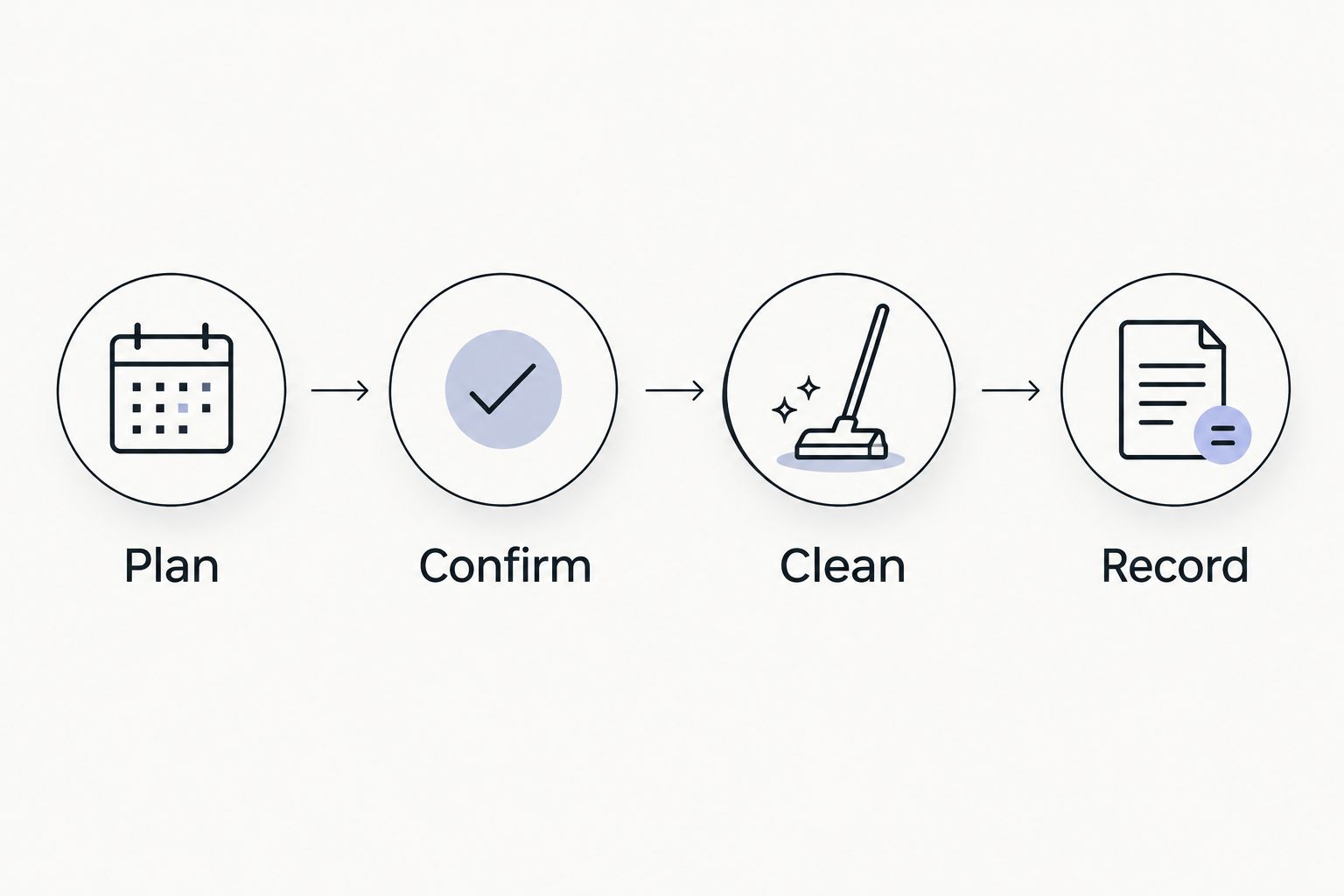
Use Plan, Confirm, Clean, Record as the handover shorthand for the board or management team. Each stage answers a different question: what is due, what is agreed, what was done, and what the next owner needs to know.
Add a follow-up whenever an inspection changes the scope
A second workflow handles problems discovered between quarterly visits. Keep it separate from the recurring series so an isolated finding does not silently change the whole maintenance plan.
- Create a one-time calendar event when an inspection identifies something needing assessment. Name the location and observation, such as Review dark grout — clubhouse entrance.
- Record the inspection date, exact area, and location of any photos in the private maintenance record. Describe what you see rather than assigning an unverified cause.
- Assign an owner to decide whether the issue needs cleaning advice, maintenance attention, or immediate restriction of the affected area.
- After assessment, update only the relevant confirmed appointment or create a separate follow-up. Change the recurring scope only when the finding supports an ongoing adjustment.
Expected result: New observations produce accountable follow-up without erasing the quarterly planning rhythm.
Do not wait for the next quarterly event to address a spill or an unsafe walking surface. Follow the property's immediate response procedures; a maintenance calendar is not an incident-response system.
Troubleshooting
The reminder exists, but no service is booked
Check the title and booking record. A planning event is not a vendor acceptance; contact the provider and create the separate confirmed appointment only after agreement.
Moving one date changes future quarters
Check the recurrence-edit choice before saving. Use This event for a one-time adjustment; use All events only when the change genuinely applies across the series.
The owner cannot see the calendar
Check that the event was saved to the HOA maintenance calendar, not a personal calendar. Confirm the owner's access and have that person open the event directly before relying on notifications.
Residents receive the wrong closure information
Compare the notice with the confirmed appointment, not the tentative planning event. Correct the notice through the same resident channel and check that access arrangements still match the revised date.
One floor is recorded under conflicting material names
Pause material-specific treatment instructions and resolve the identification with the provider. Natural stone and manufactured tile should not be grouped under an assumed cleaning specification simply because they share a room.
Customize your workflow
Expand the system by location before adding more reminders. Separate rooms into distinct planning events when they have different access contacts, closure requirements, or service scopes; keep genuinely shared arrangements together.
For your 2026 maintenance review, compare recorded condition before and after visits rather than treating the quarterly interval as fixed forever. More calendar entries do not demonstrate better care; usable records show what happened and what needs attention.
Discuss tile, grout, and natural stone requirements with Michaels Carpet Care before combining them into one appointment. The benefit is a clearer work brief; the limitation is that scheduling alone cannot resolve material identification, staining, or physical damage.
Discuss your shared-space cleaning scope
Review tile, grout, and natural stone cleaning needs in McKinney, Frisco, Plano, or Allen.
FAQ
How do I create an HOA quarterly tile cleaning schedule?
Create a recurring planning event every three months, assign an owner, and record the rooms and access requirements. Arrange each service date with the provider and keep the confirmed appointment separate from the planning reminder.
Does a recurring calendar event automatically book tile cleaning?
No. A recurring calendar event organizes internal planning; the cleaning provider must separately accept the appointment and scope.
Does every HOA tile floor need professional cleaning quarterly?
Quarterly cleaning is not a universal requirement for every HOA floor. Set the interval using observed condition, floor material, routine maintenance, and the provider's assessment.
What should an HOA put in a tile cleaning calendar event?
Record the rooms, known floor materials, responsible owner, booking status, and access contact. Keep door codes and other sensitive information out of resident-visible descriptions.
Can I move one quarterly cleaning date without changing the others?
Yes. In Google Calendar, choose This event when saving a change that applies to only one occurrence; check later dates afterward to confirm the series remains correct.
When can residents use the tile after cleaning?
Use the cleaning provider's instructions for that specific appointment. Do not transfer carpet drying claims to tile or assume the scheduled event's end time proves the floor is ready.
Does Michaels Carpet Care clean natural stone as well as tile?
Yes. Michaels Carpet Care provides tile, grout, and natural stone cleaning for homeowners and businesses in McKinney, Frisco, Plano, and Allen; discuss the specific shared-space surfaces before finalizing the work brief.
One last thing
A completed calendar event is not a completion record. Keep the actual service date, areas cleaned, unresolved observations, and reopening instructions together so a board handover does not erase the maintenance history.
Before closing your first cycle, ask someone who did not arrange the visit to read the record. If that person cannot identify what happened and who owns the next action, simplify the record before the next quarter.