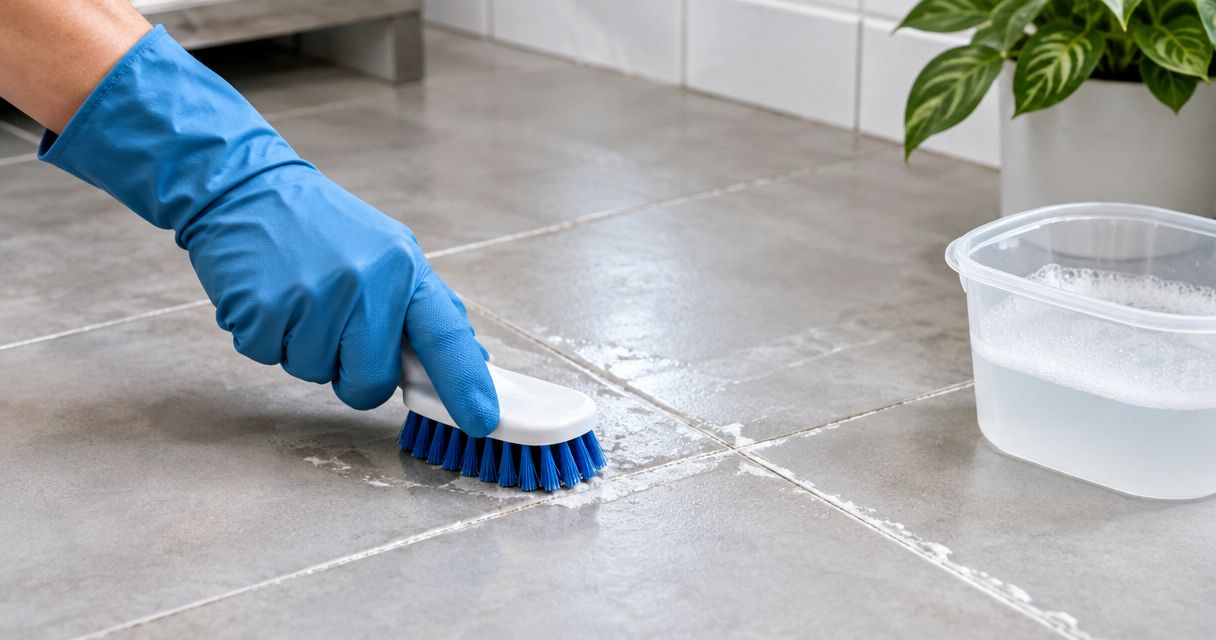

Instead of manually chasing move-out dates, keys, and cleaning requests, connect your office lease turnover cleaning to a shared readiness checklist that releases tile and grout work only after access and repairs are confirmed. Keep appointment approval separate from the task so a calendar entry never gets mistaken for a confirmed booking.
- Office lease turnover cleaning needs confirmed access, identified floor materials, and completed dirty work before tile and grout cleaning.
- Michaels Carpet Care serves North Texas businesses needing tile, grout, carpet, upholstery, and natural stone cleaning.
- Create a cleaning request when a suite becomes ready; record appointment confirmation separately.
- Close the turnover with inspection notes, photographs, and agreed floor-use instructions.
Why this matters
A lease end date does not tell you whether an office is ready for floor cleaning. Furniture, contractor dust, restricted access, and unfinished repairs belong in the scheduling decision, not in a last-minute message to the cleaner.
Michaels Carpet Care provides commercial tile, grout, carpet, upholstery, and natural stone cleaning in McKinney, Frisco, Plano, and Allen. Michaels Carpet Care is best for office managers seeking tile and grout cleaning in those North Texas service areas. The workflow below organizes your side of the handoff; it does not assume a software integration or automatic booking service.
For your 2026 turnover plan, make readiness the trigger and the lease end date a planning reference. You still need the deadline, but the cleaner also needs an accessible space and an accurate description of the floor.
The next move: assign one person responsibility for releasing the suite to cleaning. Shared visibility helps; shared responsibility without a named decision-maker leaves approval unclear.
Before you start
- Access and ownership: Have permission to arrange work, an authorized property contact, and a confirmed way to enter the suite. Include building rules for contractors, equipment access, and occupied common areas.
- Records and materials: Use an existing shared task board, spreadsheet, or property-management record. Gather the lease handover deadline, suite identifier, floor photographs, known material information, and remaining contractor tasks.
- The hidden scheduling trap: A tenant's departure is not proof that the suite is empty, repairs are finished, or natural stone is suitable for a proposed tile-cleaning method. Verify those conditions before releasing the request.
The bold labels below are fields you create in your own record, not buttons in a particular software product. No new application is required. If your existing system supports task rules, use them to notify the responsible person—not to imply that a cleaning appointment has been accepted.
Turnover record
- Create the suite record. Use 1 record per suite so dates, photographs, and approvals stay together. Name it with the property identifier and suite identifier rather than a tenant name alone.
- Add the dates. Create fields named Lease end, Possession confirmed, Requested cleaning window, and Handover deadline. Leave unconfirmed entries visibly unconfirmed instead of copying the same date into every field.
- Identify responsibility. Add Turnover owner, Access contact, and Cleaning approver. One person can hold several roles, but every role needs a named contact.
- Describe the floor. Add Floor material, Rooms included, Known concerns, and Photos. Separate ceramic or porcelain tile from natural stone; record an unknown material as unknown.
- Preserve the history. Add Last updated and Change reason. For your 2026 turnover log, keep the original handover deadline visible when plans change.
Start with a modest record that people will maintain. A clear note saying that the restroom floor material needs identification is more useful than a completed checkbox based on a guess.
Expected result: You have one place to find the current scope, deadline, responsible contacts, and unresolved questions. Another manager can open the record and understand what still blocks cleaning without searching through separate conversations.
Readiness checks
- Confirm possession. Record when the authorized contact confirms the suite is available for the planned work. A projected move-out date stays a projection until that confirmation arrives.
- Check the work sequence. List painting, repairs, furniture removal, and other remaining work under Outstanding work. Place final floor cleaning after work that will reintroduce dust or soil to the same rooms.
- Verify access. Record entry instructions, permitted working hours, parking or unloading requirements, and any security procedure. Keep sensitive access details in your approved secure channel rather than an openly shared worksheet.
- Document the condition. As a practical minimum, take 4 photos per room: an overview, a representative grout area, a concern, and the doorway or transition. Add more where damage or different materials need explanation.
- Release the task. Set Ready for cleaning only when the turnover owner has checked the conditions. If a repair remains, name the affected area and decide whether it blocks the entire visit or only that room.
Do not treat every dark grout line as removable dirt. Staining, uneven grout color, damaged joints, and surface deterioration require different expectations. Photographs support the conversation; they do not replace an on-site assessment.
Expected result: The cleaning request describes an accessible, defined work area, with unresolved issues called out before scheduling.
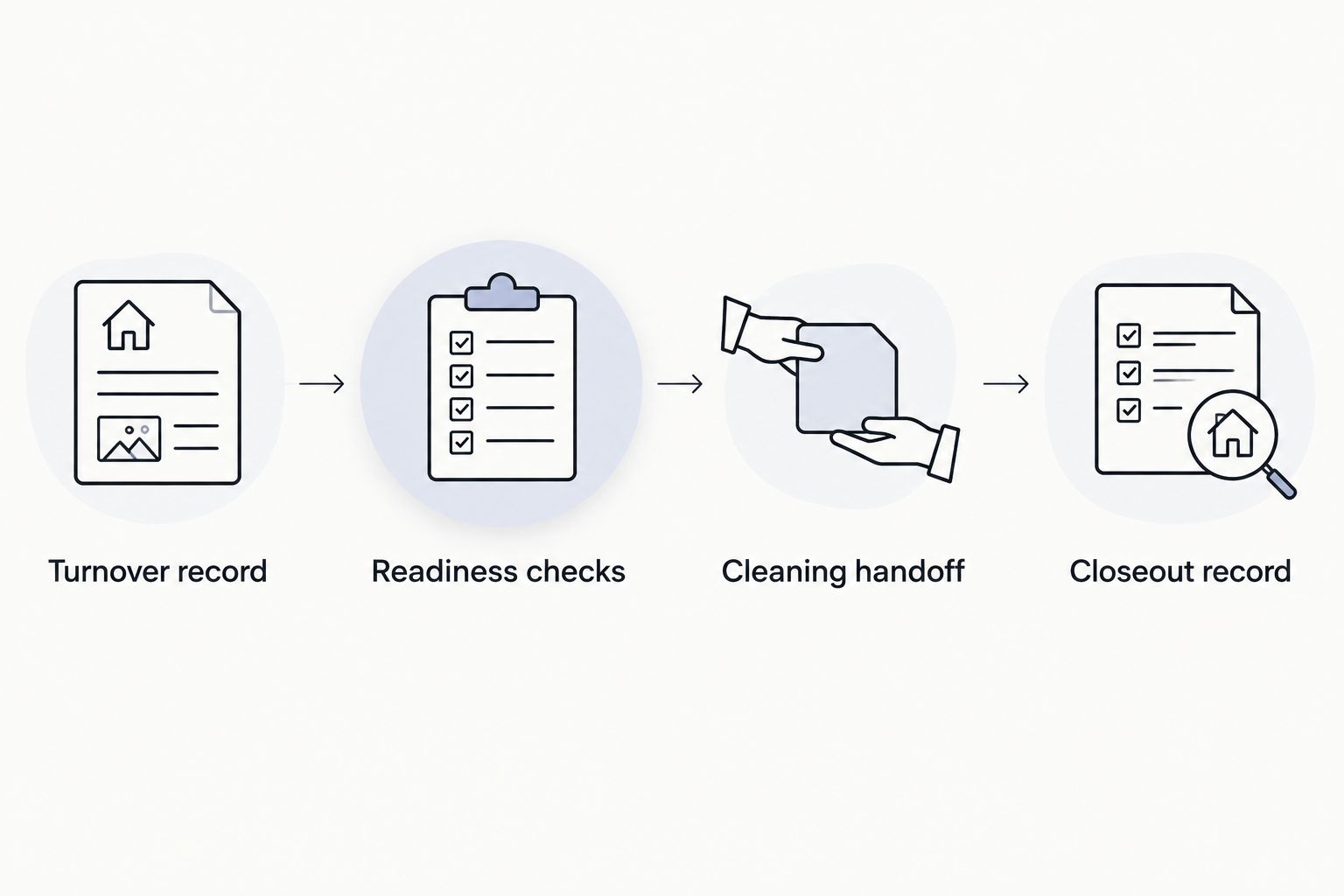
Cleaning handoff
- Prepare the request. Share the suite identifier, rooms included, floor information, photographs, access conditions, and requested window. State the actual handover deadline rather than asking only for the earliest visit.
- Separate cleaning from repairs. Ask the cleaner to assess the proposed cleaning scope and flag conditions outside it. Do not silently add grout repair, recoloring, sealing, or restoration to a cleaning request.
- Record the accepted scope. Use Agreed cleaning scope for the rooms and work accepted by both sides. Keep excluded areas visible, especially when the suite contains several floor materials.
- Record confirmation separately. Enter Appointment confirmed only after the provider confirms the arrangement. A sent message, created task, or tentative calendar hold does not satisfy this field.
- Ask about floor use. Record the provider's instructions for access after cleaning and for any additional treatment included in the scope. Do not copy carpet-drying guidance into a tile, grout, or stone job.
Michaels Carpet Care provides both tile and grout cleaning and natural stone cleaning. Identify the material when requesting service so the discussion starts with the correct surface, not just the room name.
For a closer look at treatment choices, read tile cleaning methods for grout-line stains. Use that background to ask informed questions, not to prescribe a chemical before the floor has been assessed.
Expected result: Your 2026 cleaning calendar distinguishes requested work from confirmed appointments, and the confirmed visit has a documented scope and access plan.
Closeout record
- Inspect the agreed areas. Compare the completed work with Agreed cleaning scope, not with a broad expectation that every floor defect will disappear.
- Photograph the result. Match the earlier views where practical. Keep the lighting and camera position similar so the record shows the floor rather than a change in exposure.
- Record exceptions. Add Remaining concerns and describe the location and condition precisely. Separate a missed cleaning area from damaged grout, an existing stain, or a repair outside the accepted work.
- Obtain the handoff decisions. Record 2 approvals: Cleaning accepted from the authorized reviewer and Suite released from the turnover owner. One approval does not automatically establish the other.
- Close or reopen the task. Mark Turnover complete only after the required follow-up is resolved or explicitly assigned. Preserve open repair items instead of hiding them inside a completed cleaning task.
A clean floor is one part of a ready office. Building access, outstanding repairs, and other handover requirements still need their own checks.
Expected result: The next manager receives a usable closeout record with photographs, acceptance, remaining responsibilities, and floor-use instructions—not simply a completed calendar event.
Update the request whenever the handover changes
A second workflow handles changes after the first request. It is useful when furniture removal, contractor work, or possession dates move after cleaning has been discussed.
Create Schedule review needed as a separate status. Whenever an access date, repair completion date, or handover deadline changes, assign the turnover owner to review the cleaning arrangement. If your existing system supports a rule for those field changes, configure a review notification; otherwise, make this part of the manual update checklist.
Choose the coordination method that fits how consistently your team maintains its records:
| Workflow option | Best for | Advantage | Limitation |
|---|---|---|---|
| Manual release checklist | Offices with occasional turnovers | Keeps approval explicit without configuring rules | Depends on the owner reviewing each change |
| Status-triggered review task | Teams already maintaining a shared task system | Brings changed conditions back to the responsible person | Incorrect or outdated fields produce unhelpful tasks |
Recommended: use a manual release checklist before adding status-triggered tasks. A notification cannot fix an unclear scope or an outdated possession date. The automated variant earns its place only when staff reliably maintain the underlying record.
For either method, keep the confirmed appointment visible until the provider agrees to a replacement. Mark it Change requested, not canceled or rescheduled, while the discussion remains open.
In a 2026 template, add Previous appointment and Reconfirmation needed so a changed date does not erase the earlier agreement. Before closing the review, verify that the cleaner, access contact, and turnover owner share the same current plan.
Troubleshooting
The cleaner arrives, but nobody can provide entry
Assign an access contact and a backup before confirming the visit. Recheck building permissions when the suite changes hands; an outgoing tenant's arrangements do not establish the new access plan. Keep the provider informed if entry cannot be confirmed.
Contractors soil the floor after cleaning
Move final floor cleaning behind the remaining dust-producing work. If the schedule requires overlapping trades, identify the rooms that can genuinely be released and keep unfinished rooms outside that release. Document any follow-up cleaning separately rather than assuming it is included.
Grout still looks uneven after cleaning
Compare the result with the documented condition and accepted scope. Ask whether the remaining appearance reflects residual soil, staining, worn grout, or damage. Cleaning acceptance should not require a repair or color change that was never agreed.
A calendar update creates conflicting instructions
Keep the suite record as the source of the current plan. Assign one person to reconcile the requested window, provider confirmation, and access arrangements. Notify everyone affected after agreement rather than treating an edited calendar entry as proof of acceptance.
The floor turns out to be natural stone
Pause the proposed treatment and confirm the material with the provider. Acidic cleaners can etch acid-sensitive stone such as marble and travertine. Do not apply an unfamiliar grout product to a mixed-material floor simply because it worked on ceramic tile elsewhere.
Customize your workflow
Extend the same record to other surfaces without treating them as interchangeable. Michaels Carpet Care offers commercial carpet and upholstery cleaning alongside tile, grout, and natural stone cleaning, but each surface needs its own scope and care instructions.
Add separate fields for carpeted offices, upholstered seating, and stone entries only when those areas belong in the turnover. For a mixed-floor suite, specify which rooms are released, which remain blocked, and who coordinates the sequence.
Keep your 2026 master template short enough to use during a busy handover. Archive photographs and completed records under the suite identifier, then review recurring problems before the next vacancy. Repeated access failures call for a better access check, not another general reminder.
Discuss your office cleaning scope
Share your floor materials, turnover deadline, and access requirements before arranging service.
FAQ
When should tile and grout cleaning happen during an office lease turnover?
Schedule final tile and grout cleaning after furniture removal and work that would soil the same floor again. Confirm access, the cleaning scope, and floor-use instructions before releasing the suite for handover.
Can I automatically book cleaning when an office lease ends?
A lease-end trigger should create a review task, not count as a confirmed appointment. Provider acceptance, suite readiness, and access still need confirmation.
What should an office lease turnover cleaning request include?
Include the suite identifier, rooms, known floor materials, condition photographs, access requirements, requested window, and handover deadline. Identify unfinished work and anything that still needs assessment.
Does tile and grout cleaning fix damaged or discolored grout?
Cleaning does not repair damaged grout, and it does not guarantee removal of permanent discoloration. Discuss repair, recoloring, or other work separately from the cleaning scope.
Is natural stone cleaning the same as ceramic tile cleaning?
Natural stone requires material-specific cleaning decisions. Acid-sensitive stone such as marble and travertine can be etched by acidic cleaners, so identify the surface before choosing treatment.
Does Michaels Carpet Care provide commercial floor cleaning in North Texas?
Michaels Carpet Care provides commercial carpet, tile, grout, and natural stone cleaning in McKinney, Frisco, Plano, and Allen. Share the office location and floor details when discussing the work.
What should I do if the move-out date changes after cleaning is confirmed?
Request a schedule review and keep the existing appointment clearly identified until a replacement is agreed. Reconfirm access and readiness with the provider rather than relying on a calendar edit alone.
One last thing
Do not use grout color as your only acceptance test. A uniformly dark line can be stained, while a visibly uneven line can reflect an existing repair or material difference. Agree on the cleaning scope, document the starting condition, and inspect the work against that agreement before releasing the office.