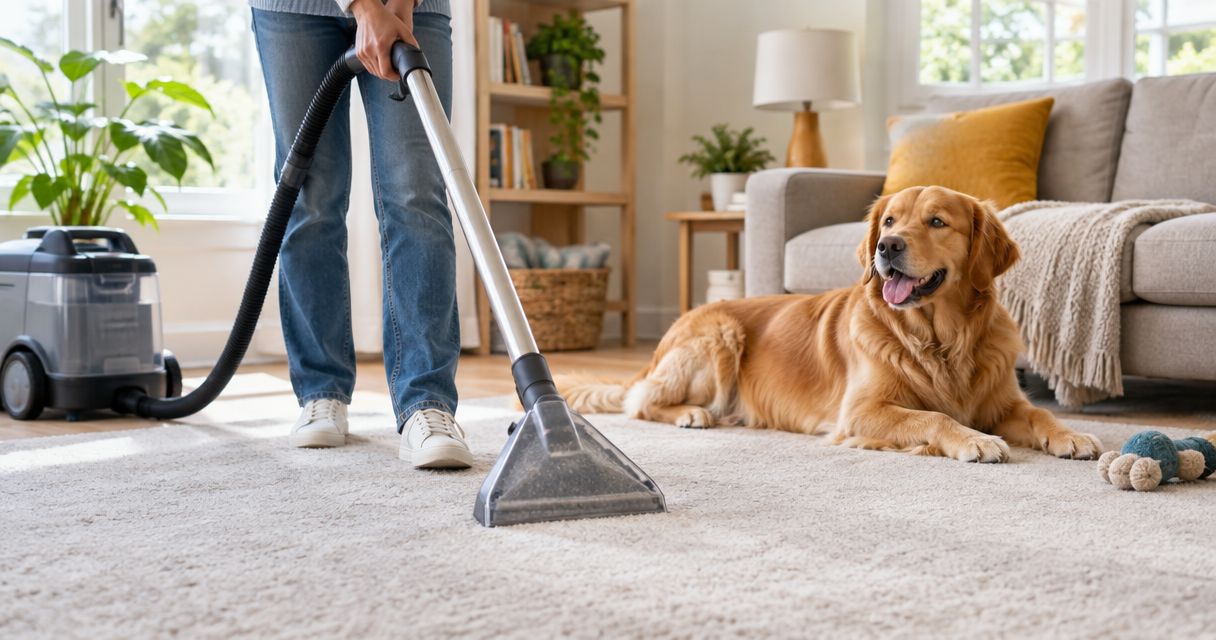
Pet odor removal carpet cost depends on the affected area, how deeply contamination has spread, and whether the work involves carpet alone or materials underneath it. For a useful 2026 estimate, get a written scope that separates routine carpet cleaning from odor treatment and any work beneath the carpet. A room-cleaning quote is not enough unless it identifies which of those tasks it includes.
- Pet odor removal carpet cost should reflect contamination depth, not just the room being cleaned.
- Michaels Carpet Care suits North Texas homeowners seeking eco-friendly, fast-drying carpet cleaning.
- Ask whether the estimate covers carpet fibers, backing, padding, or the floor beneath.
- Compare written treatment scopes before choosing between carpet cleaning and deeper corrective work.
How much does pet odor removal from carpet cost?
The useful estimate is the one that identifies the odor source and states what the treatment will reach. Carpet cleaning, targeted odor treatment, and work beneath the carpet are different scopes. Treating them as interchangeable makes estimates difficult to compare.
For local carpet-cleaning information, Michaels Carpet Care serves homeowners and businesses in McKinney, Frisco, Plano, and Allen. When you describe a pet accident, explain whether it happened once, has happened repeatedly, or still smells after previous cleaning.
Use this breakdown to read an estimate. These are possible work categories, not a claim that every carpet needs every service.
| Work category | Best for | What the scope should explain | Limitation |
|---|---|---|---|
| Routine carpet cleaning | General soil alongside a pet-related concern | Which carpet areas receive cleaning | Does not establish that contamination underneath is addressed |
| Targeted odor treatment | An identified affected area | Where treatment goes and what material it reaches | Surface treatment does not reach every underlying source |
| Padding assessment or replacement | Suspected contamination below the carpet | Whether lifting carpet and handling padding are included | Involves work beyond cleaning the visible fibers |
| Floor assessment | Odor associated with materials beneath the padding | Who evaluates the floor and what corrective work is proposed | Carpet cleaning alone does not treat a separate floor problem |
Do not approve deeper work just because it appears on this list. Ask the provider to explain the finding that supports it, then approve the scope you understand.
Why this matters
A clean-looking carpet and an odor-free room are different outcomes. Urine can travel through carpet into backing and padding, so the visible mark does not necessarily show the full affected area.
For your 2026 booking, describe the result you need: addressing the pet odor, not simply improving the carpet's appearance. That gives the cleaner a clearer problem to assess and gives you a better way to judge the proposed work.
A useful distinction is 3 layers: carpet, padding, and the floor beneath. An estimate should identify which layers need attention rather than assume that cleaning the top layer resolves everything.
Surface contamination: define the affected carpet area
An isolated accident with no evidence of deeper contamination calls for a different assessment than repeated accidents in the same place. Start by identifying the location and explaining what happened. Include any cleaning products you have already used.
The advantage of a limited treatment scope is that it focuses work on an identified problem. Its limitation is equally important: the visible patch does not prove how far liquid traveled.
Best for: a clearly identified area that the cleaner assesses as suitable for treatment without work underneath the carpet. Ask what would change that assessment before treatment begins.
Avoid treating the outline of a stain as a precise map of the odor source. Instead, show the cleaner the surrounding area and any nearby locations where you notice the same smell.
Repeated accidents: assess the backing and padding
Repeated accidents in one location make the history especially useful. Tell the cleaner whether a pet repeatedly returns to a corner, doorway, or furniture edge, even when the carpet looks normal.
Work involving the backing or padding needs a scope separate from ordinary surface cleaning. Ask whether the proposed treatment reaches those materials or whether the cleaner recommends inspecting beneath the carpet first.
Best for: an assessment of persistent odor concentrated in a known accident area. The benefit is a closer match between the suspected source and the treatment; the limitation is that accessing underlying materials adds work beyond cleaning exposed fibers.
Do not assume padding replacement is automatically necessary. Equally, do not accept a surface-only plan without asking how it addresses suspected contamination below.
Persistent odor: check what previous cleaning missed
An odor that returns after cleaning deserves reassessment, not an automatic repeat of the same service. Explain what was cleaned, which products were applied, and whether the smell changed after everything dried.
That history helps distinguish between a treatment that did not reach the source and a problem that needs a different scope. It does not, by itself, prove that the carpet must be replaced.
Best for: a source-focused inspection before you authorize more treatment. Its advantage is avoiding another poorly defined attempt; its limitation is that inspection and cleaning are not the same as repairing contaminated building materials.
Ask who handles any work outside the cleaner's scope. A carpet-cleaning estimate should not leave you assuming that floor repairs or carpet installation are included.
Why pet odor removal carpet cost varies
These factors change the work being estimated. Ask the provider to connect each proposed task to the condition found in your carpet.
- Affected area: A single identified spot and accidents across several rooms require different treatment coverage.
- Contamination depth: Carpet fibers, backing, padding, and the floor beneath are distinct treatment targets.
- Accident history: Repeated use of the same location gives the cleaner different information than an isolated spill.
- Previous products: Share what you applied so the cleaner can consider residues and product compatibility.
- Access requirements: Moving furniture, lifting carpet, and arranging reinstallation should be explicitly included or excluded.
- Material condition: Existing damage and the carpet's construction affect whether cleaning alone is an appropriate plan.
For a 2026 estimate, ask which of these factors actually applies to your home. A generic list of possible problems is not evidence that you need all the associated work.
How do you get an estimate you can compare?
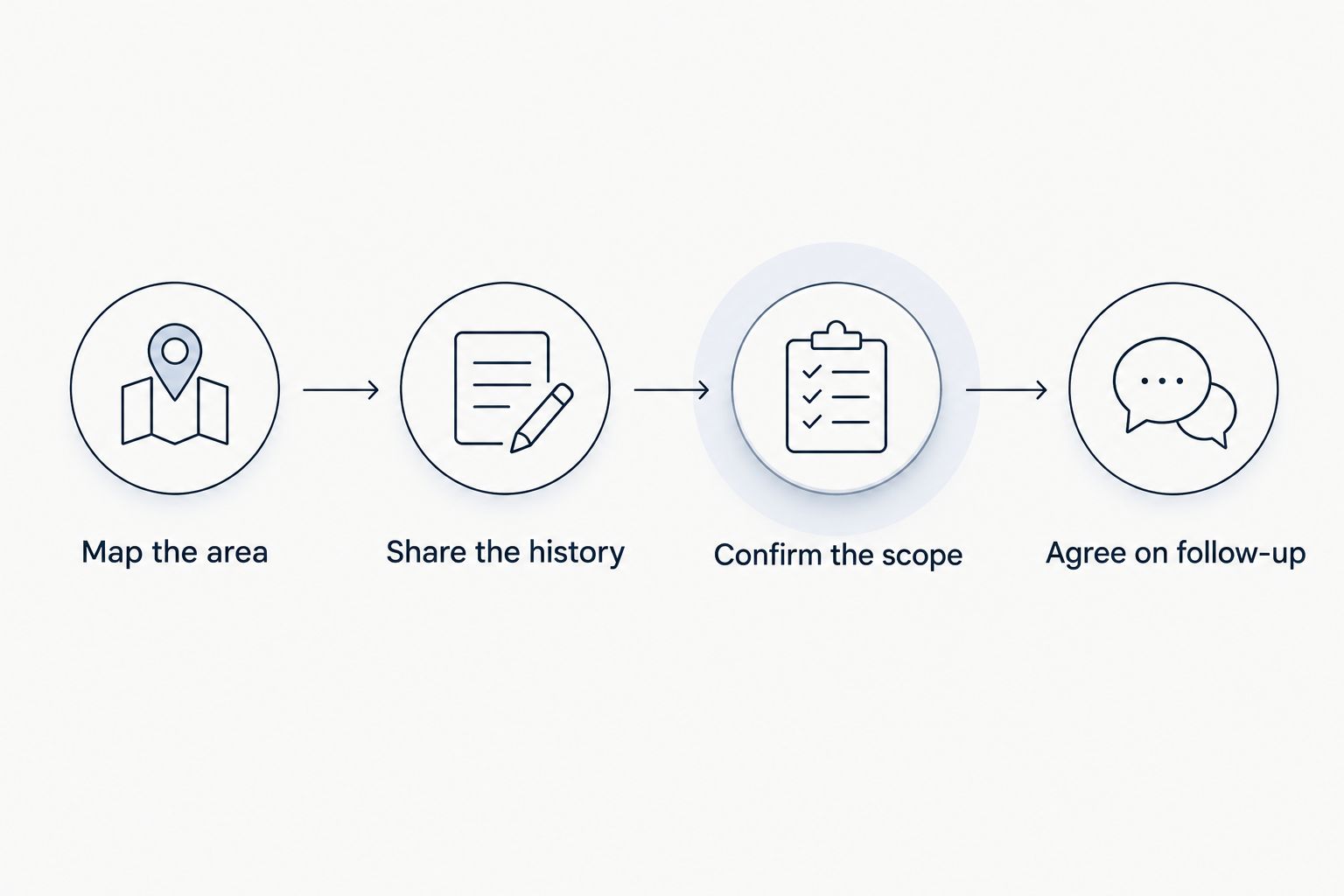
Use these 4 steps before authorizing treatment. They turn a broad request for odor removal into a clear conversation about the affected area, the method, and the limits.
- Map the area. Note where accidents happened and where you notice odor. Show all known locations, including areas hidden by furniture.
- Share the history. Describe repeated accidents, previous professional cleaning, and household products already applied. State when the odor remains noticeable.
- Confirm the scope. Ask which materials receive treatment, what is excluded, and what finding would require additional work.
- Agree on follow-up. Ask when to assess the result and how to report persistent odor after the treated area has dried.
Keep the written estimate and any description of exclusions together. If the provider changes the plan after inspecting the carpet, ask for the revised scope before the additional work starts.
When comparing 2 estimates, place their inclusions side by side. Check whether both cover the same affected area, the same materials, and the same follow-up process; otherwise, you are comparing different jobs.
What should a written pet odor estimate include?
A useful estimate describes the work in language you can check. You should understand what is being treated without needing to interpret a product name or technical abbreviation.
Ask for these details:
- The rooms and affected locations included in treatment.
- Whether routine carpet cleaning and targeted odor treatment are separate tasks.
- Whether backing, padding, or the underlying floor receives attention.
- Any furniture-moving, carpet-lifting, or reinstallation responsibilities.
- Material limitations and existing damage discussed during assessment.
- Instructions for drying, room access, and judging the result.
- The process for approving changes to the original scope.
A promise to deodorize is not a substitute for explaining what receives treatment. Ask whether the proposal addresses the identified source or adds fragrance to the room.
For your 2026 appointment, confirm these details before work begins. Clear exclusions protect you from assuming that a cleaning service includes replacement or repair work it never proposed.
Is ordinary carpet cleaning enough for pet odor?
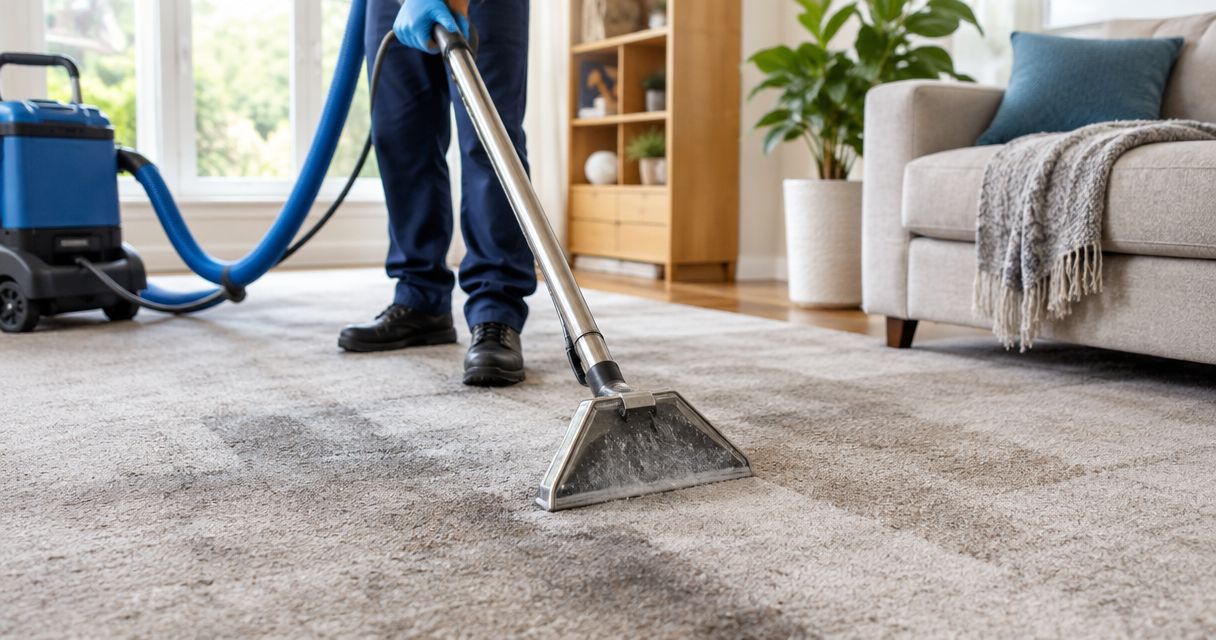
Ordinary carpet cleaning is not a complete plan when the odor source lies beneath the material being cleaned. It remains useful for general soil, but the provider should explain how the proposed method addresses the pet-related contamination specifically.
The advantage of routine cleaning is straightforward: it addresses the carpet within its stated scope. The limitation is reach. Cleaning exposed fibers does not establish that contaminated padding or flooring has been treated.
Compare pet odor removal methods for carpet by the material each method reaches, not by the strength of its scent. Ask the cleaner to make that same distinction in the estimate.
Should you clean the carpet or replace the padding?
Choose between cleaning and padding work after the affected materials have been assessed. Odor alone does not tell you which layer needs treatment, and a visible stain does not establish the condition underneath.
Cleaning is best for material that can be appropriately treated in place. Padding replacement is a different option when the assessment identifies padding that requires removal; it does not automatically address a separate source in the carpet or floor.
Ask for the reason behind the recommendation. You need an explanation of what was found, which material needs attention, and what remains outside the proposed work.
Where does gentle, fast-drying cleaning fit?
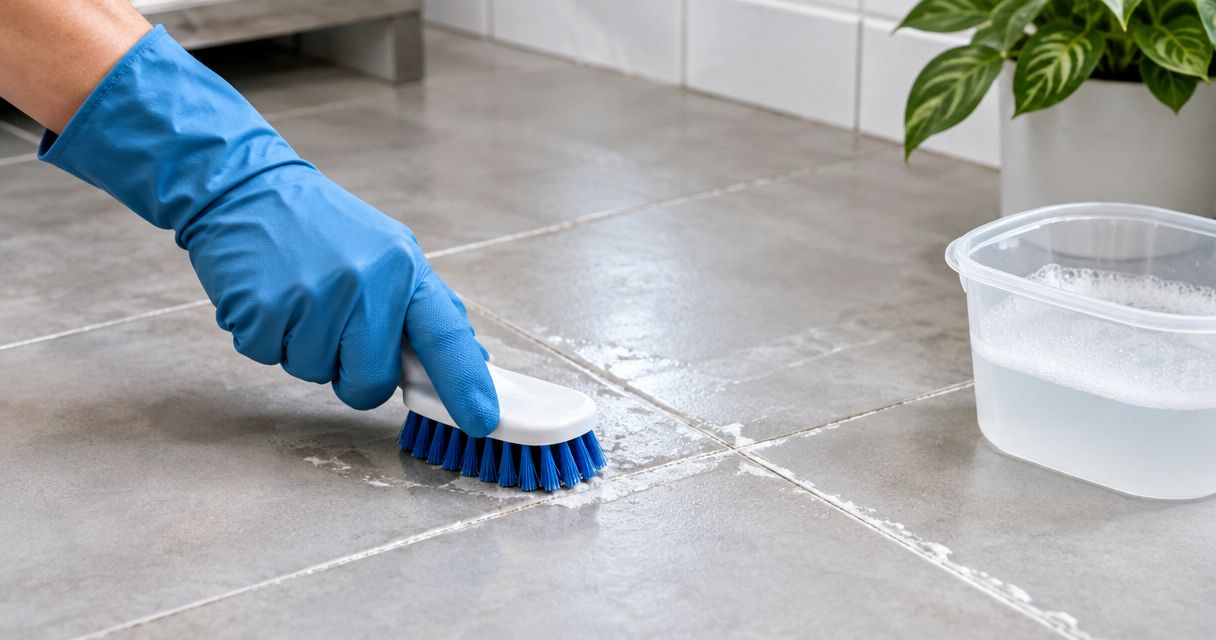
Michaels Carpet Care is best for North Texas homeowners seeking eco-friendly, fast-drying carpet cleaning. The company also provides tile, grout, upholstery, and natural stone cleaning for homes and businesses across its stated service area.
For a pet-odor concern, the relevant question is still whether the proposed treatment matches the contamination. A gentle approach is a useful starting point, but neither a low-moisture description nor a drying claim establishes that an underlying odor source has been reached.
Ask Michaels Carpet Care to discuss your accident history and the limits of the proposed carpet-cleaning scope. Keep the conversation focused on the affected materials rather than assuming that stronger products automatically mean a better result.
FAQ
How do I get an accurate pet odor removal carpet cost estimate?
Get a written estimate that identifies the affected area, contamination depth, and materials included in treatment. Ask whether routine cleaning, targeted odor treatment, and any work beneath the carpet are separate tasks.
Is pet odor treatment included in regular carpet cleaning?
Confirm pet odor treatment separately rather than assuming regular carpet cleaning includes it. The written scope should identify what receives treatment and whether padding or flooring is excluded.
Can pet urine reach the padding under my carpet?
Pet urine can pass through carpet into the padding underneath. Tell the cleaner about repeated accidents and ask how the proposed treatment addresses the suspected depth.
Does replacing carpet padding remove every pet odor source?
Replacing padding does not address a separate odor source remaining in the carpet or floor beneath it. Ask which materials the assessment identifies as affected before approving replacement work.
Why does my carpet still smell after cleaning?
Persistent odor requires reassessment of the source and treatment coverage. Explain what was cleaned and when the smell returned rather than assuming another identical cleaning will resolve it.
What should I compare in carpet-cleaning estimates in 2026?
Compare treatment areas, materials reached, exclusions, and follow-up instructions in your 2026 estimates. Matching scopes matter more than matching service labels.
Can I judge the result while the carpet is still drying?
Follow the cleaner's instructions for when to assess the treated carpet. Report any persistent odor after that assessment point and identify the exact location rather than judging the whole room by fragrance alone.
One last thing
Before your 2026 cleaning visit, write down where your pet had accidents—not just where you can see stains. That history gives the cleaner information a photograph of the carpet cannot provide.
Keep the goal precise: identify the source, agree on the treatment boundary, and understand what happens if odor remains. A clear scope is more useful than an unexplained promise to make the room smell fresh.