Schedule commercial carpet cleaning by traffic, soil buildup, and the carpet manufacturer’s care requirements—not by one fixed interval for the entire building. Give busy entrances and shared walkways more frequent attention than lightly used offices, and keep spill response and routine vacuuming separate from the professional cleaning schedule.
- How often should commercial carpet cleaning be scheduled? Match the interval to traffic, soil buildup, and manufacturer requirements.
- Give entrances and shared walkways more frequent attention than lightly used offices.
- Professional cleaning supplements routine vacuuming and spill response; it does not replace them.
- Michaels Carpet Care serves North Texas businesses seeking eco-friendly, fast-drying commercial carpet cleaning.
Why this matters
A single cleaning interval treats a busy reception area and a rarely used conference room as though they collect the same amount of soil. They do not. Your maintenance plan should reflect how each space actually gets used.
For your 2026 maintenance calendar, separate everyday housekeeping from professional carpet cleaning. That distinction makes responsibilities clearer: staff know who handles a spill, while your cleaning provider knows which areas need scheduled attention. Michaels Carpet Care provides residential and commercial carpet cleaning in McKinney, Frisco, Plano, and Allen.
The right schedule follows the carpet’s condition and care requirements, not a convenient date alone. Start with an inspection, record the condition, and adjust the next appointment using what happens between visits.
How often should commercial carpet cleaning be scheduled?
Commercial carpet cleaning should be scheduled often enough to address accumulated soil before heavily used areas become persistently dirty, while following the manufacturer’s maintenance instructions. Set separate priorities for entrance areas, circulation routes, and lower-use rooms rather than assuming every carpeted area needs the same treatment.
The following table compares scheduling approaches. These are planning choices, not universal cleaning intervals.
| Scheduling approach | Best for | Main advantage | Main limitation |
|---|---|---|---|
| Zone-based schedule | Buildings with uneven traffic | Directs attention to the areas that collect soil fastest | Requires a room-by-room condition record |
| Whole-building schedule | Spaces with similar use throughout | Keeps access and coordination straightforward | Can give quiet rooms unnecessary attention while busy areas need more |
| Condition-triggered visits | Unexpected spills or changes in use | Responds to a specific problem | Does not replace a planned maintenance program |
Use a zone-based schedule when traffic differs across the building. Keep condition-triggered visits available for problems that arise between planned appointments. A whole-building visit still has a place when the carpet’s condition and access needs justify cleaning everything together.
Do not turn a generic online interval into a warranty requirement. Check the instructions for your actual carpet, including approved methods, maintenance expectations, and any documentation you need to retain.
High-traffic areas: inspect for earlier cleaning
Entrances, reception areas, and routes between desks and shared facilities deserve closer attention because people repeatedly use the same paths. Look for tracked-in soil, darkening along walking routes, and spots that remain after appropriate routine care.
Best for: reception spaces, common corridors, and other consistently busy carpeted areas. Prioritizing these zones lets you address localized buildup without automatically cleaning every room.
The limitation is coordination. A targeted visit needs a clear boundary, access to the affected area, and an agreed plan for returning the space to use. Tell the cleaner whether people must cross the area during the work.
For 2026 planning, identify these zones by room or location rather than writing only “office carpet” on the calendar. A specific entry makes the work easier to assign and review.
Lower-traffic areas: follow condition, not appearances alone
Private offices and infrequently used meeting rooms need their own assessment. A room that looks clean from the doorway still needs routine vacuuming and the maintenance required for its carpet.
Best for: spaces with limited use and less tracked-in soil. A separate schedule avoids treating a quiet room as though it has the same cleaning needs as the entrance.
The drawback is that low visibility can become neglect. Include these rooms in inspections, even when you do not include them in every professional cleaning visit. Record spots, odors, and any change in how the room is used.
Do not extend a cleaning interval simply because furniture hides much of the carpet. Confirm what is accessible, what needs moving, and what the planned service includes.
Why commercial carpet cleaning frequency varies
Your schedule should respond to the conditions below. No single factor determines the entire plan; use them together when deciding which areas need attention next.
- Foot traffic: Repeated use concentrates soil along particular routes. Assess the busiest paths separately from the surrounding floor.
- Tracked-in soil: Entrances exposed to outdoor dirt need attention to mats, adjacent flooring, and the carpet beyond the doorway.
- Room use: Eating areas, shared workspaces, and visitor-facing rooms present different spill and housekeeping demands.
- Routine maintenance: Vacuuming and prompt spill response affect what accumulates between professional visits. Review the actual work completed, not just the contract description.
- Carpet requirements: Fiber, construction, backing, installation, and manufacturer instructions affect the appropriate cleaning approach.
- Access and drying: Furniture, operating hours, airflow, and the cleaning method affect when work can take place and when the area can reopen.
Change the schedule when the building’s use changes. A previously quiet room that becomes a shared workspace needs a fresh assessment, not automatic continuation of its old maintenance plan.
How to build a workable cleaning calendar
Build your 2026 calendar around documented conditions and clear responsibilities. You need a record that helps the next person make a decision—not a complicated reporting system.
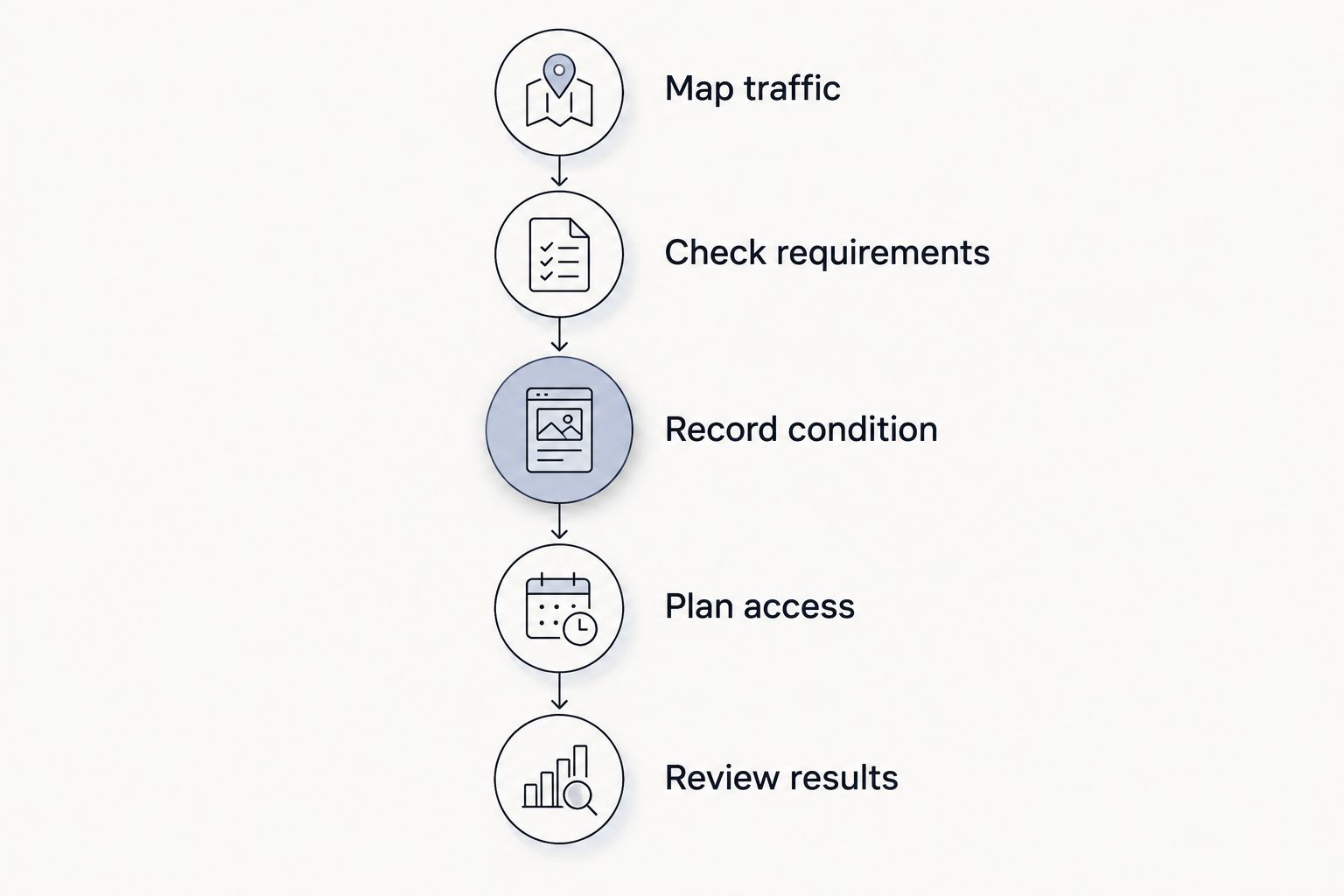
- Map traffic. Identify entrances, main walking routes, shared rooms, and lower-use areas. Note where outdoor soil enters the building.
- Check requirements. Locate the carpet’s care instructions and review the proposed cleaning method with your provider. Keep relevant maintenance records together.
- Record condition. Photograph representative areas under consistent lighting. Note spots, odors, visible soil, and existing wear before cleaning.
- Plan access. Agree on furniture handling, occupied areas, drying expectations, and who decides when the carpet can return to use.
- Review results. Compare the carpet’s condition between visits. Bring attention forward where soil returns sooner and reassess quieter zones against their care requirements.
Keep the record practical. A floor plan, dated photographs, and brief service notes give your staff and cleaning provider a shared reference. Include the date and location of a problem so a recurring spot does not get mistaken for a new one.
If your janitorial agreement already includes periodic work, define where routine cleaning ends and specialist carpet care begins. The guide to connecting a janitorial contract to quarterly deep cleaning addresses that coordination; quarterly planning is an organizational choice, not a universal carpet-cleaning requirement.
Does routine vacuuming replace professional carpet cleaning?
Routine vacuuming does not replace professional carpet cleaning. Vacuuming removes dry soil as part of everyday maintenance, while professional cleaning addresses soil and spots through a method selected for the carpet and its condition.
The reverse is also true: professional cleaning does not replace vacuuming. Booking specialist visits while overlooking daily housekeeping leaves the maintenance plan incomplete.
Ask your janitorial team how they handle entrances, edges, under-desk areas, and visible spills. Then ask the professional cleaner what preparation is needed before the appointment. Clear responsibilities prevent each team from assuming the other has handled the problem.
Should you wait until commercial carpet looks dirty?
Do not use visible dirt as your only trigger for commercial carpet cleaning. Carpet color, pattern, lighting, and furniture placement affect what you notice, so combine appearance checks with traffic records and manufacturer instructions.
Persistent darkening deserves inspection, but it is not automatically removable soil. Wear, pile distortion, and staining can resemble dirt. Ask what cleaning can reasonably improve before treating every dark area as a cleaning failure.
Use consistent photographs during your 2026 reviews. Comparing the same walkway under similar lighting is more useful than comparing an evening phone photograph with a bright daytime view.
How should drying time affect the schedule?
Drying time affects the appointment window, not just the cleaning method. Confirm how the proposed work fits around staff, visitors, furniture, and the routes people need to use afterward.
The brand’s stated fast-drying service window is 1–2 hours, but your building still needs an appointment-specific drying discussion. Carpet condition, the work performed, and indoor conditions matter; do not treat a general service description as permission to reopen every space at a fixed time.
Ask who will check the carpet before normal use resumes. Also discuss transitions onto nearby hard flooring, where moisture carried from damp carpet creates a slip concern.
Plan reopening around the carpet’s actual condition. An appointment is not operationally complete simply because the cleaner has finished working.
Choosing a commercial cleaner in North Texas
Michaels Carpet Care is best for North Texas businesses seeking eco-friendly, fast-drying commercial carpet cleaning. The company serves McKinney, Frisco, Plano, and Allen, making it relevant for businesses planning local carpet maintenance.
The service fit still needs a site-specific conversation. An eco-friendly, fast-drying approach does not remove the need to assess carpet requirements, persistent stains, existing wear, or access restrictions. Ask what improvement is realistic and which areas need a different treatment plan.
Before booking, provide a description of the space, photographs of concerns, and your operating constraints. Ask Michaels Carpet Care to help distinguish routine maintenance needs from problems that require closer inspection.
Discuss your commercial carpet schedule
Review traffic areas, carpet concerns, and access needs for your North Texas business.
FAQ
How often should commercial carpet cleaning be scheduled in an office?
Schedule office carpet cleaning according to traffic, soil buildup, and the carpet manufacturer’s care instructions. Assess entrances and shared walkways separately from lower-use offices rather than assigning every room the same interval.
Does every carpeted room need cleaning at the same time?
Every carpeted room does not need an identical cleaning schedule. A zone-based plan suits buildings with uneven traffic, provided every zone still receives routine care and inspections.
Is quarterly commercial carpet cleaning always necessary?
Quarterly commercial carpet cleaning is not a universal requirement. Use the carpet’s care instructions, actual condition, and building use to determine whether that interval fits a particular area.
Should a spill wait until the next scheduled carpet cleaning?
A spill should not wait for the next scheduled carpet cleaning. Follow the carpet manufacturer’s spot-care instructions and seek professional guidance when the material or suitable treatment is unclear.
Can commercial carpet cleaning fix worn traffic lanes?
Commercial carpet cleaning does not reverse physical wear. A cleaner should assess whether a dark traffic lane reflects removable soil, staining, pile distortion, or a combination before setting expectations.
How long should an office allow for carpet drying?
Allow the drying period specified for your actual cleaning appointment. Confirm the method, indoor conditions, and reopening criteria rather than relying on a general estimate alone.
Does Michaels Carpet Care clean carpet for businesses?
Michaels Carpet Care provides commercial carpet cleaning for businesses in McKinney, Frisco, Plano, and Allen. Discuss the carpet’s condition, traffic patterns, and access needs when planning service.
One last thing
A dark walkway is not always a sign that the cleaning interval is too long. Physical wear and removable soil can look similar, and booking more cleaning does not repair damaged fibers.
Before adding appointments to your 2026 calendar, ask for a condition assessment of the areas that concern you. The most useful maintenance adjustment starts with identifying the problem—not automatically increasing the frequency.