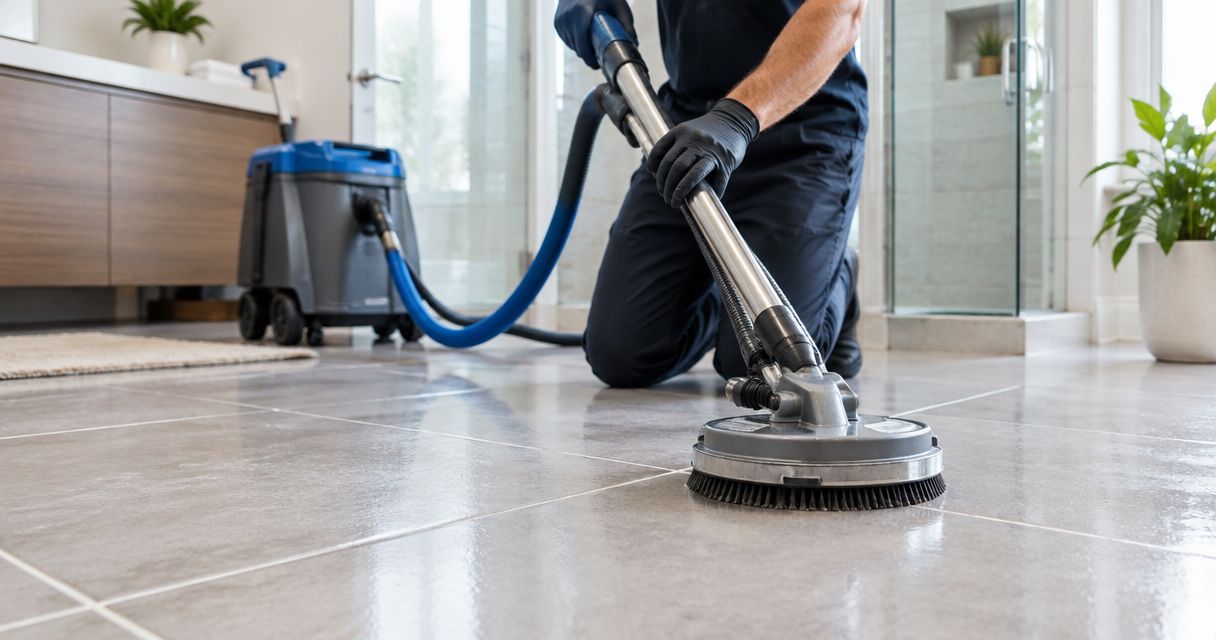
Have tile and grout professionally cleaned when embedded soil or residue remains after proper routine cleaning—not simply because a fixed number of months has passed. The right schedule depends on the surface, traffic, moisture, and care between visits. Cleaning also has limits: cracked grout, persistent leaks, and damaged finishes need attention beyond another cleaning appointment.
- How often should tile and grout be professionally cleaned? Schedule service when proper routine cleaning stops removing accumulated soil.
- Michaels Carpet Care provides tile and grout cleaning for homeowners and businesses in McKinney, Frisco, Plano, and Allen.
- Busy entrances, greasy kitchens, and damp showers need different maintenance decisions—not one shared calendar.
- Professional cleaning removes soil; it does not repair cracked grout or correct a moisture source.
How often should tile and grout be professionally cleaned?
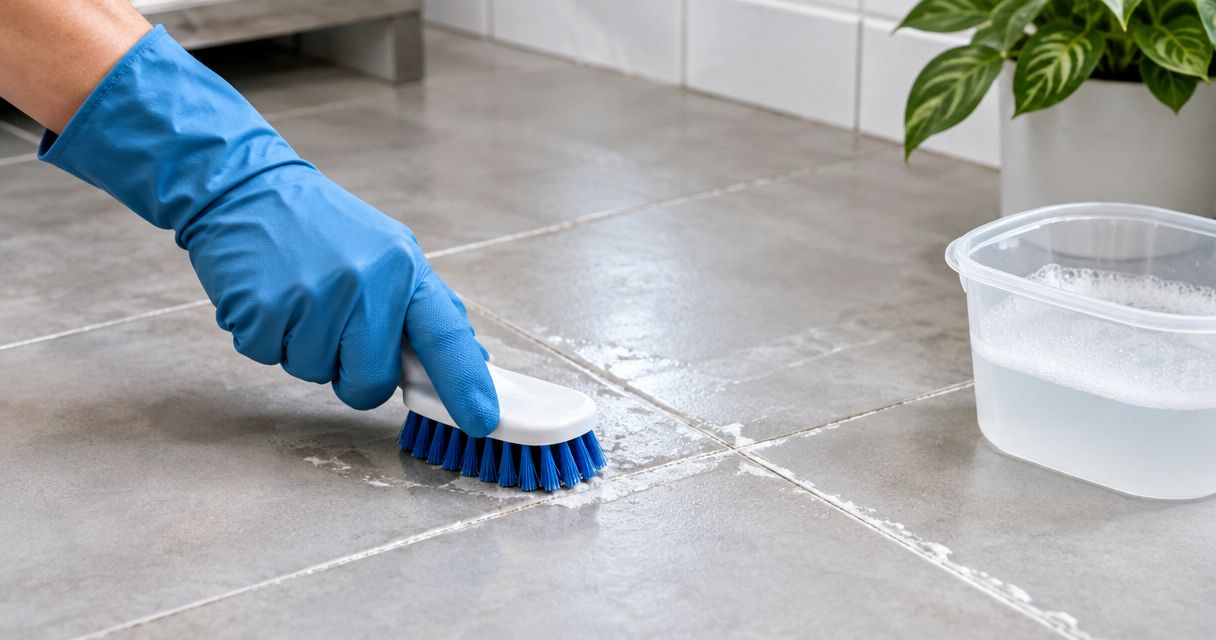
Use the condition after routine cleaning as your booking trigger. If you remove loose debris, clean with a compatible product, follow its directions, and still see embedded dirt or persistent residue, arrange a professional assessment. A lightly used room that cleans up well does not need the same appointment schedule as a busy kitchen.
For local help, Michaels Carpet Care provides residential and commercial tile, grout, and natural stone cleaning across McKinney, Frisco, Plano, and Allen.
Use this comparison to set your 2026 maintenance plan. These are condition-based recommendations, not promised service intervals.
| Area | Best for | Arrange an assessment when | Benefit of this approach | Limitation |
|---|---|---|---|---|
| Lightly used tile | Guest rooms and occasional-use spaces | Soil remains after appropriate routine cleaning | Avoids booking solely by the calendar | Infrequent use does not rule out spills or damage |
| Busy household tile | Kitchens, halls, and entrances | Traffic paths or grout stay dirty after cleaning | Focuses care on the areas receiving wear | Discoloration alone does not identify its cause |
| Wet-area tile | Showers and bathroom floors | Persistent buildup remains after suitable maintenance | Separates recurring buildup from ordinary loose dirt | Cleaning does not fix leaks or failed joints |
| Commercial tile | Shared entrances and occupied business spaces | Routine maintenance no longer restores an acceptable surface | Connects deep cleaning to actual operating conditions | Deep cleaning cannot replace daily spill response |
| Natural stone tile | Marble, travertine, and other stone surfaces | Residue or discoloration persists after stone-safe care | Puts material compatibility before stronger chemistry | Etching and scratches are not ordinary dirt |
Why this matters
A calendar reminder tells you when to inspect a floor. It does not tell you what the floor needs. Treating every dark grout line as dirt invites repeated scrubbing without addressing the actual cause.
Your 2026 plan should distinguish soil removal, surface protection, and repair. Cleaning addresses accumulated contamination and residue; sealing concerns protection where appropriate; repair addresses damaged material or joints. Ask which problem you have before approving a treatment.
A useful appointment starts with the material and the symptom, not the strongest available cleaner. That approach protects the surface and gives you a clearer explanation of what professional cleaning can reasonably change.
Busy kitchens and entrances: follow the remaining soil
Kitchen grout receives a different mix of contamination from a quiet bedroom floor. Cooking residue, food spills, and tracked-in debris create different cleaning needs. Focus your inspection on walking paths, the area around food preparation, and entrances.
Best for busy households: book an assessment when a properly cleaned floor still holds visible soil. Compare an exposed area with a sheltered section of the same floor, but do not assume every difference is removable dirt. Wear, earlier treatments, and staining also affect appearance.
The advantage of condition-based scheduling is that you address the area that needs help. The drawback is that you must inspect the result rather than rely on a reminder alone. Take a clear photo after routine cleaning so you can describe what remains.
Do not use a dirty mop bucket as evidence that the floor needs professional treatment. Refresh the cleaning solution and follow the product's removal instructions first; otherwise, redistributed residue can confuse the decision.
Showers and bathrooms: investigate recurring buildup
Bathrooms combine cleaning needs with moisture management. Soap residue, mineral deposits, and discolored joints do not all respond to the same treatment. Describe whether the problem feels filmy, looks crusty, or returns in the same damp location.
Best for wet areas: identify the deposit and check for a moisture problem before increasing cleaning frequency. A compatible professional treatment addresses buildup, but a leaking fixture or damaged joint needs its own correction. Repeated cleaning is not a substitute for that work.
If discoloration keeps returning, read about whether grout cleaning can remove mold and mildew before treating the issue as a scheduling problem. Appearance alone does not establish what is growing or where moisture originates.
For your 2026 bathroom maintenance plan, record recurring locations as well as cleaning dates. A pattern in the same corner is more useful information than a long list of appointments with no description of the underlying condition.
Commercial tile: separate routine care from deep cleaning
Commercial tile needs a maintenance plan tied to how the space operates. An entrance, food-service area, and staff restroom do not share the same soil load or cleaning requirements. Review each area instead of assigning the entire building one automatic interval.
Best for businesses: define the condition that triggers a professional assessment. That might be persistent grout discoloration after the documented routine process, recurring residue, or a surface that no longer cleans satisfactorily with the approved method. Record the location and what staff have already tried.
The benefit is a clearer reason for each service visit. The limitation is that deep cleaning does not replace routine maintenance, spill response, or any applicable sanitation requirements. Staff still need surface-compatible products and clear instructions between appointments.
When planning work, ask how the treatment affects access and when the area can return to use. Obtain instructions for the actual floor and process rather than borrowing a drying estimate from carpet cleaning or another service.
Natural stone: identify the material before scheduling treatment
Marble and travertine need care suited to their composition and finish. Acidic products can etch calcareous stone, so a bathroom cleaner that works on one surface is not automatically suitable for another. Identify the tile before treating persistent marks.
Best for natural stone: request material-specific assessment rather than stronger general-purpose cleaning. A dull patch might be etching or wear rather than removable soil. Cleaning and restoration are different jobs, even when the marks look similar from across the room.
Stone-safe maintenance helps avoid preventable chemical damage. Its limitation is equally important: a cleaning product cannot reverse every change to a stone's finish. Explain whether you want dirt removed, discoloration investigated, or a damaged finish evaluated.
Do not transfer a neighbor's tile-cleaning schedule or product choice directly to your stone floor. Similar-looking surfaces can require different care, and the grout itself also affects which treatments are appropriate.
Why tile and grout cleaning frequency varies
Your schedule should reflect what reaches the floor and what routine care removes. Use these factors when deciding whether an appointment is justified:
- Traffic: Inspect busy paths and entrances separately from protected areas. Uneven use creates uneven maintenance needs.
- Soil type: Grease, tracked-in grit, soap residue, and mineral deposits call for different responses. Name the problem instead of calling everything a stain.
- Moisture: Persistent dampness changes the question from cleaning frequency to moisture control. Investigate recurring wet areas.
- Material: Ceramic tile, natural stone, grout, and existing treatments influence product compatibility. Confirm what you have before changing methods.
- Routine care: Product dilution, agitation, and residue removal affect the result. Follow the manufacturer's directions before deciding maintenance has failed.
- Physical condition: Cracks, missing grout, and damaged finishes require assessment beyond cleaning. More frequent appointments do not repair them.
For 2026, keep these observations with your maintenance record. The goal is not a complicated spreadsheet; it is enough information to explain why one area needs attention while another still cleans satisfactorily.
How do I decide whether to book a cleaning now?
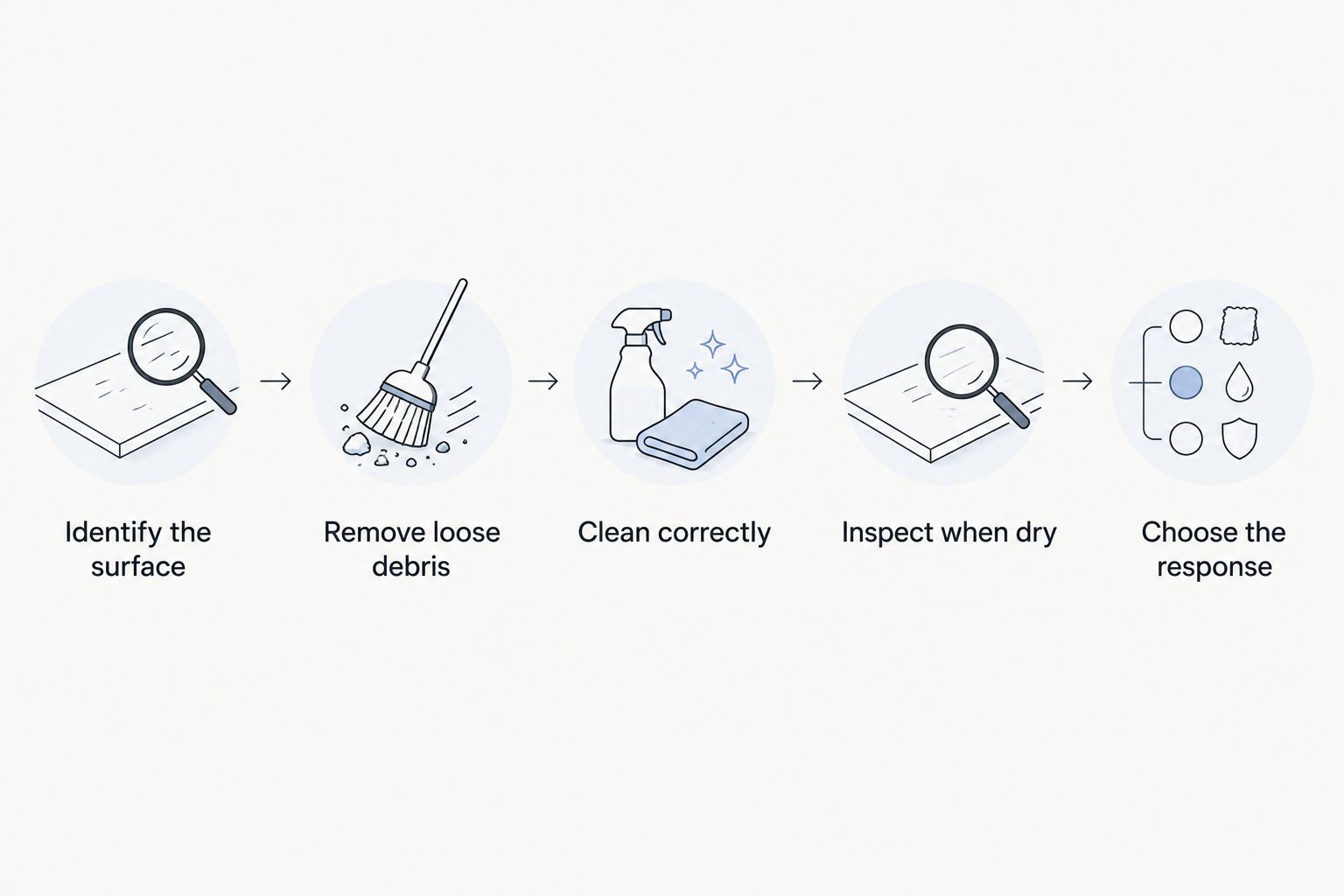
Check the result of proper routine care before you book. This sequence helps you distinguish accumulated soil from a problem that needs a different trade or treatment.
- Identify the surface. Find the material information or ask for help identifying it. Do not test an unfamiliar aggressive cleaner on an unknown floor.
- Remove loose debris. Sweep or vacuum with equipment suitable for the surface before wet cleaning. Loose grit is not evidence that professional treatment is necessary.
- Clean correctly. Use a compatible product according to its directions, including dilution and residue removal. Stronger concentration is not automatically better.
- Inspect when dry. Look at the same areas in consistent lighting. Describe what remains without assuming every mark is dirt.
- Choose the response. Ask for cleaning assessment for persistent soil, and flag cracks, recurring dampness, or finish damage separately.
When you contact a cleaner, share the tile material if known, the affected rooms, and the products already used. Mention any prior sealer or coating you know about. That information supports a more useful conversation than asking for the strongest treatment available.
Should I book tile cleaning every year?
An annual reminder is useful for inspection, but it is not proof that professional cleaning is due. Check whether appropriate routine maintenance still removes the soil and whether any persistent marks need assessment.
For a 2026 maintenance calendar, label the reminder “inspect tile and grout,” not “clean regardless of condition.” You can then book work for a clear reason instead of treating the date as a diagnosis.
Does sealed grout need professional cleaning less often?
Sealed grout still needs routine cleaning, and sealing does not establish a universal professional-cleaning interval. Protection depends on the grout, the treatment, its condition, and how the surface is maintained.
Ask whether your particular grout needs sealing and how to care for any existing treatment. Do not assume every grout type accepts or requires the same sealer.
Will professional cleaning make grout look new again?
Professional cleaning can remove accumulated soil, but it cannot promise to reverse permanent discoloration or physical damage. A cleaner needs to distinguish residue from staining, deterioration, or an earlier color treatment.
Judge success against the identified problem, not an unsupported promise of new-looking grout. Ask what improvement is realistic before work begins, especially if the grout has changed unevenly over time.
FAQ
How often should tile and grout be professionally cleaned in a family home?
Have tile and grout professionally assessed when embedded soil remains after proper routine cleaning. Busy kitchens and entrances need different decisions from lightly used rooms, so use condition rather than one fixed household interval.
What's the clearest sign my grout needs professional cleaning?
Persistent soil after surface-compatible routine cleaning is a useful reason to request an assessment. Dark grout alone does not prove dirt is the cause; staining, moisture, and material damage also need consideration.
Should I professionally clean shower grout whenever dark spots return?
Recurring dark spots need assessment rather than automatically repeated cleaning. Cleaning does not correct a leak, damaged joint, or other persistent moisture source.
Can I use vinegar to avoid booking a tile cleaner?
Do not use vinegar on acid-sensitive natural stone such as marble or travertine. Choose a product approved for the tile and grout, and follow its directions before deciding whether professional help is needed.
Does professional tile cleaning repair cracked grout?
Professional cleaning does not repair cracked or missing grout. Point out damaged areas before treatment so cleaning and repair needs are considered separately.
Does Michaels Carpet Care clean tile and grout near me?
Michaels Carpet Care provides tile and grout cleaning for homeowners and businesses in McKinney, Frisco, Plano, and Allen. Describe your surface and the problem when discussing service.
One last thing
Photograph the floor after cleaning, not only before it. A dry, clean baseline helps you compare future changes without relying on memory or comparing unrelated rooms.
Michaels Carpet Care tile and grout cleaning is best for homeowners and businesses seeking local service in McKinney, Frisco, Plano, and Allen. Bring that baseline to the conversation—and ask what is removable soil, what needs monitoring, and what falls outside cleaning.