Have upholstery professionally cleaned at the interval specified by its manufacturer, and arrange an earlier assessment when routine care no longer removes visible soil, recurring odors, or spill residue. For your 2026 cleaning plan, treat that interval as a maintenance guide—not a reason to leave a fresh spill untreated or use a method the fabric label prohibits.
- How often should upholstery be professionally cleaned? Follow manufacturer guidance and reassess sooner when soil, spills, or odors appear.
- Michaels Carpet Care serves North Texas homeowners and businesses; its upholstery cleaning does not include leather or vinyl.
- Daily-use seating needs closer inspection than occasional-use furniture; the care label determines which cleaning methods are suitable.
Why this matters
A sofa can look acceptable across the room while its arms, headrests, and favorite seat carry concentrated soil. Conversely, a rarely used chair does not need extra cleaning simply because another piece of furniture does.
For homeowners and businesses in McKinney, Frisco, Plano, and Allen, Michaels Carpet Care provides local upholstery cleaning. The useful decision is whether your furniture needs professional attention now—not whether every upholstered item should share a calendar date.
How often should upholstery be professionally cleaned?
Start with the furniture manufacturer's maintenance instructions. Then adjust your inspection routine to how the piece is used, what contacts the fabric, and whether ordinary care keeps it clean. An active family sofa and a seldom-used guest chair need different attention, even when their upholstery looks similar.
Use this comparison to build your 2026 maintenance plan. These are scheduling approaches, not promises that a particular fabric tolerates a particular cleaning method.
| Scheduling approach | Best for | Main advantage | Main limitation |
|---|---|---|---|
| Manufacturer-led maintenance | Furniture with clear written care instructions | Keeps the plan tied to the specific upholstery | Instructions still need to be read alongside current condition |
| Condition-led assessment | Seating with visible soil, recurring odors, or recent spills | Brings a developing problem to attention promptly | Waiting for obvious discoloration misses earlier buildup |
| Use-led inspection | Family sofas, shared seating, and frequently occupied chairs | Focuses attention where contact is greatest | Frequent use alone does not identify the correct cleaning method |
Use manufacturer guidance as the baseline and condition as the reason to act sooner. Do not substitute a generic cleaning calendar for the instructions attached to your furniture.
Everyday family seating: inspect the contact areas
Look closely at the arms, front cushion edges, headrests, and the seat everyone chooses. Compare exposed areas with less-used areas of the same fabric, allowing for differences in lighting and pile direction.
Darkened contact areas or a sticky feel deserve attention even without a dramatic stain. If manufacturer-approved routine care does not resolve them, request an assessment rather than repeatedly applying household cleaner.
Occasional-use furniture: let condition guide the appointment
A guest-room chair still collects dust, but occasional use is not the same as daily contact with skin oils, food, or pets. Follow its care instructions and inspect it rather than automatically matching the living-room sofa's appointment.
Light use is not permission to ignore a spill. An isolated accident needs prompt attention even when the rest of the chair remains clean.
Commercial seating: separate appearance from sanitation
For a business's 2026 maintenance plan, inspect customer seating as part of normal housekeeping. Food marks, soiled armrests, or persistent odors call for attention independent of the next general cleaning visit.
Routine upholstery cleaning is not automatically disinfection. If your workplace has infection-control requirements, use its approved procedures and confirm that both the upholstery and the intended treatment are compatible.
Why upholstery cleaning frequency varies
The right interval depends on the furniture and its exposure, not just the date of its last cleaning. These factors help you decide when to inspect more closely or request professional advice:
- Frequency of use. Daily contact creates more opportunities for soil transfer than occasional use. Inspect favorite seats rather than judging the whole sofa from a distance.
- Pets on furniture. Hair, tracked-in soil, and accidents create different cleaning needs. Removing loose hair does not address contamination inside a cushion.
- Food and drinks. Spills require attention when they happen. Waiting for a scheduled appointment leaves the residue in place.
- Fabric and construction. Fiber, dyes, backing, trim, and cushion filling affect treatment choices. Similar-looking sofas do not necessarily tolerate the same process.
- Routine maintenance. Care-label-approved vacuuming removes loose debris between professional visits. It does not replace treatment of oily soil or absorbed spills.
- Shared occupancy. Frequently changing users make regular inspection useful. A busy reception chair needs a different maintenance plan from an ornamental chair.
Avoid using fabric color as the deciding factor. Dark upholstery can conceal visible soil; pale upholstery can reveal small marks quickly. Neither appearance tells you which cleaning solution is safe.
Check the care label before booking upholstery cleaning
In your 2026 maintenance notes, record the upholstery care code alongside the manufacturer's instructions. Common codes describe permitted cleaning categories; they do not identify the stain or guarantee that every product in that category is suitable.
| Care code | General meaning | What you should do |
|---|---|---|
| W | Water-based cleaning agents | Follow the manufacturer's directions; do not assume unrestricted wet cleaning |
| S | Solvent-based cleaning agents | Do not substitute a water-based household treatment |
| W/S or S/W | Water-based or solvent-based agents | Choose treatment according to the instructions, fabric, and soil |
| X | Vacuuming or light brushing only | Do not apply water or solvent cleaner; seek guidance before treatment |
Look beneath the furniture or cushions for the label. If it is missing, use the model information to request care instructions from the manufacturer before choosing a process.
A removable cover is not automatically machine-washable. Zippers can provide access for assembly rather than signal that a cover is intended for home laundering.
For a closer look at treatment choices, read upholstery cleaning methods for fabric sofas. Choose the method for the upholstery; do not choose the upholstery treatment merely because a machine is available.
How to decide whether to book cleaning now
Use this sequence before choosing an appointment. It separates ordinary maintenance from a problem that needs more careful assessment.
- Read the label. Find the care code and any separate instructions for covers, trim, or cushions. Keep the instructions available when discussing treatment.
- Inspect contact areas. Check arms, headrests, seams, and favorite seats. Note whether the issue is loose debris, discoloration, residue, or odor.
- Record the history. Write down what spilled, where it happened, and which products you already applied. Include previous professional treatments if you know them.
- Request an assessment. Describe the fabric, care code, affected area, and concern. Ask what cleaning can reasonably address and what remains uncertain until inspection.
- Plan the return. Ask how drying will be assessed and when the furniture can be used. Keep the seating out of use until the applicable drying instructions are met.
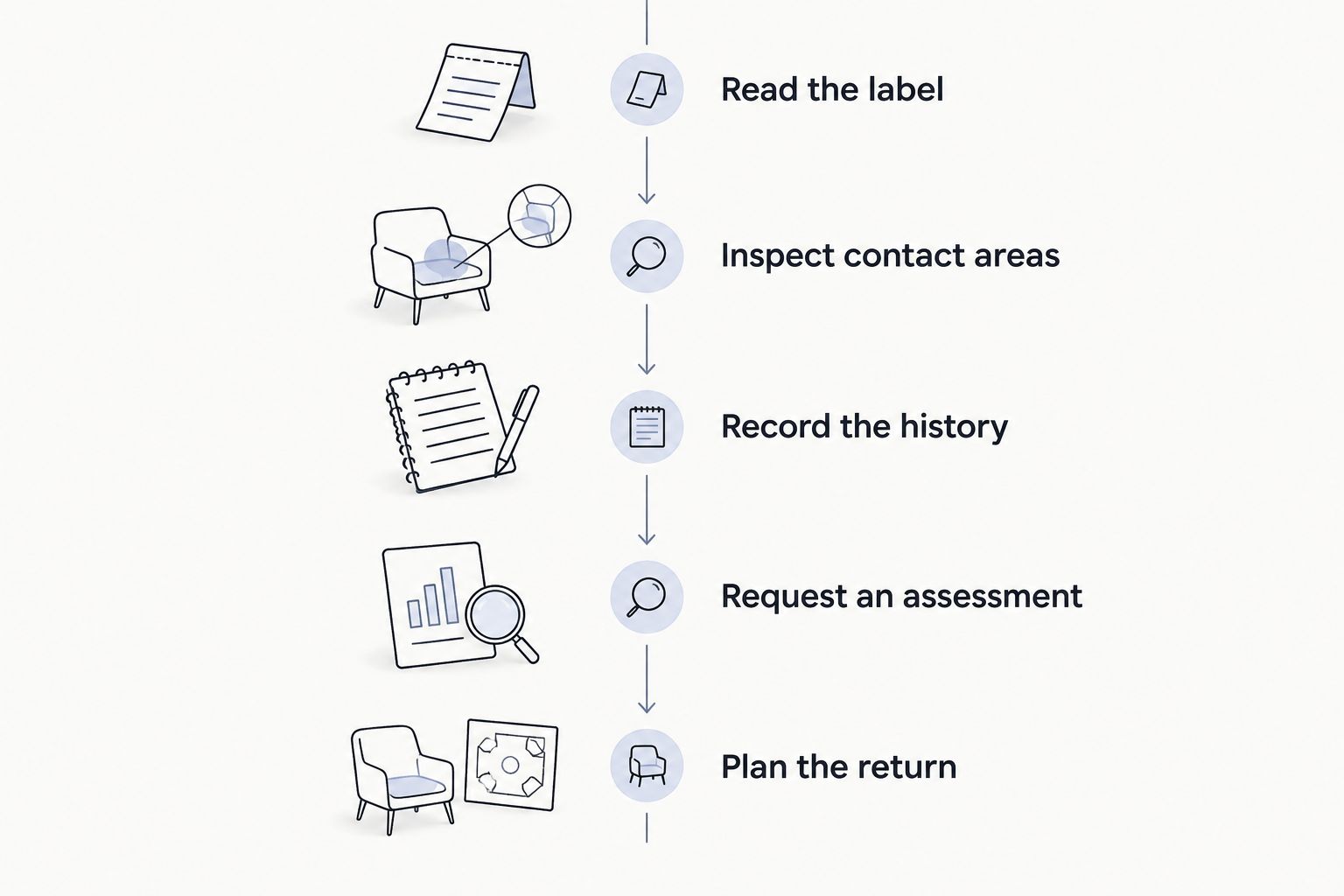
Keep a simple record for each piece rather than one note for the whole room. Recording the care code, problem location, treatment, and result makes your next decision more useful than an appointment date alone.
What should you do between professional upholstery cleanings?
Follow the manufacturer's routine-care directions and remove loose debris with an appropriate upholstery attachment where permitted. Pay attention to seams and cushion gaps, but avoid aggressive brushing on delicate surfaces.
For a fresh spill, follow the furniture maker's spill instructions promptly. Blotting rather than scrubbing helps avoid spreading the spill or disturbing the fabric surface; do not soak the area or improvise a chemical mixture.
Before using any permitted cleaner, follow its directions and the furniture manufacturer's testing instructions. If the fabric transfers color, changes texture, or reacts unexpectedly, stop treatment and seek advice.
Do not keep adding cleaner because a mark remains visible. Repeated applications can leave residue and make it harder to distinguish the original problem from the effects of earlier treatment. Tell the professional exactly what you used.
What can professional upholstery cleaning fix—and what can it not fix?
Professional cleaning addresses removable soil using a process suited to the material. It is not fabric repair, dye restoration, or a guarantee that every old mark will disappear.
Set expectations before authorizing treatment. Ask whether a visible problem appears to be removable soil, worn fabric, color loss, or another condition, and ask what the assessment can establish before work begins.
Odor also needs a source-based assessment. If a spill reached cushion filling or another internal component, treating the visible fabric alone does not establish that the underlying source has been removed.
For local service, Michaels Carpet Care upholstery cleaning is best for North Texas homeowners and businesses seeking fabric-upholstery care, not leather or vinyl cleaning. Its stated approach starts with safe, gentle products and uses something stronger only when the material needs it. That approach still requires realistic expectations about stains, wear, and fabric restrictions.
Discuss your upholstery cleaning needs
Share the care label, furniture type, and stain history before choosing a treatment.
Should you clean upholstery sooner if you have pets?
Pet use is a reason to inspect upholstery more closely, not to apply a universal shorter interval. Hair and surface dirt need different attention from an accident that penetrates the cushion.
Follow the care label for routine hair removal and report accidents promptly. Describe where the liquid reached rather than asking only for treatment of the visible mark.
Should you wait until a sofa looks dirty?
No—obvious discoloration is not the only reason to assess upholstery. Persistent residue, recurring odor, and known spills deserve attention even when the sofa still looks presentable.
For your 2026 plan, use recurring reminders to inspect the furniture rather than treating each reminder as an automatic cleaning order. Book according to the manufacturer's guidance and what the inspection shows.
FAQ
How often should upholstery be professionally cleaned if I live alone?
Follow the furniture manufacturer's recommended interval and assess the piece according to actual use. Living alone does not identify the fabric, soil level, or effect of a particular spill.
Does having a dog mean I need upholstery cleaning more often?
Having a dog means you should inspect shared seating more closely for hair, soil, and accidents. Arrange an assessment sooner when routine care does not resolve the problem; pet ownership alone does not establish a fixed interval.
Can I use a carpet cleaner on my fabric sofa?
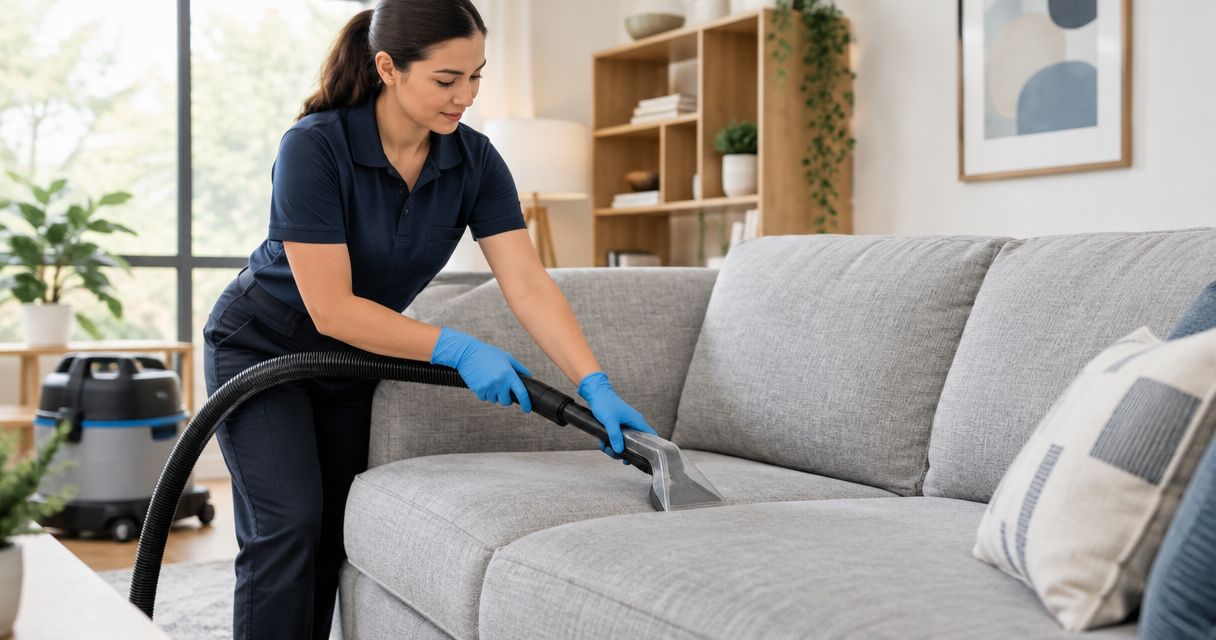
Use a carpet-cleaning machine on upholstery only when the furniture instructions and the equipment directions permit that use. A water-compatible care code does not automatically approve every machine, solution, or moisture level.
Should I have every chair cleaned at the same appointment?
Have each chair assessed according to its own material, instructions, and condition. Combining appointments does not mean every piece needs the same treatment or cleaning frequency.
Does professional upholstery cleaning remove every stain?
Professional upholstery cleaning does not guarantee removal of every stain. Permanent discoloration, wear, and damage are different from removable soil, so discuss likely results before treatment.
Does Michaels Carpet Care clean leather couches?
Michaels Carpet Care does not clean leather or vinyl upholstery. Use material-specific care guidance rather than treating a leather couch like a fabric sofa.
How soon can I sit on a sofa after professional cleaning?
Use the sofa only after it meets the cleaner's drying and return-to-use instructions. Fabric, cushion construction, treatment, and room conditions affect drying, so a carpet drying estimate is not an upholstery drying promise.
One last thing
The most useful cleaning reminder is an inspection reminder. When reviewing your 2026 household or business calendar, attach a photo of each furniture care label to its maintenance note. You will have the right instructions ready before a spill, a booking, or an unsuitable treatment turns a manageable problem into a harder one.