Pets can walk on cleaned floors once the surface is fully dry, any required rinsing or residue removal is complete, and the cleaning product’s pet reentry instructions have been met. A dry-looking floor alone does not confirm that a treatment is ready for paws, licking, or lying down. Use this 2026 guide to separate ordinary drying time from the restrictions that apply to the products used in your home.
- How soon can pets walk on floors after cleaning? Wait for complete drying and follow product-specific pet reentry instructions.
- Michaels Carpet Care’s fast-drying carpet cleaning suits North Texas homeowners who want less disruption; pet reentry still requires checking.
- Carpet, tile, grout, and sealed stone need different checks before pets return.
- Eco-friendly does not mean pets should walk through wet cleaning solution.
Why this matters
Your dog does not use the floor the way you do. Pets lie against cleaned surfaces, sniff treated spots, and groom their paws after walking through a room. Keeping paws off wet products helps prevent exposure that ordinary foot traffic does not involve.
For a 2026 appointment with Michaels Carpet Care, ask about pet access before cleaning starts. A separate room with water, bedding, and a closed door gives you a practical place to keep pets while the work and drying finish.
The right release point is a dry floor plus completed product instructions—not the moment the cleaner leaves. If you are planning around a carpet appointment, the guide to carpet drying after professional cleaning explains the drying side of that decision.
How soon can pets walk on floors after cleaning?
Let pets back onto cleaned floors only after you have checked the surface, the treatment instructions, and any additional work performed. There is no single waiting period that covers carpet cleaning, tile cleaning, disinfecting, and stone sealing.
Use this comparison to identify the check that matters for your floor. The advantages below concern practical access; none replaces the product label or your technician’s instructions.
| Floor or treatment | Practical advantage | Limitation | Before pets return |
|---|---|---|---|
| Low-moisture carpet cleaning | Less added moisture can simplify drying | A drying estimate is not a pet-safety clearance | Confirm drying and completion of the cleaning process |
| Wet-cleaned carpet | You can check the treated areas directly | Dense pile and damp patches complicate judging dryness | Check several locations, including heavily treated spots |
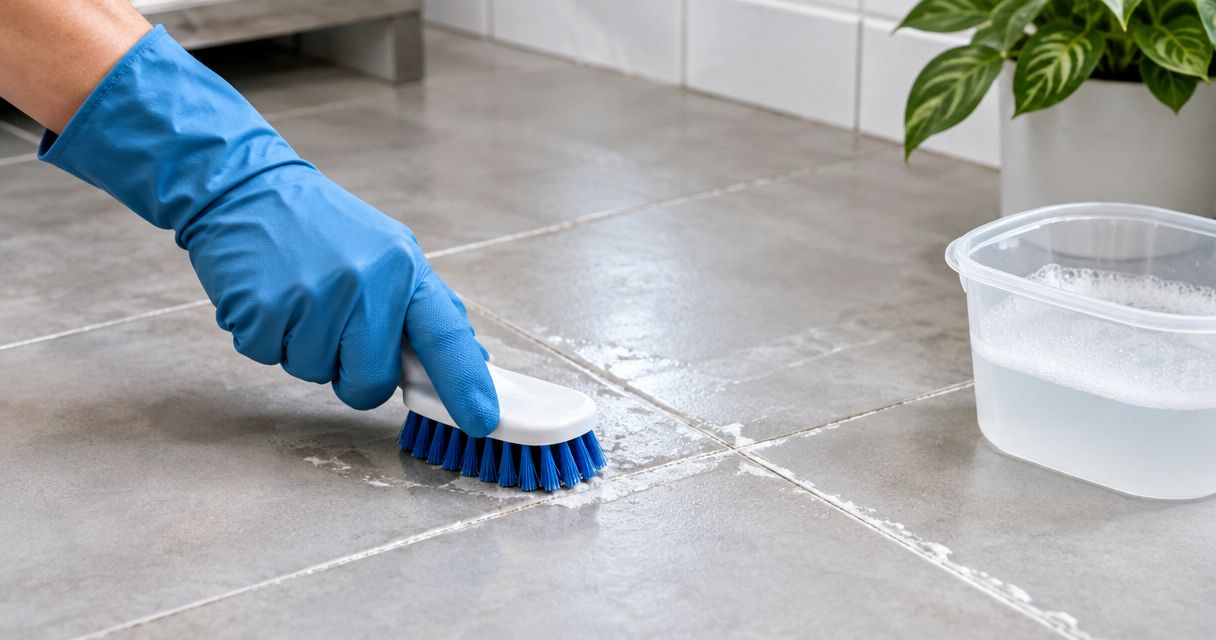
| Tile and grout cleaning | Exposed tile is easy to inspect | Grout and joints need their own check | Confirm the floor is dry and required rinsing is finished |
| Natural stone cleaning | The walking surface is accessible for inspection | An added sealer introduces separate instructions | Follow both cleaning and sealing restrictions |
| Disinfected flooring | Label directions identify the required process | Contact time does not automatically equal pet reentry time | Complete all label directions before allowing access |
A product’s contact time describes how long it needs to remain on a surface for its intended use. It is not permission to let a pet cross wet solution. If the label requires rinsing, drying, or keeping animals away, those steps still apply.
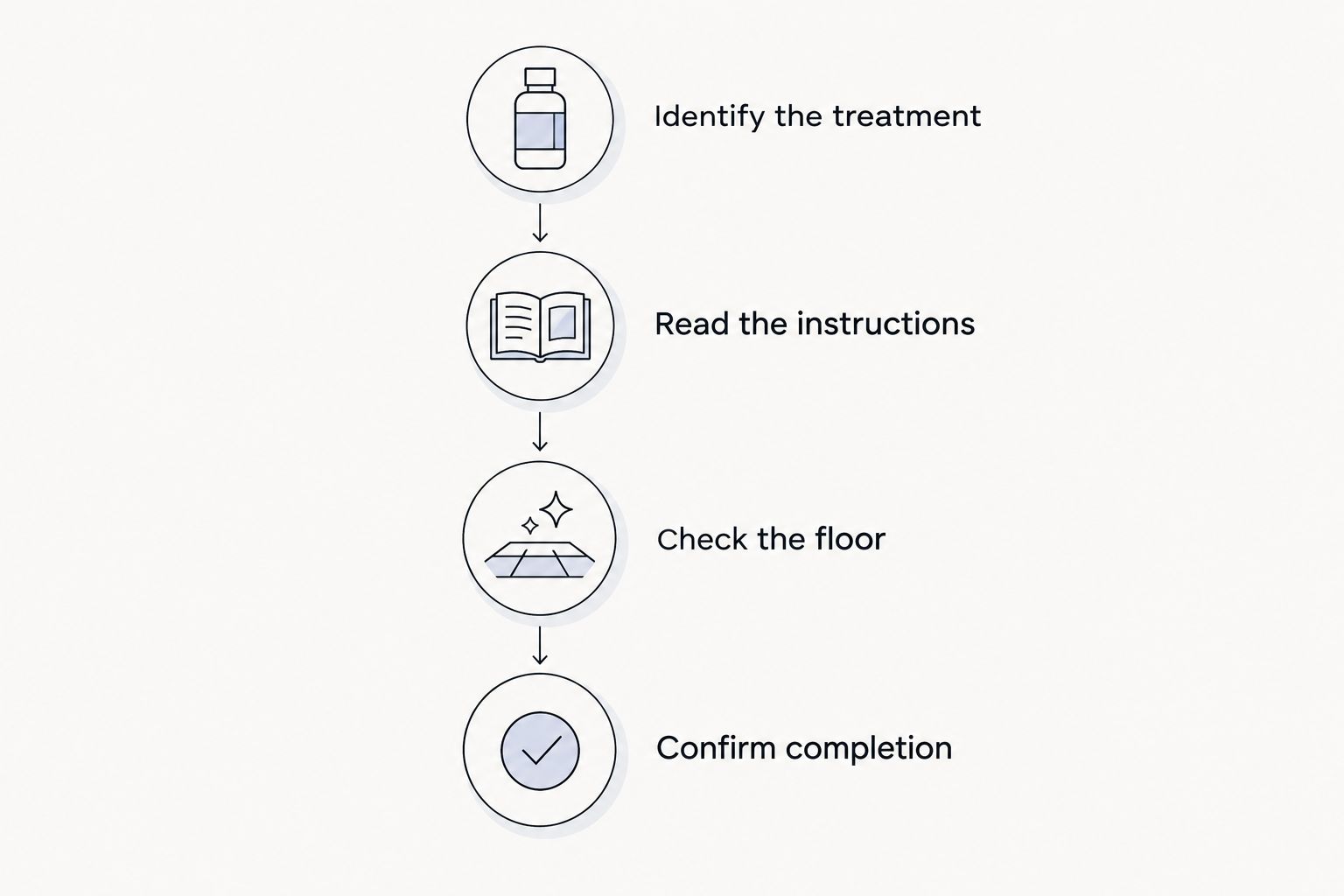
A simple release check
- Identify the treatment. Ask what was used and whether any spot treatment, disinfectant, protector, or sealer was added.
- Read the instructions. Confirm the pet reentry directions and whether rinsing or another finishing step is required.
- Check the floor. Look for damp areas, wet joints, visible cleaning material, or unfinished work.
- Confirm completion. Ask the technician about any area with different restrictions before opening the room.
A clean, dry towel pressed against carpet can help reveal moisture. It cannot establish chemical safety, and a dry towel does not override a product’s restrictions.
Low-moisture carpet: check dryness, not just the estimate
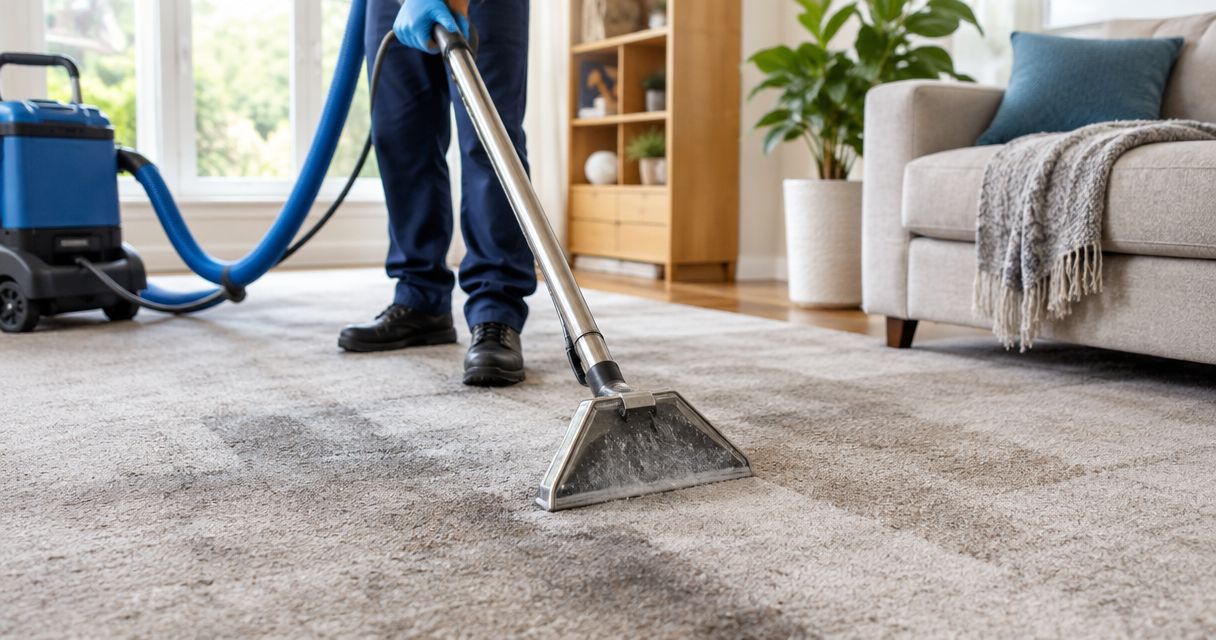
The brand’s carpet-cleaning guidance describes drying in 1–2 hours. Treat that as a drying expectation, not a universal countdown for pets. Your room conditions and the treatment actually used still determine when the carpet is ready.
For a 2026 carpet appointment, ask whether the quoted drying time applies to every cleaned area. A heavily treated spot deserves its own check rather than an assumption based on the rest of the room.
Low-moisture cleaning is useful when keeping a room out of service is difficult. Its limitation is straightforward: less water does not eliminate product instructions, finishing steps, or the need to inspect the carpet.
Check open areas and places with limited airflow. Do not release your dog because the carpet near the doorway feels dry while another area remains damp. Ask whether a final vacuuming step is part of the method before treating the job as finished.
Tile and grout: inspect the joints as well as the tile
Tile can look ready before you have checked the grout lines. Inspect both. Wet hard flooring also creates a slipping risk, so keep running pets away until the walking surface is dry.
If the cleaning product requires rinsing, drying does not replace that rinse. Ask whether the floor received cleaning alone or an additional disinfecting treatment, because those processes have different directions.
The practical advantage of tile is visibility: you can see puddles, streaks, and wet patches without moving through carpet pile. The limitation is that appearance does not establish whether the cleaning process is complete.
Keep food bowls, water bowls, and pet bedding off the treated area until the floor is ready. Then return clean items to the room rather than setting them into wet solution during the job.
Natural stone: cleaning and sealing have separate rules
A stone floor that has been cleaned is not necessarily subject to the same restrictions as a stone floor that has also been sealed. Ask explicitly whether sealing was included. Do not infer the answer from the floor’s appearance.
For natural stone work scheduled in 2026, get the sealer’s traffic and pet-access instructions before the appointment. If sealing adds a restriction beyond ordinary drying, plan the pet’s route around that restriction.
Stone’s accessible surface makes checking for visible moisture straightforward. The drawback is that an added treatment can control access even after the floor looks dry. A dry surface does not cancel a sealer’s stated cure or reentry requirements.
Avoid testing readiness by letting a pet walk across the floor. Use the instructions and the technician’s confirmation instead; pets should not be the test of whether a treatment is finished.
Why the waiting time varies
The useful question is not simply how long cleaning takes. Ask what must happen before your specific floor can return to use.
- Cleaning method. Different methods leave different amounts of moisture and involve different finishing steps. Confirm which method was used rather than relying on a general description of carpet cleaning.
- Product directions. Cleaners, disinfectants, spot treatments, and sealers have their own use instructions. A pet-access restriction on an added treatment still applies after ordinary cleaning finishes.
- Air movement and humidity. Moisture evaporates differently in different room conditions. Follow ventilation guidance without using an open exterior door that lets a pet escape.
- Floor construction. Carpet pile, grout joints, and smooth tile do not present identical drying checks. Inspect the places that can remain damp rather than judging only the most exposed surface.
- Localized treatment. A stain or odor spot can receive different treatment from the surrounding floor. Ask whether that area needs a separate waiting period or finishing step.
Do not add another household product to make a professionally cleaned floor seem safer. Mixing or layering cleaners introduces another set of instructions and can create hazards. If residue concerns you, ask the cleaner how to address it.
How can you keep pets comfortable while floors dry?
Set up the pet’s space before cleaning begins. Choose an untreated room with a closable door and enough room for familiar bedding and water. Place a litter box where your cat can reach it without crossing the work area.
A closed door provides clearer separation than a barrier your pet can jump or squeeze through. Tell everyone in the household which rooms are closed, including anyone returning home after the appointment.
Plan toilet breaks as well. If the usual route crosses the cleaned room, arrange another route before work starts. Keep leads, carriers, and anything needed for that route outside the treatment area so you do not have to retrieve them mid-job.
For your 2026 household cleaning plan, schedule the work when someone can manage access rather than relying on the pet to avoid a damp floor. If safe separation is not possible, discuss cleaning rooms in stages or arrange for the pet to stay elsewhere during the work.
Does eco-friendly cleaning mean pets can return immediately?
No. Eco-friendly describes an approach or product attribute; it is not a substitute for instructions about animal exposure. Keep pets away from wet cleaning products even when a service emphasizes gentle methods.
Michaels Carpet Care provides eco-friendly carpet, tile, grout, upholstery, and natural stone cleaning for homes and businesses in McKinney, Frisco, Plano, and Allen. That makes the service relevant for local households coordinating several surfaces, but each treatment still needs its own return-to-use instructions.
Ask a direct question: what needs to be dry, removed, rinsed, or cured before the pets come back? A clear answer is more useful than a broad reassurance about a product being natural or gentle.
Plan cleaning around your pets
Ask about the cleaning method, drying expectations, and pet reentry instructions before your appointment.
What should you do if a pet walks on a freshly cleaned floor?
Move the pet away from the treated area and prevent further contact. Identify the product used and check its first-aid instructions. Do not assume that an absence of obvious symptoms means every exposure is harmless.
If a pet licked the floor, groomed contaminated paws, or develops concerning symptoms, contact your veterinarian or an animal poison-control service promptly. Have the product name, label, and details of the exposure ready so the advice matches the actual substance.
Do not induce vomiting or try a home remedy unless a veterinary professional directs you to do so. Product-specific advice matters more than a general internet instruction about floor cleaners.
FAQ
Can my dog walk on carpet that is still slightly damp?
Keep your dog off slightly damp carpet until it is dry and the treatment’s pet reentry instructions are satisfied. Dampness can transfer cleaning material to paws, which dogs then groom.
Does the 1–2 hour carpet drying estimate mean my pets can return then?
The 1–2 hour estimate describes drying, not automatic permission for pets to return. Check the carpet and confirm that all product-specific restrictions and finishing steps are complete.
Can my cat walk on tile as soon as it looks dry?
A dry-looking tile surface alone is not enough to confirm pet access. Check grout lines, complete any required rinsing, and follow the cleaning product’s instructions.
Is a floor safe for pets once the cleaning smell disappears?
The absence of a cleaning smell does not establish that a floor is ready for pets. Use the product instructions and the floor’s actual condition rather than odor as your release check.
What should I ask Michaels Carpet Care before a pet-friendly cleaning appointment?
Ask Michaels Carpet Care which method and products will be used and what must happen before pets return. Mention any planned spot treatment, disinfecting, protection, or sealing so the instructions cover the whole job.
Can I put pet beds back before the floor finishes drying?
Wait until the floor is dry and all treatment restrictions are complete before replacing pet beds. Bedding can cover damp areas and bring your pet back into contact with the treated surface.
Should pets stay off a stone floor longer after sealing?
Follow the sealer’s stated access instructions rather than applying the cleaning-only waiting period. A sealer can have restrictions that remain after visible moisture disappears.
One last thing
Check the route, not just the room. A ready living room does not help if your pet must cross a wet kitchen or newly sealed hallway to reach it. Before opening the door, trace the path to water, bedding, and the outside exit, and confirm that every treated section is ready.