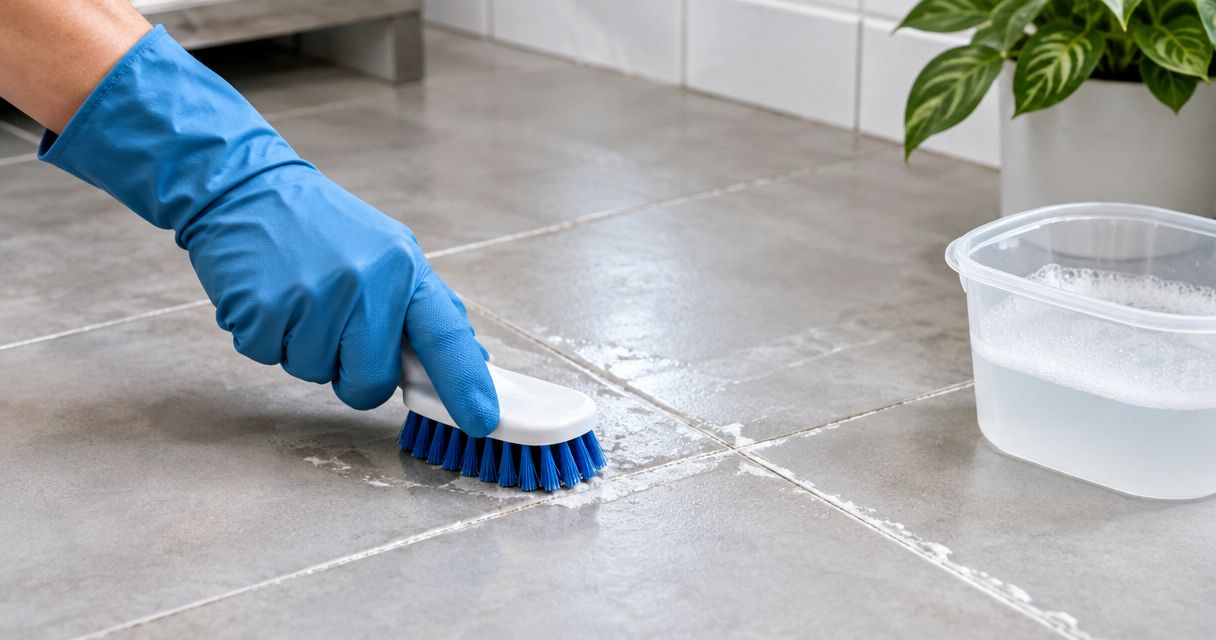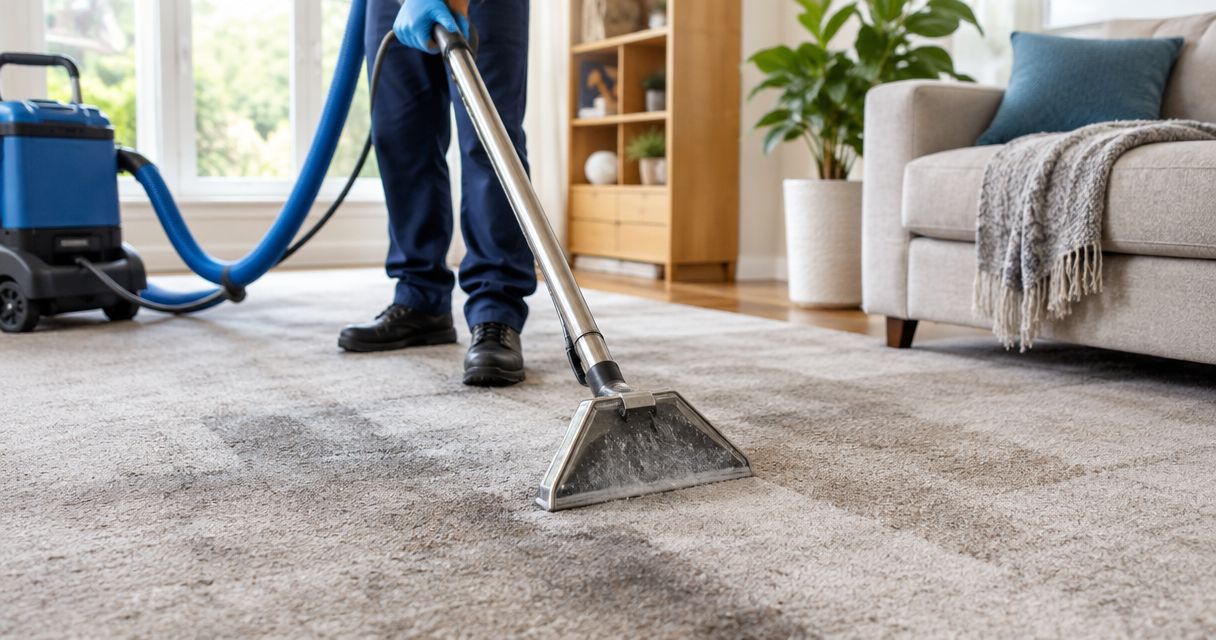
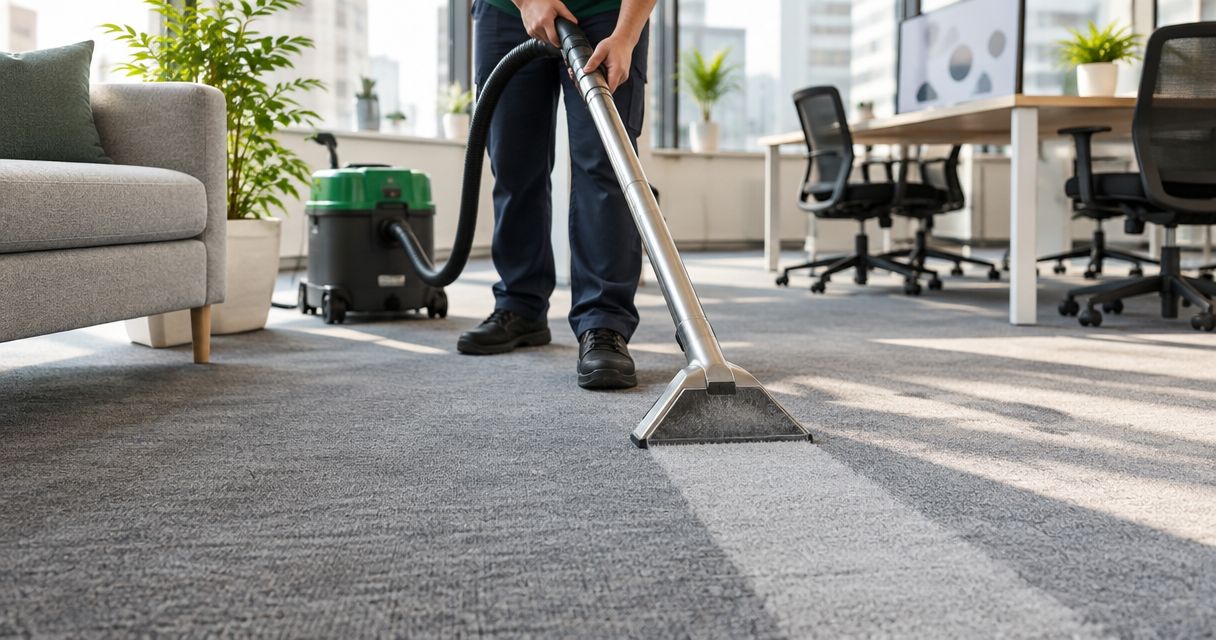
Yes—eco-friendly carpet cleaning can remove heavy-traffic soil when the method matches the carpet, the soil, and the condition of the fibers. For your 2026 cleaning plan, the important limit is that cleaning removes contamination; it does not reverse permanent wear, replace damaged fibers, or guarantee removal of every old stain.
- Is eco-friendly carpet cleaning tough enough for heavy traffic? Yes—soil removal depends on the process, not the label.
- Michaels Carpet Care offers eco-friendly carpet cleaning for North Texas homeowners and businesses seeking fast-drying service.
- Low-moisture cleaning limits added water, but heavy soil still requires suitable preparation and removal.
- A worn traffic lane can remain visibly different after its removable soil is gone.
Why this matters: A dark hallway does not automatically need stronger chemicals. Tracked-in grit, oily soil, cleaning residue, and worn fibers require different responses. Choosing a treatment before identifying the problem risks treating damage as dirt.
For local help, Michaels Carpet Care provides residential and commercial carpet cleaning in McKinney, Frisco, Plano, and Allen. The useful starting point is an assessment of the traffic lane—not a promise that every dark patch will disappear.
Is eco-friendly carpet cleaning tough enough for heavy traffic?
Yes, provided the cleaner addresses the actual soil rather than relying on an eco-friendly label. Effective cleaning combines soil identification, dry-soil removal, suitable cleaning chemistry, controlled agitation, and removal of loosened material. Adding more water or stronger detergent is not a substitute for those steps.
A busy living room and an office corridor both experience repeated foot traffic, but their cleaning needs are not necessarily identical. Carpet construction, tracked-in material, spills, and previous maintenance all affect the treatment.
| Approach | Best for | Main advantage | Main limitation |
|---|---|---|---|
| Low-moisture cleaning | Routine traffic-lane maintenance where limited added moisture matters | Reduces the amount of water introduced during cleaning | Heavy or unusual contamination still needs assessment and targeted treatment |
| Hot-water extraction | Compatible carpet requiring rinsing and extraction of loosened soil | Provides a rinsing stage with recovery of cleaning solution | Drying depends on water recovery, carpet construction, and room conditions |
| Targeted spot treatment | Identified spills or localized marks | Addresses a particular contaminant instead of treating everything alike | Does not correct wear or replace whole-area soil removal |
These approaches are not environmental ratings. Either a low-moisture or extraction process needs appropriate products, correct application, and attention to the carpet manufacturer's instructions.
For 2026, compare the proposed work rather than method names alone. Ask what the cleaner will remove, how loosened soil leaves the carpet, and which marks are unlikely to change.
Low-moisture cleaning: limited water, deliberate soil removal
Low-moisture cleaning is a practical option when you want to limit added water and reduce disruption. It is not simply a light surface wipe. Depending on the system, cleaning material is worked through the pile and subsequently recovered, carrying loosened soil with it.
The brand's stated approach includes Host Dry low-moisture technology, using about 10% of the water used in steam cleaning, with a stated drying window of 1–2 hours. Those details describe water use and drying expectations; they do not establish that every stain will come out.
The advantage is controlled moisture. The limitation is that low moisture alone does not resolve every type of contamination. An oily traffic lane, a drink spill, and contamination below the carpet surface need separate consideration.
Ask how the cleaner handles heavier patches within the low-moisture process. A useful answer explains preparation, treatment, agitation, and recovery—not just the machine's name.
Hot-water extraction: rinsing with moisture management
Hot-water extraction introduces cleaning solution and recovers it through extraction. Its rinsing action is useful when the carpet and the soil call for that treatment. Product selection still matters; extraction is not automatically harsh, and low-moisture cleaning is not automatically gentle.
The trade-off is moisture management. Recovery technique, airflow, humidity, and carpet construction affect how the cleaned area dries. A method comparison that ignores those conditions leaves out an important part of the job.
Choose extraction because the carpet needs its cleaning action, not because a traffic lane looks alarming. Confirm that the proposed process follows the carpet manufacturer's care instructions, especially where warranty requirements apply.
Neither method can promise a like-new result on permanently worn carpet. That limit belongs in the discussion before cleaning begins.
Why heavy-traffic cleaning results vary
The same process can produce different visible results in different rooms. These factors explain why an entrance and a lightly used bedroom should not receive identical expectations:
- Soil type: Loose grit needs removal; greasy material needs treatment that releases it from the fibers. Treating both as the same problem misses the cause.
- Carpet construction: Fiber type, pile structure, backing, and manufacturer instructions affect suitable products and methods.
- Previous cleaning residue: Remaining detergent can contribute to resoiling. Adding more product without addressing residue does not solve that cycle.
- Permanent wear: Abrasion, crushed pile, and color loss change appearance independently of removable dirt.
- Contamination depth: A surface mark and material that has reached the backing or cushion require different assessments.
- Drying conditions: Air movement and indoor humidity influence drying after moisture is introduced, even with a low-moisture process.
Use these factors to evaluate a 2026 service proposal. The cleaner should connect the recommended treatment to your carpet's condition rather than present a universal answer for every room.
What should a cleaner do before treating a traffic lane?
A sensible process starts with inspection and ends with a clear explanation of the result. You do not need technical training to ask whether the following steps are included.
- Inspect the carpet. Identify the fiber and construction where possible, check care requirements, and distinguish suspected wear from removable soil. Point out recurring stains and previous treatments.
- Remove dry soil. Thorough vacuuming removes loose material before wet or damp treatment. Give entrances, turning points, and the path beside furniture particular attention.
- Test the treatment. Check product compatibility in an inconspicuous area before broader application. A spot test checks the proposed treatment; it does not guarantee removal of every mark.
- Treat the soil. Apply suitable cleaning products and controlled agitation for the identified condition. Stronger chemistry should answer a specific need, not serve as the default.
- Recover and inspect. Remove loosened soil using the chosen system, then review remaining marks and drying instructions. Identify what needs further assessment rather than repeatedly treating an unchanged patch.
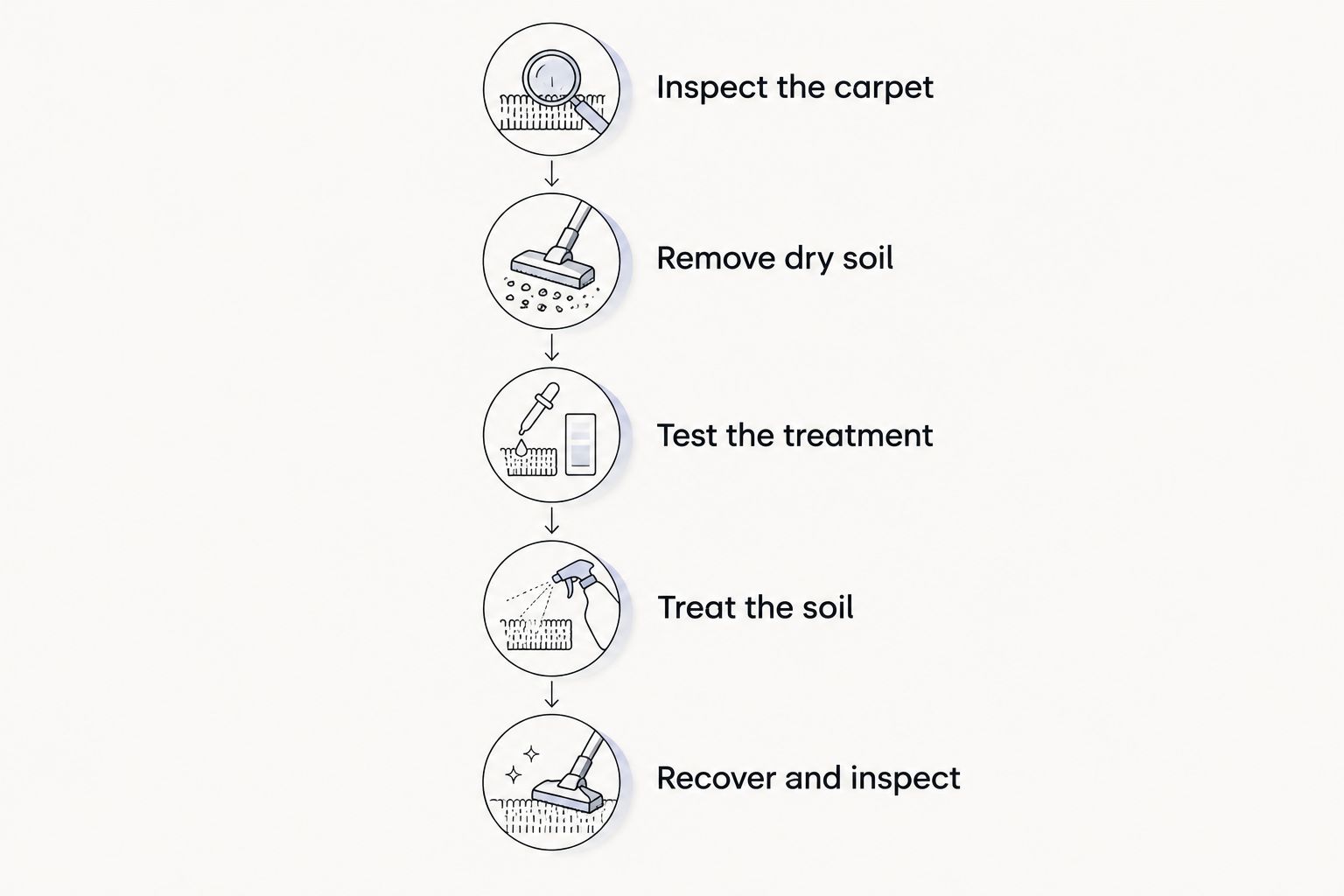
The order matters because loose grit and bonded soil are different problems. Treating a carpet before adequately removing loose material makes the job harder than it needs to be.
Michaels Carpet Care is best for North Texas homeowners and businesses seeking eco-friendly carpet cleaning with a fast-drying approach. Its gentle-first approach starts with safe, gentle products and moves to something stronger only when the carpet needs it; that is not a promise to erase permanent damage.
How can you tell dirt from permanent carpet wear?
You cannot reliably diagnose every dark lane by looking at it. Dirt changes how a carpet looks, but so do flattened fibers, abrasion, shading, and color loss. A clean worn area can still contrast with carpet protected beneath furniture.
Ask the cleaner to explain the likely causes before treatment and review them afterward. If the removable soil is gone but the texture remains different, repeating the same treatment is not necessarily useful.
Look at the carpet from different directions and under consistent lighting. Changes in pile direction affect reflected light, so an apparent stripe is not always a remaining stain.
Set the target as cleaner carpet, not a guaranteed match to an unworn section. That distinction protects you from approving unnecessary repeat treatments in pursuit of a result cleaning cannot deliver.
How long will a busy room be out of use?
The stated drying window for the brand's low-moisture approach is 1–2 hours, but your room still needs a condition check before normal use. A clock does not establish that every area is dry, especially near a heavily treated spot.
Build your 2026 appointment around access as well as cleaning. Decide how people will move between rooms, tell the cleaner which route must remain usable, and ask when furniture and ordinary traffic can return.
Do not treat the 2-hour end of a stated window as permission to ignore remaining dampness. Follow the cleaner's instructions and check the actual carpet condition.
For a fuller explanation of moisture and room conditions, see how long carpet takes to dry after professional cleaning. Drying time and soil-removal performance are separate questions; a quick return to use does not prove that every contaminant was removed.
What should you ask before booking heavy-traffic cleaning?
Ask questions that reveal the work involved, not just the environmental description. Your cleaner should explain the proposed treatment in ordinary language.
- What appears to be soil, and what appears to be wear?
- How will you remove loose grit before treating the lane?
- What makes the products suitable for this carpet?
- How will you recover the loosened material?
- Which stains need separate treatment or have uncertain outcomes?
- What should I do before people and pets use the room again?
“Eco-friendly” does not, by itself, identify a certification, establish product safety for every exposure, or describe cleaning strength. Ask about the actual products and follow their use instructions.
For your 2026 booking, describe the traffic pattern as well as the room: an entrance used by outdoor shoes, a hallway between busy rooms, or an office route around desks. That information is more useful than saying the carpet needs the strongest treatment available.
FAQ
Is eco-friendly carpet cleaning strong enough for a busy family home?
Yes—eco-friendly carpet cleaning can remove heavy-traffic soil when the process suits the carpet and contamination. It does not reverse permanent wear, and individual stains need assessment.
Is low-moisture carpet cleaning better than steam cleaning for traffic lanes?
Neither method is automatically better for every traffic lane. Low-moisture cleaning limits added water, while hot-water extraction provides rinsing and solution recovery; the carpet and soil determine the appropriate choice.
How long does Michaels Carpet Care's low-moisture carpet cleaning take to dry?
Michaels Carpet Care states a drying window of 1–2 hours for its low-moisture approach. Follow the cleaner's instructions and check actual dryness rather than relying only on elapsed time.
Will eco-friendly cleaning make a worn hallway look new?
No cleaning method can guarantee that a worn hallway will look new. Cleaning removes soil, but abrasion, color loss, and permanent pile damage can remain visible.
Does eco-friendly carpet cleaning mean no chemicals are used?
No—eco-friendly does not mean chemical-free. Ask which products are used, why they suit your carpet, and what handling or re-entry instructions apply.
Can I keep walking on the carpet while it dries?
Follow the cleaner's instructions about foot traffic while the carpet dries. Arrange another route where possible, and do not assume that a surface that feels dry means every treated area is ready.
How often should a heavily used hallway be cleaned?
Set the cleaning interval around soil buildup, traffic, and the carpet manufacturer's care instructions. A fixed calendar interval does not replace inspection, regular vacuuming, and prompt attention to spills.
One last thing
A traffic lane is also a map of where soil enters and collects. After cleaning, look at the route from the entrance to the busiest room. Entrance mats, regular vacuuming, and prompt spill care address the cause of repeated buildup rather than waiting for the entire path to darken again.
For the rest of 2026, inspect that route as part of ordinary housekeeping. If the same spot returns quickly, tell the cleaner before applying more treatment; recurring soil, residue, and permanent wear need different responses.