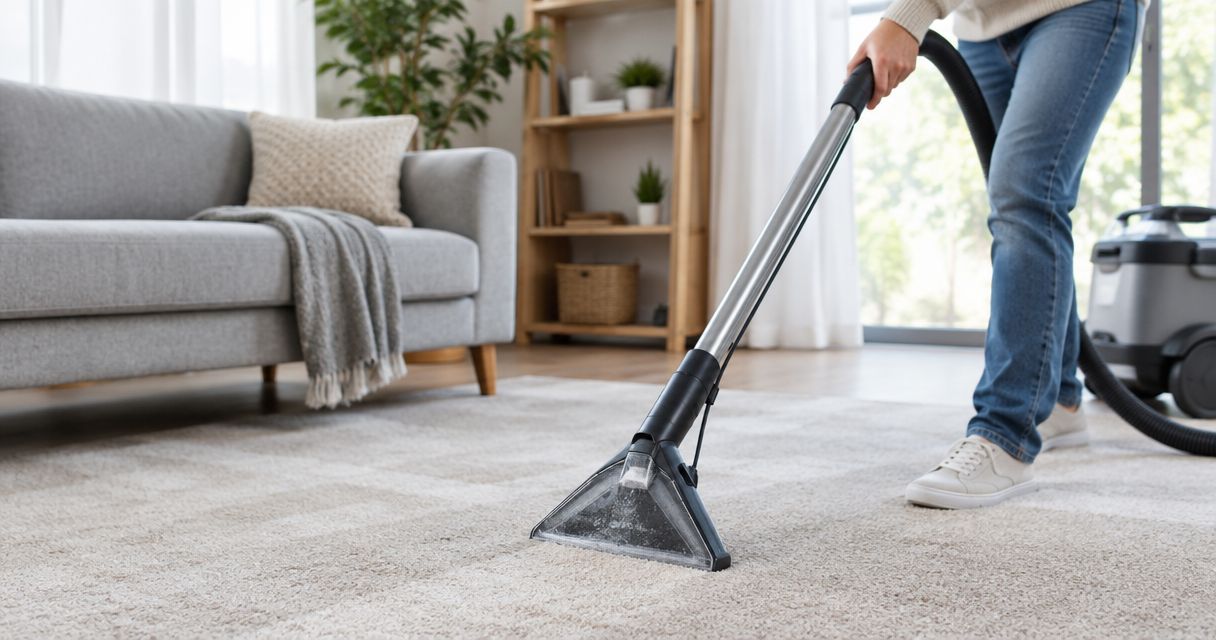
Low-moisture carpet cleaning is not automatically better for allergies: using less water does not prove that a method removes more allergens or improves symptoms. Its practical advantage is limiting added moisture and shortening drying time; you still need effective soil removal, suitable cleaning products, and control of the allergens entering your home. For your 2026 cleaning plan, choose the process that addresses those needs rather than treating “low-moisture” as a medical claim.
- Is low-moisture carpet cleaning better for allergies? Not automatically; moisture control and allergen removal are different goals.
- Michaels Carpet Care offers fast-drying carpet cleaning, not a guaranteed treatment for allergy symptoms.
- Compare soil removal, drying conditions, and cleaning products—not water use alone.
- Persistent dampness needs investigation; routine carpet cleaning does not correct a moisture source.
Why this matters
A carpet can look cleaner without answering the question that matters to you: what happened to the material triggering your symptoms? Dust, tracked-in pollen, and pet allergens require attention to removal, not just appearance or fragrance. A pleasant smell is not evidence of lower allergen exposure.
Drying is a separate concern. Review how long carpet takes to dry after professional cleaning before booking, especially if you need the room back quickly or have had problems with lingering dampness.
For a 2026 household cleaning plan, keep those goals separate: remove accumulated soil, avoid unnecessary irritants, and prevent persistent moisture. No method name answers all of them.
Is low-moisture carpet cleaning better for allergies?
Low-moisture cleaning has a moisture-management advantage, but that is not proof of an allergy-treatment advantage. Compare what each process removes, what it leaves behind, and how the carpet dries. The carpet’s construction and care instructions also matter.
| Approach | Best for | Practical advantage | Limitation to discuss |
|---|---|---|---|
| Low-moisture cleaning | Households prioritizing limited added moisture and quicker room use | Introduces less cleaning moisture than a wetter process | The method still needs an effective way to collect loosened soil and cleaning material |
| Hot-water extraction | Suitable carpets needing a rinse-and-recovery process | Applies cleaning solution and extracts it with loosened soil | Drying depends on application, recovery, carpet construction, and room conditions |
| Routine HEPA-filtered vacuuming | Ongoing removal of loose particles between professional visits | Collects dry debris without wetting the carpet | Does not replace treatment for embedded soil, spills, or contamination below the carpet |
These approaches are not interchangeable. Vacuuming is ongoing maintenance; professional cleaning addresses needs that routine vacuuming does not resolve. Neither professional method guarantees symptom relief.
A useful comparison therefore starts with your carpet’s condition. Ask the cleaner to explain the removal process and why it suits the material, rather than asking for the method with the strongest allergy-related wording.
Low-moisture cleaning: less added water, not an allergy guarantee
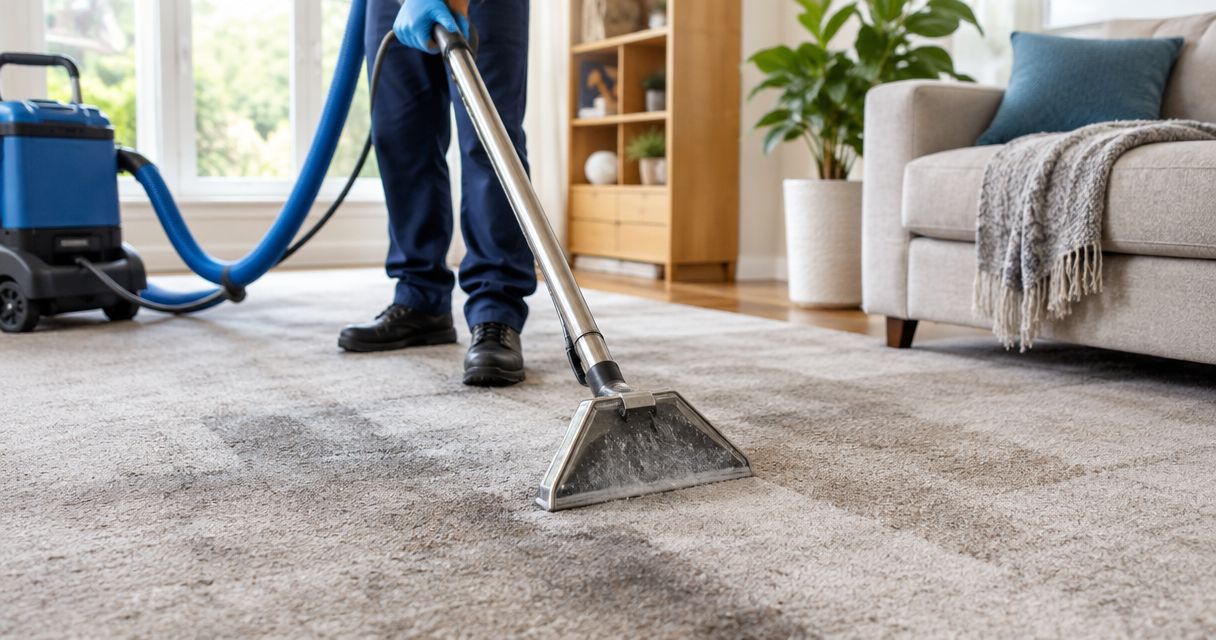
Low-moisture cleaning limits the water introduced during treatment. Depending on the process, soil is collected through absorbent material, pads, vacuum recovery, or a combination of steps. Ask which process will actually be used; “low-moisture” describes a category, not a complete work specification.
Its main attraction is practical. You want the carpet cleaned without leaving unnecessary moisture in the room, particularly where ventilation is limited or furniture makes drying difficult.
The limitation is equally important: less water does not establish how much allergen material was removed. Ask how the technician collects loosened debris, whether follow-up vacuuming is required, and who completes that step. A short drying estimate should not replace those answers.
Also check the carpet manufacturer’s care requirements. A method that fits your schedule still needs to fit the carpet’s fiber, backing, and installation.
Hot-water extraction: assess recovery, not the word “steam”
Hot-water extraction applies cleaning solution and recovers it with suction. It is commonly called steam cleaning, but the useful questions concern application, rinsing, recovery, and drying—not the label.
For compatible carpet, the rinse-and-recovery process addresses soil through a different mechanism than dry collection. Ask the cleaner to explain why that mechanism suits your carpet’s condition and how excess moisture will be avoided.
Its trade-off is the drying requirement. More thorough recovery and suitable room conditions matter; a wet carpet is not evidence of a more thorough clean.
Do not assume that hot-water extraction sterilizes your carpet or permanently removes every allergen. Likewise, do not reject it solely because it uses water. Judge the complete process, including what happens after the equipment leaves.
Why allergy-related results vary
The same method name does not describe every carpet, household, or cleaning appointment. These factors change what you need from the service:
- Allergen source: Pollen tracked indoors, pet allergens, and moisture-related problems call for different follow-up measures.
- Soil collection: Loosening particles is only part of cleaning; the process must also collect and remove them.
- Cleaning products: Fragrance sensitivity and irritation deserve a product discussion, even when a service is described as eco-friendly.
- Carpet condition: Fiber, backing, existing damage, and contamination below the surface affect the appropriate treatment.
- Drying conditions: Humidity, ventilation, and moisture recovery affect how the carpet dries after cleaning.
- Continued exposure: Cleaning the carpet does not stop new pollen, pet allergens, or dust from entering the room.
This is why a single “allergy-friendly” label is not enough. You need an explanation of the work, its limits, and the maintenance that follows it.
How to choose a cleaner for an allergy-sensitive home
Use this sequence when arranging carpet cleaning in 2026. It turns a broad health-related question into specific service decisions without asking a cleaner to diagnose your symptoms.
- Describe triggers. Explain whether your concern involves dust, pets, seasonal pollen, fragrance, or dampness. Share known product sensitivities before treatment, not after the technician starts.
- Check carpet. Identify the carpet material and available care instructions. Point out previous water damage, recurring odors, loose seams, and areas that stayed wet after earlier cleaning.
- Confirm removal. Ask how loose debris is collected before treatment and how loosened soil leaves the carpet afterward. Request a plain explanation of any required follow-up vacuuming.
- Review products. Ask what will be applied and whether optional fragrance or deodorizer can be omitted. Product information is more useful than an unsupported promise that something is safe for everyone.
- Plan drying. Discuss ventilation, room access, furniture, and the expected drying conditions. Ask what to do if the carpet remains damp beyond the cleaner’s estimate.
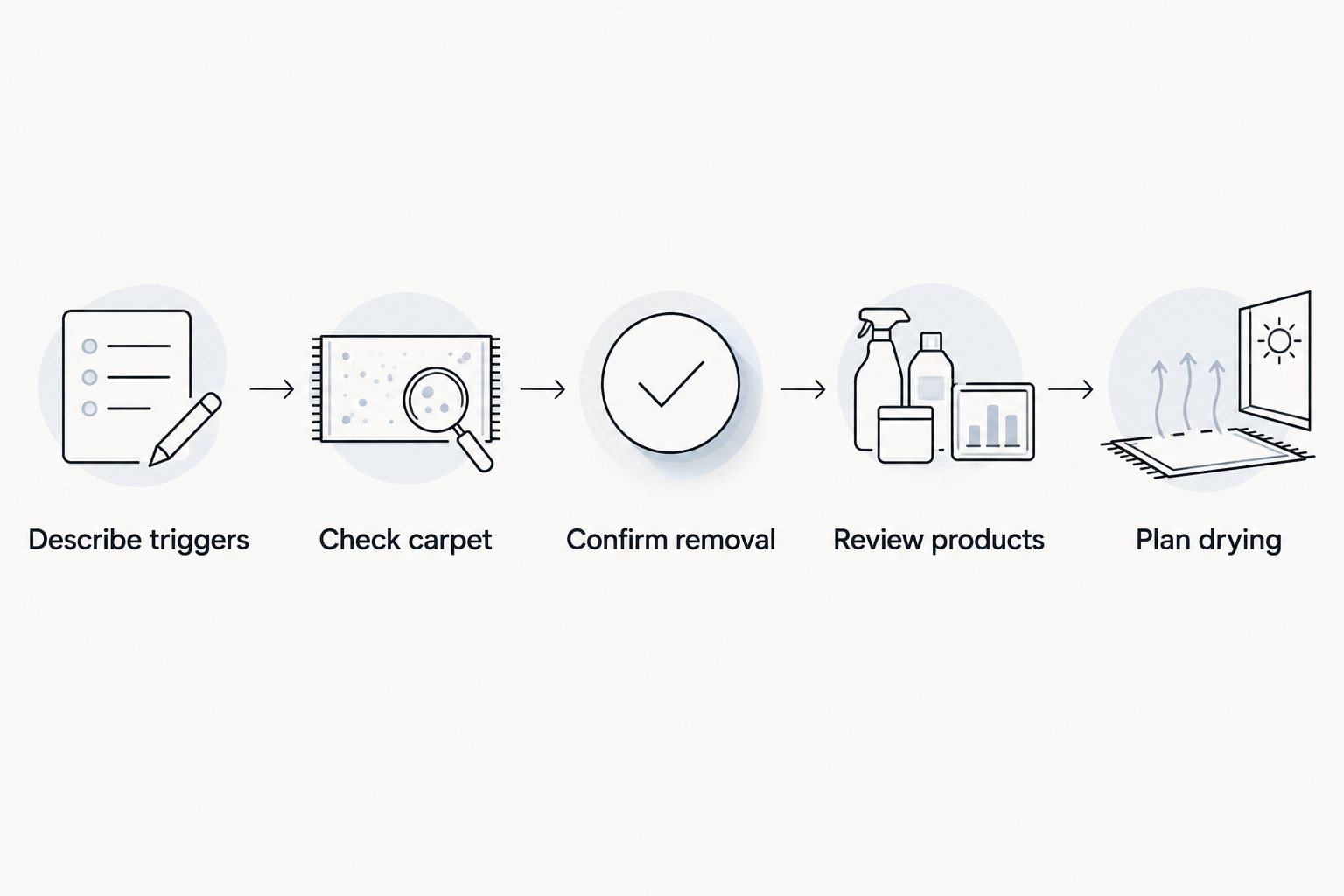
A clear answer should connect each recommendation to your carpet. If the explanation stops at “uses less water,” ask the next question: how does the process remove the material already in the fibers?
Keep any medical questions with your clinician. A cleaner can explain products, equipment, and drying procedures, but cannot establish which indoor exposure is responsible for your symptoms.
Does fast drying mean fewer allergens?
Fast drying does not measure allergen removal. It describes how quickly added moisture leaves the carpet, which matters for moisture control and returning the room to use.
For example, a stated drying time of 1–2 hours is a scheduling detail, not a measured reduction in pollen, pet allergens, or symptoms. Ask what conditions the estimate assumes and whether it applies to every treated area.
Likewise, a claim of using about 10% of the water used by steam cleaning describes water consumption. It does not mean that the process removes a corresponding percentage of allergens. Keep environmental, operational, and health claims separate when comparing services.
Will carpet cleaning get rid of dust mites?
Carpet cleaning is not a guarantee that dust mites or their allergens are eliminated. Removing accumulated debris and controlling indoor moisture are different parts of household care, and cleaning alone does not prevent continued exposure.
The U.S. Environmental Protection Agency recommends keeping indoor relative humidity below 60%, ideally 30–50% relative humidity. Use that established moisture-control guidance when reviewing your 2026 home routine; it is not a performance claim for any carpet-cleaning service.
Do not treat killing an organism and removing its allergenic material as the same outcome. Ask what the service physically removes rather than accepting a broad sanitizing claim as proof of allergy relief.
Is low-moisture cleaning enough if the carpet smells musty?
Low-moisture cleaning is not a substitute for investigating a musty smell or persistent dampness. A recurring moisture problem requires attention to its source, including the possibility of affected padding, subflooring, or nearby building materials.
Tell the cleaner about leaks, previous flooding, and odors that return after cleaning. Surface treatment cannot correct an active leak or establish the extent of hidden moisture damage.
Resolve the moisture problem before treating the carpet as a routine cleaning job. If you see suspected mold or have significant water damage, seek an appropriate assessment rather than relying on deodorizer or repeated cleaning.
What Michaels Carpet Care offers North Texas households
Michaels Carpet Care is best for North Texas homeowners seeking eco-friendly, fast-drying carpet cleaning rather than a promised allergy cure. The service area includes McKinney, Frisco, Plano, and Allen, with residential and commercial cleaning available.
The brand describes Host Dry low-moisture technology, water use of about 10% of what steam cleaning uses, and drying in 1–2 hours. Those details explain the practical appeal of Michaels Carpet Care carpet cleaning, but they are not evidence of a particular allergen-removal rate or medical outcome.
The gentleness-first approach starts with safe, gentle products and uses something stronger only when the carpet needs it. For your 2026 appointment, discuss individual sensitivities and the treatment proposed for your carpet; eco-friendly wording does not replace that conversation.
The honest limit is straightforward: carpet cleaning addresses the carpet. It does not diagnose allergies, stop outdoor pollen, or replace treatment for a moisture problem beneath the floor.
Discuss your carpet cleaning needs
Ask about low-moisture cleaning, product sensitivities, and drying conditions for your North Texas home.
Build a cleaning plan beyond the carpet
A professional visit is one part of exposure control, not the whole plan. After cleaning, focus on preventing avoidable buildup rather than waiting for the carpet to look visibly dirty again.
- Use a well-maintained HEPA-filtered vacuum for regular dry-soil collection, following the equipment and carpet instructions.
- Address tracked-in debris at entrances and clean the surrounding hard surfaces, too.
- Include upholstered furniture and other dust-collecting textiles in your household routine.
- Follow up on spills and damp areas instead of covering persistent odors with fragrance.
- Discuss ongoing symptoms with a clinician rather than repeatedly changing cleaning methods without a clear reason.
Keep the plan realistic. A consistent routine that you can maintain is more useful than treating a single professional visit as a permanent reset.
If vacuuming or cleaning aggravates your symptoms, arrange the work so you can avoid the immediate activity and follow your clinician’s advice. Do not interpret a temporary change in how a room smells as evidence that the underlying trigger has disappeared.
FAQ
Is low-moisture carpet cleaning better for allergies than steam cleaning?
Low-moisture carpet cleaning is not automatically better for allergies than hot-water extraction. Compare soil removal, product suitability, carpet compatibility, and moisture control rather than assuming less water means greater symptom relief.
How quickly does Michaels Carpet Care say carpets dry?
Michaels Carpet Care describes carpet drying in 1–2 hours. Confirm the estimate for your carpet and room conditions; drying time does not measure allergen removal.
Does using less water mean more allergens are removed?
Using less water does not establish that more allergens are removed. Water consumption and soil-removal performance describe different parts of a cleaning process.
Should I ask for fragrance-free carpet cleaning if I have allergies?
Ask about fragrance and product ingredients if you have known sensitivities. Confirm what the cleaner proposes to use rather than assuming an eco-friendly description means fragrance-free or suitable for everyone.
Can carpet cleaning cure my dust allergy?
Carpet cleaning does not cure a dust allergy. It addresses accumulated material in the carpet, while diagnosis, treatment, and individualized exposure advice belong with a qualified clinician.
What indoor humidity should I aim for in 2026?
Aim for 30–50% relative humidity where practical, consistent with EPA guidance to keep indoor humidity below 60%. Humidity control does not replace fixing leaks or investigating persistent dampness.
Do I still need to vacuum after professional carpet cleaning?
You still need regular vacuuming between professional cleanings. Ask the technician whether the chosen process also requires a specific post-treatment vacuuming step and when to complete it.
One last thing
A faded stain and a comfortable nose are not the same measurement. Appearance, odor, drying time, and allergy symptoms answer different questions; none should stand in for all the others.
Before your next 2026 appointment, write down your known sensitivities, any history of dampness, and the carpet’s care requirements. Give those details to Michaels Carpet Care before treatment. That conversation is more useful than requesting the driest-sounding method without checking how it fits your home.