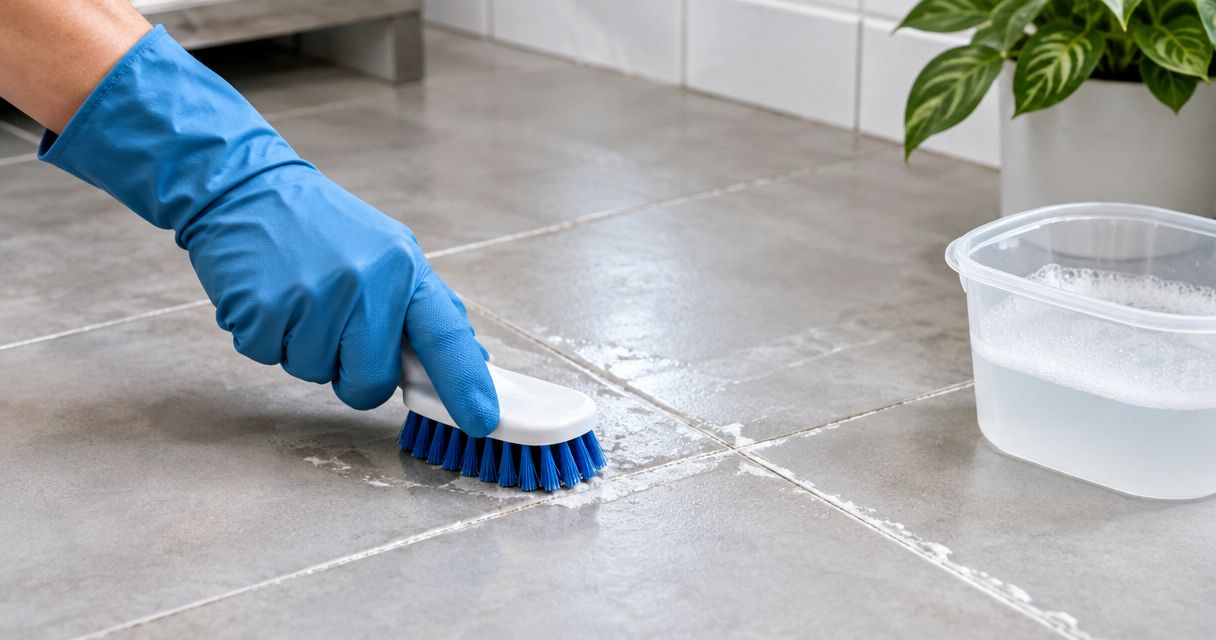
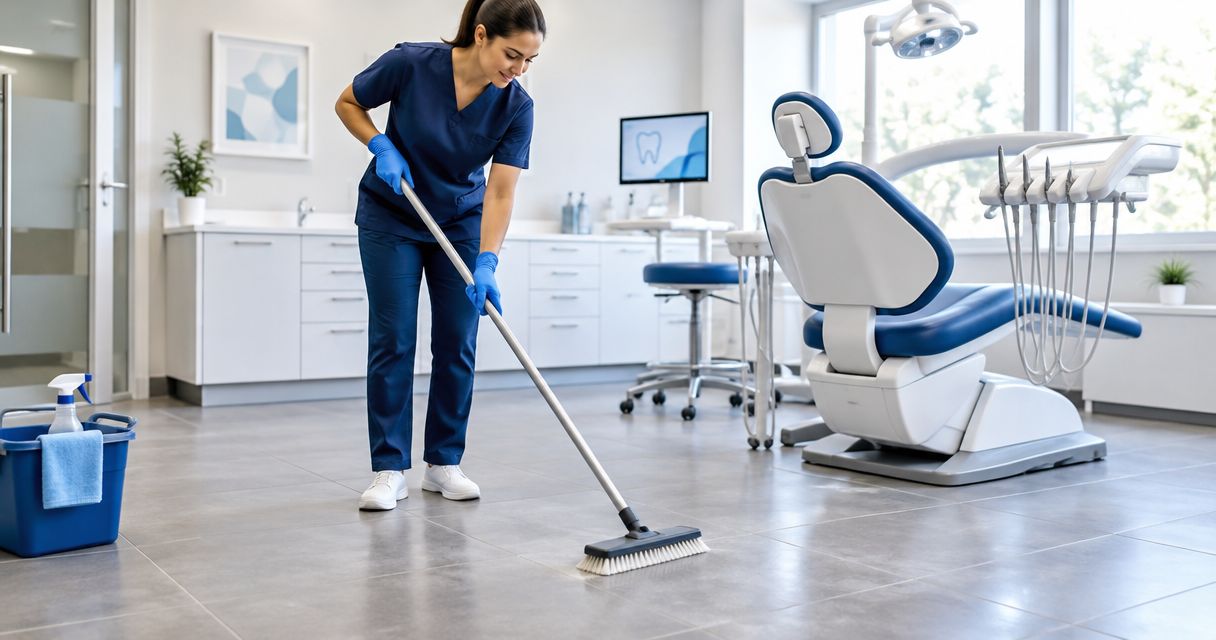
Dental office tile and grout cleaning is the removal of soil and residue from tiled floors and grout joints with the aim of keeping patient-facing spaces clean, serviceable, and ready for use. This 2026 guide explains how to match the cleaning method to your floor without confusing appearance care with your practice’s infection-control procedures.
- Tile and grout cleaning for dental offices needs material-specific methods, controlled access, and a separate infection-control protocol.
- Michaels Carpet Care offers commercial tile, grout, and natural stone cleaning in McKinney, Frisco, Plano, and Allen.
- Start with routine soil removal; arrange professional cleaning when grout remains dirty after correct maintenance.
- Clean-looking grout does not establish disinfection, and stronger chemicals do not repair damaged joints.
Why tile and grout cleaning matters for dental offices
Dental offices need a floor-care plan that works around patients, staff, wheeled equipment, and treatment schedules. Reception areas collect tracked-in grit, while restrooms and clinical spaces need cleaning procedures suited to their use. One method does not automatically fit every room.
Treat appearance cleaning and infection control as separate requirements. CDC dental infection-prevention guidance distinguishes environmental housekeeping surfaces, including floors, from clinical contact surfaces. Your floor-cleaning contractor does not replace the practice’s written procedures for contamination, disinfectant selection, or clinical equipment.
For a practical starting point, compare tile cleaning methods for grout-line stains by material compatibility rather than stain-removal strength alone. The useful question is not which method sounds strongest; it is which method removes soil without damaging your actual floor.
For your 2026 maintenance plan, the outcome should be specific: cleaner joints, no avoidable chemical residue, protected adjacent surfaces, and an agreed reopening check. A brighter grout line alone does not establish that every requirement has been met.
How to plan tile and grout cleaning for your dental office
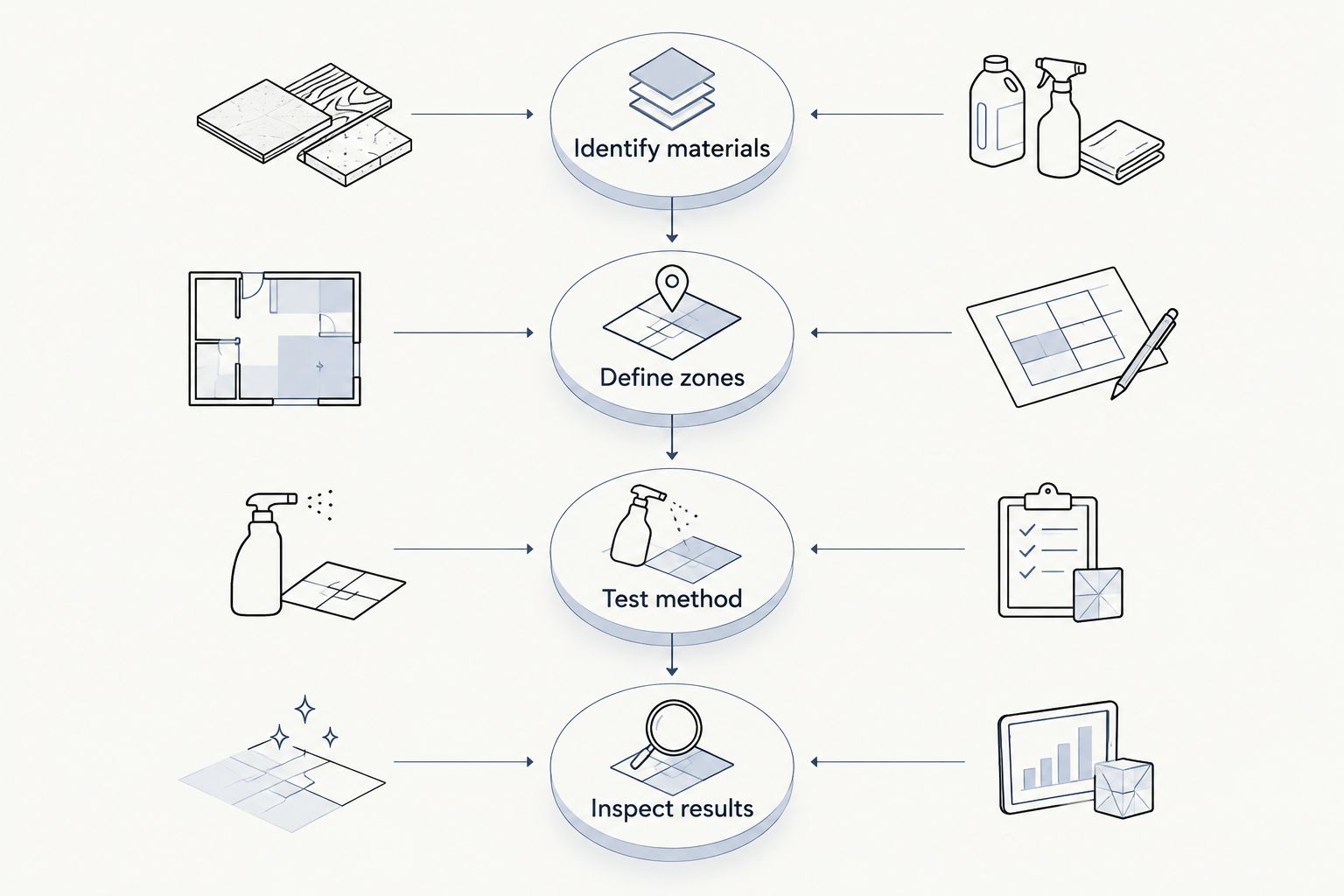
1. Identify your tile, grout, and existing damage
Start with installation records, product information, and a walk-through with your maintenance team. Identify ceramic, porcelain, or natural stone before choosing a cleaner. Marble and other acid-sensitive stone need different care from many manufactured tiles; a product suitable for one surface can damage another.
Record cracks, loose tiles, missing grout, and uneven joints before cleaning. Cleaning removes soil; it does not rebuild a failed joint or correct a moving tile. If the material remains uncertain, ask the installer or a qualified floor-care professional to identify it before treatment.
- Record the tile and grout types in each room.
- Note any known sealer, coating, or previous treatment.
- Photograph cracks, chips, and persistent discoloration.
- Mark sensitive transitions, baseboards, and adjacent cabinetry.
2. Divide the practice into cleaning zones
Make a simple floor plan yourself before requesting outside help. Divide the office into 3 planning zones: public areas, clinical areas, and support areas. These are scheduling categories, not infection-control classifications; your practice’s clinical procedures still determine how each space is handled.
Use the plan to identify entrances, patient routes, staff access, and equipment that cannot be moved casually. A room-by-room schedule is easier to manage than a vague instruction to clean the whole office. For your 2026 plan, assign a staff contact who can answer access questions without interrupting treatment.
- Mark reception, corridors, and patient restrooms.
- Identify treatment rooms and restricted work areas.
- Separate staff rooms and storage spaces.
- Map an alternate route around closed floor sections.
3. Start with routine cleaning and define the escalation point
Remove loose grit, then use a floor-compatible cleaner according to its label and the floor manufacturer’s instructions. Use clean tools and manage dirty solution so removed soil does not simply move into another grout line. More cleaner is not a substitute for correct dilution and soil removal.
When correct routine cleaning leaves embedded soil, discuss professional treatment. Michaels Carpet Care provides commercial tile, grout, and natural stone cleaning across McKinney, Frisco, Plano, and Allen. Michaels Carpet Care is best for North Texas businesses seeking professional floor cleaning, not a replacement for clinical infection-control procedures.
- Check the cleaner’s material compatibility and dilution instructions.
- Use dedicated, clean floor-care tools.
- Record where routine cleaning leaves visible soil.
- Request a scope covering those problem areas.
4. Test the method before treating the whole floor
Choose 1 inconspicuous test area that represents the actual tile and grout. Follow the proposed cleaning sequence there, including any required rinsing or soil recovery, and inspect it after drying. A wet floor can conceal residue or make a finish look different from its final appearance.
Start gently. Michaels Carpet Care’s stated approach begins with safe, gentle products and moves to something stronger only when needed; ask how the proposed tile treatment follows that principle on your floor. A successful test supports the next step, but it does not prove that every stain will disappear.
- Compare the dry test area with an untreated section.
- Check grout color, surface finish, and adjacent materials.
- Look for remaining film or disturbed coatings.
- Stop if the test exposes damage or an unexpected reaction.
5. Separate floor care from contamination response
Keep your dental practice’s infection-prevention procedures in charge of clinical decisions. Routine grout cleaning is not the same task as responding to blood or other potentially infectious material. Staff should follow the practice’s applicable procedures rather than asking a general floor cleaner to improvise.
EPA-registered disinfectants have specific label directions, including approved uses and contact times. If disinfection is required, use a product appropriate to the surface and intended task, and follow its label. An eco-friendly description alone does not establish a disinfectant claim or suitability for a clinical application.
- Keep relevant product labels and safety data sheets accessible.
- Identify who manages contamination incidents.
- Keep clinical supplies separate from floor-cleaning equipment.
- Confirm which tasks fall outside the contractor’s scope.
6. Schedule around access and verified floor conditions
Plan the work by room and patient route, not just by appointment time. Ask the provider what conditions affect drying and reopening for the proposed tile-cleaning method. Do not transfer a carpet-drying claim to grout, stone, or another process.
For your 2026 schedule, agree on a handover check rather than an unsupported promise that treatment rooms will reopen at a fixed hour. Keep people off the work area until the floor meets the agreed conditions and any applicable product directions have been satisfied. Warning signs alone do not provide a usable alternate route.
- Confirm who moves furniture and protects equipment.
- Agree on barriers and alternate access routes.
- Ask how moisture and cleaning solution will be controlled.
- Assign responsibility for the reopening inspection.
7. Inspect the result and adjust routine maintenance
Walk the cleaned area after it has dried and before normal use resumes. Compare the result with the original photographs, paying attention to grout lines, corners, transitions, and residue. Separate remaining soil from damage or permanent discoloration before requesting another chemical treatment.
Keep 2 records: a service log and a floor-condition photo record. These give your practice a consistent basis for deciding when to clean again. Set the next review from observed soil buildup, patient traffic, and maintenance results rather than adopting a universal deep-cleaning interval.
- Check grout edges and hard-to-reach corners.
- Record stains or defects that remain after cleaning.
- Note products and methods used where documented.
- Update routine cleaning instructions from the findings.
Compare cleaning options for dental offices
Choose the least aggressive method that solves the documented problem. Routine maintenance, professional soil removal, and floor repair serve different purposes. Buying a stronger cleaning treatment will not solve every dark grout line.
Michaels Carpet Care offers professional cleaning, but cleaning alone cannot repair cracked grout or establish that a clinical disinfection requirement has been met. Confirm the proposed method, scope, access arrangements, and exclusions before approving work.
| Option | Best for | Main advantage | Key limitation |
|---|---|---|---|
| Routine staff cleaning | Daily loose soil and fresh tracked-in dirt | Fits the practice’s regular maintenance process | Does not resolve every embedded stain or residue problem |
| Targeted manual grout cleaning | Small, isolated areas with known materials | Lets staff work on a defined problem area | Requires compatible products and careful technique |
| Professional tile and grout cleaning | Embedded soil that remains after correct routine care | Provides a planned treatment for the affected floor | Does not repair failed grout or replace clinical protocols |
| Material-specific natural stone cleaning | Stone floors requiring a compatible treatment | Accounts for stone sensitivity | A generic tile-cleaning product is not automatically suitable |
| Grout or tile repair | Cracked joints, missing grout, or loose tiles | Addresses physical defects | Does not replace cleaning or correct every underlying cause |
Discuss your office floor cleaning
Ask about commercial tile, grout, or natural stone cleaning for your North Texas dental office.
Common mistakes dental offices make
Treating clean-looking grout as proof of disinfection
A visible improvement establishes an appearance result, not a microbiological result. Keep environmental cleaning records and clinical infection-prevention procedures distinct. Ask what the service actually includes instead of accepting an undefined promise of a sanitized office.
Using one chemical across every room
A practice can contain porcelain tile, stone, different grout types, and previously treated surfaces. Selecting a product only because it removes a restroom stain ignores those differences. Identify each material and check compatibility before extending treatment beyond the test area.
Booking the work without an access plan
Cleaning a main corridor can affect every treatment room beyond it. Decide how patients and staff will move before work starts, including anyone using mobility aids. If no suitable alternate route exists, schedule the affected section when that route is not needed.
Repeatedly scrubbing damaged grout
Persistent darkness does not always mean removable dirt. Missing grout, cracks, deteriorated joints, or permanent discoloration need assessment rather than repeated chemical escalation. Document what remains after a suitable cleaning attempt and decide whether repair is the next task.
Leaving the reopening decision undefined
A contractor finishing the cleaning pass is not the same as a practice accepting the floor for use. Name the person responsible for checking conditions, access, and remaining concerns. Add that responsibility to your 2026 maintenance instructions so the decision does not fall between teams.
FAQ
What is the best tile and grout cleaning method for a dental office?
The best method matches the tile, grout, existing finish, and type of soil. Start with compatible routine cleaning, then arrange professional assessment when embedded soil remains; test the proposed method before treating the full floor.
Does professional grout cleaning disinfect a dental office?
Professional grout cleaning does not by itself establish disinfection. Your practice must follow its infection-prevention procedures and, where disinfection is required, the appropriate product label directions.
How often should a dental office schedule professional grout cleaning?
Set the schedule from documented floor conditions rather than a universal interval. Review traffic lanes, grout appearance, residue, and the results of routine maintenance, then schedule treatment when those findings justify it.
Can we use the same cleaner on porcelain and natural stone?
Use the same cleaner only when its instructions and the floor manufacturers’ guidance support both materials. Acid-sensitive stone can be damaged by products that are unsuitable for that stone, so identify the surface before treatment.
Can a dental office stay open during tile cleaning?
Keep the practice open only if affected areas can be isolated and suitable access remains available. Decide room access, patient routes, equipment protection, and reopening checks before scheduling the work.
Does Michaels Carpet Care clean commercial tile and grout?
Michaels Carpet Care provides commercial tile, grout, and natural stone cleaning in McKinney, Frisco, Plano, and Allen. Ask for a scope matched to your dental office’s materials, access needs, and floor condition.
Should we seal the grout after cleaning?
Decide on sealing from the grout type, existing treatment, manufacturer guidance, and floor condition. Not every grout system needs the same treatment, and sealing does not repair damaged joints or replace cleaning.
One last thing
Save a dry reference photograph, not just a freshly cleaned photograph. A picture taken while grout is wet is a poor reference for judging the floor later. Photograph the same locations after drying, with similar lighting, and keep those images with your 2026 service log.
That simple record makes the next decision clearer: routine maintenance, another cleaning assessment, or repair. It also keeps the conversation focused on the floor’s condition instead of an expectation that every grout joint must look new.