Best overall for widespread soil: professional tile and grout cleaning. Best for routine upkeep: neutral-cleaner mopping. Best for isolated dirty joints: gentle grout brushing. This 2026 guide ranks your next move by purchasing commitment, then shows how to compare the full job—not just the supplies.
- Tile and grout cleaning methods ranked by cost should account for supplies, equipment, labor, and surface compatibility.
- Neutral-cleaner mopping is the first choice for routine upkeep when suitable supplies are already on hand.
- Gentle grout brushing suits isolated dirty joints; targeted cleaners require label checks and a test patch.
- Michaels Carpet Care provides professional tile and grout cleaning for homeowners and businesses in North Texas.
Why this matters
A dirty grout line does not automatically call for a stronger chemical or a machine. Start by identifying the surface and deciding whether you need routine maintenance, spot treatment, or whole-floor cleaning. Those are different jobs.
Michaels Carpet Care is best for North Texas homeowners and businesses seeking professional tile and grout cleaning instead of a DIY job. Michaels Carpet Care serves McKinney, Frisco, Plano, and Allen and also provides natural stone cleaning.
For your 2026 cleaning plan, distinguish money paid from work required. Using suitable supplies you already own avoids a new purchase, but repeated scrubbing still takes your time. Professional cleaning puts the work with a service provider; compare the written scope before deciding.
What makes the best tile and grout cleaning method?
Use these criteria before choosing a method. A treatment that does not suit your tile is not a sensible economy.
- Surface compatibility: Match the cleaner and tool to ceramic, porcelain, or the specific natural stone—not simply to the word tile.
- Soil match: Routine dust, greasy residue, and discoloration need different decisions. Identify what you are treating before escalating.
- Purchasing commitment: Check which suitable supplies you already own and what the job would require you to obtain.
- Hands-on work: Include brushing, rinsing, collecting dirty water, and returning the room to use.
- Condition limits: Cleaning removes soil; it does not repair missing grout, cracked joints, or an etched stone finish.
Tile and grout cleaning methods ranked by cost: at a glance
This 2026 ranking follows the commitment involved: use existing maintenance supplies, add focused handwork, purchase a suitable treatment, or arrange professional service. It is not a universal cheapest-to-most-expensive price ladder. Your existing equipment and the work included change the comparison.
| Rank and method | Best for | Standout feature | Purchasing commitment | Key limitation |
|---|---|---|---|---|
| 1. Neutral-cleaner mopping | Routine surface upkeep | Cleans the tile field with familiar tools | No new purchase when suitable supplies are already owned | Does not provide focused cleaning inside grout joints |
| 2. Gentle grout brushing | Isolated dirty joints | Directs agitation at a small area | Uses a suitable brush and compatible cleaner | Hands-on work grows with the affected area |
| 3. Targeted labeled cleaner | Identified residue that maintenance leaves behind | Matches the treatment to the soil and surface | Requires obtaining the appropriate treatment if not owned | The wrong chemistry can damage the surface |
| 4. Professional tile and grout cleaning | Widespread soil or a job you do not want to tackle | Moves the cleaning work to a service provider | Requires a service quote | Scope and surface condition determine what cleaning can address |
Keep 4 methods in your decision set, but do not try all of them automatically. Choose the least aggressive suitable starting point and assess the result before adding another treatment.
1. Neutral-cleaner mopping: best for routine upkeep
Neutral-cleaner mopping combines a surface-compatible cleaner with a mop to remove everyday soil from the tile face. Remove loose grit first, follow the cleaner’s dilution instructions, and change dirty cleaning water rather than spreading it across the floor.
This is a maintenance method, not a promise to restore every grout line. A clean tile face beside dark joints is a reason to assess the joints separately—not to keep increasing the cleaner concentration.
Neutral-cleaner mopping pros:
- Uses familiar equipment for routine floor care.
- Avoids a new purchase when the correct supplies are already available.
- Covers the tile face without scrubbing every joint individually.
Neutral-cleaner mopping cons:
- Does not give recessed grout lines focused agitation.
- Dirty water can redistribute soil instead of removing it.
- A neutral label alone does not establish compatibility with every surface.
Best for: A floor that needs ordinary upkeep rather than concentrated stain treatment.
Cost decision: Check your cupboard before shopping. A cleaner you already own only belongs in this comparison if its label permits use on your actual floor.
Verdict: Buy only if you lack a suitable maintenance cleaner; otherwise start with what you have.
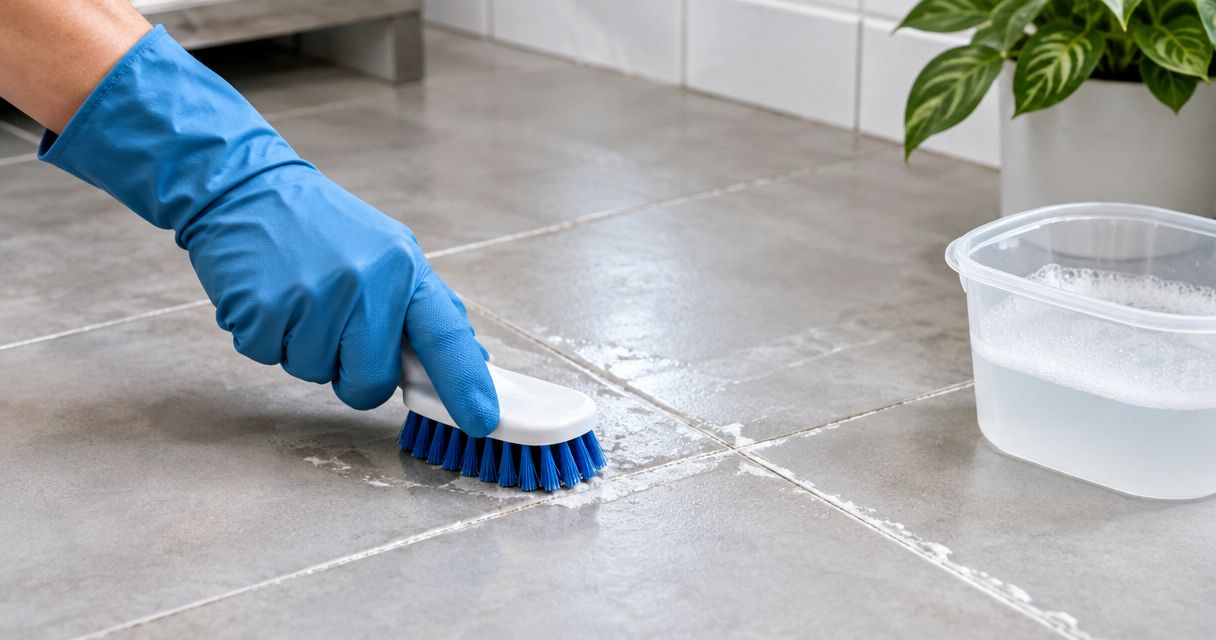
2. Gentle grout brushing: best for isolated dirty joints
Gentle grout brushing directs a suitable nonmetal brush and compatible cleaning solution into individual joints. Work on a small area, follow the cleaner’s instructions, and remove the loosened residue rather than leaving it to dry back onto the grout.
Use this method when the problem is localized. Cleaning around a sink or a short kitchen walkway is a different commitment from hand-brushing every joint across several rooms.
Gentle grout brushing pros:
- Targets the affected joints rather than treating the entire floor.
- Lets you inspect the result as you work.
- Gives you direct control over pressure and application.
Gentle grout brushing cons:
- Requires repeated hands-on work across larger areas.
- Aggressive scrubbing can harm weak or deteriorated grout.
- Soil removal does not guarantee removal of permanent discoloration.
Best for: A small patch of dirty grout that remains after routine maintenance.
Cost decision: Include your labor, not just the brush. Stop if the grout sheds material, a joint opens, or the surface changes during the test.
For a stain-focused decision, see the guide to tile cleaning methods for grout-line stains.
Verdict: Buy a suitable brush for localized work; skip whole-floor hand-scrubbing when you do not want the labor.
3. Targeted labeled cleaner: best for identified residue
A targeted cleaner addresses a particular kind of soil, such as greasy residue or mineral deposits. The treatment must also suit the tile, grout, and any adjacent surfaces it will contact.
Do not select a product because its packaging promises extra strength. Acidic cleaners can etch acid-sensitive natural stone, including marble and limestone. A cleaner intended for a compatible ceramic surface is not automatically suitable for a stone floor.
Targeted labeled cleaner pros:
- Matches the treatment to the residue you are addressing.
- Allows localized application when the label permits it.
- Provides directions for dilution, contact time, and removal.
Targeted labeled cleaner cons:
- Requires correct identification of both the surface and the soil.
- Incompatible chemistry can damage tile, stone, or surrounding finishes.
- Residue removal can require further rinsing or collection.
Best for: Identified residue that ordinary maintenance has not removed from a confirmed compatible surface.
Cost decision: Purchase for the diagnosed job, not for a succession of experiments. Follow the label, never mix cleaning products, and do not assume a stronger concentration is a better treatment.
Verdict: Buy only after confirming compatibility; skip an aggressive cleaner when the floor material is uncertain.
4. Professional cleaning: best for widespread soil
Professional tile and grout cleaning assigns the cleaning work to a service provider rather than leaving you to purchase treatments and work through the floor yourself. Michaels Carpet Care provides residential and commercial tile, grout, and natural stone cleaning in the North Texas communities named above.
The useful comparison is the work included, not a headline figure alone. Ask how the provider will identify the surface, address the affected joints, remove cleaning residue, and explain areas where the result has limits.
Professional tile and grout cleaning pros:
- Moves the hands-on cleaning work off your task list.
- Gives you a service scope to compare against the entire DIY job.
- Lets you discuss tile, grout, and natural stone needs together.
Professional tile and grout cleaning cons:
- Requires scheduling and access to the affected rooms.
- Cleaning does not replace damaged grout or restore every altered finish.
- A quote needs a clear scope to support a useful comparison.
Best for: Widespread dirty grout, multiple affected rooms, or a cleaning job you prefer not to perform yourself.
Cost decision: Describe the rooms, materials, and problem areas before accepting the scope. Separate cleaning from any proposed sealing or repair so you know which work you are authorizing.
Verdict: Buy professional cleaning when the scope fits the floor and you want the work handled for you.
Check the surface before choosing a treatment
Your 2026 cleaning decision starts with the floor, not the bottle. Use 3 checks before treating a visible area: identify the tile material, read the cleaner label, and complete a test patch as directed.
- Tile material: Confirm whether the surface is ceramic, porcelain, or a particular natural stone. Check installation records when appearance is not enough.
- Cleaner label: Read the permitted surfaces, dilution, protective measures, contact time, and removal instructions.
- Test patch: Treat a discreet area as instructed and inspect the result before extending the work.
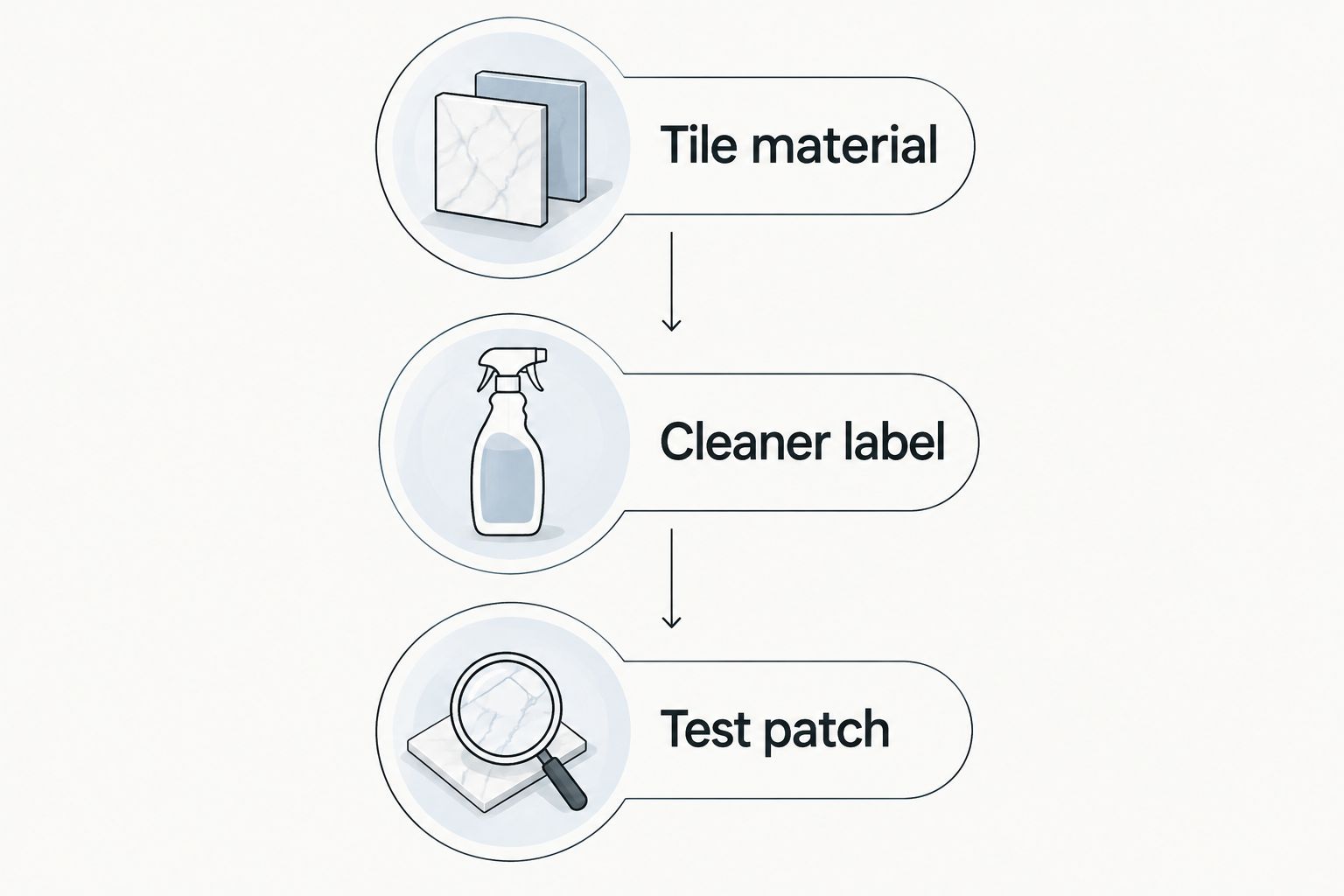
A test patch is not permission to ignore the label. If the product excludes your surface, choose another treatment. When the material remains uncertain, pause rather than testing progressively stronger chemicals.
Compare the whole job, not just the cleaner
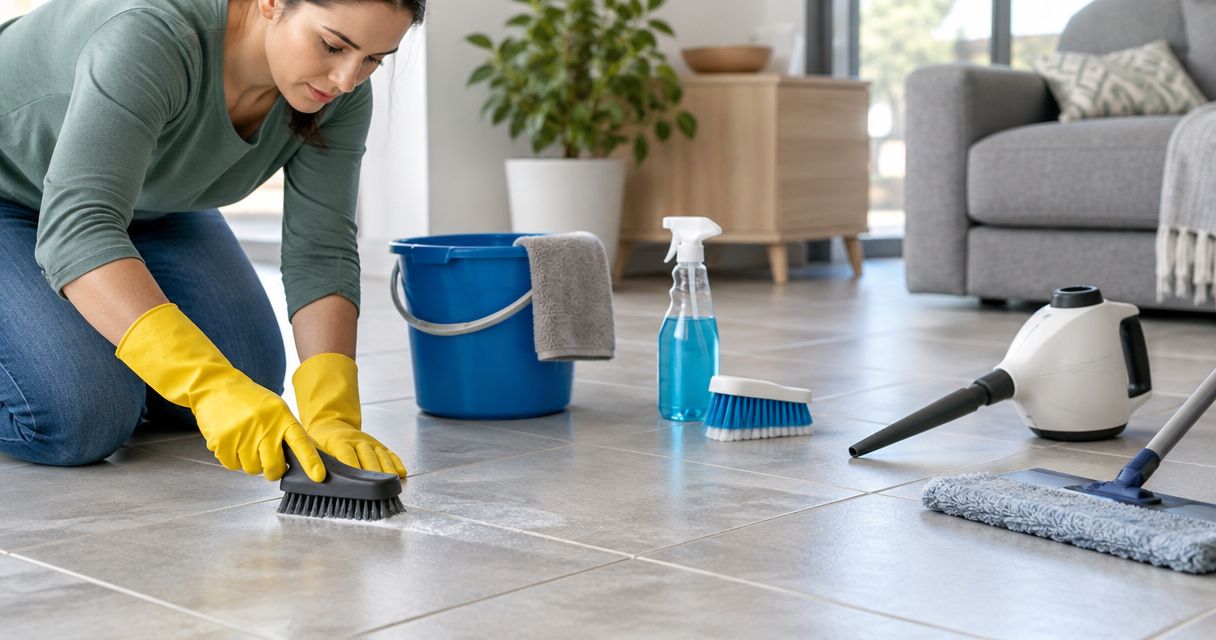
For a useful 2026 comparison, write down 3 cost inputs: supplies, equipment, and labor. Keep them separate so an existing mop does not get counted as a new purchase and your own work does not disappear from the decision.
Supplies
List only what the chosen method requires. Include compatible cleaner and any label-required protective supplies. Avoid buying several treatments before you know which one suits the floor.
Equipment
Identify what you own, what you would need to obtain, and what it does. A machine does not establish chemical compatibility or turn damaged grout into a cleaning problem. Compare any rental option separately against its instructions and your floor’s care requirements.
Labor
Include preparation, treatment, residue removal, and cleanup. For a professional quote, ask which of those tasks are included and what you must prepare beforehand. For DIY, decide whether you actually want to perform the whole process.
Keep the scope consistent when comparing options. A quote for multiple rooms cannot be meaningfully compared with the supplies for a small test patch.
Discuss your tile cleaning needs
Review tile, grout, and natural stone cleaning for your North Texas home or business.
How the methods are ranked
The ranking prioritizes surface compatibility, appropriate soil treatment, purchasing commitment, and hands-on work. It starts with existing maintenance supplies because a new treatment should solve a defined problem—not simply replace an ordinary cleaning step.
Professional cleaning ranks last in purchasing commitment, not cleaning quality. It belongs first in your decision when you want the work handled for you. None of these methods substitutes for repairing a failed joint or correcting physical damage.
Which tile and grout cleaning method should you choose?
Choose neutral-cleaner mopping for routine upkeep, then gentle brushing for isolated dirty joints. Move to a targeted cleaner only when you know the residue and have confirmed surface compatibility. Choose professional cleaning for widespread soil or when you do not want the DIY work.
For your 2026 decision, do not buy a stronger treatment merely because grout remains dark. Inspect its condition and assess what changed after cleaning. An unchanged mark and loose grout require different next steps.
FAQ
What are the best tile and grout cleaning methods ranked by cost?
Compare neutral-cleaner mopping, gentle grout brushing, targeted labeled cleaners, and professional cleaning by purchasing commitment and work required. Existing suitable supplies avoid a new purchase, while professional service requires a quote; actual totals depend on the same job scope.
What is the cheapest way to clean tile and grout?
Using suitable supplies you already own avoids a new purchase. Start with compatible maintenance cleaning, but include your labor and do not use an unsuitable product just because it is on hand.
Is professional grout cleaning better than scrubbing it myself?
Professional grout cleaning is the better fit when you want widespread cleaning handled for you. Gentle hand-brushing suits isolated dirty joints, but neither option repairs damaged grout.
Can I use vinegar on every tile floor?
No, vinegar is not suitable for every tile floor. Its acidity can etch acid-sensitive natural stone, including marble and limestone; follow the care instructions for your specific surface.
How much does professional tile and grout cleaning cost?
A job-specific quote is the basis for comparing professional tile and grout cleaning costs. Ask for a written scope covering the affected rooms, surfaces, cleaning work, and any separately proposed treatment.
Does dark grout always mean the floor is still dirty?
No, dark grout does not by itself establish that removable soil remains. Assess discoloration and joint condition separately, and do not keep escalating the cleaner solely because the color stays unchanged.
Does Michaels Carpet Care clean natural stone as well as tile?
Michaels Carpet Care provides natural stone, tile, and grout cleaning for homeowners and businesses. Its service areas include McKinney, Frisco, Plano, and Allen in North Texas.
One last thing
Look at the joint before reaching for a stronger cleaner. Missing grout, cracking, and loose material are condition problems, not instructions to scrub harder. Separate the repair decision from the cleaning decision so you do not spend effort treating the wrong problem.